
贸易转口

Search documents
中美两头吃得好好的,突然背刺中国,老墨咋想的?
Xin Lang Cai Jing· 2025-12-20 12:57
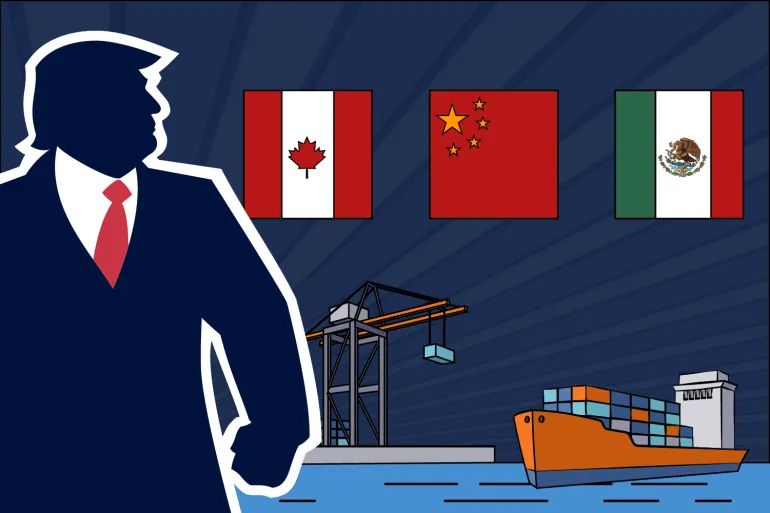
Core Viewpoint - Mexico is strategically positioning itself to benefit from the ongoing U.S.-China trade tensions by implementing a tariff proposal targeting Chinese goods, effectively aligning itself with U.S. interests while leveraging its manufacturing capabilities to attract Chinese companies to set up production facilities in Mexico [2][5][29]. Group 1: Tariff Proposal and Economic Impact - Mexico's recent tariff proposal includes additional tariffs on 1,463 items, with rates ranging from 5% to 50%, particularly affecting key industries such as automotive, textiles, and steel [2][8]. - The proposal is seen as a direct response to the U.S.-China trade war, with the majority of tariffs set below 35%, but critical sectors facing the highest rates [2][8]. - The U.S.-Mexico-Canada Agreement (USMCA) allows Mexican-produced goods to enter the U.S. tariff-free, creating an incentive for Chinese companies to manufacture in Mexico to bypass U.S. tariffs [10][17]. Group 2: Mexico's Role in Global Supply Chains - Mexico has emerged as a significant intermediary in the global supply chain, benefiting from Chinese manufacturing overflow while maintaining a favorable trade relationship with the U.S. [17][25]. - The value added by Chinese components in Mexican automotive production is approximately 5%, which is crucial for maintaining production efficiency [20]. - Mexican exports to the U.S. are projected to exceed $506 billion in 2024, highlighting the country's reliance on the U.S. market [20]. Group 3: Domestic Economic Effects - The minimum wage in Mexico has increased significantly, from 88 pesos per day in 2018 to 278.80 pesos by 2025, largely due to the high-wage requirements in the automotive sector under the USMCA [15][37]. - The trade dynamics have led to a substantial increase in the U.S. trade deficit with Mexico, rising from $112.7 billion to $171.5 billion, a 52% increase since the USMCA's implementation [17][20]. - Mexican political stability has been bolstered by the economic benefits derived from the trade tensions, with President Sheinbaum's approval rating reaching 85% [37][42]. Group 4: Challenges and Future Considerations - Mexico faces pressure to demonstrate loyalty to the U.S. amid potential reviews of the USMCA, with the next review scheduled for July 2026 [28][30]. - The Mexican government has shown hesitance in fully committing to the tariff proposal, indicating a desire to maintain a balanced relationship with China while appeasing U.S. demands [32][35]. - Domestic opposition to the tariff increases is growing, with concerns that higher production costs will ultimately harm Mexican consumers and businesses reliant on Chinese imports [47][49].

高盛:运用细分贸易数据解读中国出口韧性
Goldman Sachs· 2025-06-23 02:30
Investment Rating - The report indicates a positive outlook on China's export resilience, highlighting strong growth in exports, particularly to emerging markets [2][3]. Core Insights - China's exports have demonstrated surprising strength, achieving double-digit growth since Q4 2023, driven by factors such as front-loading of export orders and trade re-routing [2][3][4]. - The report emphasizes the shift of China's export flows from developed markets to emerging markets, particularly ASEAN, which has become a key trading partner [2][3][4]. Summary by Sections Export Growth Dynamics - Real exports from China have shown double-digit year-over-year growth since Q4 2023, with significant contributions from emerging markets [2][3]. - Front-loading of export orders has played a crucial role in maintaining high export levels, particularly in anticipation of US tariffs [5][6]. Trade Patterns and Destinations - Exports to ASEAN accounted for 16% of China's total exports in 2024, surpassing exports to the US, indicating a strategic shift in trade routes [2][3][4]. - The report notes that strong trade growth with major emerging economies has been a significant contributor to China's export strength over the past decade [2][3]. Sectoral Analysis - Exports of vehicles and electrical machinery to emerging markets have risen sharply, driven by supply chain diversification and increasing local demand for electric vehicles [2][3][4]. - The report highlights a transition in China's export product mix from traditional goods to new sectors such as electric vehicles, lithium-ion batteries, and solar cells [26][35]. Impact of US Tariff Policies - US tariff policies have induced front-loading and trade re-routing, which have helped stabilize China's overall export growth despite a decline in US-bound exports [5][6][18]. - The report estimates that cumulative front-loading of US-bound exports during Q4 2024 to Q1 2025 was around 30% of trend-implied monthly export values [5][6]. ASEAN's Role in Trade - The ASEAN-China Free Trade Agreement has significantly reduced tariffs, contributing to the rise in ASEAN-bound exports from China [37]. - Trade data discrepancies suggest potential transshipment of goods through ASEAN to avoid US tariffs, indicating a complex trade dynamic [39][41].