资金的时间价值

Search documents
全款买房的都是傻子?贷款时间是越长越好吗?内行人坦言:这3种情况很多人忽略
Sou Hu Cai Jing· 2026-01-31 16:33
Core Viewpoint - The debate between full payment and mortgage for home buying is nuanced, with both options having their merits and drawbacks depending on individual circumstances and market conditions [1][12]. Group 1: Current Mortgage Landscape - As of early 2026, mortgage rates have collectively decreased, with first-time homebuyers seeing rates as low as 2.6% for five-year loans and 3.0% for commercial loans in some cities, marking the lowest rates in over a decade [1][2]. - The down payment requirements have also significantly reduced, with some areas allowing as low as 15% down from the previous 30% [1]. Group 2: Financial Calculations - A hypothetical scenario illustrates that for a 5 million property, a buyer opting for a mortgage with a 1 million down payment and a 4 million loan at a 3.2% interest rate would incur monthly payments of approximately 1,686 yuan, leading to over 2 million yuan in total interest paid [2][4]. - The time value of money is crucial; if the 4 million yuan is kept in a bank account earning 3% interest, it could generate 360 million yuan in interest over 30 years, highlighting the potential benefits of leveraging funds [4]. Group 3: Loan Duration and Market Dynamics - The choice of loan duration is critical; longer terms reduce monthly payments but can lead to higher total interest payments. For example, a 30-year loan significantly lowers monthly obligations compared to a 10-year loan [5][6]. - Many borrowers are unaware that over one-third of the loan term, they may have already paid more than half of the total interest, which can affect their financial planning [6]. Group 4: Advantages of Mortgages - Current mortgage rates are historically low, making it financially advantageous to use leverage for asset appreciation rather than holding cash that may depreciate [8]. - Mortgages provide flexibility, allowing homeowners to retain cash for emergencies or other investments, which is not possible with full payment [8]. Group 5: Rental Market Considerations - In some cities, the cost of buying versus renting has become comparable, making mortgages an attractive option to lock in housing costs and mitigate future rent increases [8]. Group 6: Recommendations for Buyers - Experts suggest that first-time buyers should prioritize entering the market now due to favorable rates and down payment options, rather than waiting for perfect conditions [10]. - It is advisable to maintain a balance between down payment and liquidity, ensuring that monthly payments do not exceed 40% of household income to preserve quality of life [12].

“全款买房”和“贷款30年”买房,到底有多大区别?曹德旺给了建议
Sou Hu Cai Jing· 2025-09-18 15:24
Core Viewpoint - The decision between full payment and mortgage for home buying significantly impacts personal financial health, quality of life, and future development trajectories, especially in the current complex economic environment [3]. Economic Cost Comparison - Full payment eliminates interest costs, while mortgage incurs significant interest expenses. For a property valued at 3 million yuan, a 30% down payment (900,000 yuan) and a loan of 2.1 million yuan at a 4.0% interest rate over 30 years results in a total repayment of approximately 3.628 million yuan, leading to over 1.528 million yuan in interest payments [4]. - The potential investment return on saved funds from a mortgage could exceed the cost of interest. If the 2.1 million yuan saved from not paying upfront is invested at an annual return of 5.3%, it could grow to approximately 9.4 million yuan over 30 years, highlighting the wealth-building potential of leveraging loans [5]. Financial Flexibility and Asset Allocation - Full payment ties up a significant portion of assets in real estate, reducing liquidity, while a mortgage allows for better cash flow management and diversified investments, enhancing financial flexibility and risk resilience [6][8]. - A healthy asset allocation should include various asset classes, and using a mortgage can facilitate this diversification, aligning with investment guidelines that suggest no single asset class should exceed 50% of total assets [8]. Psychological Impact and Quality of Life - Full payment provides a sense of security and peace of mind, while mortgage holders face long-term repayment stress, with 37% of mortgage holders reporting anxiety related to their loans [7]. - The choice of loan duration can also affect psychological well-being, with some preferring shorter loan terms to alleviate long-term financial burdens [7]. Tax and Policy Considerations - Mortgage payments may offer tax benefits, such as interest deductions that can reduce personal income tax liabilities, with an average savings of about 3,600 yuan in annual taxes from such deductions [9][10]. Decision-Making Guidance - Individuals should assess their financial situation, ensuring they have emergency funds equivalent to 6-12 months of expenses before opting for full payment. The recommendation is that mortgage payments should not exceed 30% of monthly income to maintain quality of life [11]. - Personal risk tolerance and investment capability should be considered; those with strong investment skills may benefit from leveraging loans, while risk-averse individuals might prefer full payment for peace of mind [12]. - Job stability and income growth expectations are crucial in deciding loan terms, with younger buyers potentially benefiting from longer loan durations [12]. - Psychological factors should not be overlooked, as anxiety from mortgage obligations can outweigh financial benefits, making it essential to align choices with personal comfort levels [13].
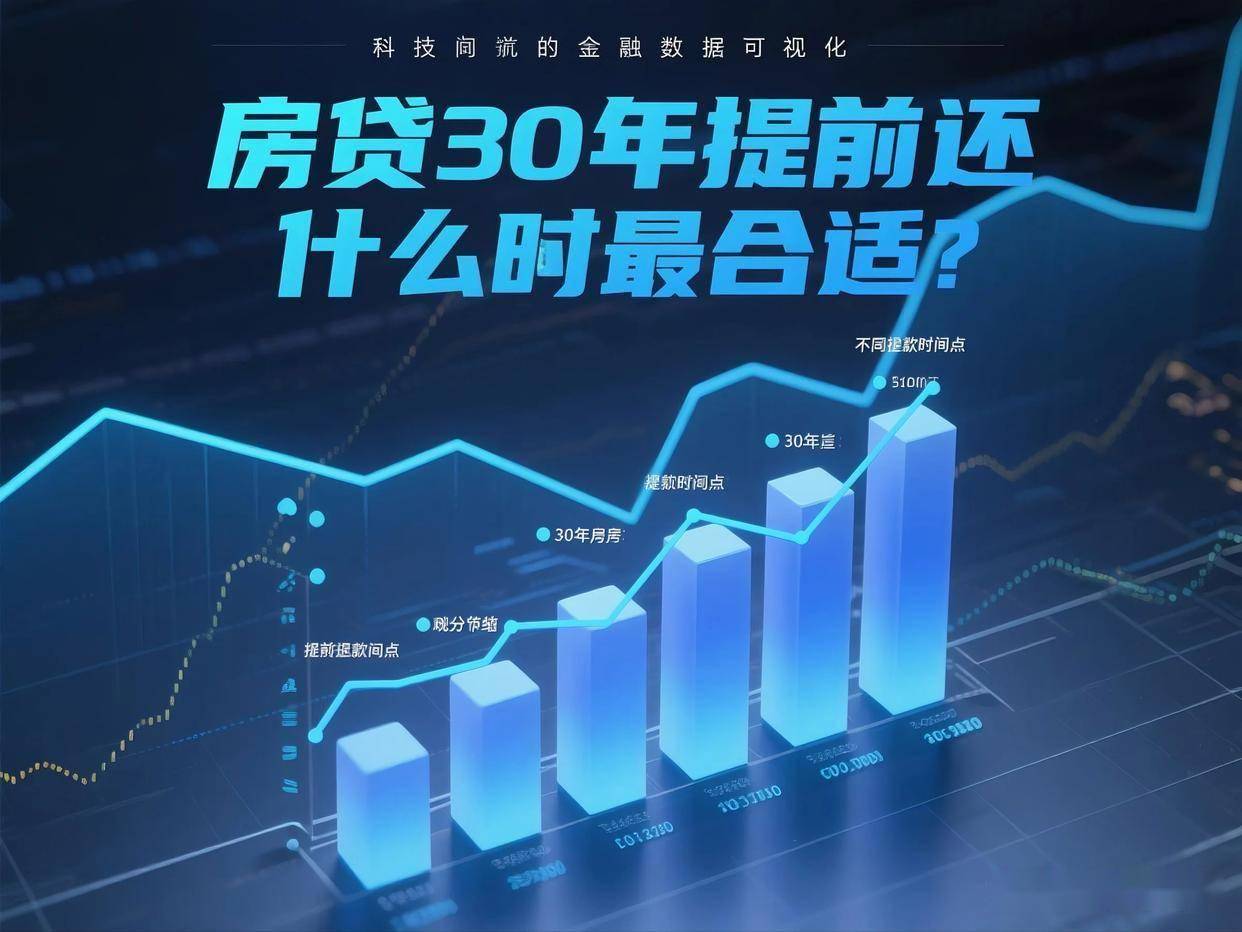
揭秘房贷30年提前还贷的黄金窗口:省下的不是利息,是未来的自由
Sou Hu Cai Jing· 2025-05-24 15:00
Core Viewpoint - The article emphasizes the importance of timing in making early repayments on a 30-year mortgage, highlighting the complexities involved in financial decision-making related to interest savings and cash flow management [2][3]. Group 1: Early Repayment Strategies - For equal principal and interest repayment, the first 10 years, especially the first 8 years, are considered the "golden decade" for early repayment to minimize total interest paid [4]. - For equal principal repayment, the first 5 years, particularly the first 3 years, are crucial for maximizing the benefits of early repayment due to higher interest proportions in the initial period [4]. - Key timing for repayment is identified as January 1st, coinciding with interest rate adjustments, which can lead to significant interest savings [4]. Group 2: Financial Considerations and Misconceptions - There is a debate on the balance between risk and return, with some viewing early repayment as a way to eliminate debt anxiety, while others criticize it as a potential cash flow trap [3]. - Many homeowners have misconceptions, such as prioritizing full cash purchases over the time value of money or miscalculating the benefits of using year-end bonuses for repayment without considering potential investment returns [3]. - Some homeowners may prematurely repay during a period of declining interest rates, missing out on the benefits of lower interest rates [3].