
跨周期资产配置

Search documents
【高端访谈】带着“好资产”穿越周期 当好金融体系“稳定器”——访中国中信金融资产党委书记、董事长刘正均
Xin Hua Cai Jing· 2026-04-01 02:03
Core Viewpoint - In 2025, China CITIC Financial Asset Management Co., Ltd. reported a total revenue increase of 43% to 80.476 billion yuan, with a net profit of 11.086 billion yuan, reflecting a 17% growth after excluding the impact of the leasing company. The company achieved an annualized return on equity (ROE) of 18.7%, with all three main business segments showing revenue growth, and the stock price rising by 28% throughout the year, leading to its inclusion in the MSCI China Index [2][5]. Group 1: Business Performance - The company’s main business saw new investments exceeding 178.6 billion yuan in 2025, marking an 8% year-on-year increase, maintaining its leading position in the industry [3]. - From 2023 to 2025, the company's net profit attributable to shareholders increased from 1.766 billion yuan to 11.086 billion yuan, achieving three consecutive years of growth [5]. - The company has maintained a continuous decline in both non-performing asset balance and non-performing asset ratio for three consecutive years, with the provision coverage ratio exceeding regulatory requirements [5]. Group 2: Strategic Insights - The chairman emphasized that the core value of asset management companies (AMCs) lies in risk resolution and asset revitalization, rather than merely acquiring non-performing assets [3][4]. - The company aims to identify and invest in high-quality assets that align with national strategic directions, focusing on sectors such as real estate relief, small financial institutions, technology finance, and green finance [3][4]. - The company has adopted a proactive approach to asset management, focusing on uncovering and allocating good assets from non-performing ones, thereby maximizing asset preservation and value enhancement [4]. Group 3: Risk Management and Industry Role - The company has positioned itself as a stabilizer in the financial system, playing a unique role in counter-cyclical adjustment and financial rescue, with a total of 532.9 billion yuan invested in key regions and sectors since March 2022 [9][10]. - The company has actively participated in risk resolution for small financial institutions, acquiring approximately 240 billion yuan in non-performing asset packages from small banks since 2022 [10]. - The company has developed a replicable model for risk resolution, particularly in the real estate sector, demonstrating its ability to address complex issues that traditional financial tools cannot solve [7][8].


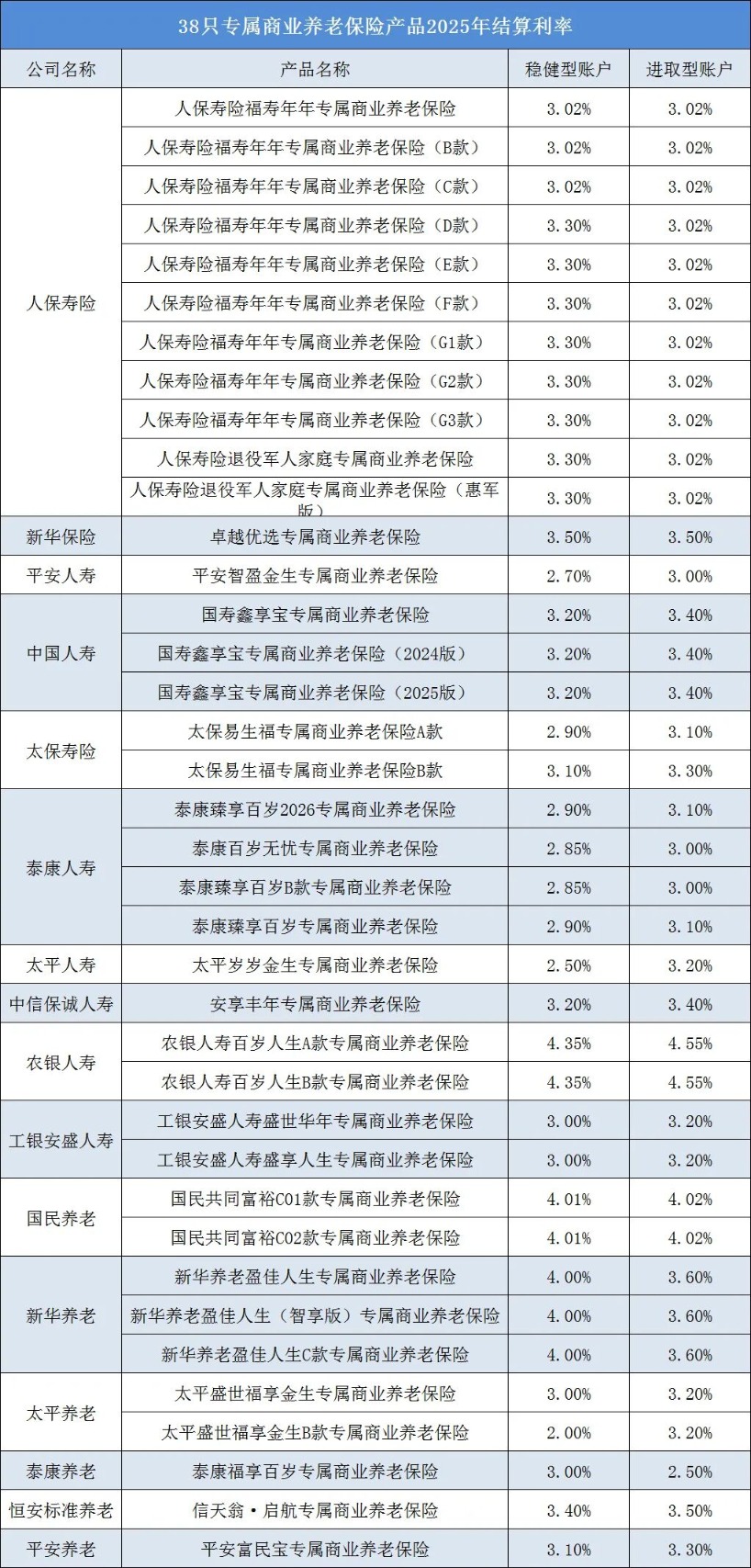
最高4.55%!专属商业养老保险2025年结算利率出炉
Guo Ji Jin Rong Bao· 2026-01-14 14:44
Core Viewpoint - The exclusive commercial pension insurance products have shown promising settlement interest rates for 2025, with a significant portion exceeding 3% and several surpassing 4% [1][3]. Group 1: Settlement Rates - A total of 67 accounts have settlement rates of 3% or higher, accounting for nearly 90% of the total [1]. - Among 38 exclusive commercial pension insurance products, the settlement rates for stable accounts range from 2% to 4.35%, while for aggressive accounts, they range from 2.5% to 4.55% [3]. - Three insurance companies have products with settlement rates of 4% or higher, with the highest rates being 4.35% for stable accounts and 4.55% for aggressive accounts from Agricultural Bank Life Insurance [4]. Group 2: Product Design and Strategy - Exclusive commercial pension insurance is designed with two phases: accumulation and payout, featuring a "guarantee + floating" yield model [3]. - The stable accounts are tailored for risk-averse clients, focusing more on fixed-income assets, while aggressive accounts have a higher allocation to equity assets [3][5]. - The dual-account structure allows for risk diversification and improved overall returns, leveraging long-term capital attributes for cross-cycle asset allocation [5]. Group 3: Market Development and Policy Support - The pilot program for exclusive commercial pension insurance began in June 2021 and expanded nationwide by March 2022, transitioning to a regular business model by October 2023 [6]. - Recent policies have emphasized the development of the third pillar of pension insurance, encouraging the creation of new products and enhancing the market for exclusive commercial pension insurance [6]. - To enhance competitiveness, insurance companies are encouraged to shift from a single financial product model to a comprehensive ecosystem solution, integrating health management and community services [7][8].



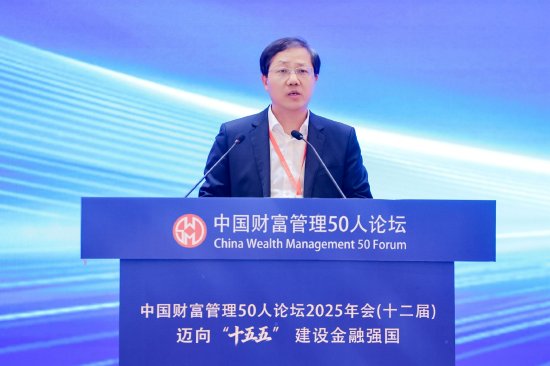
殷春平:保险资管需强化资产负债协同优化、系统性重构
Xin Lang Cai Jing· 2025-12-27 12:40
Core Viewpoint - The 2025 China Wealth Management Forum emphasizes the challenges posed by a low interest rate environment on insurance asset management and the need for strategic responses to enhance risk resilience [1][3]. Group 1: Challenges in Low Interest Rate Environment - The low interest rate environment presents direct challenges for insurance asset management, including the maturity of high-yield fixed income assets and the lagging adjustment of liability costs compared to asset yield declines [3][7]. - Insurance companies face risks of narrowing interest spreads and potential losses, while third-party asset management businesses encounter similar challenges due to client demands for low volatility and stable returns [3][7]. Group 2: Strategic Responses - A collaborative optimization of both asset and liability sides is necessary to enhance overall risk resilience, which includes strategic asset allocation (SAA) that aligns liability duration and costs with assets to reduce mismatch risks [3][7]. - Diversification of assets is crucial, with a focus on long-term equity investments, overseas assets, gold, and alternative assets to overcome development bottlenecks in debt business and increase revenue sources [3][7]. Group 3: Investment Management Optimization - Continuous improvement of the investment management system is essential, leveraging group operational advantages to optimize entrusted relationships and establish a long-term entrusted management system [4][8]. - A culture of investment research should be fostered to create an asset collaboration sharing mechanism and develop a cross-cycle asset allocation system aimed at asset-liability management [4][8]. Group 4: Technological Empowerment - The company is advancing the construction of systematic and intelligent investment research platforms, utilizing the "AI+" strategy to enhance investment decision-making processes and improve research efficiency [4][8]. - The introduction of an OKR process system aims to strengthen communication and coordination across departments, enhancing collaboration between asset and liability sides [4][8]. Group 5: Specific Investment Strategies - In fixed income assets, the focus is on maintaining a foundational role while innovating new products, including integrating ESG factors into product design and increasing the allocation of asset securitization products [9][10]. - For equity assets, the company plans to increase allocation using a "core + satellite" strategy, balancing returns and volatility while focusing on sectors that align with national strategies [10].

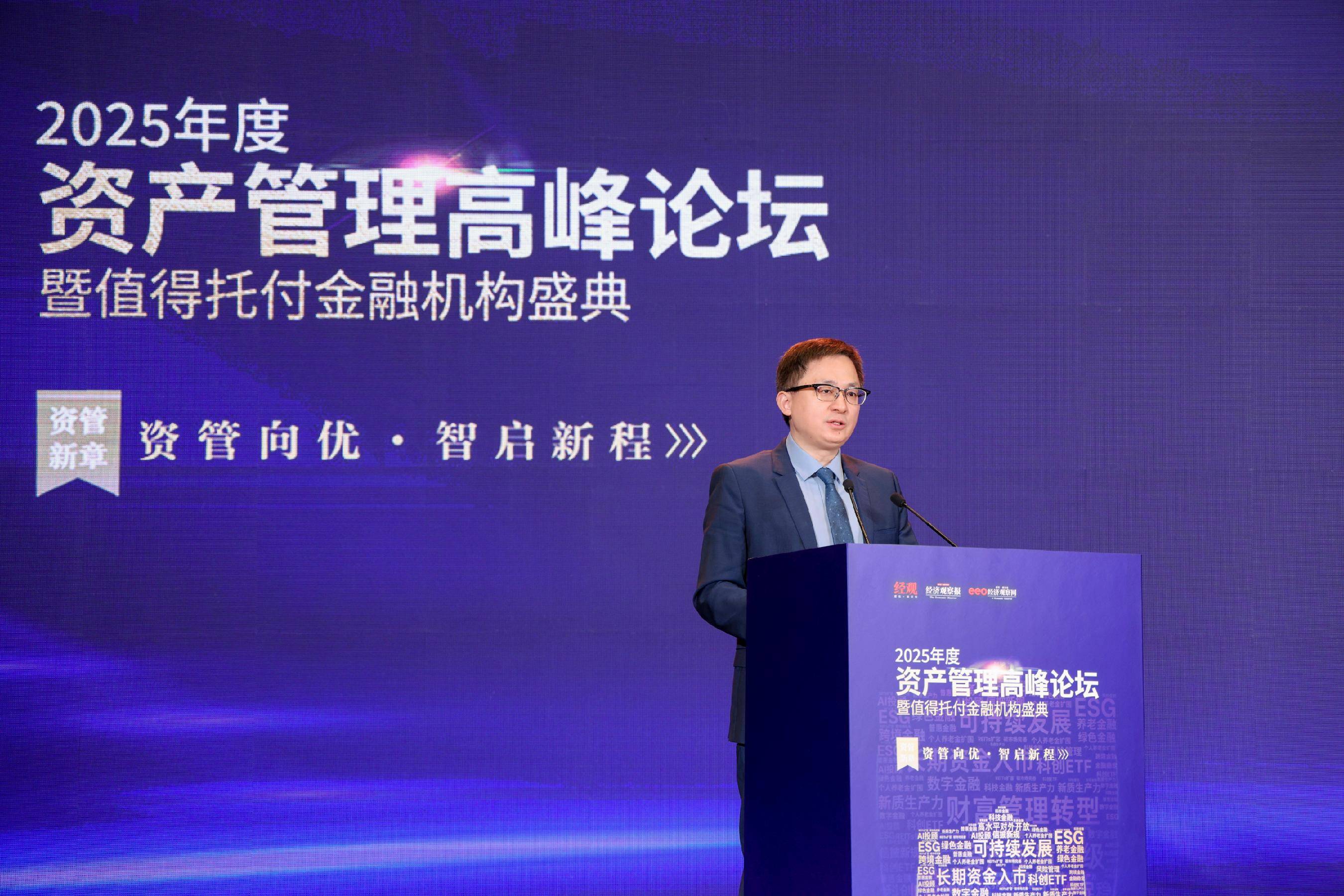
经济观察报副总编辑郭宏超:三大核心变革重塑资管行业生态
Sou Hu Cai Jing· 2025-11-26 02:36
Core Insights - The Chinese asset management industry, valued at 210 trillion yuan, is at a critical turning point for transformation and upgrading, influenced by a comprehensive pressure test over the past year [3][4]. Regulatory Framework - The regulatory framework is continuously improving, establishing a solid foundation for compliant development, with the gradual implementation of asset management regulations, personal pension systems, public fund fee reforms, and private fund industry standards [4][5]. Asset Structure - There is a deep restructuring of asset structures, injecting new momentum into industry development, as the trend of household wealth shifting towards financial assets is irreversible. Structural opportunities such as the expansion of the Beijing Stock Exchange, accelerated listings of innovative enterprises, normalized issuance of REITs, and a surge in green bond issuance are providing continuous liquidity to the asset side [4][5]. Investor Behavior - Investor behavior is becoming increasingly rational, with a focus on long-term and value investing principles penetrating market risk pricing and enhancing research capabilities to achieve sustainable wealth growth for clients [5]. Institutional Strategies - In a market environment characterized by low interest rates and asset scarcity, institutions need to build cross-cycle asset allocation capabilities and explore inclusive pension finance, positioning personal pension accounts as important service entry points for long-term client engagement [5]. Trust and Client Relationships - Rebuilding trust with clients is crucial; understanding client anxieties will enable firms to seize opportunities in the next industry cycle and earn long-term trust and commitment from clients [5].
千余只组合类保险资管产品最新披露年化收益率为正
Zheng Quan Ri Bao· 2025-08-08 07:27
Core Insights - The recent recovery of the A-share market has led to an overall increase in the yields of combination insurance asset management products, with performance varying across different product categories [1][2]. Performance Summary - As of March 21, 2023, among 1,529 disclosed combination insurance asset management products, 1,084 achieved positive returns, accounting for 71%, while 384 had negative returns, representing 25% [1][2]. - The average yield of these products is 7.66%, with a median yield of 2.60%. The highest yield recorded is 176.76%, while the lowest is -85.50% [2]. - In the equity category, 266 products were analyzed, with 221 achieving positive returns, which is 83%. The average yield for equity products is 23.39%, showing a significant increase year-on-year [3]. - For fixed-income products, out of 1,016, 690 achieved positive returns, which is 68%, with an average yield of 1.85%, indicating a year-on-year decline [2][3]. - Among 247 mixed products, 173 achieved positive returns, accounting for 70%, with an average yield of 14.66%, also reflecting a substantial year-on-year increase [3]. Influencing Factors - The yield of equity products is closely linked to stock market performance, while macroeconomic factors, such as interest rate changes, impact fixed-income product performance [3]. - Investment strategies, risk management capabilities, and market competitiveness of insurance asset management institutions are critical factors influencing yields [3]. Future Outlook - Insurance funds are significant participants in the A-share market, with policies encouraging long-term capital inflow leading to increased equity allocations [4]. - In 2024, the allocation balance for life and property insurance companies in stocks is projected to grow by 28.29% and 28.22%, respectively, marking the highest growth rates among various products [4]. - Future investment strategies for insurance funds will focus on long-term asset allocation, utilizing different combinations to capture market opportunities [5]. - The emphasis will be on avoiding excessive focus on short-term returns and ensuring alignment with liabilities to achieve stable long-term gains [5].