跨境电商合规化

Search documents
跨境电商全球“扫雷”|TMT年度盘点
Jing Ji Guan Cha Wang· 2026-02-14 06:44
Core Insights - The TMT industry in 2025 is characterized by rapid technological advancements and a shift towards compliance and localization, with companies needing to adapt to survive [2][3][4] Group 1: Industry Trends - The cross-border e-commerce sector is transitioning from a low-price model to one focused on high cost-performance certainty, driven by changing buyer expectations and regulatory pressures [3][4] - Compliance has become a fundamental requirement, with new tariffs and regulations being implemented in major markets like the US and EU, impacting platforms such as AliExpress and SHEIN [4][5] - The total import and export volume of China's foreign trade reached 45.47 trillion yuan in 2025, marking a 3.8% increase, with significant growth in exports of green products [5] Group 2: Localization and Compliance - Platforms like Alibaba International Station and Temu are adopting semi-managed models to assist merchants with logistics, tax compliance, and after-sales services, emphasizing the importance of localization [6][7] - Localization is identified as a critical competitive focus, requiring integration into local supply chains and talent networks rather than mere translation [7][8] Group 3: AI Integration - AI is reshaping productivity in the cross-border e-commerce sector, enabling businesses to overcome language barriers and streamline operations without the need for expensive multilingual staff [8][9] - The integration of generative AI across various business functions is enhancing efficiency and allowing small enterprises to connect with global buyers more effectively [9][10]


投机取巧彻底没戏!合规风暴席卷全球,谁能扛住这波大洗牌?
Sou Hu Cai Jing· 2026-01-16 08:51
Core Viewpoint - The cross-border e-commerce industry is facing significant regulatory changes that threaten the profitability of small and medium-sized sellers, as compliance requirements increase globally, particularly with the U.S. leading the charge in 2025 [1][3]. Group 1: Regulatory Changes - The U.S. has suspended its tax exemption policy for small packages, eliminating the $800 tax-free threshold, which means sellers must now pay up to 120% in tariffs or a fixed fee of $100 per item [3][4]. - The European Union will implement a new VAT policy starting December 2025, which will impose VAT on all goods entering from abroad, further increasing costs for sellers [4][6]. - Other regions, including the UK and Japan, are also adjusting their tax exemption rules, raising compliance barriers for global trade [6]. Group 2: Impact on Sellers - Many sellers report that their profit margins have been severely impacted, with some stating they now incur losses due to increased tax burdens [4][6]. - The introduction of comprehensive tax reporting requirements has closed loopholes that previously allowed sellers to operate with minimal oversight, leading to a significant drop in net profits for 31% of sellers, with some facing VAT burdens as high as 8%-10% [6]. Group 3: Adaptation Strategies - In response to these challenges, the overseas warehouse model is gaining popularity, allowing sellers to stock goods in local warehouses to reduce shipping times and avoid tariffs [8][10]. - A semi-managed model is emerging, where sellers handle inventory and quality control while platforms manage operations, logistics, and customer service, thus lowering operational barriers for sellers [10]. - Emerging markets are becoming critical for growth, with platforms in regions like Latin America and Southeast Asia lowering entry barriers to attract Chinese sellers [10][12]. Group 4: Industry Outlook - Despite the challenges, the cross-border e-commerce sector is not in decline; China's cross-border e-commerce imports and exports reached 2.75 trillion yuan in 2025, a 69.7% increase from 2020, indicating a shift towards compliance and sustainable growth [12][14]. - The industry is transitioning from a focus on exploiting regulatory loopholes to creating genuine value, marking the beginning of a high-quality development era in cross-border e-commerce [12][14].

欧洲又出新政,跨境卖家天塌了
Sou Hu Cai Jing· 2025-12-21 10:50
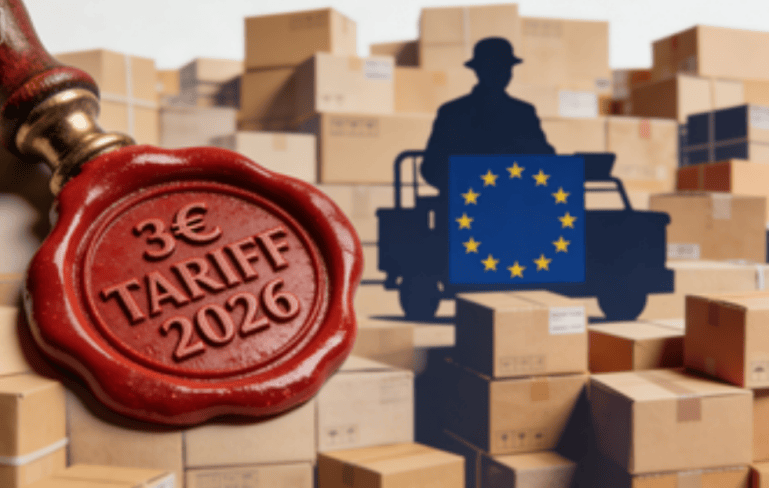
Core Viewpoint - The European Union has announced a fixed tariff of 3 euros on all imported packages valued below 150 euros, effective July 1, 2026, which is expected to significantly impact the e-commerce landscape, particularly affecting low-cost sellers from China [2][3]. Group 1: Policy Details - The new regulation introduces a flat fee of 3 euros instead of a traditional value-based tax, disproportionately affecting low-cost items [4]. - For example, a 5-euro phone case will see its cost increase by 150% due to the new tariff, while a 100-euro item will only see a minimal impact [5]. - The tariff is applied per customs classification, meaning that packages with multiple items may incur higher total tariffs if items fall under different categories [5][6]. Group 2: Market Impact - The new policy is expected to disrupt the business models of platforms like Shein and Temu, which rely on low prices and fast shipping [10][11]. - Small and medium-sized sellers, particularly those selling low-margin products, will face significant challenges as they may not be able to pass on the increased costs to consumers [11]. - The EU's decision is part of a broader trend of tightening regulations on low-value cross-border trade, with similar measures being adopted in the US, UK, and Thailand [13][14]. Group 3: Strategic Recommendations - Sellers are advised to shift from a "price war" strategy to a "value war," focusing on higher-value products to mitigate the impact of the new tariffs [15]. - Transitioning to a supply chain model that utilizes local warehouses in the EU can help sellers avoid the new tariffs and improve delivery times [16]. - Diversifying market presence beyond Europe to regions with less stringent tax policies can help sellers reduce risk and find new growth opportunities [16].
日本10%消费税落地!TikTok Shop美国站保证金暴涨至1500美元!
Sou Hu Cai Jing· 2025-12-10 13:09
Core Viewpoint - Japan's ruling Liberal Democratic Party has proposed a tax reform that will eliminate the consumption tax exemption for imported goods valued under 10,000 yen starting in 2026, requiring all goods entering Japan to pay a 10% consumption tax [1][3]. Group 1: Tax Policy Changes - The new tax policy will abolish the special regulation that taxed personal imports at 60% of the overseas price, shifting to full taxation based on actual transaction prices [3][4]. - Online platforms with annual sales exceeding 5 billion yen will be required to act as tax agents for consumption tax [3][4]. - The proposal includes key details such as the responsibility of large e-commerce platforms for tax collection and the 5 billion yen sales threshold [3][4]. Group 2: Impact on Cross-Border E-commerce - The new tax regime is expected to diminish the price advantage of low-cost goods, increasing operational costs for platforms by 30%-50% for those with sales over 10 billion yen [4][6]. - The number of low-value imports has surged, with approximately 170 million items valued under 10,000 yen expected in 2024, accounting for 90% of all import licenses [4][6]. - The policy aims to promote fair competition and enhance customs regulation, addressing complaints from domestic businesses about unfair competition from overseas sellers [6][10]. Group 3: Cost Implications - For a typical product priced at 8,000 yen, the new tax will add 800 yen in consumption tax, raising the total price to 8,800 yen, with potential additional customs fees of about 300 yen [9][10]. - The operational costs for sellers relying on low-price direct shipping models may be significantly impacted, potentially eroding profit margins [9][10]. Group 4: Global Context - Similar tax reforms are being implemented globally, with the U.S. and EU also moving to eliminate tax exemptions for low-value imports, indicating a broader trend of tightening regulations on cross-border e-commerce [11][12][14]. - Countries like the UK, France, and Vietnam are also reviewing or have enacted similar policies, marking the end of the "tax-free era" for cross-border e-commerce [14][16]. Group 5: Strategic Recommendations for Sellers - Sellers are advised to reassess their pricing strategies, operational models, and tax compliance management in light of the new regulations [16][20]. - Transitioning to an overseas warehouse model is recommended to mitigate the impact of the new tax regime and improve logistics efficiency [20][30]. - Understanding the new tax collection mechanisms and obtaining a Japanese Consumption Tax registration number (JCT) is crucial for compliance and operational success [20][30].

深圳跨境电商卖家沸腾了!“无票免征”试点落地,合规之路终于通了
Sou Hu Cai Jing· 2025-11-27 08:08
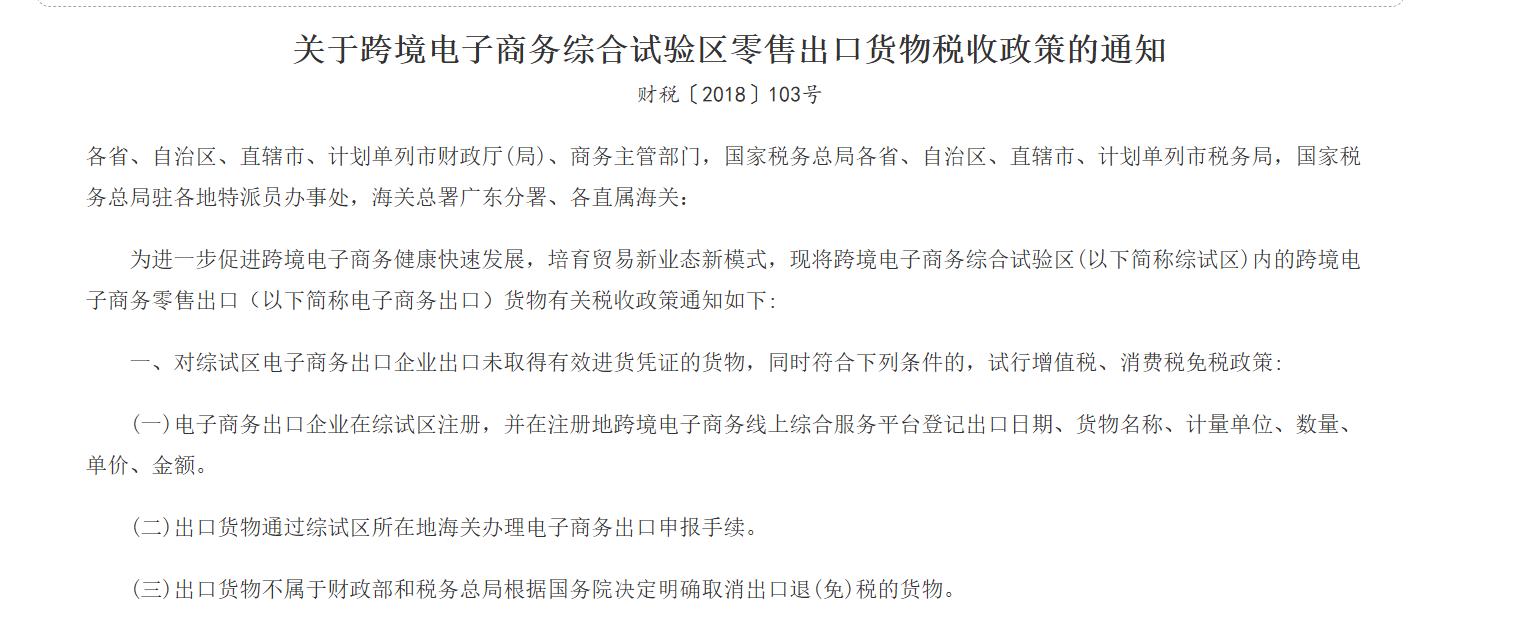
Core Insights - The article discusses the implementation of the "no-invoice exemption" policy for cross-border e-commerce exports in Shenzhen, which aims to alleviate tax compliance issues faced by sellers [1][2]. Group 1: Policy Overview - The "no-invoice exemption" policy allows cross-border e-commerce companies to enjoy VAT and consumption tax exemptions even without obtaining purchase invoices, provided they meet certain conditions [1][2]. - This policy is a practical breakthrough based on the national framework established by the Ministry of Finance and other authorities, specifically aimed at enhancing compliance for cross-border e-commerce [2]. Group 2: Benefits of the Policy - The policy helps sellers avoid tax risks by clarifying compliance pathways, allowing them to operate within a defined "safe zone" as long as they follow the established procedures [4]. - It addresses the issue of corporate income tax compliance by linking the "no-invoice exemption" to corporate income tax regulations, thus facilitating a comprehensive compliance framework for businesses [5]. - The successful implementation of the policy for the 9610 trade model opens the door for potential future applications to the 9810 model (B2B cross-border e-commerce), which could benefit a wider range of sellers [6]. Group 3: Implementation Steps - To benefit from the "no-invoice exemption," companies must complete four key steps: register with the tax authority, submit export declarations through the designated platform, accurately record export details, and ensure that the exported goods are not from restricted categories [8].
多家主流跨境平台发布涉税信息报送通知
21世纪经济报道· 2025-10-24 03:56
Core Viewpoint - The cross-border e-commerce industry in China is undergoing a significant compliance transformation, driven by new tax reporting regulations from major platforms like Amazon, AliExpress, and SHEIN, which will impact sellers' operations and the overall market landscape [1][3][4]. Group 1: Regulatory Changes - In October, Amazon announced it would report Chinese sellers' tax information quarterly to the Chinese tax authorities, with the first report due by October 31, covering transactions from July to September 2025 [1][4]. - The regulatory framework for tax information reporting was established by the State Council and the National Tax Administration, mandating all foreign platforms providing services to Chinese operators to fulfill reporting obligations [3][4]. - Major platforms, including Walmart, Shopee, and TikTok Shop, have begun reporting seller data, indicating a widespread compliance trend across the industry [4][5]. Group 2: Impact on Sellers - The compliance requirements will significantly affect cross-border e-commerce sellers, particularly small and medium-sized enterprises (SMEs), which often lack robust financial systems and have operated in tax gray areas [5][6]. - Increased compliance costs, including direct tax payments and indirect costs related to systems, personnel, and operational adjustments, will pressure sellers, especially those with low profit margins [5][6]. - Sellers are exploring various strategies to adapt, with some seeking advice from tax consulting firms while others remain uncertain about future regulatory developments [5][6]. Group 3: Industry Evolution - The shift towards tax transparency is expected to reshape the competitive landscape, potentially leading to a market consolidation where non-compliant sellers are eliminated, creating opportunities for compliant businesses [6][7]. - Platforms will face new responsibilities to manage and report seller data accurately, necessitating the development of robust internal data management systems [6][7]. - The industry is transitioning from a phase of rapid growth to one focused on quality and compliance, emphasizing the need for innovation, brand development, and customer service as key competitive factors [7][8].

平台启动涉税信息报送 跨境电商从“野蛮生长”迈向“全面合规”
2 1 Shi Ji Jing Ji Bao Dao· 2025-10-23 06:15
Core Insights - The cross-border e-commerce industry is undergoing a significant compliance transformation, moving away from its previous "wild growth" phase towards a more regulated environment [2][3][7]. Group 1: Regulatory Changes - Amazon has announced it will report Chinese sellers' identity and income information to tax authorities quarterly, with the first report due by October 31, covering transactions from July to September 2025 [1][5]. - Other major platforms like AliExpress and SHEIN have also initiated similar tax information reporting processes [1][6]. - The regulatory framework was established by the State Council's 2025 regulations, which extend reporting obligations to all foreign internet platforms serving Chinese operators [4][5]. Group 2: Industry Impact - The compliance requirements are expected to significantly impact cross-border e-commerce sellers, particularly smaller businesses that have historically operated in a gray area regarding tax compliance [3][7]. - The new regulations will likely lead to increased operational costs for sellers, including direct tax payments and indirect costs related to system upgrades and compliance measures [7][8]. - The industry is anticipated to experience a reshuffling, as non-compliant sellers may be pushed out, creating more market space for compliant businesses [8][9]. Group 3: Future Outlook - The cross-border e-commerce sector is expected to evolve into a resource-intensive, capital-intensive, and talent-intensive industry, indicating a shift towards high-quality development [9]. - Compliance will become a core competitive advantage, with businesses needing to focus on product innovation, brand building, supply chain management, and customer service to thrive in the new regulatory landscape [8][9].


美股异动|亚马逊股价重挫近5% 涉税合规挑战引市场关注
Xin Lang Cai Jing· 2025-10-10 23:13
Core Insights - Amazon's stock price dropped by 4.99% on October 10, reaching a new low since August 2025, attracting significant market attention [1] - Amazon's tax compliance efforts are under scrutiny, with its tax filing work covering 20 overseas sites, including key markets like Germany, the UK, and Japan, but notably excluding the US [1] - The choice of a Beijing law firm as Amazon's tax filing agent indicates its strategy in adapting to new tax regulations, reflecting a gradual adjustment to the evolving tax compliance landscape [1] Industry Developments - Amazon's low-price marketplace, Haul, has issued a notice requiring sellers to complete tax information, highlighting the need for sellers to be aware of policy differences across platforms [2] - The new tax regulations provide clear policy guidelines for tax oversight on platforms, pushing for greater compliance in the cross-border e-commerce sector [2] - Sellers operating without proper tax identification and reporting will face challenges due to the new compliance requirements, necessitating adjustments in tax management to avoid penalties [2] Investor Considerations - Despite facing uncertainties, Amazon's global market influence and adaptability to market changes remain significant [2] - Investors are advised to remain observant and monitor Amazon's progress in tax compliance and global expansion strategies [2]
合规驱动、平台赋能,行业各方共议“出海新质力”
Sou Hu Cai Jing· 2025-09-29 02:19
Core Viewpoint - The "New Quality Power Going Abroad" roundtable meeting focused on the dual transformation of cross-border e-commerce towards "compliance" and "intelligent supply chain" in the context of tightening global customs policies [1][5][15] Group 1: Key Changes in Cross-Border E-Commerce - The meeting highlighted three significant changes: the end of the U.S. De Minimis policy, the full implementation of the EU ICS2, and the strengthening of regulations in Southeast Asian social e-commerce [3] - The transition from "low threshold" to "high compliance" necessitates a restructuring of cost structures and delivery systems for enterprises [5] Group 2: Industry Insights and Trends - The founder of Fashion Planet shared insights on the trend of going abroad, emphasizing the importance of breaking down information barriers to empower more Chinese clothing brands [5] - SHEIN's "Unique Gravity" program aims to support OBM merchants in achieving scale growth through five key elements: mindset transformation, operational efficiency, supply assurance, brand planning, and long-term value [6] Group 3: Intellectual Property and Compliance - A special session on "Intellectual Property Protection in Cross-Border E-Commerce" discussed the increasing number of patent lawsuits and the need for companies to focus on intellectual property layout during their international expansion [10] Group 4: Regional Development and Strategic Value - The Panyu Industrial Economic Headquarters Park is positioned as a key player in the high-quality development of the fashion industry, providing quality space and supporting regional industrial transformation [12][14] - The park's operational manager emphasized the importance of resource integration and service empowerment in driving the healthy cycle of the industrial ecosystem [14]

深耕跨境电商 8 年,这些血泪经验帮你少走弯路
Sou Hu Cai Jing· 2025-08-13 07:03
Group 1 - The choice of platform is more important than the selection of products, as different platforms have varying rules and market dynamics [2] - New platforms like Yunshang City are gaining attention for their favorable entry processes and lower barriers for small sellers [2] - The supply chain is critical for cross-border business, with Yunshang City offering advantages like bonded warehouse resources and reduced logistics costs [3] Group 2 - Compliance is essential for survival in cross-border e-commerce, with Yunshang City providing tools for sellers to ensure they meet regulatory requirements [4] - New sellers are advised to focus on niche categories, maintain sufficient cash flow, and engage with seller communities for information sharing [5] - Yunshang City is suitable for beginners and experienced sellers looking to enter emerging markets, but may not be ideal for those aiming to build high-margin private label brands [6]