
跨江融合

Search documents
一座桥,不只连接两座城
Xin Hua Ri Bao· 2026-01-05 22:02
Core Viewpoint - The construction of the Changtai Yangtze River Bridge has significantly enhanced connectivity between Changzhou and Taizhou, facilitating cross-river integration and collaboration in various sectors, including transportation, tourism, and industry. Transportation Development - The opening of the Changtai Yangtze River Bridge has reduced travel time between Changzhou and Taizhou from 1 hour and 20 minutes to just 20 minutes, leading to increased interactions between the two cities [1] - The introduction of new bus routes and direct transportation services has further improved accessibility, with the Changtai 85 bus line averaging over 2,600 passengers daily in its first month [3] Economic Collaboration - The bridge has attracted businesses to relocate from Changzhou to Taizhou, with companies like Jiangsu Changchao New Materials establishing operations in the Taixing Hongqiao area due to reduced logistics costs and enhanced development opportunities [5] - Taizhou has signed multiple cooperation agreements with Changzhou to promote joint development projects, particularly in the health and manufacturing sectors, leveraging the strengths of both cities [6] Cultural and Tourism Integration - The bridge has fostered a cultural exchange, with increased tourism activities such as "cross-city breakfast" becoming popular among residents of both cities, leading to a 50% increase in foot traffic in Taizhou's old streets [2] - Strategic partnerships have been formed to develop joint tourism products and cultural resources, exemplified by the collaboration between the Changzhou Dinosaur Park Group and Taizhou [4] Industrial Development - The Changtai Bridge has enabled the establishment of industrial parks, such as the intelligent connected vehicle industrial park in Taixing, aimed at attracting automotive-related businesses from both cities [6] - Companies in Taizhou are benefiting from the proximity to Changzhou's industrial base, with supply chains becoming more integrated and efficient due to the bridge's opening [5] Innovation and Research Collaboration - Taizhou is actively engaging in collaborative research initiatives with institutions like Jiangnan University and the provincial research institute to enhance innovation in sectors such as biotechnology and food science [8] - The establishment of the "China Bio-Fermentation and Future Food Industry Research Institute" signifies a commitment to advancing research and development in key industries [8]
打造长江口产业创新绿色发展协同区重要支点,苏锡通园区“一马当先”“快马奔腾”
Xin Lang Cai Jing· 2026-01-01 15:03
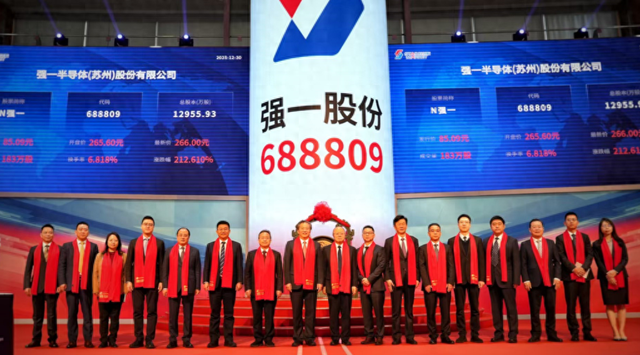
Core Viewpoint - Qiangyi Semiconductor (Suzhou) Co., Ltd. successfully listed on the STAR Market, becoming the 600th company on the board, highlighting its leading market position in MEMS probe card manufacturing and breaking the monopoly of foreign manufacturers [1][3]. Company Overview - Founded in 2015 in Suzhou, Qiangyi Semiconductor specializes in MEMS probe card technology and mass production [1]. - The company raised 2.756 billion yuan through the public offering of 32.3899 million shares, with funds directed towards the development and production of high-end probe cards in Nantong [3]. Strategic Development - Qiangyi Semiconductor's strategy involves a "cross-river integration tactic" with R&D in Suzhou and manufacturing in Nantong, reflecting a broader trend of regional collaboration [3][11]. - The establishment of Qiangyi Semiconductor (Nantong) Co., Ltd. represents a significant investment of 1 billion yuan, focusing on the production and sales of MEMS and thin-film probe cards [3]. Regional Collaboration - The Su-Xi-Tong Park, where Qiangyi is located, is a collaborative effort among Suzhou, Nantong, and Wuxi, designed to leverage regional strengths and promote innovation [11][13]. - The park has been recognized for its role in facilitating cross-river integration and is seen as a model for regional development, attracting companies due to its favorable location and resources [10][12]. Industry Position - Qiangyi Semiconductor ranks sixth globally in the semiconductor probe card industry and is the only domestic company in the top ten, indicating strong market confidence in its capabilities [7]. - The company’s products are essential for wafer testing in semiconductor manufacturing, ensuring quality control before chip packaging [7]. Future Goals - The Su-Xi-Tong Park aims to achieve high-speed, high-tech, and high-ranking development goals, with plans to double GDP and fiscal revenue, and significantly increase the output of high-tech manufacturing [23][24]. - The park is focused on attracting high-growth technology companies and enhancing its innovation ecosystem to support sustainable development [15][17].

南京又一长江大桥通车
Ren Min Ri Bao· 2025-11-26 22:10
Core Points - The Jiangsu Nanjing Xinshengwei Yangtze River Bridge has been completed and opened to traffic after over five years of construction, bringing the total number of Yangtze River bridges in Nanjing to eight [1] - The bridge spans approximately 13.17 kilometers with a main design speed of 80 km/h and features a six-lane dual carriageway, serving as a crucial link between Qixia District, Jiangbei New Area, and the Economic Development Zone [1] - The main bridge is a single-span suspension bridge with a main span of 1760 meters, making it the longest of its kind in China and the third longest in the world [1] - The opening of this bridge is expected to enhance the crossing capacity of the Yangtze River in Nanjing and improve the regional road network [1] - Jiangsu Province has built a total of 21 river-crossing channels, with four completed during the "14th Five-Year Plan" period, effectively connecting counties, cities, and districts across the river and promoting regional integration [1]
如皋聚力“以港强市” 聚焦“跨江向海”
Xin Hua Ri Bao· 2025-08-22 23:26
Core Viewpoint - Rugao City is advancing the "Port-Strong City" strategy to leverage its geographical advantages and accelerate development opportunities [1][3]. Group 1: Economic Development - Rugao is focusing on transforming its water transport advantages into economic strengths, with a systematic approach to enhance port economy, upgrade industries, and improve urban quality [3]. - The total investment of 1 billion yuan in the Senyong high-end process equipment manufacturing project highlights the city's commitment to industrial growth [2]. - Rugao's industrial sales exceeded 100 billion yuan in the first half of the year, with six major industrial chains accounting for 87% of the industrial output value [2]. Group 2: Port and Logistics - Rugao Port has become a logistics hub within a 100-kilometer radius, with 25 approved berths and container shipping routes reaching multiple global regions [4]. - The port's development has led to a 13.1% increase in foreign trade, with exports growing by 17.9% in the first half of the year [4]. - The integration of port services and trade is being optimized to enhance economic growth [4]. Group 3: Marine Economy - Rugao is creatively proposing a development model that combines river and sea resources, focusing on shipbuilding and marine engineering as key industries [6]. - The city is actively attracting high-end intelligent manufacturing and new material projects to foster marine industry growth [7]. - The establishment of the first commercial coral farming facility in China demonstrates Rugao's commitment to developing a robust marine economy [7].