
港产城融合

Search documents
铸就蓝色引擎,广东6个亿吨级大港撑起“一核两极”格局
Nan Fang Du Shi Bao· 2026-02-11 09:24
Core Insights - Guangdong's port construction is transforming from rapid development to quality enhancement during the 14th Five-Year Plan, aiming for a cargo throughput of 2.325 billion tons and a container throughput of 80.97 million TEUs by 2025, ranking third and first nationally respectively [1][2] - The province is investing nearly 100 billion yuan in water transport infrastructure, a 63% increase from the previous five-year plan, to support the development of a world-class port cluster [2] - The integration of port, industry, and city is driving economic growth, with significant increases in container throughput for major ports like Guangzhou and Shenzhen, which are expected to reach 28.05 million TEUs and 35.41 million TEUs respectively by 2025 [4][5] Infrastructure Development - Guangdong's port infrastructure has seen a leap in development, with the completion of automated terminals and deep-water channel projects, enhancing operational efficiency and capacity [2][3] - By 2025, the province will have 2,111 productive berths, with 429 being 10,000 tons or more, supporting the "one core, two poles" development pattern [3] Transportation Network - The province has established a multi-dimensional transportation network centered around ports, with 9 out of 14 coastal ports achieving rail access, and a significant increase in intermodal transport volumes [3] - The coastal highway network connects all ports and major port areas, facilitating logistics and trade [3] Economic Impact - The ports are crucial for economic development, with Guangzhou and Shenzhen ports enhancing their roles in international trade and logistics, contributing to local economic growth [4][5] - The integration of port operations with local industries is creating a closed-loop ecosystem that improves efficiency and competitiveness in exports [5] Smart and Green Port Initiatives - Guangdong is advancing smart and green port construction, with initiatives like the first mobile shore power supply system and extensive use of automation and AI technologies [6] - By 2025, the province aims to have 1,294 shore power facilities covering 94% of berths, significantly reducing fuel consumption and carbon emissions [6] Pollution Management - The province has implemented comprehensive measures for managing ship pollution, achieving full coverage of storage facilities and improving waste management processes [7] Innovative Logistics Models - The "combination port" and "parallel port" models are being developed to enhance operational efficiency and streamline customs processes, with significant increases in container volumes handled [8][9] - These models are expected to improve loading rates and reduce operational costs significantly [9]

融汇四海,能济天下,一家千亿国企的格局升维与时代答卷
Qi Lu Wan Bao· 2026-02-11 06:26
Core Viewpoint - The transformation of Shandong Ronghui represents a strategic upgrade from a coal-centric model to a diversified enterprise, aiming for a revenue of over 102 billion yuan by 2025 and positioning Jining Port as a leading inland port in Northern China [1][8] Group 1: Strategic Transformation - Shandong Ronghui's new identity reflects a comprehensive restructuring, moving beyond the limitations of its previous name "Jining Energy" to encompass a broader industrial scope including logistics, energy, high-end manufacturing, and modern services [1][8] - The company aims to become a leading integrated service provider for energy and bulk commodities, marking a significant shift in its operational strategy [1][9] Group 2: Port Development and Logistics - The rise of Liangshan Port as a key player in this transformation has been marked by significant investments, including the excavation of 17.5 kilometers of secondary waterways and the construction of a 9.18-kilometer dedicated railway line, enhancing coal logistics and trade [3][4] - Liangshan Port has expanded its operations to include 26 regular container shipping routes, connecting to over 50 ports nationwide and achieving a successful river-sea intermodal transport for the first time in the province [3][4] Group 3: Industrial Integration and Innovation - The establishment of a modern port cluster, including Longgong Port and Taiping Port, has facilitated a multi-industry approach, with Longgong Port achieving a 69% year-on-year increase in container throughput [4][5] - The "smart steel" manufacturing park has developed over 400 clients and is projected to generate an annual output value of 2.1 billion yuan by 2025, showcasing the effectiveness of shared processing and logistics [6] Group 4: Future Vision and Goals - Shandong Ronghui's strategic upgrade is aligned with national and provincial development goals, aiming for a revenue target of 200 billion yuan by 2030 and aspiring to enter the Fortune Global 500 [9][10] - The company’s approach serves as a model for other resource-based enterprises facing transformation challenges, providing a replicable framework for high-quality development [9][10]
解码日照港产城融合的“进退”之道
Qi Lu Wan Bao· 2026-02-05 04:45
Core Insights - The launch of the Ceres-1 rocket marks a significant milestone for China's commercial space sector and symbolizes the strategic transformation of Rizhao, a port city, from a "port-driven" economy to a more integrated urban development model [1][7] Group 1: Urban Development Strategy - Rizhao is addressing the "port city decline" dilemma by relocating coal operations southward, thereby freeing up coastal space and implementing the country's first "port retreat for sea restoration" project, which has transformed industrial shorelines into ecological spaces [3][4] - The city has successfully shifted its development logic by prioritizing ecological restoration over industrial expansion, enhancing urban quality and reconnecting citizens with coastal environments [3][6] Group 2: Industrial Transformation - Rizhao is leveraging technology to transition its port operations from traditional methods to a "smart port" model, significantly improving efficiency and positioning the port as a supply chain organizer rather than just a loading and unloading facility [4][5] - The establishment of five major industrial chains, including steel and grain, has attracted various industries to the port area, with the port's industrial output accounting for over 80% of the city's total industrial output, profits, and taxes as of November 2025 [4][5] Group 3: Green Economy and New Industries - The green transformation has led to the emergence of new industries such as commercial aerospace, marine ranching, and new energy materials, contributing to a comprehensive blue economy [5][6] Group 4: Community and Quality of Life - The development strategy emphasizes the importance of people, with improvements in the environment leading to better job opportunities and enhanced quality of life for residents, fostering a sense of community pride and identity [6][7]


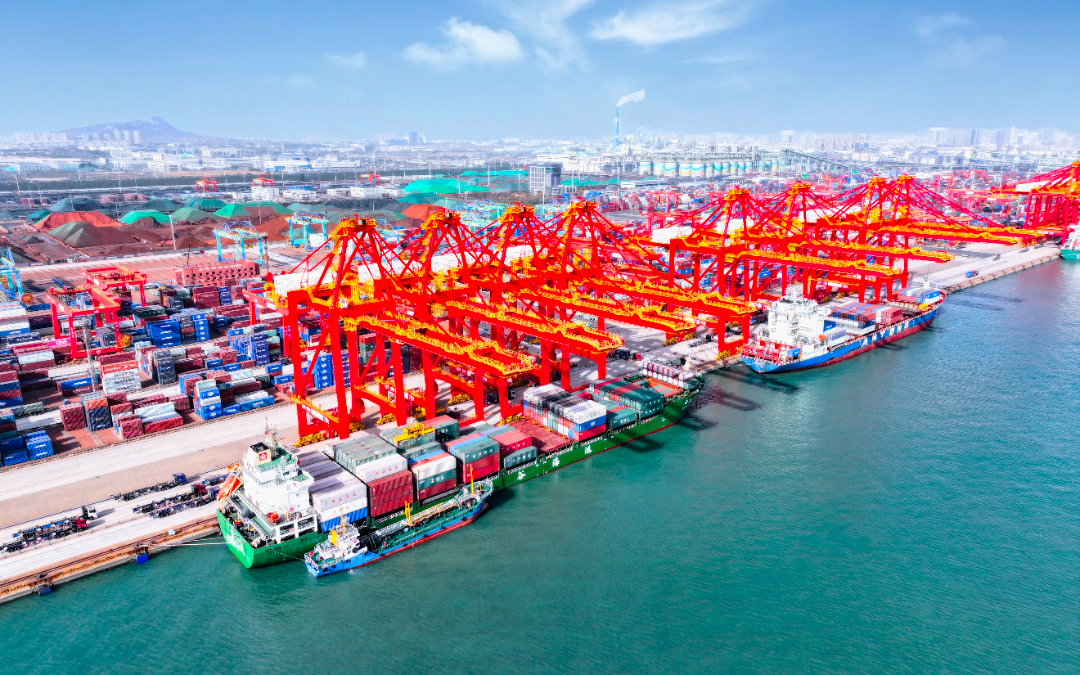
变“水路”为“出路”
Jing Ji Ri Bao· 2026-02-04 02:38
Core Insights - The article highlights the strategic repositioning of the Grand Canal by Jining, transforming it from a cultural relic into a vital economic artery that connects domestic and international markets [1][2] - Jining's port is redefined as a "flow entry" and "value highland," facilitating seamless integration between port services and manufacturing, thereby creating a vibrant port industry cluster [1] Group 1 - Jining has initiated high-standard dredging and rehabilitation projects to awaken the Grand Canal, turning it into a crucial transportation route [1] - The port's function has been strategically aligned with industrial development, promoting deep integration of logistics and industrial chains, which significantly reduces logistics costs for enterprises [1] - The "port-industry integration" model has led to the emergence of dynamic port industry clusters, enhancing economic activity in the region [1] Group 2 - The "Three-Year Action Plan for Accelerating High-Quality Development of Inland Waterway Transportation in Shandong Province (2023-2025)" emphasizes the need for integrated planning of ports, industries, and urban areas [2] - The deep integration of ports and industries will elevate the city's comprehensive carrying capacity, necessitating upgrades in infrastructure and public service systems [2] - Jining is transitioning from "port-industry integration" to "port-industry-city integration," breaking traditional spatial and functional separations to achieve a new integrated development pattern [2]
海南两会观察:一个小县“六个第一”迈向“十五五”
Zhong Guo Xin Wen Wang· 2026-01-31 12:33
Core Viewpoint - The development of the marine equipment (yacht) manufacturing industry in the Jinpai Port Development Zone of Hainan Free Trade Port is gaining momentum, with 15 projects established, contributing to the high-quality development of the marine economy in Lingao [1][2]. Economic Performance - Lingao County has maintained the highest total fishery output value in Hainan Province for 27 consecutive years [1]. - The industrial added value of Lingao County increased by 45.5%, ranking first in the province [1]. - Lingao exceeded the provincial investment attraction targets, signing projects with a total investment of 8 billion yuan, leading among similar counties [1]. - The coverage rate of social assistance in Lingao reached 3.4%, the highest in the province [1]. - PM2.5 levels in Lingao have met provincial targets, achieving the best historical performance and exceeding air quality assessment goals for four consecutive years [1]. Social and Economic Challenges - Lingao faces significant pressures and challenges in 2025, with efforts to raise 1.53 billion yuan to address historical issues [2]. - The county aims to resolve 20 issues identified by central and provincial inspections, including settling 1.1 billion yuan in historical debts owed to small and medium-sized enterprises [2]. - Lingao has addressed 45 historical issues related to the business environment, achieving a resolution rate of 78.9% [2]. Development Strategy - Lingao has established a "1243" development strategy framework, focusing on integrating port, industry, and city development [3]. - The strategy includes creating new high grounds for modern marine economy and cultural tourism, and fostering four new economic drivers: digital economy, green energy economy, modern services, and low-altitude economy [3]. - The county aims to enhance high-quality development through seven key areas, including deepening reform and opening up, expanding effective demand, and improving ecological civilization [3].
理响中国·深改进行时:革故鼎新释活力
Yang Shi Wang· 2026-01-29 07:07
Group 1 - The core viewpoint emphasizes that reform and innovation are fundamental drivers for high-quality development, with institutional innovation being key to overcoming development bottlenecks [1] - The "14th Five-Year Plan" highlights the necessity of comprehensive deepening of reforms to address systemic and mechanistic obstacles that hinder high-quality development [1] - Tianjin has implemented 686 institutional innovation measures since the establishment of its Free Trade Zone in 2015, consistently ranking among the top three in institutional innovation index nationwide [1] Group 2 - Institutional innovation extends beyond the Free Trade Zone, integrating deeply into the development of port-industry-city synergy [2] - Tianjin has launched the first "Port-Industry-City Integration Government Service Window" in the country, which has become a significant asset for attracting investment [2] - The customs clearance time for imported goods in Tianjin is 26.55 hours, significantly faster than the international average of 48 hours, enhancing trade efficiency [2]
瞭望|天津高质量发展“九字诀”
Xin Lang Cai Jing· 2026-01-24 13:25
Core Viewpoint - The article emphasizes the strategic importance of "Beijing-Tianjin-Hebei," "Port-Industry-City," and "Education-Science-Talent" as key components for Tianjin's high-quality development during the "14th Five-Year Plan" period, aiming to enhance collaboration and innovation across these sectors [1][2]. Group 1: Beijing-Tianjin-Hebei Collaboration - The Beijing-Tianjin-Hebei collaboration has opened new opportunities for Tianjin, enhancing its role in alleviating non-capital functions from Beijing and promoting technological innovation [3][4]. - The region has seen significant industrial integration, with Tianjin leading initiatives in high-end equipment and new information technology, contributing to the national industrial landscape [4][5]. - Infrastructure improvements, such as the completion of intercity rail lines, have facilitated better connectivity and economic integration within the region [6]. Group 2: Port-Industry-City Integration - Tianjin's port has become a critical asset, with container throughput increasing from 21.02 million TEUs in 2022 to 23.29 million TEUs by 2024, reflecting its growing role as a comprehensive economic hub [8]. - The port's operational efficiency has improved significantly, reducing vessel turnaround times and enhancing service capabilities, which supports industrial growth [7][8]. - The integration of port services with high-end industries has led to the establishment of multiple industrial clusters, attracting significant investments and fostering economic development [9][10]. Group 3: Education, Science, and Talent Development - Tianjin is enhancing its innovation ecosystem by leveraging its educational resources, with 29 national key laboratories and 56 universities contributing to a robust talent pool [11][12]. - The city has implemented policies to promote industry-education integration, resulting in a high alignment of vocational education with local industry needs, achieving over 90% alignment in program offerings [12][13]. - Initiatives to attract and retain talent, such as the "Haihe Talent" program, have successfully brought in over 520,800 individuals, with a focus on young and highly educated professionals [14][15].
加快建设28个重大项目 增加津兴城际进京车次
Xin Lang Cai Jing· 2026-01-23 20:58
Core Viewpoint - The city aims to enhance its transportation system by focusing on development, public welfare, and safety, targeting a qualitative improvement and reasonable quantitative growth in transportation services [1]. Group 1: Infrastructure Development - The city plans to accelerate the construction of 28 major projects, including the Tianjin-Weifang High-speed Railway and the expansion of the Tianjin Port's 10,000-ton channel, to promote steady growth in road and waterway transportation [1]. - The integration of transportation in the Beijing-Tianjin-Hebei region will be emphasized, with initiatives to enhance commuting convenience and adjust transportation capacity based on demand [1]. Group 2: Port and Industry Integration - The strategy includes promoting the integration of ports, logistics, trade, and industry to establish a significant strategic support point for domestic and international dual circulation in northern China [1]. - The focus will be on enhancing port capabilities, implementing a "Port+" strategy, and fostering the development of industries near the port [1]. Group 3: Service Quality Improvement - The city will work on completing the construction of the Metro Line 8 and the Z4 Line's first phase to optimize public transportation supply and enhance service quality [2]. - Efforts will be made to reduce costs and improve efficiency in transportation logistics while deepening the integration of transportation and tourism [2].
长沙口岸经济高质量发展座谈会举行
Chang Sha Wan Bao· 2026-01-22 02:38
Core Insights - The meeting on the high-quality development of Changsha's port economy highlighted the city's achievements in logistics and international trade despite complex global circumstances [1] Group 1: Achievements in Logistics - Changsha has been approved as an air-port type national logistics hub and a national-level China-Europe freight train gathering center [1] - The China-Europe freight trains from Changsha have dispatched 1,037 trains in 2025, maintaining a stable scale of over 1,000 trains for five consecutive years and ranking among the top in the country for seven years [1] - Changsha Huanghua International Airport has resumed five international passenger routes, totaling 14 international routes, with an international (regional) passenger throughput of 1.043 million people, leading the central six provinces in terms of inbound foreigner numbers and proportions [1] Group 2: Innovations and Efficiency Improvements - The cross-border e-commerce public service platform has upgraded its collection and settlement functions, improving data processing efficiency by 50% [1] - The launch of the "zone-port linkage" system has enhanced overall port efficiency by 45% [1] Group 3: Future Development Goals - The city aims to focus on "connectivity" in 2026, addressing bottlenecks in intermodal transport, logistics, and the integration of port, industry, and urban development [1] - Emphasis will be placed on "collaboration" to strengthen policy coordination, information linkage, cross-regional cooperation, and platform communication [1] - A "closed-loop" service and element guarantee system will be established to improve customs clearance efficiency and enhance port functions [1]
如何打造新时代“海上新烟台”?
Qi Lu Wan Bao· 2026-01-21 07:21
Core Viewpoint - Yantai aims to leverage its marine resources and develop a modern marine economy during the "14th Five-Year Plan" period, focusing on blue development and ecological protection [1][9]. Group 1: Bay Planning - The government report emphasizes the need for comprehensive bay planning, aiming to create beautiful bays and achieve two national-level beautiful bays by 2026 [2][3]. - Yantai's marine economy is transitioning from "point development" to "overall planning," necessitating a shift from a large marine economy city to a modern marine strong city [2][3]. - A proposal for a special leadership group to initiate a comprehensive planning and high-quality development action for Yantai's main bays has been suggested, promoting a "one bay, one policy" approach for differentiated development [3]. Group 2: Port-Industry-City Integration - The government report highlights the construction of a world-class marine port and the deepening of port-industry-city integration, targeting a cargo throughput of over 550 million tons by 2026 [5]. - The integration of port and local industries is crucial, with plans to develop regional industry clusters such as stone, new energy, and high-end chemicals to enhance port competitiveness [5][6]. - The marine equipment industry is identified as a core support for Yantai's marine economy, with initiatives to strengthen marine equipment and marine renewable energy industry chains [6][7]. Group 3: Ecological Protection - The government report calls for the establishment of a model for island protection and development, including the construction of a zero-carbon island [7][8]. - The promotion of ecological aquaculture is essential for the "blue granary" initiative, with suggestions for a multi-species ecological farming model to enhance water quality and seafood quality [8]. - Plans to build deep-sea aquaculture facilities and a resource bank for marine species are set to strengthen Yantai's "blue granary" foundation, promoting a transition to technology-driven and ecologically sustainable fishing practices [8].
