
医疗器材

Search documents
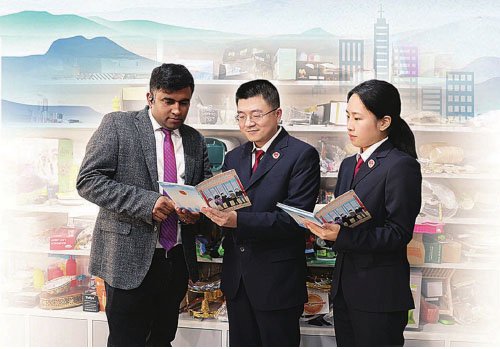
破维权痛点 筑创新高地
Xin Lang Cai Jing· 2026-02-25 23:03
Core Viewpoint - Zhejiang Province's judicial system has made significant strides in enhancing intellectual property (IP) protection, thereby fostering a better business environment and supporting innovation [7][8][12]. Group 1: Intellectual Property Protection Initiatives - In June 2025, the Yiwu City Prosecutor's Office provided legal education on IP protection to foreign businesses [3]. - The Hangzhou Binjiang District Prosecutor's Office developed pre-litigation compensation schemes to address challenges in recovering losses from IP infringements [5]. - The Wu Xing District Prosecutor's Office in Huzhou held discussions with affected enterprises, highlighting the effective role of prosecutors in helping businesses recover from losses due to IP violations [7]. Group 2: Achievements in IP Enforcement - Zhejiang's prosecutors have implemented a comprehensive approach to IP protection, resulting in notable successes in safeguarding innovation and compensating losses [7][8]. - The province's experience in enhancing the criminal compensation mechanism for IP cases was recognized as a national model, being the only one from the national prosecutor system to receive this honor [7]. - From February 2024 to May 2025, over ten individuals were prosecuted for crimes related to trademark infringement, with sentences ranging from one year and three months to four years and six months [10]. Group 3: Case Studies and Legal Actions - A case involving a high-tech company revealed that the use of counterfeit components led to significant operational issues, prompting prosecutors to guide law enforcement in a comprehensive investigation [9]. - In a separate case, a competitor was found guilty of stealing trade secrets, leading to a thorough investigation and subsequent prosecution [11]. - The prosecutors have successfully facilitated compensation for 754 companies, amounting to over 360 million yuan since 2024, through pre-litigation compensation mechanisms [15]. Group 4: Focus on Foreign IP Cases - Zhejiang has seen a rise in foreign IP protection needs, prompting the judicial system to enhance its capabilities in handling such cases effectively [16]. - A case involving counterfeit medical devices highlighted the importance of swift legal action to protect consumer health and corporate interests [16]. - The prosecution of individuals involved in the sale of counterfeit products demonstrated the effectiveness of a coordinated approach in dismantling criminal networks [18]. Group 5: Future Directions - The Zhejiang Provincial Prosecutor's Office aims to continue improving the quality and efficiency of IP protection, contributing to the establishment of a robust IP environment in the province [19]. - The focus will remain on enhancing legal supervision and fostering an ecosystem conducive to innovation and business growth [19].

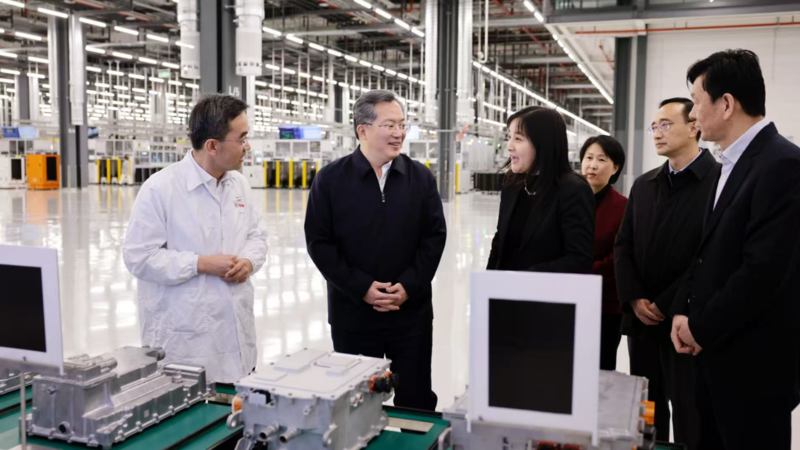
范波调研苏州市外资企业发展工作
Su Zhou Ri Bao· 2026-01-06 00:21
Group 1 - The core message emphasizes the importance of foreign investment in China's modernization and economic integration, highlighting the need for a conducive business environment in Suzhou [5] - The city aims to enhance its competitive edge by promoting innovation and attracting high-end projects, particularly in sectors like biotechnology and advanced manufacturing [4][5] - The local government encourages foreign enterprises to reinvest profits and establish R&D centers, aiming to create a market-oriented and law-based business environment [5] Group 2 - The visit to Bosch's new energy vehicle components and autonomous driving R&D base showcases the city's commitment to supporting advanced technology and manufacturing [4] - At Samsung Electronics, the focus is on enhancing manufacturing capabilities to boost global market competitiveness [4] - The engagement with Johnson & Johnson and Eli Lilly highlights the city's push for innovation in the biopharmaceutical sector, encouraging these companies to expand their investments in Suzhou [4]
一座桥,不只连接两座城
Xin Hua Ri Bao· 2026-01-05 22:02
Core Viewpoint - The construction of the Changtai Yangtze River Bridge has significantly enhanced connectivity between Changzhou and Taizhou, facilitating cross-river integration and collaboration in various sectors, including transportation, tourism, and industry. Transportation Development - The opening of the Changtai Yangtze River Bridge has reduced travel time between Changzhou and Taizhou from 1 hour and 20 minutes to just 20 minutes, leading to increased interactions between the two cities [1] - The introduction of new bus routes and direct transportation services has further improved accessibility, with the Changtai 85 bus line averaging over 2,600 passengers daily in its first month [3] Economic Collaboration - The bridge has attracted businesses to relocate from Changzhou to Taizhou, with companies like Jiangsu Changchao New Materials establishing operations in the Taixing Hongqiao area due to reduced logistics costs and enhanced development opportunities [5] - Taizhou has signed multiple cooperation agreements with Changzhou to promote joint development projects, particularly in the health and manufacturing sectors, leveraging the strengths of both cities [6] Cultural and Tourism Integration - The bridge has fostered a cultural exchange, with increased tourism activities such as "cross-city breakfast" becoming popular among residents of both cities, leading to a 50% increase in foot traffic in Taizhou's old streets [2] - Strategic partnerships have been formed to develop joint tourism products and cultural resources, exemplified by the collaboration between the Changzhou Dinosaur Park Group and Taizhou [4] Industrial Development - The Changtai Bridge has enabled the establishment of industrial parks, such as the intelligent connected vehicle industrial park in Taixing, aimed at attracting automotive-related businesses from both cities [6] - Companies in Taizhou are benefiting from the proximity to Changzhou's industrial base, with supply chains becoming more integrated and efficient due to the bridge's opening [5] Innovation and Research Collaboration - Taizhou is actively engaging in collaborative research initiatives with institutions like Jiangnan University and the provincial research institute to enhance innovation in sectors such as biotechnology and food science [8] - The establishment of the "China Bio-Fermentation and Future Food Industry Research Institute" signifies a commitment to advancing research and development in key industries [8]
我国持续扩大高水平对外开放
Xin Lang Cai Jing· 2026-01-03 22:20
Group 1 - The 2026 Tariff Adjustment Plan aims to scientifically adjust import provisional tax rates, optimize tariff categories, and continue implementing agreement and preferential tax rates, which will help lead the development of new productive forces and meet the growing needs of the people [1] - The plan includes three main aspects: adjusting import provisional tax rates, optimizing tariff categories, and continuing to implement agreement and preferential tax rates [1] - In the adjustment of import provisional tax rates, 935 items will have provisional tax rates lower than the most-favored-nation rate, enhancing the linkage between domestic and international markets [1] Group 2 - The adjustment in the petrochemical sector includes items such as bio-aviation kerosene and lithium-ion battery recycled black powder, reflecting the national policy to support the green and low-carbon transition of fossil energy [2] - The reduction of import tariffs on medical products like artificial blood vessels and diagnostic kits for infectious diseases aims to improve public health and enhance the well-being of the population [2] - The adjustment of tariffs on certain medical devices is expected to increase the supply of quality products and reduce the medical burden on consumers [2] Group 3 - The optimization of tariff categories will include new entries such as intelligent bionic robots and bio-aviation kerosene, with the total number of tariff categories reaching 8,972 [3] - The plan continues to implement agreement tax rates for certain imported goods from 34 trade partners, promoting regional integration and economic cooperation [3] - China aims to provide 100% zero-tariff treatment for products from 43 least developed countries, showcasing its commitment to global development amidst rising trade protectionism [3]
港科大报告:贸易壁垒未促“脱钩”,反而推动中国企业加速全球化
Jing Ji Guan Cha Wang· 2025-12-10 03:37
Core Insights - The report indicates that measures taken by various countries to reduce dependency on Chinese supply chains have not led to the anticipated "decoupling," but rather have prompted Chinese companies to initiate a new round of deeper global expansion [1][2]. Group 1: Industry Transformation - The report analyzes four key industries: electric vehicles, solar energy, apparel, and medical equipment, highlighting how geopolitical tensions, AI technology applications, and mandatory ESG regulations are fundamentally altering global manufacturing and procurement patterns [2]. - Chinese companies are transitioning from being the "world's factory" to "global production organizers," actively establishing manufacturing bases, R&D centers, and logistics hubs in regions such as Southeast Asia, South Asia, the Middle East, North Africa, Europe, and the Americas [3]. Group 2: Sector-Specific Developments - In the electric vehicle sector, Chinese manufacturers are investing in factories in Europe and ASEAN while securing upstream mineral resources through projects in Indonesia and Africa [3]. - In the solar industry, leading companies are relocating the entire vertical supply chain from polysilicon to components to Southeast Asia and North Africa to mitigate trade risks [3]. - In apparel and medical equipment, Chinese firms are building overseas industrial parks, creating proprietary brands, and establishing R&D laboratories to ascend the value chain and compete directly with international giants [3]. Group 3: Technological Innovations - The report emphasizes that the reshaping of supply chains is driven not only by AI and automation but also by rapid iterations of materials and core components [4]. - Innovations in battery chemistry and rare-earth-free motor designs in the electric vehicle sector aim to reduce reliance on countries that monopolize key minerals, while new battery technologies and efficient manufacturing processes in solar energy could reshape critical nodes in the value chain [4]. Group 4: ESG Regulations Impact - ESG requirements have shifted from optional to mandatory, influencing market entry and profitability, with the EU leading this trend through regulations like the Digital Product Passport and Carbon Border Adjustment Mechanism [5]. - The traditional cost-driven site selection logic is becoming obsolete, as companies must now prioritize regions that can provide verifiable low carbon footprints and robust ESG infrastructure [5]. - The report suggests that compliance with ESG standards is increasingly becoming a "passport" for entering high-end markets, fundamentally altering global industry regional layouts [5]. Group 5: Nearshoring Trends - Nearshoring has shown significant progress in certain sectors, such as medical device manufacturing in Central America and the automotive industry in Mexico, driven by geographical proximity, mature infrastructure, and favorable trade agreements [6]. - However, structural limitations exist, particularly in the apparel sector, where replicating Asia's decades-long accumulated textile ecosystem and supply network is challenging [6]. - The report highlights that successful nearshoring requires solid industrial infrastructure, a stable policy environment, and high logistical efficiency, while uncertainties in tariff policies have led many investors to adopt a wait-and-see approach [6].
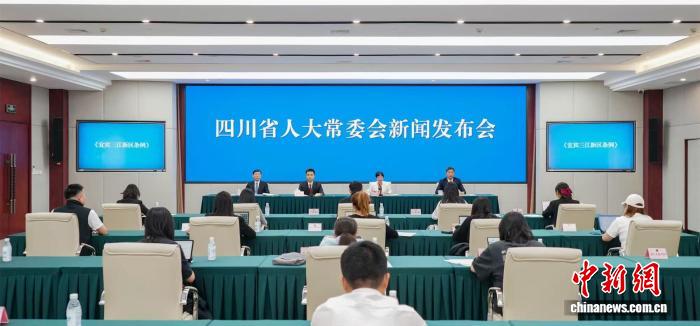
四川推进宜宾三江新区建设 打造南向开放合作窗口
Zhong Guo Xin Wen Wang· 2025-10-16 13:52
Core Viewpoint - Sichuan Province is advancing the construction of Yibin Sanjiang New Area, aiming to establish a southern opening and cooperation window, with the newly formulated "Yibin Sanjiang New Area Regulations" set to take effect on December 1 this year [1][4]. Group 1: Economic Development - Yibin Sanjiang New Area, established in February 2020, has shown strong development momentum, with regional GDP projected to rise from 22.15 billion yuan in 2020 to 60 billion yuan by 2024 [1][3]. - In the first half of this year, the regional GDP reached 27.3 billion yuan, growing by 8.2%, while the industrial output value of above-scale enterprises was 79.53 billion yuan, increasing by 9.6% [1][3]. Group 2: Regulatory Framework - The new regulations are designed to adapt to the needs of the New Area's development and to solidify the achievements of recent reforms [3]. - The regulations define the New Area's functions, including becoming a demonstration zone for green and low-carbon development, an innovative modern industrial cluster, and a pioneer in southward opening and cooperation [3][4]. Group 3: Industrial Focus - The regulations emphasize high-end industries, integration into global industrial chains, and the development of strategic emerging industries, including power batteries, new energy vehicles, electronic information, high-end equipment manufacturing, and medical devices [3][4]. - The New Area aims to enhance its open economy level, attract foreign investment, and support enterprises in expanding internationally [4].
88岁老人去世,强生被判70亿元天价赔偿
Guan Cha Zhe Wang· 2025-10-08 11:43
Core Points - A jury in Los Angeles found Johnson & Johnson liable in a lawsuit regarding its baby powder causing cancer, ordering the company to pay $966 million (approximately 6.878 billion RMB) to the family of a woman who died from mesothelioma [1][2] - The lawsuit was initiated by the family of Mae Moore, who passed away in 2021, claiming that the company's talc baby powder contained asbestos, a known carcinogen [1][2] - Johnson & Johnson plans to appeal the verdict, arguing that the evidence presented was based on "junk science" and that the ruling is "absurd and unconstitutional" [2][3] Legal and Financial Implications - The court ordered Johnson & Johnson to pay $16 million in compensatory damages and $950 million in punitive damages, although the punitive damages may be reduced on appeal due to Supreme Court guidelines [2] - The company is currently facing lawsuits from over 67,000 plaintiffs, primarily related to ovarian cancer claims, with a smaller number alleging mesothelioma [3] - To manage the extensive litigation, Johnson & Johnson is employing the "Texas two-step bankruptcy" strategy, which involves transferring its talc liabilities to a subsidiary and then seeking bankruptcy protection for that entity [3] Product and Market Context - Johnson & Johnson ceased the sale of talc-based baby powder in the U.S. in 2020, switching to a cornstarch-based formula due to safety concerns stemming from misinformation affecting consumer perceptions [2][5] - The company has been selling talc baby powder globally for over a century, but has faced ongoing lawsuits regarding its safety, particularly concerning the potential presence of asbestos in talc [2][3]


中进医疗上涨6.79%,报0.61美元/股,总市值9547.81万美元
Jin Rong Jie· 2025-08-22 13:52
Group 1 - The stock of Zhongjin Medical (ZJYL) opened up by 6.79% on August 22, reaching $0.61 per share, with a total market capitalization of $95.4781 million [1] - As of September 30, 2024, Zhongjin Medical reported total revenue of $23.502 million, representing a year-on-year growth of 18.57%, and a net profit attributable to the parent company of $3.6759 million, reflecting a year-on-year increase of 27.71% [1] - Zhongjin Medical Equipment International Co., Ltd. is a Cayman Islands-registered holding company that primarily operates through its domestic subsidiary, Changzhou Zhongjin Medical Equipment Co., Ltd., which has been recognized as a national high-tech enterprise since 2012 [1] Group 2 - The company specializes in the research and manufacturing of high-end rehabilitation equipment, having developed into a top-tier global manufacturer over more than a decade [1] - Its product range includes walking aids, respiratory medical devices, smart nano bathing equipment, and fitness equipment specifically designed for the elderly and special populations, as well as disaster relief products [1]

中进医疗上涨3.57%,报0.592美元/股,总市值9259.76万美元
Jin Rong Jie· 2025-08-22 13:52
Group 1 - The stock price of Zhongjin Medical (ZJYL) increased by 3.57% on August 22, reaching $0.592 per share, with a trading volume of $23,100 and a total market capitalization of $92.5976 million [1] - As of September 30, 2024, Zhongjin Medical reported total revenue of $23.502 million, representing a year-on-year growth of 18.57%, and a net profit attributable to the parent company of $3.6759 million, reflecting a year-on-year increase of 27.71% [1] - Zhongjin Medical Equipment International Co., Ltd. is a Cayman Islands-registered holding company that primarily operates through its domestic subsidiary, Changzhou Zhongjin Medical Equipment Co., Ltd., which has been recognized as a high-tech enterprise since 2012 [1] Group 2 - The company specializes in the research and manufacturing of high-end rehabilitation equipment, having developed into a top-tier global manufacturer over more than a decade [1] - Its product range includes walking aids, respiratory medical devices, smart nano bathing equipment, and fitness equipment for the elderly and special populations, as well as disaster relief products [1]
中进医疗上涨5.62%,报0.672美元/股,总市值1.05亿美元
Jin Rong Jie· 2025-08-13 14:32
Group 1 - The stock price of Zhongjin Medical (ZJYL) increased by 5.62% on August 13, reaching $0.672 per share, with a total market capitalization of $10.5 million [1] - As of September 30, 2024, Zhongjin Medical reported total revenue of $23.502 million, representing a year-on-year growth of 18.57%, and a net profit attributable to the parent company of $3.6759 million, reflecting a year-on-year increase of 27.71% [1] - Zhongjin Medical Equipment International Co., Ltd. is a Cayman Islands-registered holding company primarily operating through its domestic subsidiary, Changzhou Zhongjin Medical Equipment Co., Ltd., which has been recognized as a national high-tech enterprise since 2012 [1] Group 2 - The company specializes in the research and manufacturing of high-end rehabilitation equipment, having developed into a top-tier global manufacturer over more than a decade [1] - Its product range includes walking aids, respiratory medical devices, smart nano bathing equipment, and fitness equipment for the elderly and special populations, as well as disaster relief products [1]