跨省域协同发展

Search documents
全国首个跨省域的国家级高新区要来了?
3 6 Ke· 2026-01-29 02:50
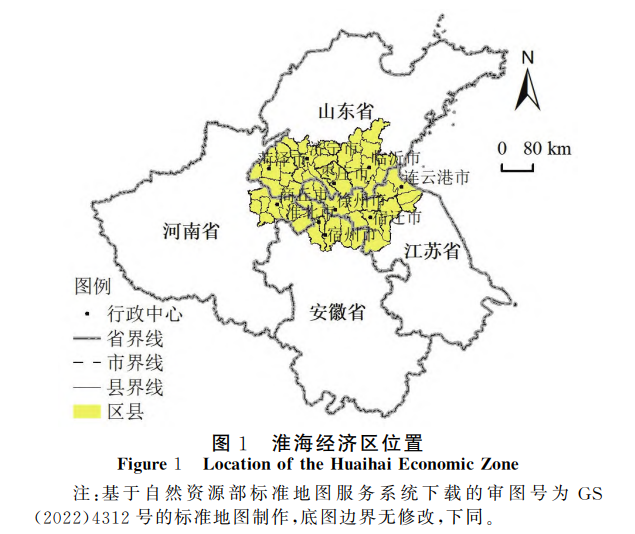
Core Viewpoint - The establishment and official naming of the "Yangtze River Delta Qingwu Jia High-tech Industrial Development Zone" marks a significant step towards the integration of the Yangtze River Delta region, aiming to become the first cross-provincial national high-tech zone in China [1][9]. Group 1: Background and Significance - The cross-provincial high-tech zone was established as part of the Yangtze River Delta Ecological Green Integrated Development Demonstration Zone, representing a move towards institutionalizing and standardizing innovative models [2]. - The strategic positioning of the Qingwu Jia High-tech Zone emphasizes "reduction development," requiring a decrease of 15.7 square kilometers in construction land, which encourages innovation within limited space [2][6]. - The area covers 19.54 square kilometers, spanning Shanghai's Qingpu, Jiangsu's Wujiang, and Zhejiang's Jiashan, facilitating natural conditions for cross-provincial cooperation due to geographical proximity and complementary industries [2][5]. Group 2: Strategic Layout and Management - The high-tech zone aims to create a strategic spatial layout characterized by "one core leading, two corridors driving, three areas collaborating, and multiple points supporting," focusing on innovation and economic density [3]. - A three-tier management structure has been established to ensure unified planning and coordination while respecting the unique circumstances of each area, providing organizational support for cross-provincial collaboration [6]. Group 3: Industry Focus and Investment Mechanisms - The industrial layout focuses on a "3+2" leading industry system, including digital industries, intelligent manufacturing, and green new materials, along with headquarters economy and green innovation services [7]. - An investment fund of 500 million yuan has been established to support the development of the cross-provincial high-tech zone, facilitating capital flow across regions [7]. Group 4: Policy and Future Prospects - The demonstration zone's executive committee has introduced 12 specific measures to promote high-quality development, focusing on reform integration, technological innovation, and resource sharing [7]. - The Qingwu Jia High-tech Zone aims to achieve national high-tech zone status by 2025, with a clear goal of meeting high standards for evaluation indicators [9][10]. - The successful establishment of this zone could serve as a model for regional cooperation and development, potentially influencing broader national strategies for balanced regional growth [11].

“洼地”组团,能否撑起长三角新一极?
Mei Ri Jing Ji Xin Wen· 2026-01-26 15:58
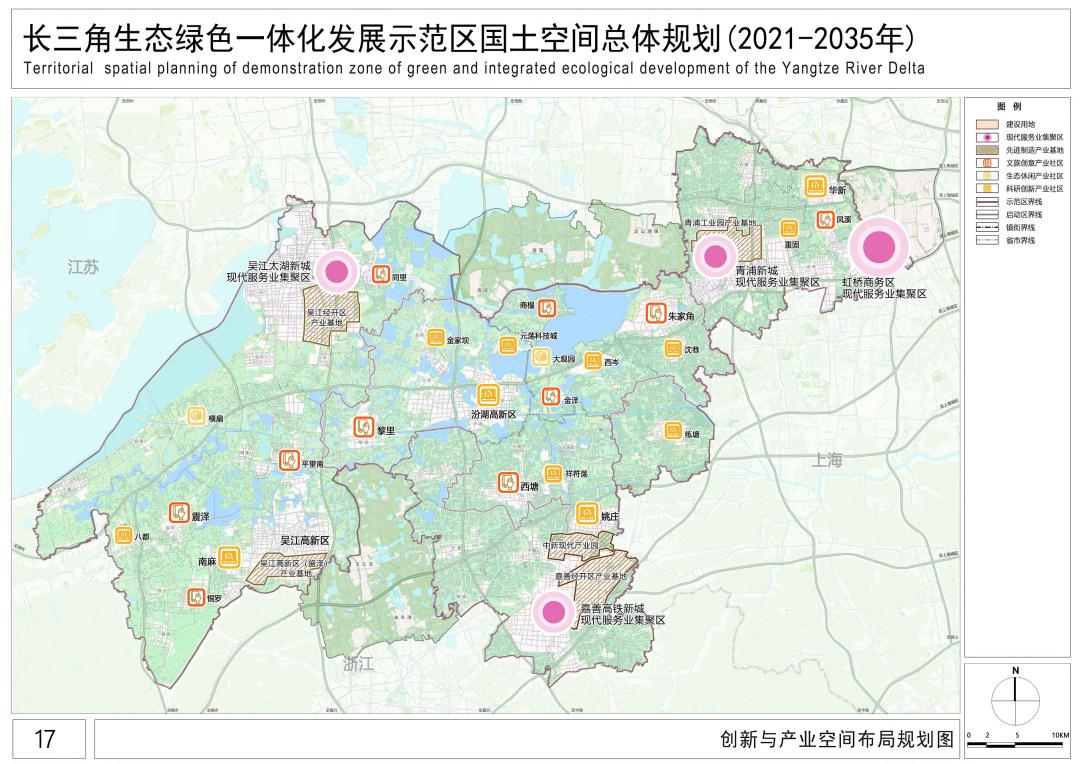
Core Viewpoint - The Long Triangle Ecological and Green Integration Development Demonstration Zone has made significant progress with the recent approval of the cross-provincial high-tech industrial development zone, aiming to become a national-level high-tech zone, which reflects a new attempt to break through its economic challenges and contribute to cross-provincial collaborative development in China [2][3][11]. Group 1: Development and Structure - The newly named Long Triangle Qingwu Jia High-tech Industrial Development Zone covers an area of 49.16 square kilometers and consists of three parks in Shanghai, Jiangsu, and Zhejiang, which have all received provincial-level approvals [2]. - The demonstration zone was established in 2019 and has been recognized as a key area for the integration of the Yangtze River Delta, despite being historically viewed as an economic "lowland" [3][4]. - The zone's focus on "ecological green" development distinguishes it from traditional industrial parks, emphasizing sustainable growth rather than large-scale urban construction [4][8]. Group 2: Economic Performance - From 2019 to 2024, the demonstration zone's per capita GDP is projected to grow at an annual rate of 6.9%, reaching 154,512 yuan, while the industrial output value is expected to grow at 8.2% annually, reaching 934.39 billion yuan [17]. - The industrial investment is anticipated to grow at an annual rate of 7.2%, reaching 49.27 billion yuan, surpassing the average levels of the Yangtze River Delta [17]. Group 3: Strategic Goals and Challenges - The demonstration zone aims to achieve national-level high-tech status by 2025, with a focus on enhancing approval powers and reducing project costs to improve development efficiency [11][13]. - The strategic layout includes a focus on integrated circuit industries and new technologies such as AI, 5G, and big data, which align with the region's growing electronic information and intelligent computing industries [14]. - Challenges remain, including the need for a top-level coordination mechanism to achieve collaborative technological innovation and equitable benefit-sharing among stakeholders [22][23].
史无前例!中国第一个“跨省建城”,来了
Qian Zhan Wang· 2025-06-17 00:45
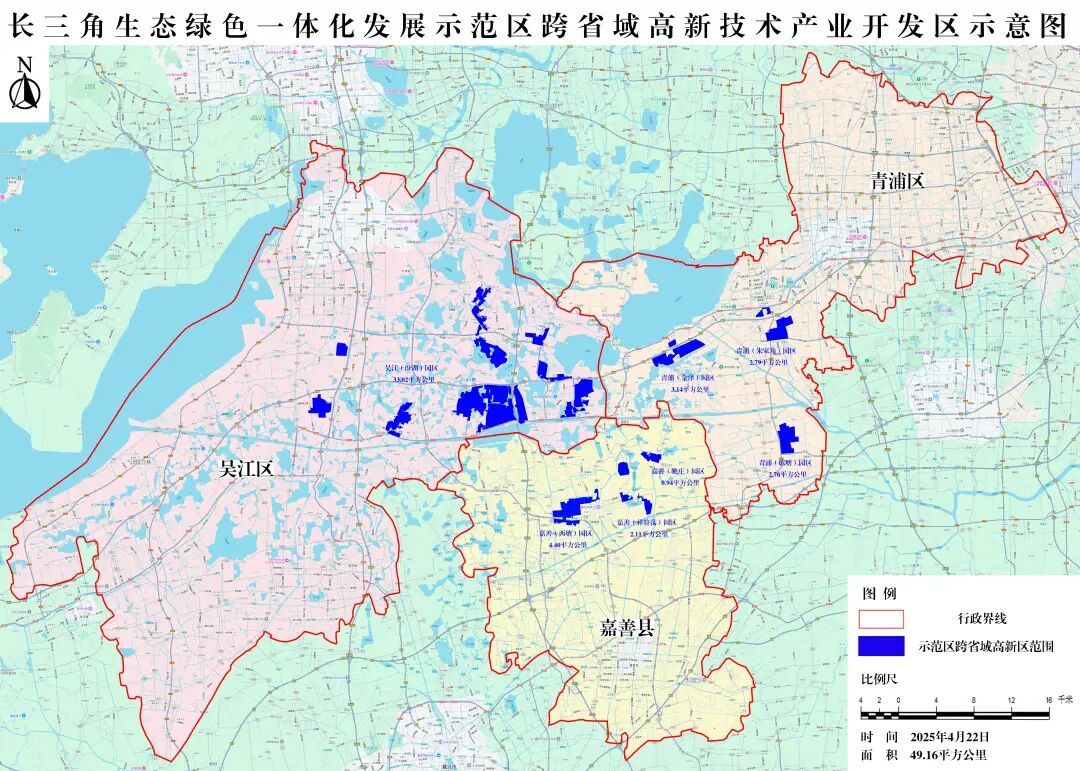
Core Viewpoint - The establishment of the "Yejian-Gushi 'One River, Two Banks' Ecological Priority Green Development Industrial Cooperation Zone" marks a significant step towards cross-provincial urban development in China, aiming to create a collaborative industrial zone between the Central Plains and the Yangtze River Delta [1][10]. Summary by Sections Economic Context - China's economy is transitioning from factor-driven to innovation-driven growth, necessitating industrial upgrades amidst global competition and geopolitical risks [1]. - The construction of a unified market and the facilitation of internal circulation are critical for China's economic future, requiring the breaking down of regional barriers to achieve efficient resource allocation [1][2]. Historical Background - Previous attempts at cross-provincial cooperation, such as the Huaihai Economic Zone, have shown limited success, with significant disparities in GDP per capita compared to more developed regions like the Yangtze River Delta [5][6]. - The Huaihai Economic Zone, established in 1986, has not achieved its potential, with GDP per capita in 2024 projected at around $9,900, compared to over $26,000 in the Yangtze River Delta [5]. New Cooperation Zone - The Yejian-Gushi cooperation zone covers an area of 3,514 square kilometers, focusing on industrial cooperation, urban integration, and shared prosperity [10][11]. - The zone aims to develop a 5 square kilometer industrial cooperation demonstration park and create a new city with a population exceeding 500,000 [11][12]. Geographical and Cultural Advantages - The geographical proximity and historical ties between Yejian and Gushi provide a solid foundation for collaboration, with easy transportation and resource flow [12][14]. - The two regions complement each other economically, with Yejian having a stronger industrial base and Gushi being a major agricultural and labor resource hub [12][14]. Development Strategies - The cooperation zone emphasizes three key strategies: industrial integration, project construction, and mechanism innovation [15][18]. - Industrial integration focuses on merging local strengths in furniture manufacturing and wood processing, aiming to create significant industry clusters [15][16]. - Project construction will involve major infrastructure developments, including transportation networks and public service projects [17]. - Mechanism innovation will address administrative barriers through unified governance and shared economic benefits [18]. Future Outlook - By 2028, the cooperation zone is projected to achieve a GDP of 77 billion yuan, with industrial value added accounting for 26.3% of the total [16][18]. - The initiative serves as a potential model for breaking down administrative barriers and fostering regional economic collaboration across China [18][20].