木竹加工

Search documents
中国林草产业总产值近11万亿元
Ren Min Ri Bao Hai Wai Ban· 2026-01-21 07:14
Core Insights - By 2025, China aims to advance collective forest rights reform and promote high-quality development of the forestry and grassland industry, targeting a total industry output value of nearly 11 trillion yuan and an import-export trade volume exceeding 180 billion USD [1][2] - The forestry sector will focus on revitalizing and effectively utilizing forest and grassland resources, with initiatives to support the healthy development of the industry, including financial support and measures to promote the under-forest economy [1] Industry Development Goals - The annual production of forest products is projected to reach over 240 million tons, with timber production expected to be 140 million cubic meters and the output value of timber processing and bamboo products estimated at 3.4 trillion yuan [1] - The central government has allocated 4.8 billion yuan for the development of the oil tea industry, with plans to plant an additional 2.82 million acres and improve 2.56 million acres of low-yield forests, bringing the total oil tea planting area to 7.5 million acres and an expected output of 1.1 million tons of tea oil [1] Employment and Economic Impact - The forestry and grassland industry is projected to directly create employment for over 60 million people, highlighting its role in income generation and job stability [1] - The industry will also support ecological tourism, with an expected annual visitor count of nearly 3 billion, further enhancing its economic contribution [1] Collective Forest Rights Reform - Multiple measures will be implemented to deepen collective forest rights reform, including ten new measures to enhance the quality and efficiency of collective forestry development and optimize management policies [2] - As of now, there are nearly 300,000 new forestry operating entities, with about 100,000 managing over 500 acres, indicating a shift towards larger-scale and intensive management practices [2] Future Directions - The forestry sector will explore new pathways for ecological product value transformation, accelerate the upgrading of the bamboo and wood industry, and promote the development of specialty industries such as woody oil and under-forest economy [2] - Continued efforts will be made to deepen collective forest rights reform, enhance financial and tax support, and establish diversified investment mechanisms to stimulate the development of the forestry and grassland industry [2]
《广东省县域林业特色产业发展目录》正式发布
Nan Fang Nong Cun Bao· 2025-10-17 07:06
Core Viewpoint - The "Guangdong County Forestry Characteristic Industry Development Directory" has been officially released to systematically showcase the development achievements of Guangdong's forestry characteristic industries and to scientifically guide industrial layout and optimization upgrades [6][10]. Group 1: Development Context - The development conference was held in Qingyuan City, focusing on promoting high-quality forestry industry development in Guangdong [5][10]. - The directory aims to embody the principle that "green mountains and clear waters are as valuable as mountains of gold and silver," supporting rural revitalization and regional coordinated development [8][10]. Group 2: Natural Advantages - Guangdong's unique geographical location, favorable climate conditions, and rich biodiversity provide a strong natural foundation for the development of forestry characteristic industries [11][12]. - The province has diverse forestry resources, from the lush bamboo forests in northern Guangdong to the coastal mangroves in the west, and from exquisite flower seedlings in the Pearl River Delta to the rich oilseed and medicinal plant resources in eastern Guangdong [12][14]. Group 3: Directory Highlights - The directory consolidates the essence of forestry industries from all 21 prefecture-level cities, highlighting representative and exemplary county-level forestry characteristic industries [16][17]. - It covers various fields including wood and bamboo processing, forest health and eco-tourism, oilseed crops, specialty economic forests, seedlings and flowers, under-forest cultivation, and medicinal materials [17][19]. Group 4: Directory Functions - The directory serves three main purposes: 1. As a "navigation" tool for governments to scientifically plan forestry industries and optimize resource allocation [20][21]. 2. As a "business card" to showcase the characteristics and charm of Guangdong's forestry, attracting capital, talent, and technology [22][23]. 3. As a "bridge" to facilitate cooperation among enterprises, investors seeking opportunities, and research institutions for technical exchanges [24][25]. Group 5: Future Vision - The initiative aims to explore high-quality development paths for ecological industrialization and industrial ecology, enhancing the vibrant landscape of Guangdong and contributing significantly to the modernization of China [26][28].


史无前例!中国第一个“跨省建城”,来了
Qian Zhan Wang· 2025-06-17 00:45
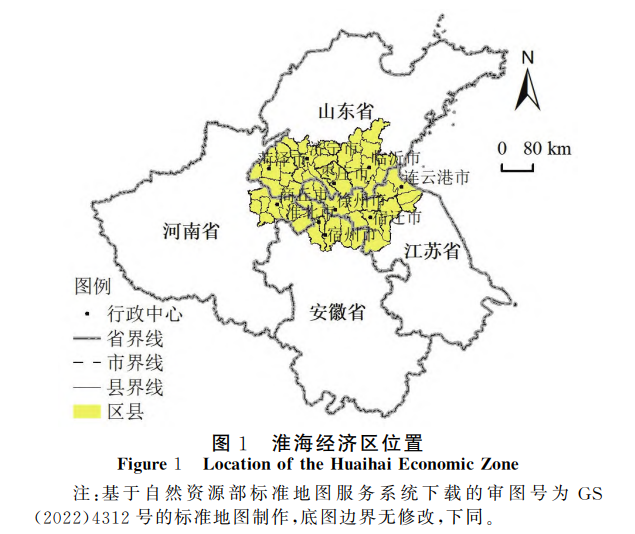
Core Viewpoint - The establishment of the "Yejian-Gushi 'One River, Two Banks' Ecological Priority Green Development Industrial Cooperation Zone" marks a significant step towards cross-provincial urban development in China, aiming to create a collaborative industrial zone between the Central Plains and the Yangtze River Delta [1][10]. Summary by Sections Economic Context - China's economy is transitioning from factor-driven to innovation-driven growth, necessitating industrial upgrades amidst global competition and geopolitical risks [1]. - The construction of a unified market and the facilitation of internal circulation are critical for China's economic future, requiring the breaking down of regional barriers to achieve efficient resource allocation [1][2]. Historical Background - Previous attempts at cross-provincial cooperation, such as the Huaihai Economic Zone, have shown limited success, with significant disparities in GDP per capita compared to more developed regions like the Yangtze River Delta [5][6]. - The Huaihai Economic Zone, established in 1986, has not achieved its potential, with GDP per capita in 2024 projected at around $9,900, compared to over $26,000 in the Yangtze River Delta [5]. New Cooperation Zone - The Yejian-Gushi cooperation zone covers an area of 3,514 square kilometers, focusing on industrial cooperation, urban integration, and shared prosperity [10][11]. - The zone aims to develop a 5 square kilometer industrial cooperation demonstration park and create a new city with a population exceeding 500,000 [11][12]. Geographical and Cultural Advantages - The geographical proximity and historical ties between Yejian and Gushi provide a solid foundation for collaboration, with easy transportation and resource flow [12][14]. - The two regions complement each other economically, with Yejian having a stronger industrial base and Gushi being a major agricultural and labor resource hub [12][14]. Development Strategies - The cooperation zone emphasizes three key strategies: industrial integration, project construction, and mechanism innovation [15][18]. - Industrial integration focuses on merging local strengths in furniture manufacturing and wood processing, aiming to create significant industry clusters [15][16]. - Project construction will involve major infrastructure developments, including transportation networks and public service projects [17]. - Mechanism innovation will address administrative barriers through unified governance and shared economic benefits [18]. Future Outlook - By 2028, the cooperation zone is projected to achieve a GDP of 77 billion yuan, with industrial value added accounting for 26.3% of the total [16][18]. - The initiative serves as a potential model for breaking down administrative barriers and fostering regional economic collaboration across China [18][20].