
轻养生微醺

Search documents
2025,年轻人没有抛弃白酒
Sou Hu Cai Jing· 2025-12-22 12:48
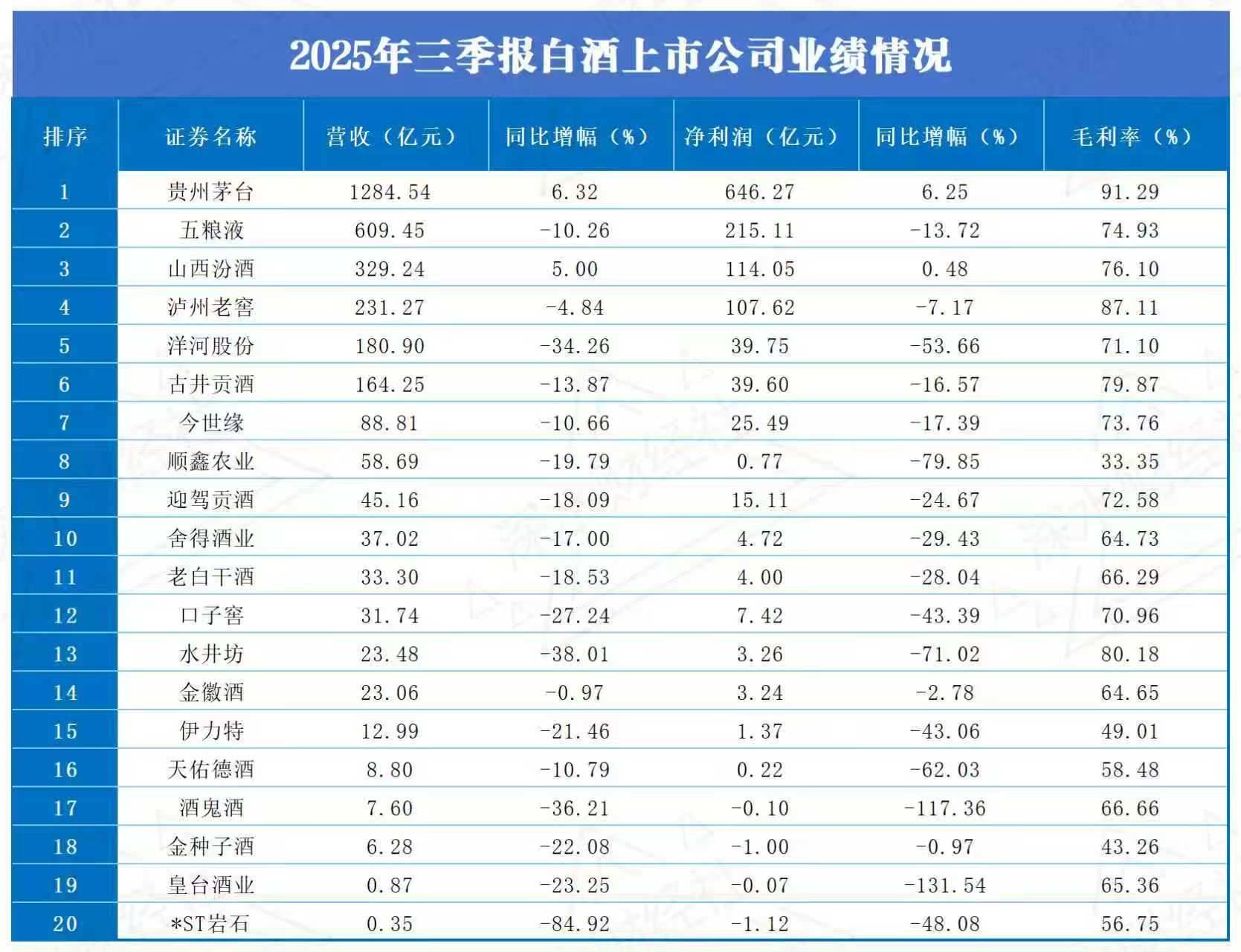
Core Viewpoint - The decline in the price of Moutai below 1499 yuan per bottle is attributed to industry-wide adjustments, including factors like consumption downgrade and inventory issues, while niche brands like Jingjiu are gaining popularity among younger consumers [1][2][3] Industry Overview - The current state of the liquor industry shows a collective downturn among major liquor companies, unable to sustain previous price levels [2][3] - The traditional consumption logic is fading, indicating a shift in consumer preferences towards more personalized and self-satisfying choices [4][5] Company Performance - In the first three quarters of 2022-2024, the liquor industry maintained double-digit revenue growth rates of 12%, 15.37%, and 10.49%, but projections for 2025 suggest negative growth for most companies [7] - In Q3, 20 listed liquor companies reported a total revenue of 317.78 billion yuan, a year-on-year decline of 5.90%, with net profits dropping by 6.93% [7][9] - Major companies like Moutai and Wuliangye are showing signs of "growth fatigue," with Moutai's revenue at 128.45 billion yuan, a growth of 6.32%, while Wuliangye's revenue fell by 10.26% [9][10] Market Dynamics - The market is experiencing a significant shift, with traditional high-end liquor brands facing pressure while niche brands like Jingjiu are thriving, particularly among young female consumers [12][18] - The consumption landscape is evolving, with younger consumers favoring low-alcohol and health-oriented products, leading to a decline in traditional high-end liquor sales [17][32] Consumer Behavior - The younger demographic (post-85 to post-94) is becoming a key market segment, preferring convenient, low-alcohol, and easily mixable products, which is reshaping the liquor market [18][20] - The trend of "self-satisfying consumption" is emerging, where consumers prioritize personal enjoyment over brand prestige, indicating a shift in purchasing motivations [20][21] Product Innovation - Companies are adapting by introducing lower-alcohol and smaller packaging options to meet the new consumer demands for health and convenience [15][24] - Jingjiu's rise in popularity is attributed to its successful marketing as a health-oriented product, appealing to young women and aligning with modern consumption trends [12][32]






年度消费观察:2025,年轻人没有抛弃白酒
Sou Hu Cai Jing· 2025-12-21 13:15
Core Viewpoint - The price of Moutai has dropped below 1499 yuan per bottle, attributed to industry cyclical adjustments, consumption downgrade, and high inventory levels among traditional liquor companies [1][2][6]. Industry Trends - The current state of the liquor industry shows a collective downward trend among liquor companies, unable to support previous price levels [2][6]. - The white liquor industry has experienced revenue growth rates of 12%, 15.37%, and 10.49% from 2022 to the first three quarters of 2024, but is projected to face negative growth by 2025 [6][11]. - In the third quarter, 20 listed liquor companies reported a total revenue of 317.78 billion yuan, a year-on-year decline of 5.90%, with net profits down 6.93% [6][8]. Company Performance - Major liquor companies, including Moutai, Wuliangye, and others, collectively reported a revenue decline of 6.3% and a net profit drop of 13.2% in the first three quarters [9]. - Moutai's revenue was 128.45 billion yuan with a growth of 6.32%, while Wuliangye saw a revenue drop of 10.26% [8][9]. Consumer Behavior Changes - Traditional consumption logic is fading, with younger consumers favoring brands like Jinjiu, which has seen a growth of over 20% in 2025 [12][13]. - The shift in consumer preferences is evident as younger demographics prioritize health and emotional value, leading to a rise in demand for low-alcohol and health-oriented products [28][29]. - The main consumption scenarios have shifted from formal events to casual gatherings and personal enjoyment, with new drinking styles emerging [16][17]. Market Dynamics - The white liquor market is undergoing significant changes, with a downward shift in the main sales price segment from 300-500 yuan to 100-300 yuan [15]. - The rise of "self-pleasing" consumption among younger consumers indicates a departure from traditional brand loyalty, focusing instead on quality and experience [18][19]. - The emergence of new brands and products that cater to the evolving preferences of consumers highlights the industry's need to adapt to changing market dynamics [12][14].