轻资产扩张模式

Search documents
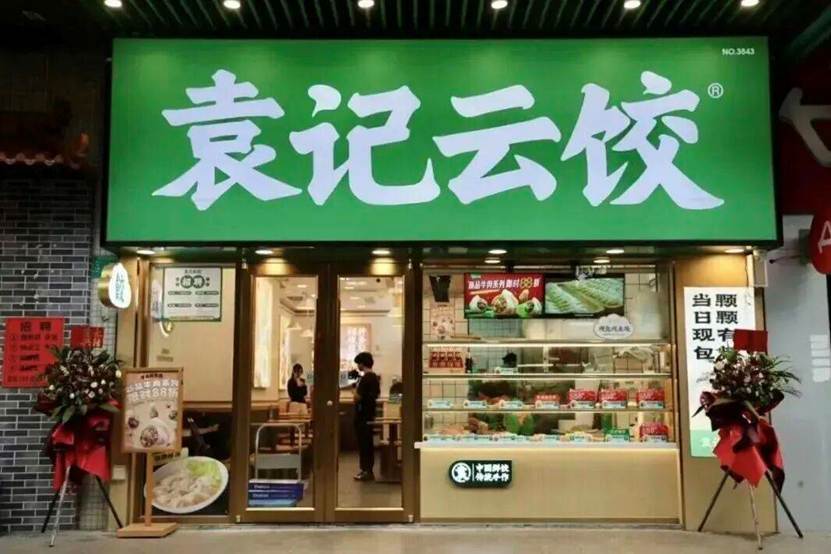
袁记云饺赴港上市,体育生袁亮宏与他的4266家饺子店
Sou Hu Cai Jing· 2026-01-15 10:10
Core Viewpoint - Yuanji Food Group, founded by Yuan Lianghong, has grown from a small stall in Guangzhou to a major player in the Chinese food industry, with annual revenue exceeding 2.5 billion RMB and plans for an IPO in Hong Kong. The company's business model heavily relies on a franchise network, with over 95% of its revenue coming from franchisees, raising concerns about operational standards and brand consistency [2][3][11]. Business Model and Expansion - The company started with a focus on handmade dumplings, capitalizing on a gap in the market for standardized operations in the Chinese fast-food sector. The "front store, back factory" model established trust and quickly built a customer base in Guangzhou [3][4]. - A significant turning point occurred in 2017 when Yuanji transitioned from individual operations to a corporate structure, achieving over 100 stores and launching a central factory for standardized production [4][5]. - By 2025, Yuanji plans to operate 4,266 stores, with 4,247 being franchises, indicating a reliance on a light-asset expansion model [5][11]. Market Positioning - The company has strategically positioned itself in first-tier cities to build brand recognition while also targeting lower-tier markets for growth. As of September 2025, 51% of its stores are located in major cities, which helps stabilize revenue and enhance brand value [6]. - The "Yuanji Weixiang" brand extends its product offerings to retail channels, with a 46% revenue increase in pre-packaged products in the first nine months of 2025, demonstrating market acceptance beyond in-store sales [8][9]. Supply Chain and Operational Efficiency - Yuanji has developed a robust supply chain with five owned factories to ensure standardized production and efficient cold chain distribution, allowing for frequent and precise replenishment of stores [9]. - The company boasts a significantly lower inventory turnover time of 12.1 days compared to the industry average, indicating effective supply chain management [9]. Financial Performance - Revenue is projected to grow from 2.026 billion RMB in 2023 to 2.561 billion RMB in 2024, with a net profit margin improvement from 8.7% to 9.7% in the first nine months of 2025, reflecting effective cost control [10][14]. - The average order value has been declining, which raises concerns about profitability despite increasing store numbers and order volumes [12][13]. Risks and Challenges - The company's revenue is highly dependent on the performance of franchisees, with over 95% of income derived from supplying materials to them. This creates a vulnerability where franchisee struggles can directly impact the company's financial health [11][18]. - Recent food safety incidents have highlighted systemic risks within the franchise model, emphasizing the need for stringent operational standards to maintain brand reputation [15][18].

平均每年亏损超10亿!文远知行闯关港股
Nan Fang Du Shi Bao· 2025-10-31 12:38
Core Viewpoint - The company, WeRide (文远知行), has officially launched its IPO in Hong Kong, aiming to raise over $400 million, with significant backing from major players like Uber and Bosch. However, the company faces substantial financial challenges, including high annual losses and a reliance on low-margin services, raising concerns about its path to profitability [2][6][12]. Financial Performance - WeRide reported a revenue of 199.6 million RMB for the first half of 2025, with only 34.7% coming from its core autonomous taxi business, indicating a heavy reliance on low-margin smart data services and ADAS development [6][8]. - The company's gross margin has significantly declined from 45.7% in 2023 to 30.6% in the first half of 2025, primarily due to a shift from high-margin ADAS custom development to lower-margin services [8]. - For the full year of 2024, WeRide is projected to have total revenues of only 362 million RMB, with a staggering net loss of 2.52 billion RMB [8]. Funding and Use of Proceeds - The IPO proceeds will be allocated with 40% for research and development and 40% for fleet commercialization, highlighting the necessity of funding for operational sustainability [12]. Business Model and Strategy - WeRide operates a "light asset" model, relying on partnerships with OEMs for vehicle production and local partners for overseas operations, which mitigates initial investment risks but raises concerns about control over critical components [13][14]. - The company has a significant dependency on a few large clients, with its top five clients contributing 48.4% of its revenue, which poses risks if demand from these sectors declines [17]. Governance and Control - The founders of WeRide hold over 70% of the voting rights, allowing them to make unilateral decisions regarding the company's strategy and operations, which may limit the influence of external investors [18][19]. - The company has not paid dividends historically and does not plan to do so in the foreseeable future, which could affect investor returns [18]. Market Position and Challenges - WeRide is positioned as a leading player in the L4 autonomous driving sector, with operations in 30 cities across 11 countries, but faces challenges in achieving scalable profitability and maintaining supply chain security amid geopolitical tensions [6][13][16].