通缩与通胀

Search documents
楼市预期急转,房价彻底明牌了
Sou Hu Cai Jing· 2026-01-30 12:05
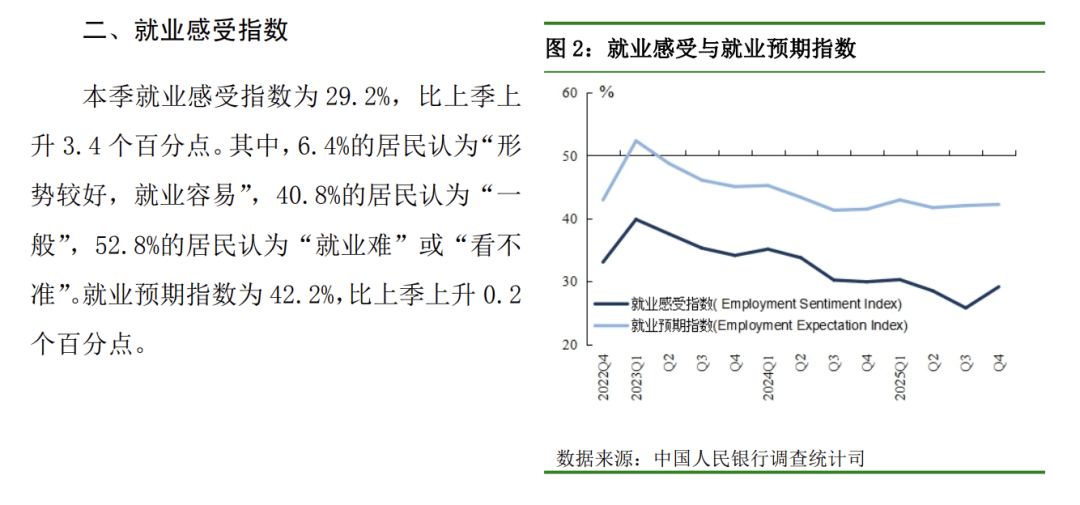
Core Viewpoint - The economic slowdown has created challenges for the middle class, primarily due to their reliance on future income, leading to potential negative cash flow and the need to liquidate assets for liquidity [1][2][3]. Group 1: Housing Market Dynamics - The marginal transaction prices of the housing market, influenced by a small percentage of transactions, can determine overall market value and price fluctuations [4]. - A decline in income for even a small segment of the population can trigger significant changes in housing prices due to forced asset sales [5]. - Resident income and future income expectations are identified as the core fundamentals driving the housing market [6][11]. Group 2: Economic Indicators - Corporate revenue growth is a necessary but not sufficient condition for rising resident income, indicating that corporate performance directly impacts household financial health [12]. - The observation of a positive revenue growth trend among the Shanghai and Shenzhen 300 and CSI 500 companies suggests a potential recovery in the housing market, with the first signs of revenue growth noted in Q3 2025 [13]. - The improvement in resident employment sentiment, as reported by the central bank, indicates a potential increase in hiring due to rising corporate revenues [15][16]. Group 3: Inflation and Economic Recovery - Signs of returning inflation are emerging, as indicated by rising perceptions of input and sales prices among entrepreneurs [21]. - The nominal GDP growth rate minus the real GDP growth rate shows a narrowing negative value, suggesting a potential exit from deflation [22][23]. - The current data indicates a possibility of economic recovery, but further confirmation is needed over the next two quarters to establish a definitive trend [23][28]. Group 4: Investment Perspective - The current data suggests a probability of housing market recovery, but certainty is lacking, necessitating further observation of upcoming data [23][30]. - The stock market may serve as a leading indicator for economic recovery, with its performance potentially reflecting broader economic trends [31].

昨天突发的数据反常,房价的玩笑这次开大了
Sou Hu Cai Jing· 2026-01-20 15:18
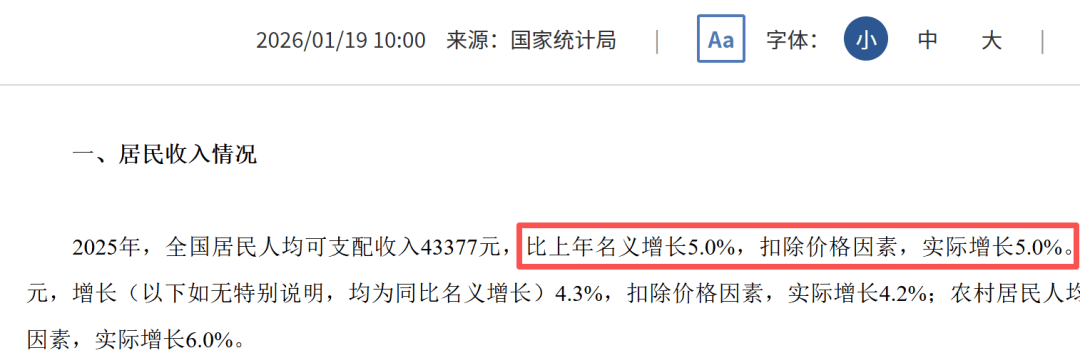
Core Viewpoint - The article discusses the apparent contradiction between nominal and real GDP growth rates and disposable income growth rates, highlighting the implications for inflation and housing prices in China [1][22]. Group 1: Economic Indicators - The nominal GDP growth rate for 2025 is projected at 3.99%, while the real GDP growth rate is expected to be 5% [1]. - Disposable income growth rates show both nominal and real figures at 5% for 2025, indicating stable consumer prices [1]. - The difference between nominal GDP and real GDP is a critical indicator for determining inflation; when nominal GDP exceeds real GDP, it signals inflation [1][22]. Group 2: Inflation and Housing Market - The article emphasizes that the transition from deflation to inflation is indicated by the positive difference between nominal GDP and real GDP, which is essential for supporting consumer spending and housing prices [1][22]. - Historical data from Japan illustrates that a positive shift in the nominal GDP minus real GDP often precedes a rise in housing prices [3][22]. - Current trends show that the difference between nominal GDP and real GDP has turned negative but is narrowing, suggesting potential future inflation [4][24]. Group 3: Demographic Factors - The birth rate in 2025 is projected to be 7.92 million, which poses long-term implications for housing demand and prices [7][25]. - There is a noted negative correlation between housing prices and birth rates, indicating that higher housing costs may deter family growth [8][25]. - The article argues that stabilizing housing prices at levels affordable for young people is crucial for reversing declining birth rates [25]. Group 4: Policy Implications - The article suggests that maintaining affordable housing prices is essential for improving birth rates and that this can be achieved through careful economic policies, including the potential introduction of property taxes after a market stabilization [25].