重体验

Search documents
黄金IP联名款销售走热,为什么年轻人愿意买单?
Ren Min Ri Bao· 2026-01-21 05:42
Core Viewpoint - The rising gold prices have pressured traditional gold jewelry sales, yet young consumers are increasingly attracted to IP collaboration gold accessories, which combine emotional value and cultural identity [7][9][12]. Group 1: Market Trends - The collaboration between gold brands and popular IPs like Disney and various animated characters has significantly increased market interest and sales among younger consumers [7][22]. - Lightweight gold products, such as 0.1-gram gold pendants and 1.16-gram gold charms, are being marketed at various price points, making them accessible to a broader audience [8][9]. - The World Gold Council reports that the ownership rate of gold jewelry among consumers aged 18-24 has risen to 62% in 2025, up from 37% in 2019, indicating a shift in consumer demographics [10][25]. Group 2: Consumer Behavior - Young consumers are purchasing IP collaboration gold jewelry primarily for emotional satisfaction and social expression, rather than for investment purposes [9][24]. - The trend of "lightweight" and "shareable" gold products aligns with the younger generation's preference for self-expression and social sharing [12][27]. - The emotional value associated with these products is becoming a significant factor in purchasing decisions, as they are seen as symbols of personal identity and cultural connection [12][27]. Group 3: Pricing and Profitability - Traditional gold jewelry prices have increased significantly, with major brands like Chow Tai Fook and Lao Miao Gold seeing prices rise to around 1400 RMB per gram by 2026 [11][26]. - IP collaboration products often use a fixed pricing model, which provides more stable profit margins for brands and allows consumers to purchase gold items at lower price points, even amidst rising gold prices [11][26]. - The high-margin pricing of IP collaboration jewelry has led to strong sales performance, with some products achieving sales of nearly 100 million RMB within weeks of launch [9][24]. Group 4: Industry Challenges and Opportunities - Traditional gold jewelry companies must adapt to a market that increasingly values design, cultural significance, and emotional connection over mere material weight [14][29]. - The industry is being pushed to innovate in design and product offerings to attract younger consumers, who are looking for more than just traditional gold jewelry [14][29]. - The shift towards lightweight and culturally relevant gold products is expected to continue, creating new opportunities for brands to engage with younger audiences [14][29].


数读中国开局新活力丨171万人次、11亿元消费:开年账单里,城市消费正在发生什么变化?
Yang Guang Wang· 2026-01-12 13:02
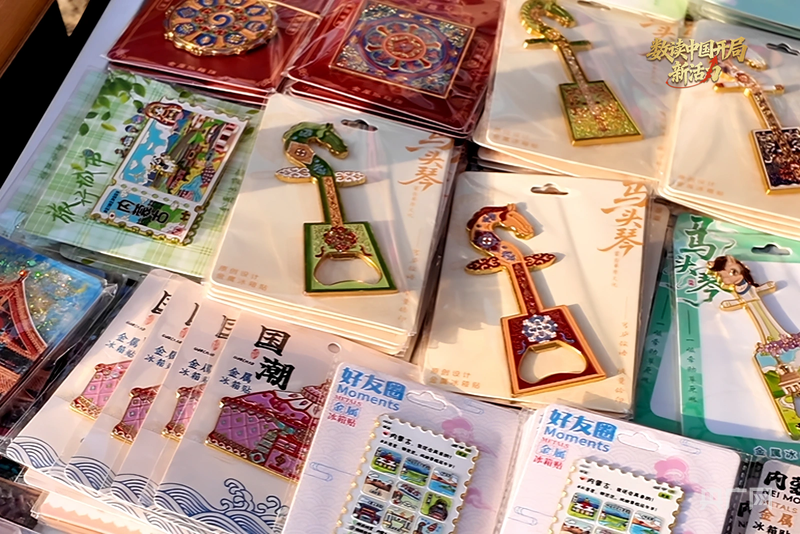
Core Insights - The article highlights a shift in consumer spending from purchasing goods to seeking experiences, indicating a growing trend of "emotional consumption" in urban life [1][7][13] Group 1: Consumer Behavior - In Hohhot, the capital of Inner Mongolia, there was a significant increase in tourism and spending during the New Year holiday, with 1.71 million domestic tourists generating a total expenditure of 1.098 billion yuan, leading the region [1] - The average spending per local consumer is around 30 yuan, while tourists spend approximately 70-80 yuan, reflecting a focus on unique and emotionally valuable purchases [5][6] - Young consumers are increasingly drawn to experiences such as cultural photography and local specialties, with some willing to spend over 200 yuan for memorable experiences [6][8] Group 2: Night Economy - The night economy in Hohhot has seen a noticeable increase in foot traffic, with visitors frequently shopping for local products during evening hours [9] - The integration of cultural and commercial activities has enhanced the nighttime consumer experience, making it a regular occurrence for tourists to explore and shop at night [9] Group 3: Cultural and Tourism Integration - Hohhot is transitioning from a "transit point" to a "destination," with a comprehensive development plan for cultural tourism that includes 56 A-level scenic spots and two national-level night cultural tourism consumption clusters [10] - The city has successfully integrated cultural, commercial, and sports activities, promoting year-round tourism rather than seasonal [10][12] - The "3+5+N" matrix of activities during the New Year period has led to increased participation and spending, establishing Hohhot as a new choice for New Year celebrations [12] Group 4: Experience Economy - The trend of "light consumption, heavy experience" is prevalent, with consumers valuing unique and culturally significant items over expensive purchases [5][13] - The shift in consumer spending reflects a broader lifestyle change, where spending is not just about fulfilling needs but also about seeking relaxation, companionship, and engagement [13][14]