
碳离子治疗系统

Search documents
8亿融资!国产重离子治疗系统
思宇MedTech· 2026-02-06 04:58
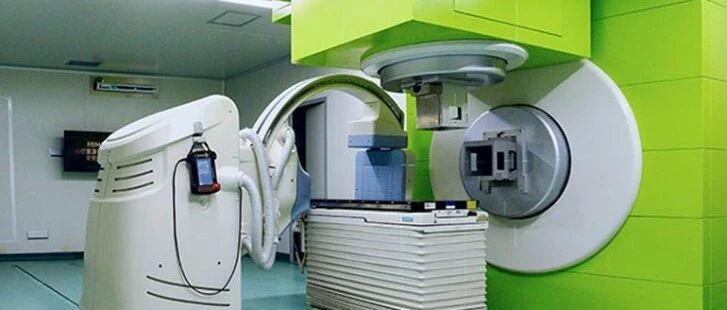
近日, 国科离子医疗科技有限公司 宣布完成 首轮股权融资,募集资金约 8 亿元人民币 。 本轮融资由 社保 基金中关村自主创新专项基金(君联资本担任管理人) 与 君联资本 联合领投,资金将主要用于重离子及轻离 子治疗装备的持续研发、产业化推进及治疗中心布局。 这是近年来 国内粒子治疗装备领域金额较大的一笔市场化融资 ,也标志着国产重离子治疗系统正从技术验证 阶段,进一步走向规模化落地。 # 从科研装 置到临 床系统,重离子治疗实现国产突破 国科离子及其全资控股公司 兰州泰基离子技术有限公司 ,依托中国科学院近代物理研究所 三代人、50 余年 的重离子物理与医用加速器研究积累 ,已在肿瘤治疗装备产业化领域深耕 20 余年。 据公司公开信息,2019 年,公司成功研制出 我国首台拥有完全自主知识产权的碳离子治疗系统 ,并于 2020 年投入临床应用,打破了重离子放疗长期依赖进口的技术格局,使中国成为 全球第 4 个掌握重离子治 癌核心技术的国家 。 目前,该系统已在 甘肃武威等地实现稳定临床运行 ,并完成从科研装置向医疗器械体系的转化。 # 轻离子联合治疗装置落地,指向"降成本、提可及性" 据公开信息,重离子系统 ...

“国家标准走基层”甘肃行 让国标扎根黄土
Zhong Guo Jing Ji Wang· 2025-09-29 06:56
Group 1 - Gansu Province is showcasing its achievements in climate change standards through the "National Standards Going to the Grassroots" initiative, highlighting how standards translate into tangible benefits for enterprises, such as reduced carbon emissions and increased revenues [1][15] - The ecological transformation in Gansu is evident, with improved vegetation due to effective implementation of national standards, reflecting a commitment to green development [2][15] - The Gansu Provincial Ecological Environment Science Design Institute emphasizes the importance of data quality in the carbon market, implementing mechanisms for regular data verification and management to ensure accurate carbon emissions reporting [4][15] Group 2 - Gansu's enterprises are adopting carbon emission standards as a driving force for green development, with many power plants facing financial losses due to outdated equipment, prompting a strict adherence to standards to mitigate losses [4][15] - The introduction of national standards, such as the "Carbon Emission Accounting and Reporting Requirements," serves as a foundation for companies like Lanzhou Jingshi Resource Environment Technology Co., which conducts carbon audits for local industries [5][15] - Traditional industries, such as Lanzhou Aluminum, are leveraging national standards to enhance their operations, resulting in significant reductions in carbon emissions and improved environmental conditions [6][7][9] Group 3 - The establishment of a modern industrial system in the non-ferrous metal sector is supported by national standards, with Lanzhou Aluminum investing 597 million yuan to implement carbon reduction and digital transformation projects [9][15] - Lanzhou Lishi Superalloy New Materials Co. has developed a digital energy and carbon management system, achieving a 10% reduction in carbon emissions through precise monitoring and optimization of energy consumption [11][15] Group 4 - Lanzhou Taiji Ion Technology Co. has made significant strides in the field of medical equipment by developing China's first carbon ion therapy system, breaking foreign monopolies and contributing to the localization of high-end medical devices [12][14] - The approval of a national standard for medical ion therapy systems is a strategic move for Gansu, aiming to secure a leading position in the industry and enhance the competitiveness of domestic products [14][15]

决胜“十四五” 打好收官战|越来越多“中国造”——我国医疗装备实现新突围
Xin Hua She· 2025-08-27 09:11
Core Viewpoint - The Chinese medical equipment industry is experiencing significant growth and innovation, marking a shift towards self-sufficiency and high-end manufacturing, which is transforming both domestic and global healthcare landscapes [1][2][3]. Industry Growth - During the 14th Five-Year Plan period, the medical equipment industry in China has achieved a compound annual growth rate of approximately 10.7%, with the market size expected to reach 1.35 trillion yuan by 2024, maintaining its position as the second-largest market globally [2]. - By the end of 2024, the number of medical device manufacturing companies in China is projected to exceed 33,000, representing a 27.8% increase compared to the end of the 13th Five-Year Plan [2]. Technological Advancements - The industry is advancing towards high-end and intelligent medical equipment, with innovations such as zero-magnetic medical imaging devices and integrated radiation therapy technologies being introduced [3]. - Since the beginning of the 14th Five-Year Plan, 315 innovative medical devices have been approved, with 272 of these being domestic products, accounting for 86.3% [3]. - Key technologies such as carbon ion therapy systems and artificial hearts have achieved domestic production, reversing the previous scenario where imported devices dominated the high-end market [3]. Clinical Applications - The integration of artificial intelligence and advanced imaging technologies is enhancing the capabilities of medical equipment, with over 1.045 million patent applications filed in the medical equipment sector during the 14th Five-Year Plan [4]. - Innovations like the full-body PET/CT scanner have significantly reduced scanning times and improved imaging capabilities, demonstrating the effectiveness of domestic innovations in clinical settings [4]. Policy Support and Infrastructure - The Chinese government has implemented multiple policies to promote high-quality development in the medical equipment sector, including key projects and planning documents aimed at enhancing research, industry, and application [6]. - Continuous improvements in grassroots medical facilities are being made, with significant upgrades in medical equipment conditions and accelerated construction of county-level medical communities [6]. Accessibility and Affordability - The emergence of domestic surgical robots has led to a noticeable decrease in equipment prices, enabling more county-level hospitals to perform robotic surgeries [8]. - Advanced technologies such as AI-assisted diagnostics and remote surgery systems are breaking geographical barriers, allowing patients in rural areas to access quality medical services [8]. Conclusion - The ultimate goal of the development of medical equipment is to benefit public health, with ongoing efforts to ensure that more patients can access and afford high-quality domestic medical equipment [9].
中国医疗器械产业近5年年均复合增长率达10.54% 已成全球第二大市场
Xin Hua Wang· 2025-08-12 05:54
Core Viewpoint - The National Medical Products Administration (NMPA) is committed to promoting the innovative development of high-end medical devices in China, aiming to transition from a "big manufacturing country" to a "strong manufacturing country" in the medical equipment sector [1] Group 1: Policy and Strategic Initiatives - The NMPA has implemented top-level design and inter-departmental collaboration to enhance the medical device industry, including the issuance of the "14th Five-Year Plan for National Drug Safety and Promotion of High-Quality Development" and the "14th Five-Year Plan for Medical Equipment Industry Development" [2] - The establishment of two technical innovation cooperation platforms focusing on artificial intelligence medical devices and medical biomaterials aims to accelerate the transformation of scientific achievements in the medical device field [2] - The NMPA has introduced innovative review measures, such as moving technical reviews to the product development stage, particularly for high-end medical devices like ECMO and particle therapy systems [2] Group 2: Innovation and Market Growth - The NMPA has prioritized the approval of innovative medical devices, implementing special review procedures to expedite the market entry of urgently needed clinical products [2] - In recent years, the NMPA has approved 217 innovative medical devices and 130 innovative drugs, with 28 innovative medical devices approved in the first half of this year alone [3] - The Chinese medical device industry has experienced a compound annual growth rate of 10.54% over the past five years, positioning China as the second-largest medical device market globally [3] Group 3: E-commerce and Sales Trends - The rapid development of online sales has significantly boosted the sales of drugs and medical devices, with an estimated online sales revenue of 292.4 billion yuan in 2022, projected to exceed 350 billion yuan in 2023 [4]
