金融风控

Search documents
反洗钱师考试网:黄金交易暴增,国家急缺的“金融风控官”怎么考?
Sou Hu Cai Jing· 2026-02-11 07:42
Core Insights - The gold market is experiencing a dual phenomenon where large-scale cashing out occurs alongside a surge in demand for small-weight gold bars, indicating a complex investor behavior in response to price volatility [1][2] - The increase in gold repurchase transactions has raised concerns about potential money laundering risks, prompting some gold retailers to implement transaction limits and suspend repurchase services on non-trading days [1][3] Group 1: Market Behavior - Investors are engaging in significant transactions, with instances of individuals selling up to 8 kilograms of gold bars for nearly 9 million yuan, while simultaneously, small-weight gold bars are in high demand, leading to long queues at counters [1] - The psychological tendency of investors to "buy high and sell low" may be exploited to create false transactions, obscuring illegal fund flows [2] Group 2: Regulatory Challenges - Non-financial institutions involved in precious metal trading often lack robust anti-money laundering monitoring systems, which raises concerns about their ability to detect suspicious transactions [3] - The recent surge in gold prices has led to increased transaction volumes, with some stores reporting significant daily repurchase amounts, thereby heightening cash flow pressures [1][4] Group 3: Emergence of Anti-Money Laundering Professionals - The implementation of the new Anti-Money Laundering Law in January 2025 emphasizes the need for enhanced professional capabilities among industry personnel, marking a shift towards specialized anti-money laundering roles [4] - The introduction of the Anti-Money Laundering Professional Certification aims to cultivate skilled professionals across various sectors, including financial institutions and specific non-financial entities [4][5] - The demand for certified anti-money laundering professionals is expected to grow significantly, as their expertise is crucial for maintaining financial security in the face of increasing regulatory scrutiny [5]

又见违法发放贷款案!商丘农商银行2900万贷款失守 两员工获刑
Xin Lang Cai Jing· 2026-02-09 01:20
Core Viewpoint - The case of illegal loan issuance by Shangqiu Huashang Rural Commercial Bank has been revealed, involving significant financial losses and highlighting severe lapses in risk management practices within the bank [1][11]. Group 1: Case Overview - In 2013, a businessman named Zhang applied for loans totaling 29 million yuan (approximately 4.5 million USD) from Shangqiu Huashang Rural Commercial Bank using fraudulent contracts and invoices [1][3]. - The bank's employees, including branch manager Cao and loan officer Zhang, failed to conduct proper due diligence, leading to the approval of these loans despite clear signs of fraud [3][4]. - The loans have remained unpaid for years, with only interest payments made, totaling 1.036 million yuan (approximately 0.16 million USD) [4][5]. Group 2: Legal Proceedings - The first-instance court found both Cao and Zhang guilty of illegal loan issuance, sentencing Cao to three and a half years in prison and Zhang to two and a half years, along with fines [7][10]. - Zhang appealed, arguing that he played a minor role in the process and had not benefited from the loans, leading to a re-evaluation of his involvement and a reduction in his sentence to two years with probation [6][10]. - The second-instance court upheld the sentence for Cao, emphasizing his primary responsibility in the loan issuance process and his failure to fulfill his duties [9][10]. Group 3: Broader Implications - This case is not isolated; multiple employees of Shangqiu Huashang Rural Commercial Bank have faced similar legal issues for illegal loan practices, indicating systemic problems within the institution [12]. - The bank's operational issues reflect a broader trend in the banking industry, particularly among smaller financial institutions, where risk management is often neglected in favor of business expansion [13]. - Regulatory bodies have noted a significant increase in penalties related to credit business violations, with nearly 3,000 fines issued in 2025 alone, highlighting the urgent need for improved risk management practices [14].
21调查|7年期车贷来了 车企“超低息”大促有点儿猛
2 1 Shi Ji Jing Ji Bao Dao· 2026-01-27 14:33
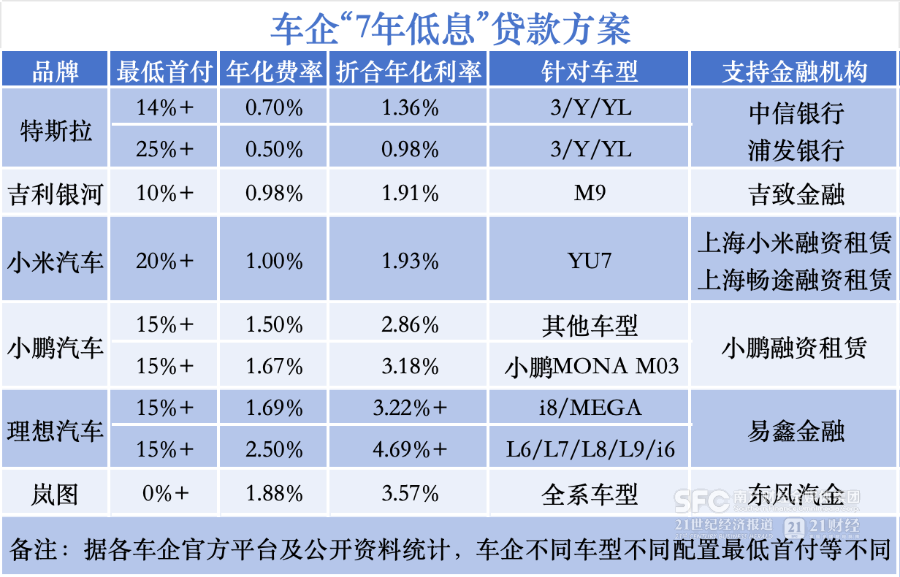
Core Viewpoint - The automotive industry is experiencing a promotional wave of "7-year low-interest" financing plans, driven by government policies aimed at boosting consumer spending and sales before the Lunar New Year [2][5]. Group 1: Promotional Trends - Multiple automakers, including Tesla, Xiaomi, Xpeng, Li Auto, Geely Galaxy, and Lantu, have launched "7-year low-interest" financing options, breaking away from the traditional 1-5 year loan terms [1][5]. - The promotional period for these financing plans is limited, primarily from January to February 2026, aimed at increasing sales volume [6]. Group 2: Financing Details - The financing plans vary significantly among automakers in terms of lending institutions, down payment requirements, and annualized interest rates [6][7]. - Tesla offers a minimum down payment of 14% with an annualized interest rate as low as 0.98% for certain plans, while other brands like Li Auto have higher rates, reaching up to 4.69% [3][7]. - The down payment requirements range from 0% for Lantu to over 25% for Tesla, indicating a wide disparity in accessibility for consumers [6][7]. Group 3: Consumer Impact - The extended loan terms reduce monthly payment burdens, making it easier for consumers to afford new vehicles, but they also lead to higher total interest payments over the loan's duration [10]. - For example, a Xiaomi YU7 financed over 7 years results in a total interest payment of approximately 14,252.28 yuan, compared to a higher monthly payment with a shorter loan term [10]. Group 4: Market Dynamics - The introduction of these financing options is a response to consumer demand for lower upfront costs and monthly payments, particularly before the Lunar New Year [2][5]. - However, concerns about vehicle depreciation and the long-term viability of such financing options exist, especially given the rapid technological advancements in electric vehicles [13][14]. Group 5: Risk and Regulation - Financial institutions face increased risk management challenges due to the longer loan terms and lower down payments, necessitating more stringent consumer assessments [19][20]. - The approval process for "7-year low-interest" loans is more rigorous, with banks requiring higher credit qualifications compared to shorter-term loans [20][21].


商业航天热已经传到银行了!招行浦发放卫星,放贷已经卷到外太空了?
Sou Hu Cai Jing· 2026-01-22 08:53
Group 1 - The core idea of the articles highlights the unexpected collaboration between commercial banks and the aerospace industry, where banks like China Merchants Bank and Shanghai Pudong Development Bank are launching their own satellites for financial risk management [1][2] - The satellites, named "Zhaoyin Jinkui" and "Pudong Shuzhi," are designed to enhance banks' ability to monitor collateral and project progress, providing a technological upgrade to traditional methods of oversight [1] - With the integration of AI, these satellites can analyze construction activities and logistics in real-time, achieving a monitoring accuracy of over 95%, thus preventing potential financial losses from project mismanagement [1] Group 2 - The trend indicates a shift in the banking industry, where competition is extending beyond traditional financial metrics like interest rates to include technological capabilities such as satellite surveillance [2] - This development suggests that in the near future, banks may need to invest in space technology to remain competitive, indicating a new frontier in the financial services sector [2]


招行、浦发成功将卫星送上太空!通过遥感技术,银行可远程实现对楼盘贷后风险的实时监测
Mei Ri Jing Ji Xin Wen· 2026-01-20 16:13
Core Viewpoint - Multiple banks have recently launched satellites to enhance their risk management capabilities through satellite remote sensing technology, which allows for real-time monitoring of loan projects and collateral status, addressing the limitations of traditional inspection methods [3][5][6]. Group 1: Satellite Launches - On January 16, 2026, CMB's "Zhaoyin Jinkui" and SPDB's "Puyin Shuzhi" satellites were successfully launched, part of China's first global low Earth orbit satellite IoT constellation, "Tianqi Constellation" [1][3]. - This marks the third satellite launched by CMB, following "Zhaoyin 1" and "Zhaoyin 2" launched in December 2024 and March 2025, respectively [6]. Group 2: Technological Integration - The "Zhaoyin Jinkui" satellite is a low Earth orbit narrowband IoT satellite, complementing two previously launched broadband satellites, forming a collaborative communication matrix for CMB [5]. - CMB's remote sensing technology is integrated into its financial risk control system, achieving over 95% accuracy in monitoring construction progress of mortgage properties nationwide [5]. Group 3: Industry Trends - SPDB's "Puyin Shuzhi" satellite is part of the "Tianqi Constellation" and aims to enhance the bank's smart risk control and comprehensive service system, especially in extreme scenarios like natural disasters [8]. - The adoption of satellite remote sensing technology in the banking sector is becoming more widespread, with the costs of network deployment decreasing due to the ongoing commercial space boom [8].

最后报名机会 | 全球贸易变局下的航运合规与风控实务研讨会
Refinitiv路孚特· 2025-12-09 06:20
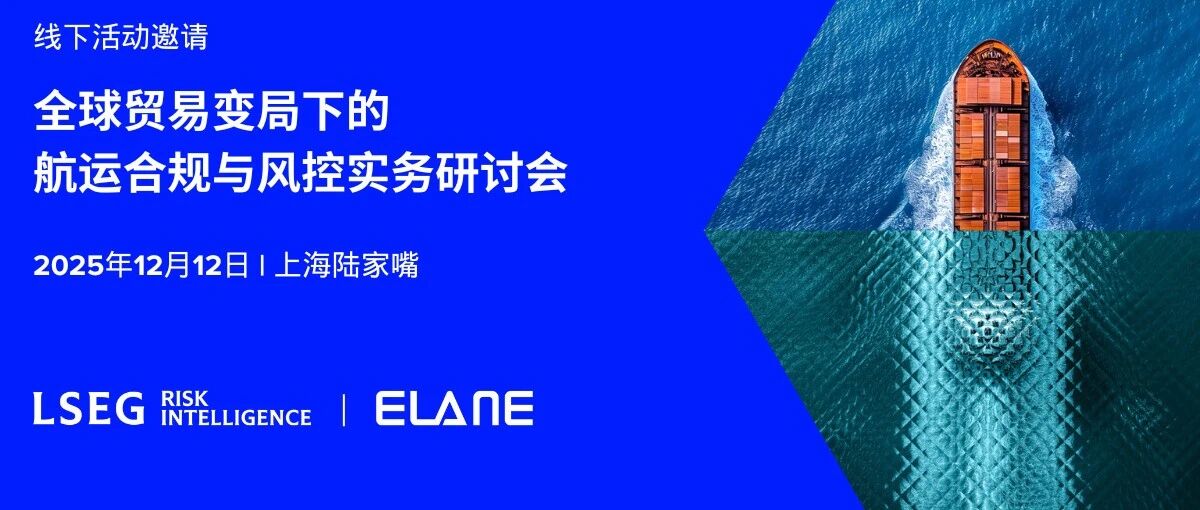
Group 1 - The article highlights the transformation of international trade compliance from a "back-end support" function to a core capability for strategic planning and risk management in enterprises due to the evolving global trade landscape and increasing regulatory pressures [1][2]. - The London Stock Exchange Group (LSEG) is collaborating with Yihailan to host a seminar in Shanghai, focusing on the core pain points of shipping trade and cross-border compliance, inviting professionals from various sectors to discuss challenges and opportunities [1][2]. - Key topics of the seminar include the role of shipping and logistics data in financial compliance, the latest developments in U.S. sanctions and export controls, and practical experiences in building resilient compliance systems [2][7]. Group 2 - The seminar agenda includes guest registration, opening remarks, a keynote speech on shipping trade compliance insights and best practices, and roundtable discussions on the application of compliance data in financial risk control [3]. - Notable speakers include professionals from Yihailan and legal experts from JunHe Law Offices, emphasizing the importance of expert insights in navigating compliance challenges [5][9][10]. - The event aims to foster a robust and transparent global trade environment by facilitating discussions among maritime, shipping, trade, logistics, multinational enterprises, and banking compliance professionals [1].
嘉宾阵容发布 | 全球贸易变局下的航运合规与风控实务研讨会
Refinitiv路孚特· 2025-12-04 09:07
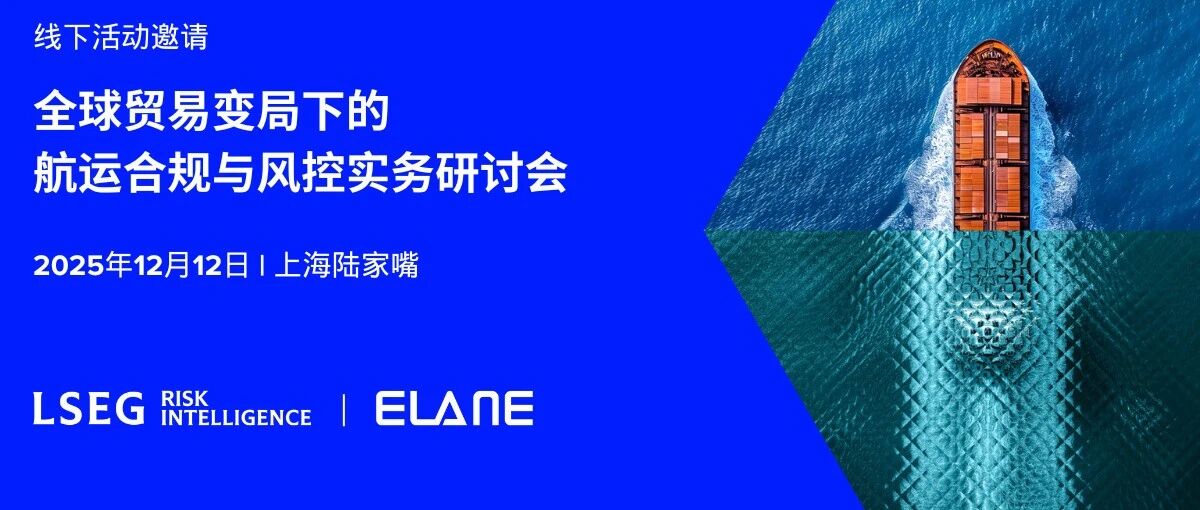
Group 1 - The article highlights the transformation of international trade compliance from a "back-office support" function to a core capability for strategic planning and risk management in response to evolving global trade dynamics and regulatory pressures [1] - The London Stock Exchange Group (LSEG) is collaborating with partners to host a seminar in Shanghai focused on shipping trade and cross-border compliance, addressing key pain points in the industry [1] - The seminar aims to bring together professionals from maritime, shipping, trade, logistics, multinational corporations, and banking risk and compliance sectors to discuss challenges and opportunities in creating a transparent global trade environment [1] Group 2 - The seminar will cover the latest trends and practical insights in identifying shipping trade risks, including the role of shipping and logistics data in financial compliance and risk control systems [2] - Topics will include the latest developments in the U.S. sanctions and export control systems, along with strategies for corporate responses [2] - The event will feature a roundtable discussion on the application of shipping logistics and sanctions compliance data in financial risk management practices [3][7]
组合风险监控大升级!教你一招识破持仓“雷点”
Wind万得· 2025-10-20 22:41
Core Viewpoint - The article highlights significant regulatory penalties imposed on major financial institutions due to inadequate risk management and compliance failures, emphasizing the need for enhanced risk monitoring systems and processes [1][2]. Group 1: Regulatory Penalties - On September 12, the National Financial Regulatory Administration disclosed administrative penalties totaling nearly 140 million yuan against three large financial institutions for issues related to loan management, investment operations, and regulatory data reporting [1]. - The penalties reflect a broader trend of failures in post-loan management, investment risk control, and system monitoring across the financial sector [1]. Group 2: Risk Management Challenges - Many financial institutions face common pain points, including reliance on manual checks that often overlook risk warnings, necessitating an upgrade in risk control practices [3]. - The difficulty in dynamically monitoring holdings leads to an underestimation of actual risks, and the time-consuming nature of report writing results in delayed risk reporting [4]. Group 3: AI-Driven Solutions - The article introduces AliceRisk, an AI-powered tool designed to enhance risk monitoring and reporting, enabling real-time oversight of portfolio risks [6][10]. - AliceRisk integrates with Wind's risk knowledge base, allowing for dynamic risk alerts, automated report generation, and traceability of various risk events [7][10]. Group 4: Risk Event Analysis - The analysis of risk events indicates a concentration of issues within specific companies, with notable instances of negative sentiment and high-risk ratings for certain entities, such as 汇添富基金管理股份有限公司 [15][20]. - The report highlights the need for ongoing monitoring of regional credit environments and potential impacts from litigation and refinancing activities [29][31].

京东消金组了新班底,李波接下催债重任
Sou Hu Cai Jing· 2025-10-12 00:46
Group 1 - Li Bo has officially become the chairman of JD Consumer Finance, with the Tianjin Financial Regulatory Bureau approving his appointment [2][3] - The approval signifies the completion of the new management team at JD Consumer Finance, following the earlier approval of other board members [3] - JD Consumer Finance has been expanding its financial operations, including the acquisition of Jiexin Consumer Finance, which has now been renamed [4][5] Group 2 - JD Consumer Finance is currently owned by several entities, with Guangzhou Jingdong Trading Co., Ltd. holding 50% of the shares, followed by other stakeholders [5] - JD's financial technology group has seen Li Bo rise through the ranks, previously serving as the deputy general manager of the Hunan branch of the Industrial and Commercial Bank of China [3][8] - JD Consumer Finance has been involved in numerous legal proceedings, with 1,913 court announcements, primarily related to financial loan contract disputes [8][9]


人工智能重塑金融风控 从技术赋能到生态协同
Jing Ji Guan Cha Bao· 2025-06-27 12:20
Group 1: AI and Big Data in Finance - The integration of artificial intelligence and big data is reshaping the core operational models of the financial industry, with significant developments in China's fintech sector following the global AI wave initiated by ChatGPT [2] - Major financial institutions like ICBC and China Merchants Bank are leading the application of AI in finance, while Tencent Cloud and Ant Group excel in technology output [2] - Ant Group has developed a leading AI risk control system that supports real-time transactions and compliance for hundreds of millions of users [2] Group 2: Evolution of Credit Risk Assessment - The credit risk evaluation system in banks has evolved from information-based to data-driven and intelligent systems, driven by the deep integration of data and technology [3] - Traditional credit risk assessment relied heavily on customer-provided information and internal data, limiting the use of external data [3] - The rise of digital finance allows financial institutions to access a broader range of external data, enhancing the comprehensiveness of risk assessments [3] Group 3: Innovation in Banking Services - Banks are innovating their service models by integrating online and offline channels, enabling personalized services anytime and anywhere [4] - The application of technologies like Intelligent Process Automation (IPA) has significantly improved operational efficiency, reducing processing times from days to minutes [4] - The focus of banking innovation has shifted from product-centric to ecosystem-centric approaches, integrating business, data, and technology [5] Group 4: Challenges in Inclusive Finance - Financial services for small and micro enterprises face challenges due to high service costs and the inherent risk characteristics of these customer segments [6] - Information asymmetry exacerbates the difficulties in risk identification and control in these segments [6] - Data is recognized as a key production factor in the digital transformation, with its marginal utility increasing as it is reused [6] Group 5: Enhancements in Risk Control Models - Traditional risk control models are limited by the narrow scope of data used, often leading to inadequate risk assessments [7] - By integrating diverse data sources, including user behavior and environmental factors, a more comprehensive risk management system can be developed [7] - The value of data increases with volume and reduced application barriers, enhancing both social and economic value [7] Group 6: AI in Anti-Money Laundering - Ant Group's anti-money laundering system combines AI and graph computing to enhance the identification of complex relationships [9] - The system utilizes heterogeneous graph modeling to depict various entities and their relationships, enabling effective tracking of fund flows [9] - AI plays a crucial role in analyzing suspicious transactions and automating report generation, improving decision-making efficiency [10]