铁电材料

Search documents
我国新成果有望让器件“存得更多,占得更少”
Yang Shi Xin Wen· 2026-01-24 08:13
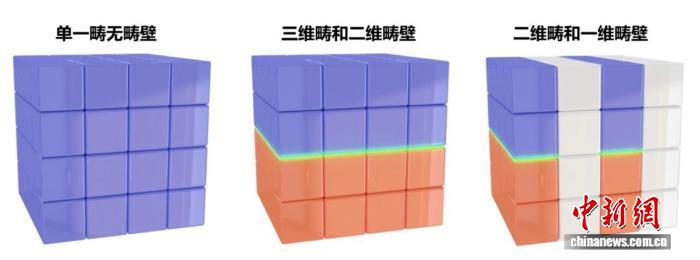
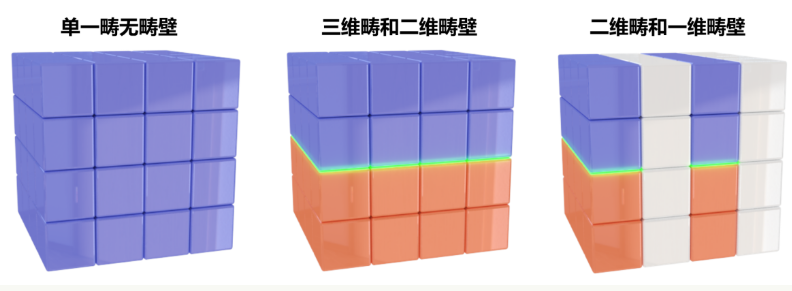
Core Viewpoint - The research team at the Chinese Academy of Sciences has developed self-supporting ferroelectric thin films with a fluorite structure and has observed and manipulated one-dimensional charged domain walls at the atomic scale using advanced electron microscopy techniques. The findings were published in the journal "Science" on January 23 [1]. Group 1: Ferroelectric Materials - Ferroelectric materials consist of tiny "electrical compass" structures that spontaneously separate positive and negative charges, indicating a direction of spontaneous polarization even without an external electric field [3]. - These materials have significant potential applications in information storage, sensing, and artificial intelligence due to their ability to attract charges from nearby materials [3]. Group 2: Domain Walls and Their Properties - In ferroelectric materials, the "compasses" are not all aligned in the same direction, leading to the formation of ferroelectric domains with consistent polarization directions, separated by domain walls [4]. - The stability of these domain walls is influenced by charge accumulation, requiring a special "glue" (charge compensation mechanism) to keep them together, which results in distinct physical properties compared to the ferroelectric domains [4]. Group 3: Research Findings - The fluorite-structured ferroelectric material ZrO2 (zirconium dioxide) presents opportunities for constructing ultra-small ferroelectric domain walls, potentially enhancing storage density [6]. - The research team discovered that these charged domain walls are confined within polar lattice layers, with dimensions on the order of angstroms, and are stabilized by excess oxygen ions or vacancies acting as "glue" [6]. - The team demonstrated the artificial manipulation of these one-dimensional charged domain walls using localized electric fields generated by electron irradiation, challenging traditional understandings of domain wall structures and providing a scientific basis for developing high-density artificial intelligence devices [6].

中科院AI芯片新路径登Science!铁电材料新结构突破存储密度极限
量子位· 2026-01-24 07:33
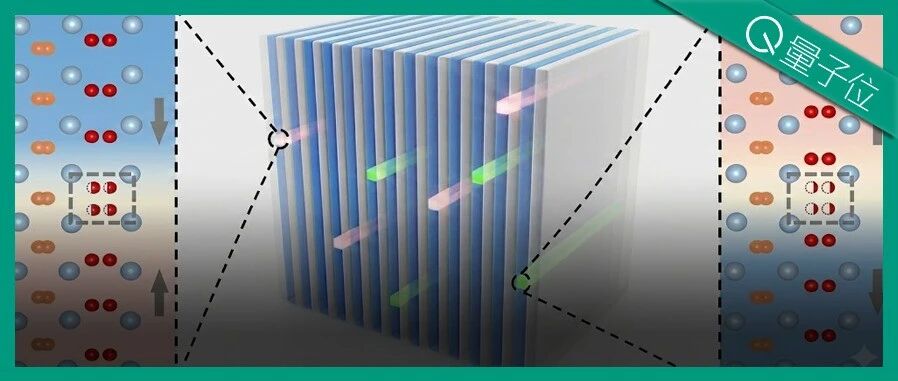
Core Viewpoint - The research from the Institute of Physics, Chinese Academy of Sciences, reveals a significant breakthrough in ferroelectric materials, specifically in the atomic-level "one-dimensional charged domain walls" within zirconia, laying a new physical foundation for next-generation artificial intelligence devices [1][4]. Group 1: Breakthrough in Ferroelectric Materials - The research team confirmed that the width and thickness of these domain walls are only the size of a single crystal cell, confined within a two-dimensional polar layer, achieving the physical limit of size [3][10]. - This discovery unveils the charge screening mechanism of oxygen ions' "self-balancing," breaking through the traditional storage density bottleneck of two-dimensional domain walls [3][22]. - The unique "polarization-ion" coupling transport characteristics of this one-dimensional structure open new physical pathways for constructing high-energy-efficient brain-like computing chips and AI devices [4][24]. Group 2: Characteristics of Ferroelectric Materials - Ferroelectric materials are defined as a class of crystalline materials with spontaneous polarization, where the polarization direction can be reversed by an external electric field [6]. - These materials can be visualized as filled with tiny "electrical compasses" that indicate the direction of charge separation rather than geographical north and south [6][7]. - The concept of ferroelectric domains is introduced, where these "compasses" align in groups to minimize energy, forming domain walls that separate different polarization regions [8][9]. Group 3: Unique Structure of Domain Walls - The research team discovered that in zirconia, the originally broad two-dimensional "walls" are compressed into atomic-scale one-dimensional "lines" due to the material's unique sub-cell layered structure [11][12]. - These one-dimensional structures are not ordinary "walls" but special charged domain walls, categorized as "head-to-head" and "tail-to-tail" [12][13]. - The stability of these high-energy structures, which are typically unstable, is maintained through the introduction of high concentrations of point defects acting as "charge glue" [29][30]. Group 4: Implications for Data Storage and Ion Transport - The theoretical data storage density using these atomic-level one-dimensional domain walls can reach 20TB per square centimeter, equivalent to storing 10,000 HD movies on a device the size of a postage stamp [24]. - The material exhibits superior ionic conductivity at room temperature, outperforming traditional solid electrolytes like yttria-stabilized zirconia (YSZ), transforming it into a "highway" for ion transport [22][23]. - The research highlights a precise "charge compensation mechanism" that allows the one-dimensional domain walls to exist stably while facilitating efficient ionic conduction [36].
【中国新闻网】中国团队发现铁电材料新结构 将助力极限密度人工智能器件开发
Zhong Guo Xin Wen Wang· 2026-01-23 05:54
Core Insights - A Chinese scientific team has discovered a new structure of one-dimensional charged domain walls in ferroelectric materials, which challenges traditional understandings and lays a scientific foundation for developing high-density artificial intelligence devices [1] Group 1: Research Breakthrough - The research was led by a team from the Chinese Academy of Sciences, including Academician Jin Kuijuan and researchers Ge Chen and Zhang Qinghua, who successfully created self-supporting fluorite-structured ferroelectric films using laser methods [1] - The findings were published in the international journal "Science" on January 23 [1] Group 2: Characteristics of Ferroelectric Materials - Ferroelectric materials consist of tiny "electrical compass" structures that spontaneously separate positive and negative charges, indicating their potential in information storage, sensing, and artificial intelligence applications [2] Group 3: Innovations in Research - The research team has been studying fluorite-structured ferroelectric materials since 2018, utilizing laser molecular beam epitaxy to grow films that are only about 5 nanometers thick, allowing for atomic-level observation of the crystal structure [6][7] - The discovery of the one-dimensional charged domain wall structure represents a significant shift in understanding, revealing the intrinsic coupling between polarization switching and oxygen ion transport in fluorite ferroelectrics [7] Group 4: Application Potential - The precise control of polarization "switches" and domain walls in ferroelectric materials is crucial for creating next-generation high-performance devices, particularly in the context of national strategic needs for information storage and artificial intelligence [8] - The one-dimensional charged domain wall is expected to increase storage density by several hundred times, potentially reaching 20 terabytes per square centimeter, which could store thousands of high-definition movies on a device the size of a postage stamp [8]
中国团队发现铁电材料新结构 将助力极限密度人工智能器件开发
Zhong Guo Xin Wen Wang· 2026-01-23 03:31
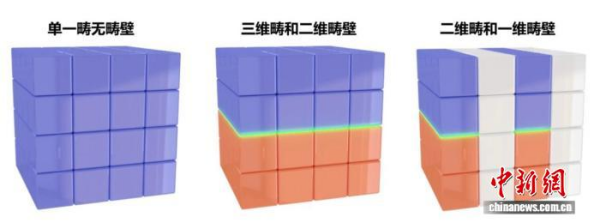
Core Insights - A Chinese research team has discovered a new structure of charged domain walls in ferroelectric materials, which could significantly enhance the development of high-density artificial intelligence devices [1][8]. Group 1: Research Breakthrough - The research, led by a team from the Chinese Academy of Sciences, successfully created self-supporting fluorite-structured ferroelectric films using laser methods, allowing for atomic-scale observation and manipulation of one-dimensional charged domain walls [1][5][6]. - This discovery challenges the traditional understanding of domain wall structures in three-dimensional crystals, revealing an intrinsic coupling between polarization switching and oxygen ion transport in fluorite ferroelectrics [8]. Group 2: Applications and Implications - The new one-dimensional charged domain wall structure is expected to greatly enhance information storage density, potentially achieving up to 20 terabytes (TB) per square centimeter, which is equivalent to storing 10,000 HD movies or 200,000 HD short videos on a device the size of a postage stamp [9]. - The research indicates that the use of these domain walls could lead to the development of next-generation, high-performance, low-power artificial intelligence chips, addressing national strategic needs in information storage and advanced technology [9].