银行股配置

Search documents
银行股配置重构系列九:从主动基金 Q4 持仓看配置思路
Changjiang Securities· 2026-01-27 15:25
Investment Rating - The investment rating for the banking sector is "Positive" and is maintained [12] Core Insights - In Q4 2025, active funds did not significantly reduce their holdings in bank stocks, with a stable allocation ratio of 1.86% compared to the previous quarter. This reflects a general decline in market risk appetite. However, it is anticipated that the allocation ratio may decrease further in Q1 2026 due to a significant rebound in risk appetite and the relative underperformance of bank stocks at the beginning of the year [2][6] - The selection of individual stocks has shifted towards a focus on fundamental trends, with Ningbo Bank seeing the most significant increase in allocation due to improved asset quality and performance expectations. The bank has established a turning point in retail asset quality and is expected to lead the sector in performance [7][8] - The report suggests that the core investment strategy for 2026 should prioritize high-performing regional banks, particularly city commercial banks, as they are expected to maintain superior growth rates amid a stable credit structure [9] Summary by Sections Active Fund Holdings - As of Q4 2025, the allocation ratio of active public funds to bank stocks remained stable at 1.86%, indicating a recovery in market risk appetite. The allocation ratio is expected to hit a new low in Q1 2026 due to a resurgence in risk appetite and the underperformance of bank stocks [6][8] - City commercial banks experienced a reduction of approximately 1.7 billion in total holdings, but Ningbo Bank was notably increased by 860 million, reflecting a shift towards stocks with improving fundamentals [7][8] Stock Selection Trends - The focus on stock selection has shifted from high dividend yields to fundamental trends, with Ningbo Bank being the most significantly increased stock in Q4 2025. The bank's asset quality indicators have shown continuous improvement, and it is expected to see a growth in performance in 2026 [7][8] - Conversely, stocks like Chengdu Bank have been reduced significantly, reflecting concerns over performance volatility and ongoing adjustments in business structure [7] Market Dynamics - The banking sector has faced downward pressure due to capital outflows from active funds and index funds, leading to undervaluation in bank stocks. The report recommends seizing opportunities in quality city commercial banks at lower price levels [9][33] - The report highlights that the allocation strategy for 2026 should focus on high-quality city commercial banks, as they are expected to outperform in terms of earnings growth amid a stable credit environment [9]




中信证券:当前银行股性价比大幅提升 给稳定回报型资金带来配置机会
Zheng Quan Shi Bao Wang· 2026-01-19 00:57
Core Viewpoint - The report from CITIC Securities indicates a significant outflow of funds from bank stocks since the beginning of the year, highlighting a disparity in performance between A-shares and H-shares in the banking sector, which suggests that A-share banks are more affected by fund outflows and style influences, resembling trends observed in August 2025 [1] Summary by Categories Market Performance - There has been a notable outflow of funds from bank stocks at the start of the year, with A-shares and H-shares showing differing performances [1] - The current situation indicates that A-share banks are significantly impacted by these fund outflows and market style changes [1] Investment Opportunities - The investment value of banks in 2026 is expected to arise from two main factors: 1. Re-evaluation of net assets due to reassessment of systemic risks in the banking sector 2. The stable return characteristics of bank equities within the framework of RMB asset allocation, leading to a re-evaluation of core equity asset values [1] - The report suggests that the current price-performance ratio of bank stocks has significantly improved, presenting a configuration opportunity for stable return-oriented funds [1] Stock Selection Strategy - The recommendation is to focus on selecting stable individual stocks, indicating a strategy that emphasizes a solid foundation for investment [1]

同股不同价 银行A/H股近五月为何分化了
2 1 Shi Ji Jing Ji Bao Dao· 2026-01-15 14:09
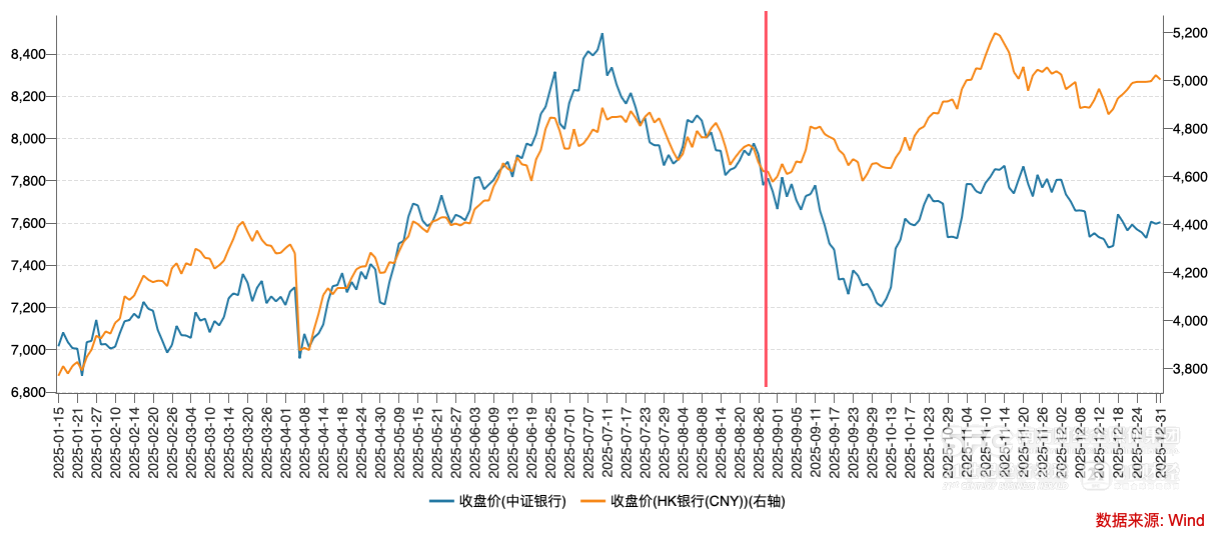
Core Viewpoint - In a low-interest-rate environment, bank stocks are seen as representatives of dividend style investments, offering medium to long-term allocation value due to their high dividend characteristics [1] Group 1: Bank Indices Performance - The main bank indices in A-share and Hong Kong markets include the China Securities Bank Index, the China Securities Hong Kong Bank Index, and the China Securities AH Bank Index [2] - The China Securities Hong Kong Bank Index is expected to significantly outperform the China Securities Bank Index in 2025 [3] - From January 1 to December 31, 2025, the Hong Kong Bank Index recorded a growth of 28.94%, which is substantially higher than the 6.79% increase of the China Securities Bank Index and the 9.60% of the AH Bank Index [4] Group 2: Investment Trends and Fund Flows - In Q3 2025, the Hong Kong banking sector saw significant buying from insurance capital, while the A-share banking sector experienced substantial selling by public funds [10] - The proportion of active equity funds' holdings in A-share banks dropped from 3.91% to 1.49%, with the market value decreasing from 64.1 billion yuan to 30.8 billion yuan [10] - In contrast, insurance capital made 41 significant investments in banks throughout 2025, with 33 of these targeting H-share banks [10] Group 3: Stock Performance and Dividend Yields - The strong performance of the Hong Kong Bank Index is attributed to the notable gains of key stocks such as HSBC Holdings, which rose by 25.53%, and Standard Chartered, which increased by 30.66% [11] - The dividend yield for Hong Kong banks remains above 6%, making them attractive to insurance capital, while A-share banks generally have yields between 3% and 4% [13] - Historical data indicates that buying bank stocks before the Spring Festival has an 80% success rate, with quality joint-stock banks and city commercial banks often yielding excess returns [13] Group 4: Future Outlook - Looking ahead to 2026, insurance capital is expected to remain a significant source of funding, but bank stocks may underperform the broader market in the first quarter due to a growth-oriented market style [15] - The return on tangible equity (ROTE) for Hong Kong banks is projected to slightly decline in 2026, yet the combined return from dividends and buybacks is still expected to exceed 7%, maintaining their investment appeal [15]





“顺风期”来了!11月6家银行被增持,机构看好配置时机
2 1 Shi Ji Jing Ji Bao Dao· 2025-11-24 13:11
Core Viewpoint - A new wave of shareholder buybacks has emerged among A-share listed banks since November 2025, indicating strong confidence in the banking sector's value and performance [1][3]. Group 1: Shareholder Actions - From November 1 to 24, six listed banks disclosed shareholder or executive buyback activities, with significant purchases from major shareholders in banks like Nanjing Bank and Chengdu Bank [3]. - Notably, Nanjing Bank's largest shareholder, BNP Paribas, increased its stake from 17.02% to 18.06% by acquiring approximately 128.23 million shares, marking its second large-scale buyback this year [6][7]. - Local state-owned enterprises are also actively investing in regional banks, as seen with Chengdu Bank's major shareholders increasing their holdings by 34.24 million shares at a cost of 611 million yuan [7]. Group 2: Market Performance - The banking sector has shown strong performance, with major banks like Bank of China and Industrial and Commercial Bank of China reaching historical highs in stock prices [3]. - Agricultural Bank of China has seen a year-to-date increase of nearly 60%, while several regional banks have also reported gains exceeding 20% [10]. - In November alone, the banking sector's cumulative increase was 2.78%, outperforming other industries, with some banks experiencing significant stock price increases [11]. Group 3: Financial Performance - The overall performance of listed banks has been resilient, with 35 out of 42 banks reporting year-on-year profit growth in the first three quarters of 2025 [9]. - The net interest margin for commercial banks stabilized at 1.42% in Q3 2025, with improvements noted particularly among joint-stock banks and city commercial banks [9]. - The financial stability and positive market actions have created a favorable environment for bank stocks, leading to a revaluation trend [9]. Group 4: Future Outlook - Multiple institutions believe that the banking sector is entering a favorable configuration window, with optimistic expectations for stock performance based on resilient fundamentals and valuation advantages [12]. - The demand for bank stocks is expected to rise due to their defensive attributes, attracting long-term capital from insurance funds and asset management companies [12][13]. - Analysts suggest that the investment logic for 2026 will focus on high dividend yields and defensive characteristics, while also considering the growth potential and long-term value of banks [13].
红利银行时代系列十八:银行股配置盘的三条核心思路
Changjiang Securities· 2025-11-17 23:30
Investment Rating - The industry investment rating is "Positive" and maintained [12]. Core Insights - The report identifies three core strategies for bank stock allocation: 1) Long-term strategic allocation to large banks using bond and non-standard asset replacement thinking, with recent mid-term dividend acceleration driving market performance; 2) Gradually increasing positions in high-quality city commercial banks in the Yangtze River Delta region to provide dividend yield flexibility; 3) Small and medium-sized insurance companies seeking long-term equity investment opportunities in small and medium-sized banks [2][6][9]. Summary by Sections Market Trends - Since the third quarter, bank stocks have experienced significant adjustments due to market style factors, but the direction of revaluation remains unchanged. The state-owned bank index has recently reached new highs, indicating sustained allocation power [6][7]. Large Banks - Large banks are becoming strategic allocation targets, with a focus on long-term debt cost advantages. The static PB valuation of Agricultural Bank A shares is below 3%, while most mainstream banks maintain dividend yields between 4% and 5.5%. The report recommends focusing on China Merchants Bank, low-valuation Bank of Communications, and state-owned H-shares [7][8]. City Commercial Banks - City commercial banks in the Yangtze River Delta have seen significant price adjustments, with public fund holdings decreasing by 1.4 percentage points to 0.83%. The report highlights the stable growth potential of these banks, with a focus on dividend yields and credit growth rates exceeding national averages [8][9]. Small and Medium-sized Insurance Companies - Small and medium-sized insurance companies are expected to actively seek long-term equity investment opportunities in small banks. Regulatory limits on single-stock investments will drive these companies to target mid-sized banks with market capitalizations in the hundreds of millions [9].


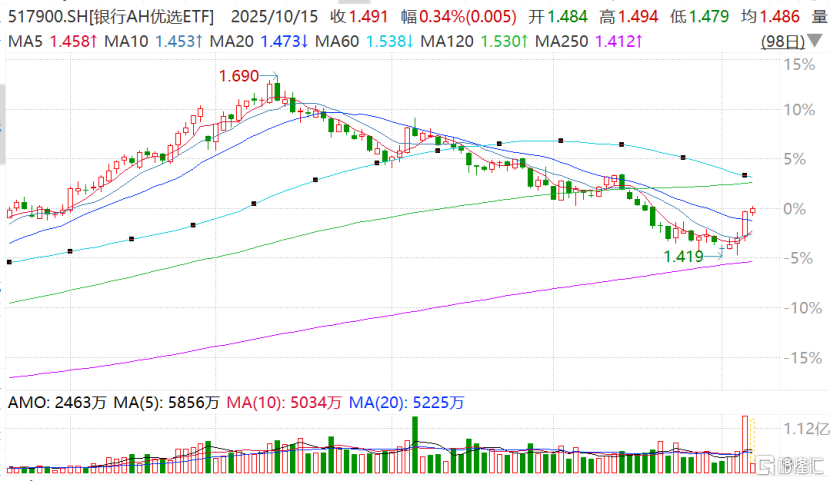
银行中期分红进行时,已派发188亿元现金!银行AH优选ETF(517900)连续三日获增持
Ge Long Hui· 2025-10-15 12:12
Core Viewpoint - The banking sector is regaining market attention after a period of adjustment, with significant net inflows into the bank AH preferred ETF, indicating a shift in investor sentiment towards bank stocks [1][11]. Group 1: Market Performance and Trends - The banking sector has seen a cumulative decline of 15.21% from July 11 to October 9, while the CSI 300 index increased by 17.44% during the same period [7]. - The banking index has recently fallen below its annual line for the first time in about a year, attributed to a shift in funding styles [9]. - The bank AH preferred ETF has experienced a net inflow of 1.07 billion yuan this year, with a share increase of 826%, leading the banking ETF category [11]. Group 2: Dividend Distribution - As of now, eight listed banks have implemented their mid-term dividend plans, totaling 18.849 billion yuan in dividends [3][4]. - The six major state-owned banks are the primary contributors to dividends, with a total cash dividend amount expected to reach 204.657 billion yuan [4][5]. - Specific dividend payouts include: Industrial and Commercial Bank of China at 50.396 billion yuan, China Construction Bank at 48.605 billion yuan, and Agricultural Bank of China at 41.823 billion yuan [5]. Group 3: Investment Insights - The high dividend policies of state-owned banks reflect their stable profitability and resilient capital adequacy levels, which can enhance market confidence and the defensive value of bank stocks in a low-interest-rate environment [6][9]. - The bank AH index offers a significant yield advantage over the ten-year government bond yield, with a dividend yield of 5.29% compared to the bank index's 4.15% [9].
华泰证券:重视优质银行股配置性机会
Mei Ri Jing Ji Xin Wen· 2025-09-29 23:57
Core Viewpoint - Huatai Securities indicates that the cost-effectiveness of bank allocations has improved due to balanced styles, calendar effects, and dividend value, suggesting a potential for short-term gains in the banking sector [1] Group 1: Market Conditions - Since mid-July, banks have experienced a maximum drawdown of approximately 15%, with some quality banks' 2025 dividend yields returning to over 5% [1] - The upward slope of the market has slowed down, and economic data has shown disturbances in the base, indicating a potential demand for risk aversion in Q4 [1] Group 2: Policy and Profitability - In the medium term, policies are focusing on stabilizing interest margins and preventing tail risks, which is expected to lead to continuous improvement in core business profitability for banks [1] - Concerns regarding asset quality are easing, and the sustainability of dividends is enhancing the attractiveness for long-term capital [1] Group 3: Investment Recommendations - There is an emphasis on the incremental allocation from insurance capital (driven by I9 switching and new premium growth), industrial capital (especially local state-owned enterprises), and foreign capital [1] - Recommendations include quality regional banks and those with stable dividends [1]

华泰证券:重视优质银行配置性机会
Xin Lang Cai Jing· 2025-09-29 23:29
Core Viewpoint - The report from Huatai Securities indicates that the CITIC Bank Index has experienced a maximum drawdown of approximately 15% from its peak in July, influenced by an increase in market risk appetite and a shift in funding styles [1] Summary by Relevant Sections Market Performance - The CITIC Bank Index's P/B ratio has fallen to 0.62x, which is at the 74th percentile over the past five years [1] - A total of 37 A-share banks have fallen below their six-month moving average, and 14 banks have dropped below their annual moving average [1] Dividend Yield and Investment Appeal - Some quality banks have seen their 2025 dividend yields rise to over 5%, indicating a higher cost-performance ratio for reallocation [1] Economic Indicators and Market Trends - The upward slope of the broader market has slowed, and recent economic indicators are still in need of recovery, suggesting a potential shift towards risk-averse investments in Q4 [1] - Historical data shows that since 2011, the bank index has a 79% probability of outperforming the CSI 300 in January [1] - The period from November to January is identified as a peak for mid-term dividends in the banking sector, which may lead to early positioning for the New Year and mid-term dividend trends [1] Investment Strategy Outlook - With a balanced style and dividend allocation, it is anticipated that market allocation demand will recover in Q4, improving the short-term success rate of bank stocks [1]
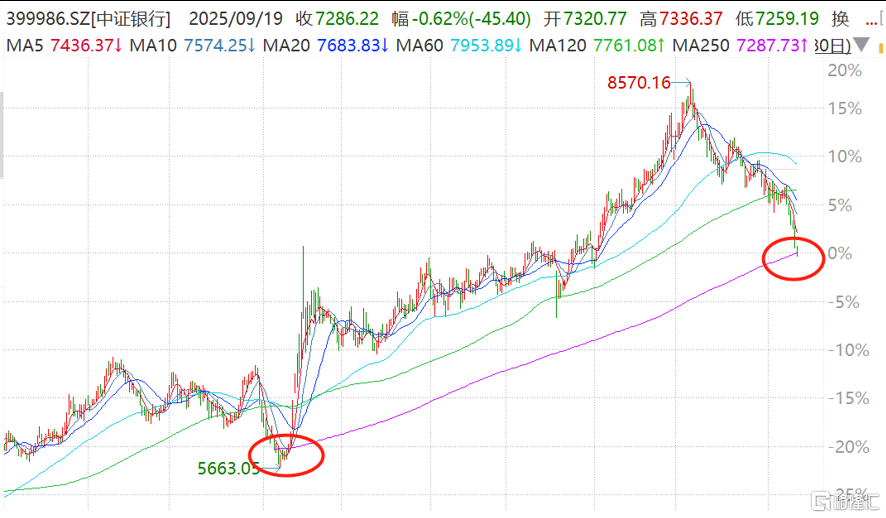
银行股探底回升,中证银行指数盘中回踩年线,工行一度跌超2%!资金连续4日增仓银行AH优选ETF(517900)
Ge Long Hui· 2025-09-19 04:16
Core Viewpoint - The banking sector is experiencing a significant decline, with major banks like Industrial and Commercial Bank of China (ICBC) and Agricultural Bank of China seeing stock prices drop over 2%, marking a notable downturn in the market [1][5]. Group 1: Market Performance - Bank stocks have seen a sharp decline, with the China Securities Bank Index falling to its annual line for the first time in a year [1]. - The AH Bank Index's dividend yield has increased to 4.6%, indicating a growing attractiveness for investors [5]. - The Bank AH Preferred ETF (517900) has shown signs of recovery after an initial drop, reflecting a potential bottoming out [3]. Group 2: Investor Sentiment - Several banks, including Everbright Bank and Nanjing Bank, have announced share buybacks, demonstrating confidence in their future prospects and long-term investment value [6]. - Social security funds have increased their holdings in the banking sector, with the proportion of bank holdings rising to 51.71%, up by 2.48 percentage points from the previous quarter [6]. - The Bank AH Preferred ETF has seen a net inflow of 20.87 million yuan over the past four days, indicating renewed interest from market participants [6]. Group 3: Institutional Investment - Insurance funds have made 11 significant investments in listed banks this year, primarily in H-shares, highlighting the sector's appeal due to its low valuations and stable dividends [6]. - The banking sector's low valuation, stable dividends, and minimal earnings volatility make it attractive for long-term institutional investors seeking steady returns [6].
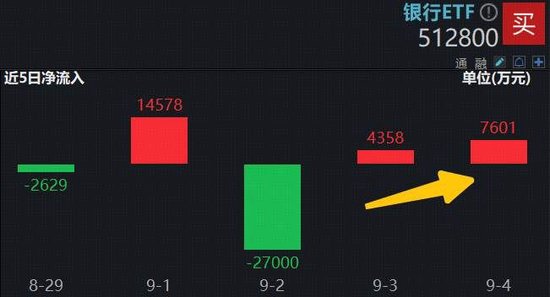
A股下跌日,银行重夺“市值王”,市场风格转向?
Xin Lang Ji Jin· 2025-09-05 01:38
Group 1 - A-share market experienced a sudden cooling, with technology stocks declining while bank stocks saw a resurgence, particularly Agricultural Bank and Postal Savings Bank reaching record highs [1] - The market capitalization of the banking sector in A-shares has reached 11.31 trillion yuan, surpassing the electronics sector, indicating a potential shift back to banks as the market's main focus [3] - The narrowing of interest margin declines and reduced non-interest disturbances are expected to drive improvements in revenue and profit growth for listed banks in the first half of 2025 [3] Group 2 - Insurance capital has been actively purchasing bank stocks this year, driven by high dividend yields, low valuations, and stable operations, suggesting significant room for further allocation to the banking sector [3] - It is estimated that insurance capital will bring an incremental investment of 1,404 billion yuan and 737 billion yuan to bank stocks in 2025, with an additional potential increase of over 200 billion yuan from equity asset allocation limits [3] - As of the end of August, the banking sector's price-to-book (PB) ratio was 0.71, indicating a low valuation level compared to historical data, making it an attractive investment option [3] Group 3 - CITIC Securities noted that the profitability of banks has stabilized and slightly exceeded expectations, with improved quarterly earnings and a stable asset quality outlook [4] - The bank ETF (512800) and its linked funds are effective investment tools for tracking the overall performance of the banking sector, with a significant scale and liquidity [4] - The bank ETF has maintained a scale within the hundred billion range, with an average daily trading volume exceeding 600 million yuan, making it the largest and most liquid among A-share bank ETFs [4]