长线思维

Search documents
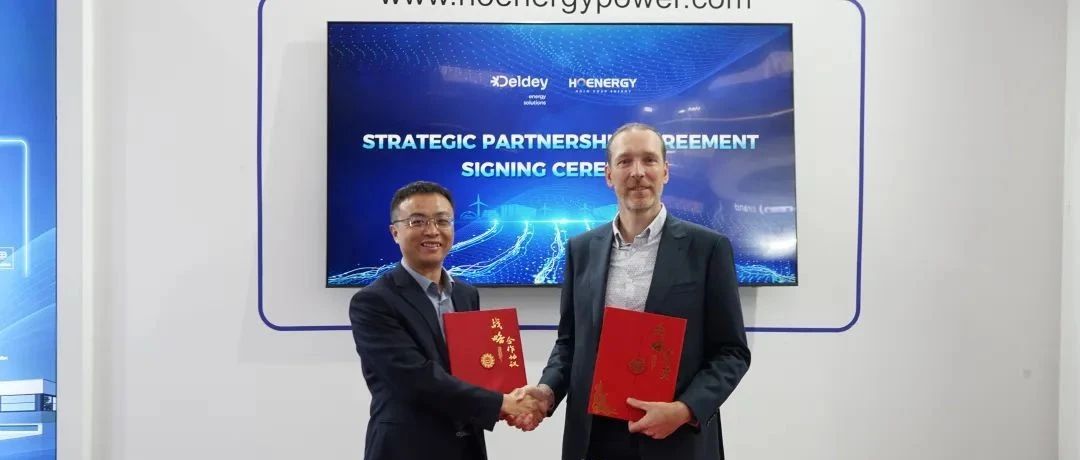
长线思维下的文明演变及体制韧性
Jing Ji Guan Cha Wang· 2025-12-13 02:28
Group 1 - The article emphasizes the importance of long-term thinking in addressing significant global challenges and the need to integrate long-term elements into social contracts and corporate performance evaluations [2] - It discusses the historical evolution of civilizations, particularly the "Axial Age," which laid the foundation for human development and the emergence of modernity [3][4] - The fusion of Greek and Hebrew civilizations, referred to as "Two希文明," played a crucial role in the Renaissance, the Reformation, and the Enlightenment, leading to the establishment of modern market economies and societal structures [4][5] Group 2 - The article highlights the liberation from "theocracy" during the Renaissance, which shifted societal focus from divine authority to human-centered values, fostering individual freedom and modern humanism [5][6] - It notes that the Reformation initiated by Martin Luther challenged the Catholic Church's authority, leading to the establishment of religious freedom and the principles of state sovereignty [6][7] - The development of modern science and the Industrial Revolution were driven by the interplay between the Renaissance, the Reformation, and the Enlightenment, significantly advancing human progress [7][10] Group 3 - The article outlines the constraints of "monarchy" in Hebrew civilization, where laws governed society, limiting the power of kings and establishing a system of checks and balances [8][9] - It discusses the significance of the Magna Carta in 1215, which marked the beginning of legal limitations on monarchs and the establishment of the principle that no one is above the law [9][10] - Enlightenment thinkers contributed to the evolution of modern democratic values, which laid the groundwork for contemporary governance and societal norms [9][11] Group 4 - The article addresses the resilience of national systems in the face of historical economic challenges, highlighting the importance of adaptability and self-correction in maintaining competitiveness [15][26] - It contrasts the experiences of the United States, Japan, and Argentina, illustrating how systemic resilience has influenced their economic trajectories [18][24] - The concept of "systemic resilience" is proposed as a critical factor for understanding national competitiveness in a rapidly changing global landscape [26][27] Group 5 - The article emphasizes China's long-term policy approach since the reform and opening-up in 1978, which has significantly contributed to its economic achievements [27][28] - It suggests that China can leverage long-term thinking to address global challenges and contribute to sustainable development in the future [28]


内需市场持续扩容提质,浙企迎来时代机遇
Xin Hua Wang· 2025-10-14 01:55
Group 1 - The article discusses the transition of China from a "manufacturing giant" to a "consumer giant," emphasizing the government's focus on expanding domestic demand as a key task [1][2] - Zhejiang enterprises are positioned at the forefront of this transformation, facing both opportunities and challenges in adapting to the evolving consumer market [2][5] - China's consumer market is the second largest globally, with a retail sales total of 32.39 trillion yuan from January to August this year, reflecting a 4.6% year-on-year growth [2][3] Group 2 - The article highlights the shift in consumer demand from traditional necessities to high-quality, experiential, and intelligent products, with new consumption categories like smart devices and health services rapidly growing [2][3] - Despite the potential, only 30% of surveyed Zhejiang enterprises have successfully launched mature products, while 50% are still refining their offerings [5] - The challenges faced by these enterprises include difficulties in accurately capturing consumer demand and balancing long-term strategies with short-term market pressures [5][6] Group 3 - Companies are exploring innovative approaches to meet the evolving consumer needs, such as integrating technology into products and shifting from traditional manufacturing to service-oriented models [11][13] - The concept of "entry thinking" is emerging, where businesses focus on establishing connections with users to drive growth, as seen in the case of companies like Zhihanshengtong [14][15] - Collaboration among companies is becoming essential, with examples of partnerships leading to new business models and enhanced value creation in competitive markets [16][17]
又签200MWh!储能出海的长线思维进化论
行家说储能· 2025-05-30 08:49
Core Viewpoint - The article emphasizes the growing opportunities for energy storage in Europe, particularly in the context of the EU Battery Regulation delay and the need for a collaborative energy system. It highlights the importance of localizing operations and creating value through partnerships rather than merely exporting products [1][2]. Group 1: Market Opportunities - The European energy storage market is expected to see an addition of 3.6 GWh by 2025, with a year-on-year growth rate exceeding 60%. The internal rate of return (IRR) for industrial storage in Europe could reach over 15%, with payback periods as short as 3-4 years [1]. - The current geopolitical climate and global value chain restructuring are pushing Chinese energy storage companies to adapt their strategies from simple product exports to deeper integration within the European market [1][2]. Group 2: Strategic Collaborations - Strategic partnerships with local European energy companies are crucial for Chinese firms to understand local market rules and customer needs, thereby securing quality project opportunities and establishing sustainable competitive advantages [2]. - A notable example is the partnership between Hongzheng Energy Storage and Czech energy company Deldey, focusing on a 200 MWh industrial storage project that addresses grid frequency regulation and renewable energy integration [2]. Group 3: Technological Adaptation - Hongzheng Energy Storage emphasizes technology collaboration and adaptation over mere product distribution. The company aims to create a full lifecycle energy value for customers through AI and digital technologies [4]. - The company’s new D-Cube-261D industrial storage system features a split design to reduce installation complexity and incorporates advanced cooling and AI algorithms to enhance efficiency and safety [7]. Group 4: Compliance and Certification - The stringent safety and compliance requirements of the European market have historically posed challenges for many companies. Hongzheng Energy Storage has built a dual moat of "certification + technology," achieving IEC and UL certifications and collaborating with international authorities for additional compliance [5]. - The company’s self-developed capabilities across hardware integration and digital software have enabled it to customize its storage systems to meet European standards [5]. Group 5: Localization Strategy - Hongzheng Energy Storage is establishing a "technology + scenario + service" localized network to address operational challenges in Europe, including setting up a major technical service center in Prague for 24/7 support [8][10]. - This localization approach aims to create a new value-sharing model, enhancing operational capabilities and customer engagement through tailored services [10]. Group 6: Long-term Vision - The company advocates for a long-term strategic mindset in its overseas ventures, transitioning from a simple sales model to one focused on value co-creation [11]. - By building localized technical teams and a network across Central Europe, Hongzheng Energy Storage is positioning itself for sustainable growth and resilience against market fluctuations [11][13].