轴心时代

Search documents
长线思维下的文明演变及体制韧性
经济观察报· 2025-12-24 10:24
Group 1 - The core idea of the article emphasizes the need to awaken long-term awareness among voters and shareholders, integrating long-term elements into social contracts and performance evaluation systems for corporate leaders [2][3] - Long-termism focuses on historical scales of centuries or even millennia, addressing the evolution of civilization, resilience of national systems, and long-term prosperity [2][4] - The article advocates for promoting long-term thinking as a starting point to address significant challenges facing humanity today [2][5] Group 2 - The "Axial Age" concept introduced by philosopher Karl Jaspers highlights the independent development of four major civilizations, laying the foundation for human society [4] - The fusion of Greek and Hebrew civilizations, referred to as "Two希文明," played a crucial role in the Renaissance, religious reform, and the birth of modern thought and science [4][5] - The article discusses the liberation from "theocracy" and "monarchy" as pivotal moments that shaped modernity and modern civilization [7][10] Group 3 - The Renaissance marked the beginning of humanism, shifting societal focus from the divine to human-centered values, fostering individual freedom and dignity [7][8] - The Reformation initiated by Martin Luther challenged the Catholic Church, leading to the establishment of religious freedom and the principle of state sovereignty [8][11] - Enlightenment thinkers contributed to the development of modern values such as freedom, equality, and democracy, which became foundational to modern education and governance [11][12] Group 4 - The article highlights the importance of institutional resilience in navigating significant changes and challenges, using the United States, Japan, and Argentina as case studies [18][27] - The U.S. has demonstrated strong institutional resilience, successfully adapting to major changes since the Industrial Revolution, while Japan and Argentina faced significant economic challenges [20][25] - The concept of "institutional resilience" is proposed as a key factor in understanding national competitiveness and long-term growth [27][29] Group 5 - The article suggests that China's long-term policies since the reform and opening up in 1978 have contributed significantly to its economic achievements [29][30] - It emphasizes the need for China to continue leveraging long-term thinking to address global challenges and contribute to future developments [30]


长线思维下的文明演变及体制韧性
Jing Ji Guan Cha Wang· 2025-12-13 02:28
Group 1 - The article emphasizes the importance of long-term thinking in addressing significant global challenges and the need to integrate long-term elements into social contracts and corporate performance evaluations [2] - It discusses the historical evolution of civilizations, particularly the "Axial Age," which laid the foundation for human development and the emergence of modernity [3][4] - The fusion of Greek and Hebrew civilizations, referred to as "Two希文明," played a crucial role in the Renaissance, the Reformation, and the Enlightenment, leading to the establishment of modern market economies and societal structures [4][5] Group 2 - The article highlights the liberation from "theocracy" during the Renaissance, which shifted societal focus from divine authority to human-centered values, fostering individual freedom and modern humanism [5][6] - It notes that the Reformation initiated by Martin Luther challenged the Catholic Church's authority, leading to the establishment of religious freedom and the principles of state sovereignty [6][7] - The development of modern science and the Industrial Revolution were driven by the interplay between the Renaissance, the Reformation, and the Enlightenment, significantly advancing human progress [7][10] Group 3 - The article outlines the constraints of "monarchy" in Hebrew civilization, where laws governed society, limiting the power of kings and establishing a system of checks and balances [8][9] - It discusses the significance of the Magna Carta in 1215, which marked the beginning of legal limitations on monarchs and the establishment of the principle that no one is above the law [9][10] - Enlightenment thinkers contributed to the evolution of modern democratic values, which laid the groundwork for contemporary governance and societal norms [9][11] Group 4 - The article addresses the resilience of national systems in the face of historical economic challenges, highlighting the importance of adaptability and self-correction in maintaining competitiveness [15][26] - It contrasts the experiences of the United States, Japan, and Argentina, illustrating how systemic resilience has influenced their economic trajectories [18][24] - The concept of "systemic resilience" is proposed as a critical factor for understanding national competitiveness in a rapidly changing global landscape [26][27] Group 5 - The article emphasizes China's long-term policy approach since the reform and opening-up in 1978, which has significantly contributed to its economic achievements [27][28] - It suggests that China can leverage long-term thinking to address global challenges and contribute to sustainable development in the future [28]

走访海德堡
Ren Min Ri Bao· 2025-09-11 22:02
Group 1 - Heidelberg is described as a serene gem along the Neckar River, known for its picturesque scenery and historical significance, including the famous castle and the Philosopher's Path [1][2] - The city has a rich literary history, being home to the Manesse Codex, the longest and most valuable medieval German poetry manuscript, and a center for German Romanticism in the early 19th century [2][3] - Heidelberg University, founded in 1386, is the oldest university in Germany and has produced 56 Nobel laureates, contributing significantly to various fields including physics, sociology, and philosophy [4][5] Group 2 - The university has notable alumni and faculty, including Hermann von Helmholtz and Max Weber, who have made significant contributions to their respective fields [4] - The philosophical contributions of Karl Jaspers, particularly his concept of the "Axial Age," highlight the intersection of various philosophical traditions and their impact on human thought [4][5] - The university emphasizes the integration of spirit and life, advocating for a research approach that is relevant to contemporary society and culture [5][6]
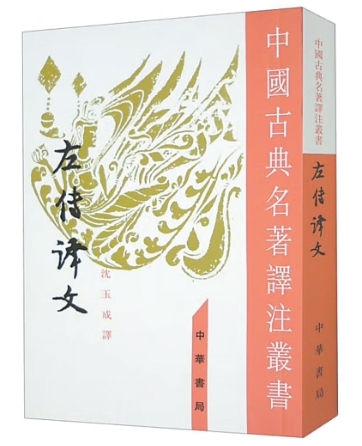
一部《左传》,读懂春秋大义(一起读经典)
Ren Min Ri Bao· 2025-08-07 22:40
Core Viewpoint - The articles discuss the significance of the "Zuo Zhuan" (左传) and its relationship with "Spring and Autumn" (春秋), emphasizing their role in understanding justice and righteousness in society, as well as their impact on Chinese culture and history [2][6][7]. Group 1: Historical Context - "Zuo Zhuan" is a comprehensive historical text that supplements the "Spring and Autumn," providing detailed accounts of events from 722 BC to 481 BC, covering 242 years of history [3]. - The author of "Zuo Zhuan," Zuo Qiuming, is noted for his unique perspective and narrative style, which has left a significant mark on Chinese historiography [3][5]. Group 2: Cultural Significance - "Zuo Zhuan" serves not only as a historical record but also as a literary epic, influencing later works such as "Records of the Grand Historian" (史记) and shaping the narrative tradition in Chinese literature [5]. - The text is seen as a foundational work that encapsulates the political, military, and ethical paradigms of the time, contributing to the collective memory and identity of the Chinese civilization [5][6]. Group 3: Philosophical Insights - The "Spring and Autumn" and "Zuo Zhuan" together explore essential questions of morality and justice, rejecting a purely profit-driven society and advocating for higher values that individuals and communities should strive for [6][7]. - The enduring relevance of these texts is highlighted by their continued study and interpretation by scholars and leaders throughout Chinese history, reflecting their importance in moral and ethical discourse [6][7].