隐藏式门把手设计

Search documents
小米SU7发生起火事故 电池、门把手成为关注焦点
3 6 Ke· 2025-10-13 12:48
Core Points - A serious traffic accident involving a Xiaomi electric vehicle occurred on October 13, resulting in the death of the driver, who was suspected of driving under the influence of alcohol [2][5] - The incident has raised concerns regarding the safety features of Xiaomi's vehicles, particularly the battery safety and door handle design [7][12] Group 1: Accident Details - The accident involved two electric vehicles, one of which caught fire after colliding and crossing the central green belt [5] - Attempts by bystanders to rescue the driver were unsuccessful due to the inability to open the car doors or break the windows [5][11] - The police report did not clarify whether the driver died immediately from the collision or due to the subsequent fire [5] Group 2: Vehicle Safety Features - Xiaomi's customer service stated that the vehicle is designed to automatically unlock upon detecting a collision, but this feature failed during the incident [7] - Concerns have been raised about the effectiveness of the battery safety measures, which were previously highlighted by Xiaomi, including a 17-layer high-pressure insulation protection and special electrolyte developed with CATL [7][10] - The vehicle's door handle design, which relies on electronic mechanisms, has been criticized for potentially being a fatal flaw in emergency situations [11] Group 3: Regulatory Implications - The accident has sparked discussions about new national standards for electric vehicle batteries and door handle designs, which aim to enhance safety and rescue reliability [12][13] - The new battery safety standards, effective from July 1, 2026, will impose stricter testing requirements, including thermal runaway tests [13] - Proposed regulations will prohibit fully hidden external door handles and require mechanical release functions to improve rescue operations [13]


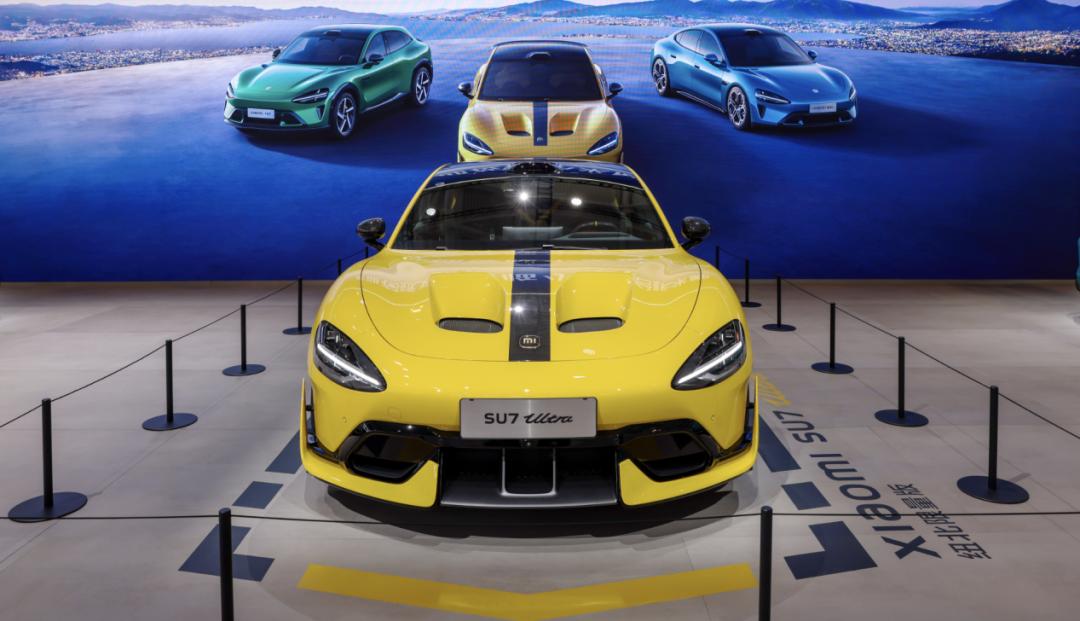
小米SU7发生起火事故,电池、门把手成为关注焦点
Hu Xiu· 2025-10-13 12:03
Core Points - A traffic accident involving a Xiaomi vehicle resulted in a fire, leading to the death of the driver, who was suspected of driving under the influence of alcohol [1][4][5] - The incident has raised concerns regarding the safety features of Xiaomi's electric vehicles, particularly the door handle design and battery safety [6][12][18] Summary by Sections Accident Details - The accident occurred on October 13, 2025, at 3:18 AM on Tianfu Avenue, Chengdu, involving two electric vehicles [1][4] - The driver of the vehicle that caught fire was identified as 31-year-old Deng, who was found to be driving under the influence [1][4] Vehicle Specifications and Safety Features - Both vehicles involved in the accident were electric, with the burning vehicle resembling the design of the Xiaomi SU7 Ultra [1][4] - Xiaomi has previously emphasized the safety of its battery technology, claiming it has top-tier protective measures, including 17 layers of high-pressure insulation and special materials to withstand extreme conditions [7][9] Emergency Response and Design Flaws - Eyewitnesses reported that attempts to rescue the driver were unsuccessful due to the inability to open the doors or break the windows [6][16] - The design of the door handles, which are electronically controlled, has been criticized for potentially being a fatal flaw in emergency situations [13][14][15] Regulatory Implications - The incident has sparked discussions about new national standards for electric vehicle battery safety and door handle designs, which are set to be implemented in 2026 and 2027 [18][20] - Xiaomi claims that all its vehicle batteries meet the upcoming safety standards [19]
隐藏式门把手,特斯拉也要放弃了?
3 6 Ke· 2025-09-23 09:56
Core Viewpoint - Tesla is re-evaluating its controversial hidden door handle design due to safety concerns, particularly in emergency situations, and is considering adjustments based on market demands, especially in China [2][5][12]. Group 1: Safety Concerns - The National Highway Traffic Safety Administration (NHTSA) is investigating approximately 174,000 units of the 2021 Tesla Model Y due to potential failures of the electronic door handle, which could pose safety risks [2][3]. - Reports indicate that there have been incidents where children were trapped in the back seat due to the failure of electronic door handles [3]. - The hidden door handle design has been criticized for its reliance on electronic systems, which can fail in the event of a power outage, complicating rescue efforts during emergencies [12][14]. Group 2: Industry Response - Other automakers, such as Great Wall Motors, have publicly criticized hidden door handles, citing issues like weight, poor sealing, and noise, suggesting that the design's benefits in reducing drag are negligible [4]. - The Ministry of Industry and Information Technology in China is seeking public input on mandatory safety standards for door handles, indicating a shift towards prioritizing safety in automotive design [4]. - The automotive industry is beginning to reflect on the balance between innovative design and practical safety, with Tesla's move potentially prompting a broader industry shift towards more practical solutions [15][17]. Group 3: Historical Context and Trends - The concept of hidden door handles is not new, having been first introduced by Mercedes in 1952, but it gained popularity with Tesla's implementation in the Model S in 2012 [6][8]. - The design became a hallmark of modern electric vehicles, appealing to consumers' desires for sleek aesthetics and advanced technology [9][11]. - However, the widespread adoption of hidden door handles has revealed significant safety vulnerabilities, leading to a reconsideration of their use in the industry [12][15]. Group 4: Technical Developments - The automotive industry is investing in developing safer and more reliable door handle solutions, including improved electronic control systems and backup mechanical mechanisms [17]. - Consumer education is highlighted as a critical aspect, as many users are unaware of emergency operation methods for hidden door handles, which can hinder their ability to respond in emergencies [17]. - The shift in focus from purely aesthetic innovations to practical safety measures is seen as a necessary evolution for the automotive industry [17][18].