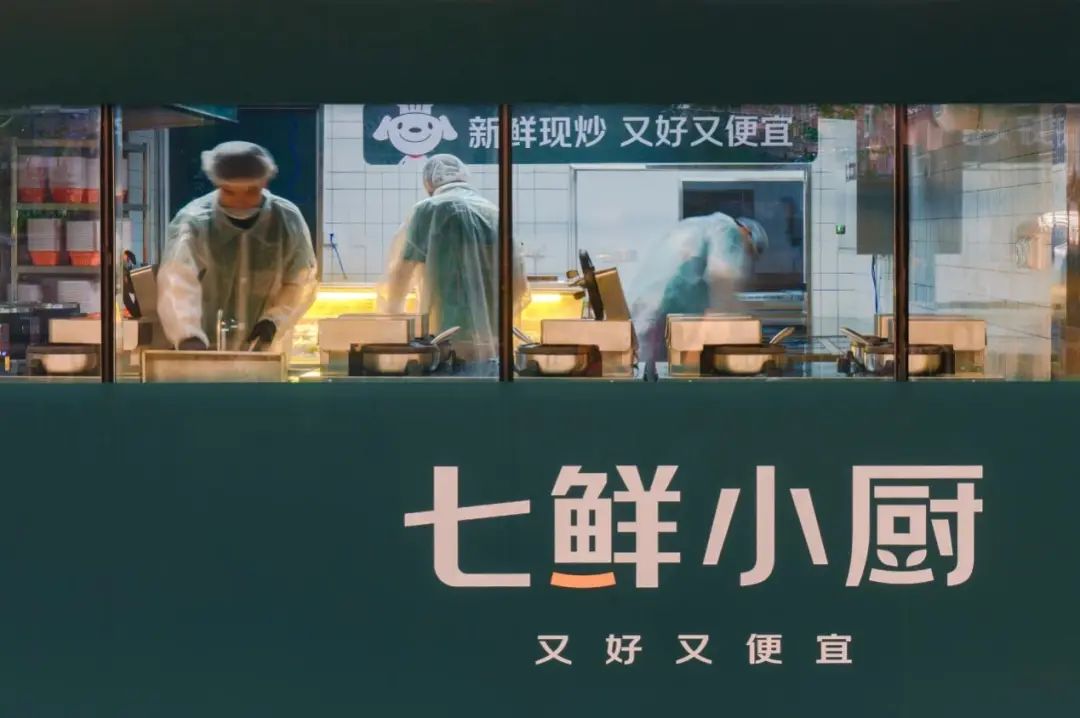
集中式外卖厨房

Search documents
美团浣熊食堂开放加盟,投资门槛约150万
Xin Lang Ke Ji· 2025-08-27 03:19
Core Insights - Meituan has launched a partner recruitment initiative for its centralized takeout kitchen brand "Raccoon Kitchen," initially limited to five cities: Beijing, Shanghai, Guangzhou, Shenzhen, and Hangzhou [1][2] - The company plans to invest in the establishment of 1,200 "Raccoon Kitchen" locations across the country over the next three years, following a successful trial operation that began in July [1] Investment Requirements - Partners are required to have an initial investment of approximately 1.5 million yuan per store, with at least 1 million yuan in cash or asset proof [1] - Partners must secure locations in popular takeout districts, with a building area of 500-1,000 square meters and a remaining lease term of no less than eight years [1] Operational Structure - The partnership model for "Raccoon Kitchen" differs from traditional franchise models, where partners are responsible for securing locations, renovation, and assisting with necessary permits for incoming food vendors [2] - Meituan will handle recruitment, pricing, marketing, on-site management, and training, while the basic salary for store managers will be covered by the partners [2] Financial Incentives - Meituan has introduced promotional policies to waive or limit certain fees for partners during the initial recruitment phase [1]

刘强东王兴,再次狭路相逢
3 6 Ke· 2025-07-23 11:27
Core Viewpoint - The competition among major food delivery platforms, including Meituan, JD.com, and Taobao, has intensified with significant subsidy initiatives, leading to a "crazy Saturday" promotion that has raised concerns among restaurant operators about sustainability and profitability [1][7]. Group 1: Subsidy Wars and Market Reactions - Taobao Flash Sale launched a subsidy plan of 500 billion yuan, prompting Meituan to issue large delivery red envelopes and JD.com to introduce discounted products [1]. - The intense competition has led to a surge in orders, causing operational challenges for delivery platforms, including system outages due to high demand [1]. - Restaurant operators have expressed fatigue from the ongoing subsidy wars, indicating that the profits do not significantly increase despite higher order volumes [8][10]. Group 2: Strategic Shifts to Self-Operated Kitchens - JD.com has opened its self-operated kitchen "Qixian Xiaochu," utilizing a machine cooking model and plans to establish over 10,000 locations nationwide within three years [2][6]. - Meituan has introduced the "Raccoon Canteen" shared kitchen model, with plans to open 1,200 locations across the country in three years, focusing on providing a comprehensive service for restaurant partners [4][6]. - Both companies aim to enhance operational efficiency and food quality, moving beyond mere order volume competition to a more sustainable business model [6][15]. Group 3: Industry Challenges and Future Outlook - The shift towards centralized kitchens raises questions about the sustainability of such business models, as previous attempts in the industry have failed [14][15]. - The competition for market share between platforms and traditional restaurants may lead to significant operational challenges, including balancing supply chain management and maintaining quality [14][15]. - The long-term viability of these new models remains uncertain, as they require substantial investment and may face resistance from existing restaurant operators [15].