零利率时代

Search documents
巨量存款到期,银行又要降利率了!
Sou Hu Cai Jing· 2026-02-03 05:42
Core Viewpoint - The announcement from Ningbo Bank regarding the adjustment of fixed deposit interest rates signals the transition into a "zero interest rate era," necessitating individuals to prepare for the implications of this shift [4]. Group 1: Economic Context - The adjustment of the fixed deposit interest rates to 0% reflects a broader trend where safe assets are yielding diminishing returns, indicating a lack of buffer for investors [4]. - In the past three and a half years, despite economic challenges, Chinese citizens have accumulated the highest savings in the last 20 years, with an average increase of 44,000 RMB per person [7]. - By 2025, the increase in RMB deposits reached 26.41 trillion RMB, resulting in a total of 162 trillion RMB held in banks, which is excessively high for any economy [7]. Group 2: Monetary Policy and Banking Response - In January, the central bank announced a significant interest rate cut, reducing the re-lending and re-discount rates by 0.25 percentage points, indicating a shift towards targeted structural monetary easing [10]. - The central bank aims to stimulate specific sectors, particularly high R&D private SMEs, as traditional broad monetary policies have proven ineffective [10]. - The trend of decreasing interest rates has led to a situation where one-year deposit rates have entered the "zero" range, and a phenomenon of "interest rate inversion" has emerged, where five-year deposit rates are lower than three-year rates [10][14]. Group 3: Investment Landscape - The banking sector is signaling a clear intention to discourage excessive savings, as interest rates continue to decline, leading to concerns about wealth erosion [14]. - Traditional investment avenues such as real estate are losing their appeal, and stock market volatility is increasing, narrowing the options for safe and rewarding investments for the average person [15]. - A significant shift in savings behavior is observed, with a notable decrease in bank deposits and an increase in non-bank deposits, indicating a migration of savings towards investment markets rather than consumption [17][18]. Group 4: Future Implications - The anticipated expiration of a large volume of fixed deposits in 2026, estimated at nearly 60 trillion RMB, will likely trigger a substantial reallocation of wealth, leading to significant changes in asset prices [6][20]. - The government is expected to implement various strategies to encourage the movement of money out of banks, including continued low deposit rates and potential inflationary measures [20]. - This transition represents a critical opportunity for wealth redistribution, emphasizing the need for individuals and businesses to adopt diversified asset allocation strategies [21][22].



华瑞银行下调存款利率,各地小银行也在下调,零利率时代已到来?
Sou Hu Cai Jing· 2025-10-26 23:09
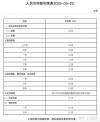
Core Viewpoint - The report from the Bank of China Research Institute indicates that more banks, particularly small and medium-sized banks, are expected to lower deposit interest rates in the last quarter of 2025, especially for medium- and long-term deposits [1] Group 1: Deposit Rate Changes - In the second quarter, the six major state-owned banks lowered their deposit rates, with the current deposit rate dropping to an unprecedented 0.05%, meaning a deposit of 10,000 yuan yields only 5 yuan in annual interest [3] - The one-year fixed deposit rate is now at 0.95%, while the three-year fixed deposit rate is only 1.25%, aligning with the zero-interest rate environment seen in developed economies [3] - Joint-stock banks have also joined the trend of lowering interest rates, with one-year fixed deposit rates around 1.15%, while some city commercial banks and provincial rural commercial banks have rates between 1% and 1.1% [4] Group 2: Comparison of Bank Rates - A table shows various banks' deposit rates, with state-owned banks offering rates of 0.95% for one-year fixed deposits and 1.25% for three-year fixed deposits, while some smaller banks still maintain higher rates [6] - Smaller banks like Shanghai Huari Bank have begun to lower their deposit rates, but their rates remain higher than those of the six major state-owned banks, with one-year fixed deposit rates at 1.5% and three-year rates at 2.3% [12] Group 3: Economic Context - The decline in deposit rates is attributed to banks' varying operational conditions and the need to lower costs in a competitive lending environment, particularly affecting smaller banks that rely heavily on interest rate spreads [7] - The People's Bank of China has not adjusted the benchmark deposit rates since July 2011, leading to a situation where the rates set by the six major banks effectively replace the central bank's rates [12] - The financial system's structural changes have resulted in deposit rates for major banks nearing zero, with current rates at 0.05% for current accounts and 0.9% for one-year fixed deposits [13]






当零利率时代到来时:最值钱的是钱本身
Sou Hu Cai Jing· 2025-07-05 00:32
Group 1 - The possibility of a zero interest rate era is discussed, with examples from Japan, the US, and Europe, raising the question of whether China could also experience this situation as its one-year interest rate is already below 1% [2] - China's economic downward pressure has been evident since 2012, with GDP growth rates declining from double digits, indicating a shift in economic dynamics, primarily due to insufficient domestic demand [2] - The reliance on external demand to supplement internal demand is diminishing, especially with the impact of trade wars, suggesting that the zero interest rate era may not be far off for China [2] Group 2 - In a potential zero interest rate era, individuals are advised to avoid risky investments, as overall asset values are expected to shrink, making a conservative investment approach more favorable [4] - The zero interest rate environment is often associated with economic depression, as seen during the Great Depression in the US, where unemployment surged, posing significant challenges for the middle class [4] - The focus should be on job security rather than maintaining dignity, as employment becomes the priority in a challenging economic landscape [4] Group 3 - The greatest pressure is on debt, with the need for balance sheet cleaning being more critical than merely lowering deposit rates, as seen in historical cases during financial crises [6] - The average wage level in society may decline significantly during a depression, leading to a situation where cash becomes more valuable compared to assets [8] - In a deflationary context, even with zero interest rates on deposits, holding cash may be a safer option as purchasing power could increase [8]