零糖

Search documents
食品饮料:食品细分赛道景气度延续,成本成为关注点
Dongxing Securities· 2026-03-31 14:09
Investment Rating - The industry investment rating for the food and beverage sector is "Positive" [4] Core Insights - The food and beverage industry is experiencing a continuation of growth in specific segments, with a focus on cost management due to rising oil prices [11][12] - The white liquor market is showing signs of differentiation in sales performance, with premium brands like Moutai and Wuliangye maintaining strong sales, while lower-tier brands are struggling [11] - The snack food segment is benefiting from new channel opportunities and is expected to maintain stable growth throughout the year [12] Summary by Sections Industry Overview - The atmosphere at the 2026 Spring Sugar and Wine Fair was notably subdued compared to previous years, indicating the industry is in a phase of bottom adjustment [11] - The overall inventory in the industry is decreasing, with a notable divergence in sales performance among different liquor brands [11] Market Performance - The food and beverage sub-sectors experienced varied weekly performance, with yellow wine up by 6.55% and soft drinks down by 3.26% [12][13] - The average price-to-earnings (PE) ratio for the industry is reported at 20.41, with yellow wine having the highest PE at 44.81 and white liquor the lowest at 17.53 [13] Investment Recommendations - The report suggests focusing on leading companies in the frozen food sector, as they are expected to benefit from the recovery in the mass catering market [12] - Specific companies to watch include Salted Fish, Ganyuan Food, and Anjui Food, particularly as Moutai's price stabilizes and demand is expected to improve in the second half of 2026 [12]
双汇发展三季度业绩亮眼:肉类总外销量创新高
Di Yi Cai Jing· 2025-11-10 07:49
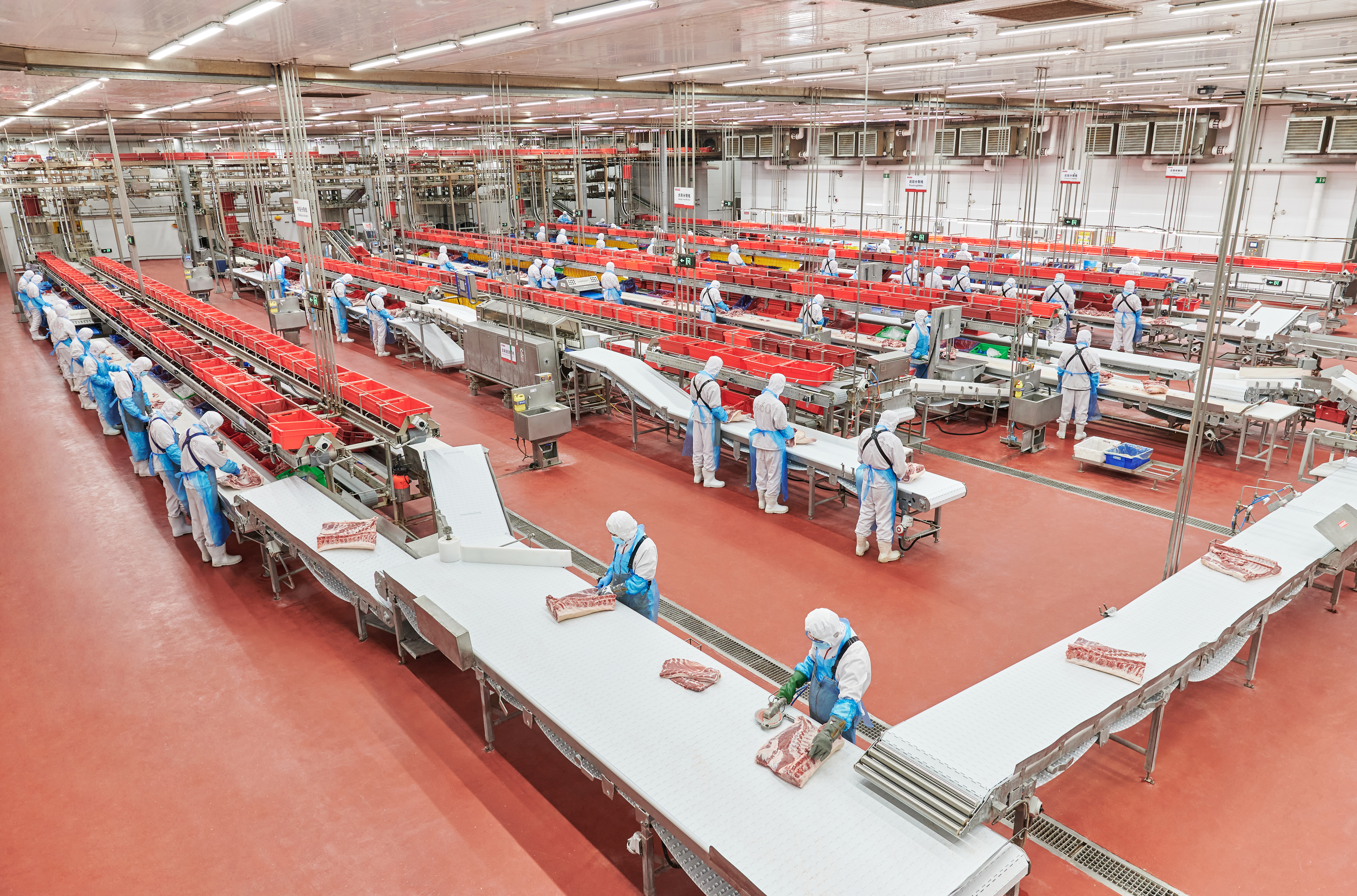
Core Insights - In a steadily recovering domestic consumption market, Shuanghui Development (000895.SZ) reported resilient Q3 results, with revenue of 44.52 billion yuan, a year-on-year increase of 1.2%, and a net profit of 3.96 billion yuan, up 4.1% [1][5] Financial Performance - For Q3 2025, the company achieved a net profit of 1.64 billion yuan, representing a significant year-on-year growth of 8.5%, while the net profit excluding non-recurring items was 1.6 billion yuan, up 10.7% [5][6] - The overall revenue for the first three quarters was stable, with the meat products sector generating 17.99 billion yuan and the slaughtering sector 19.37 billion yuan, alongside 7.3 billion yuan from other businesses [5][6] Sales and Volume Growth - The total external sales volume of meat products reached 2.489 million tons, a year-on-year increase of 5.9%, marking a historical high for the same period [5][6] - In Q3 alone, the external sales volume of meat products was 923,000 tons, reflecting a growth rate significantly above the average for the first three quarters [5][6] Product and Channel Innovation - The fresh pork business saw a 13.4% increase in external sales volume to 1.087 million tons, while the poultry business experienced an 18.4% rise to 285,000 tons, achieving historical highs [6][7] - The company has implemented a specialized sales team reform, leading to a 25.8% increase in new channel sales of meat products, with significant contributions from the snack and e-commerce channels [7] Cost Management and Profitability - The company’s weighted average return on net assets reached 18.5%, an increase of 0.5 percentage points year-on-year, indicating improved asset profitability [6] - Sales expenses rose by 8.7% to 1.57 billion yuan, while management expenses slightly decreased by 1.2% to 950 million yuan, showcasing effective cost control [6] Cash Flow and Future Outlook - The net cash flow from operating activities for the first three quarters was nearly 6 billion yuan, providing a solid foundation for ongoing development and strategic initiatives [8] - For Q4, the management anticipates a decrease in raw material costs but plans to increase market expenditure to boost sales, expecting stable year-on-year profits despite potential declines in per-ton profits [8]