
零食量贩模式

Search documents
中国零食量贩模式,在东南亚注定失效
3 6 Ke· 2026-02-04 12:29
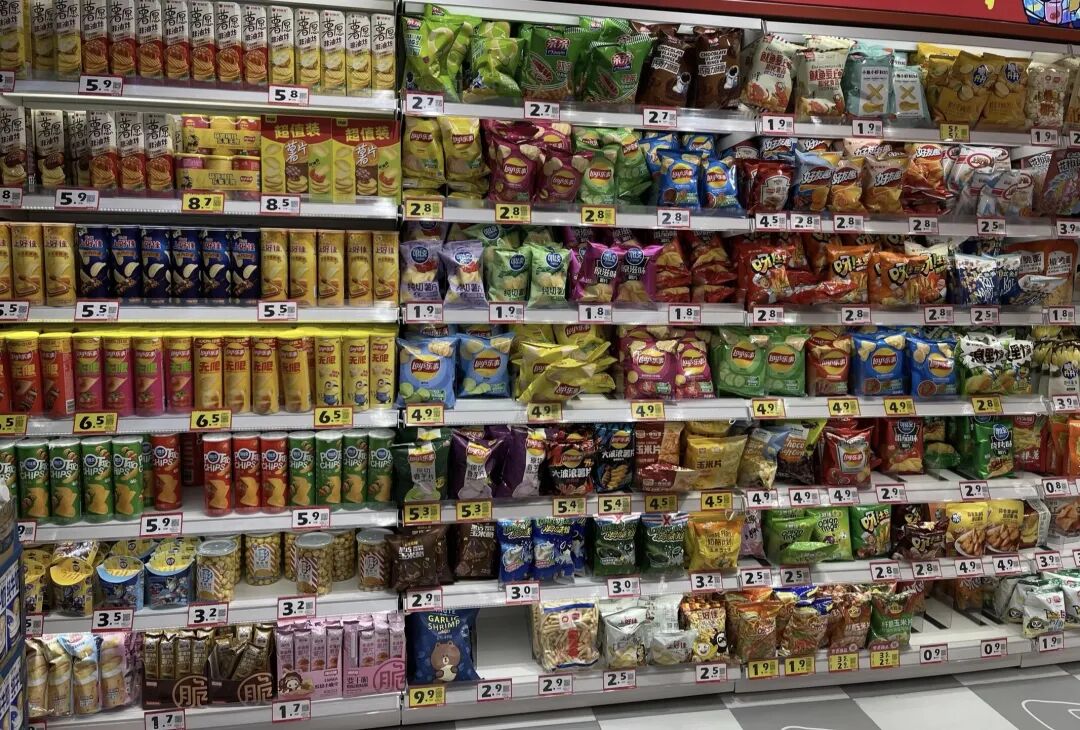
Core Viewpoint - The article discusses the challenges and misconceptions of expanding China's snack retail model into Southeast Asia, emphasizing that the unique conditions that allowed for the success of this model in China do not exist in Southeast Asia, leading to potential failures if the model is blindly replicated [1]. Group 1: Business Model Analysis - The core formula for China's snack retail (hard discount) is based on extreme low prices achieved through supply chain overflow, low fulfillment costs, and high turnover efficiency [3]. - The success of this model in China relies on a surplus of mature production capacity, which is absent in Southeast Asia [7]. - Southeast Asia's food industry is dominated by large corporations, making it difficult for new entrants to negotiate low prices or establish a competitive edge [10]. Group 2: Cost and Logistics Challenges - Importing products from China to Southeast Asia incurs high logistics and tariff costs, which can increase procurement costs by 30%-50% [11]. - The fragmented geography of Southeast Asia, with numerous islands, leads to high fulfillment costs and slow inventory turnover, making it difficult to maintain profitability [29]. Group 3: Consumer Behavior Differences - Southeast Asian consumers prefer small packaging and low prices due to their financial constraints, which contrasts with the bulk purchasing behavior seen in China [20][21]. - The low average transaction value in Southeast Asia can hinder the ability of snack retail stores to cover operational costs, as the model relies on high turnover and sales volume [22]. Group 4: Regulatory and Market Entry Barriers - The requirement for Halal certification in Indonesia and Malaysia presents significant barriers to entry for foreign snack retailers, complicating the process of introducing new products [30][32]. - The lengthy certification process can hinder the ability to quickly adapt to market trends, reducing the attractiveness of stores to consumers [36]. Group 5: Strategic Recommendations - Companies should focus on brand expansion rather than channel expansion, leveraging existing local distribution networks to introduce high-quality products [40]. - Local manufacturing should be prioritized to create products that cater to local tastes and price points, utilizing local resources and production techniques [41]. - Companies should be cautious of drawing parallels between different business models, as the operational dynamics of snack retail differ significantly from those of other sectors like beverage retail [43].

鸣鸣很忙成功登陆港交所
Jing Ji Wang· 2026-01-29 10:03
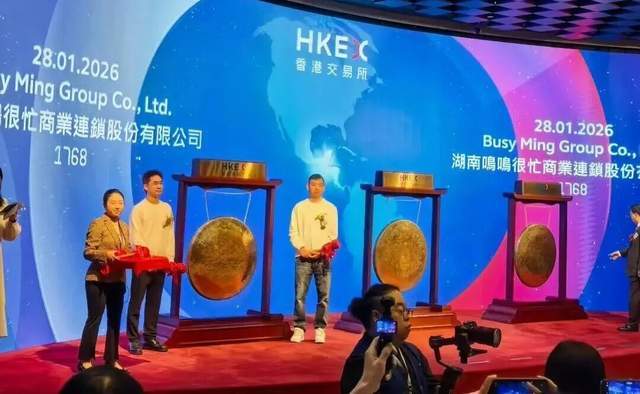
Core Viewpoint - Hunan Mingming Hen Mang Commercial Chain Co., Ltd. officially listed on the Hong Kong Stock Exchange, marking a significant milestone in its growth as a leading player in the Chinese snack retail market [1][2]. Group 1: Company Overview - Mingming Hen Mang started as a community store and has expanded to over 20,000 locations nationwide, becoming a staple in consumers' lives [1]. - The company operates two major brands: "Snacks Hen Mang" and "Zhao Yiming Snacks," leading the bulk sales model in China's food and beverage sector [1]. - The company has established a presence in 28 provinces and cities, with 59% of its stores located in county and town areas, serving as a crucial link between consumer demand and the food industry [1]. Group 2: Business Model and Strategy - Mingming Hen Mang enhances value by improving efficiency through a bulk sales model that connects directly with manufacturers and brands, significantly reducing distribution costs [2]. - The company emphasizes food safety and quality while ensuring that products of the same quality reach consumers at more reasonable prices [2]. - The recent listing on the Hong Kong Stock Exchange signifies a transition to a more transparent and stable development phase, with plans to focus on consumer demand and invest in store networks, supply chain capabilities, product structure, and food safety systems [2].
刚刚,鸣鸣很忙在港交所上市
Sou Hu Cai Jing· 2026-01-28 02:20
Core Viewpoint - "Mingming Hen Mang," China's largest leisure food and beverage retail chain, officially listed on the Hong Kong Stock Exchange, with a significant market valuation reflecting strong market expectations for its growth potential [2] Group 1: Company Overview - "Mingming Hen Mang" has expanded from a regional brand in Hunan to a national leader in the retail sector, utilizing a dual-brand synergy model to build its retail empire [3] - The company has achieved rapid growth, with a projected increase in store count from 6,585 in December 2023 to 19,517 by September 30, 2025, marking nearly a threefold expansion [4] - The merger of "Mingming Hen Mang" and "Zhao Yiming Snacks" has created a complementary national layout, enhancing market coverage and operational efficiency [4][5] Group 2: Business Model and Market Position - The rise of "Mingming Hen Mang" is attributed to a shift in the Chinese leisure food retail industry, moving away from traditional supermarket reliance to a more efficient, direct-to-consumer model [6] - The company has established a competitive edge through a supply chain policy that reduces intermediaries, allowing for lower prices—approximately 25% cheaper than similar products in supermarkets [7] - "Mingming Hen Mang" has a diverse product offering with over 1,800 SKUs per store, significantly higher than the average for similar-sized supermarkets, and 34% of its products are custom-made in collaboration with manufacturers [7] Group 3: Industry Trends and Challenges - The leisure food retail sector is undergoing transformation, with a growing demand for high-quality, affordable products, particularly in lower-tier markets [8] - Despite its advantages, "Mingming Hen Mang" faces challenges such as low profit margins, competition, and the need to adapt to changing consumer preferences towards healthier options [10] - The listing on the Hong Kong Stock Exchange marks a significant milestone, but the company must balance growth with profitability and operational control to sustain its market position [11]
新股预览:鸣鸣很忙
中国光大证券国际· 2026-01-20 06:24
Investment Rating - The report assigns a rating of ★★★★☆ for basic factors and valuation, ★★★★★ for performance growth, ★★★☆☆ for industry representation, and ★★★★★ for market conditions [4]. Core Insights - The company is a mature and steadily growing food and beverage retailer in mainland China, with a store network of 19,517 locations covering 28 provinces and all tiered cities, with approximately 59% of stores located in county and town areas [1][3]. - In 2024, the company recorded a GMV of RMB 55.5 billion, and for the nine months ending September 30, 2025, GMV reached RMB 66.1 billion, representing a growth of 74.5% compared to the same period in 2024 [2]. - The company is recognized as the largest chain retailer in mainland China for leisure food and beverage products by GMV in 2024, and it ranks fourth for food and beverage products overall, maintaining rapid growth [2]. - The company has a strong focus on user demand, with over 1.6 billion orders processed in its store network in 2024, and approximately 34% of its product SKUs are custom-developed in collaboration with manufacturers [2]. Financial Data Summary - Revenue for the fiscal years ending December 31 are as follows: RMB 4.286 billion in 2022, RMB 10.295 billion in 2023, and projected RMB 39.344 billion in 2024 [4].
万辰集团(300972)公司深度分析:硬折扣时代的渠道新探索
Xin Lang Cai Jing· 2025-08-15 10:38
Core Insights - Wancheng Group (300972.SZ) is a private enterprise established in 2011 in Fujian Province, primarily engaged in the research, factory cultivation, and market sales of edible fungi, with products covering seven major regions in China and exports to Southeast Asia and Europe and the United States [1] - The company's core business has shifted to the snack wholesale sector, with revenue from this segment reaching 98.33% by 2024, while the edible fungi business accounts for only 1.67% [1] Group 1 - In 2022, the company entered the snack wholesale market, achieving significant growth through asset acquisitions, including "Luxiaochan," "Haoxianglai," and "Laopo Daren" in 2022 and 2023, establishing a nationwide presence [2] - By 2024, the company had over 15,000 wholesale stores covering 29 provinces, with wholesale revenue reaching 31.79 billion yuan, representing an average annual growth of 66.6 times from 2023 to 2024 [2] - The snack wholesale model features low gross margins but high return on net assets, with a net asset return rate of 17.44% in Q1 2025, significantly higher than other retail channels [2] Group 2 - The company's net profit margin in Q1 2025 was 3.59%, second only to department stores at 4.5%, and higher than other channels, attributed to lower costs in rent, marketing, and management [2] - The company also exhibits higher inventory turnover, accounts receivable turnover, and total asset turnover compared to other channels, contributing to its financial efficiency [2] - Earnings per share are projected to be 4.46, 6.35, and 7.85 yuan for 2025, 2026, and 2027, respectively, with corresponding price-to-earnings ratios of 33.76, 23.71, and 19.20 based on the closing price of 150.65 yuan on August 14 [3]
一致魔芋(839273) - 关于投资者关系活动记录表的公告
2025-06-13 11:20
Group 1: Investor Relations Activities - The company held an earnings briefing on June 12, 2025, via the "Investor Relations Interactive Platform" [3] - Attendees included company directors and financial officers, specifically Mr. Tang Hualin and Mr. Huang Zhaosheng [3] Group 2: Strategic Plans and Collaborations - The company is actively expanding its konjac ingredient business and seeking partnerships with major chain restaurants [4] - Collaborations have been established with leading tea brands such as Mixue Ice City and Hu Shang Ayi, focusing on the significant market growth of konjac balls as a tea ingredient [5] Group 3: Supply Chain and Production - The company does not involve fresh konjac procurement but relies on dried konjac slices and konjac flour, ensuring stable supply through annual framework agreements with suppliers [5] - The company has stable supplier channels across major production areas in the country [5] Group 4: Mergers and Acquisitions - Currently, there are no merger or acquisition plans, but the company will monitor opportunities in line with regulatory guidelines [5] Group 5: Product Development and Market Expansion - The company focuses on three main product categories: konjac raw materials, konjac food products, and konjac beauty products, with ongoing new product development and market expansion efforts [6] - Significant progress has been made in the research and application of konjac ingredients [6] Group 6: New Market Ventures - The company has made advancements in the milk tea and pet food sectors, with notable progress in production capacity [6] - Collaborations with well-known pet food companies have been established, and the company plans to increase R&D investment to enhance market competitiveness [6]