
零食量贩

Search documents
万辰集团(300972):2025年年报点评:业务持续扩张,效率加速提升
Changjiang Securities· 2026-03-30 09:07
Investment Rating - The investment rating for the company is "Buy" and it is maintained [5]. Core Insights - The company reported a total revenue of 51.459 billion yuan in 2025, representing a year-on-year increase of 59.17%. The net profit attributable to shareholders was 1.345 billion yuan, up 358.09%, while the net profit excluding non-recurring items reached 1.277 billion yuan, an increase of 395.03% [1][3]. - In Q4 2025, the total revenue was 14.897 billion yuan, reflecting a growth of 27.15%. The net profit attributable to shareholders for this quarter was 490 million yuan, a 133.76% increase, and the net profit excluding non-recurring items was 471 million yuan, up 159.36% [1][3]. Summary by Relevant Sections Business Expansion - As of the end of 2025, the company had a total of 18,314 stores nationwide, with 4,720 new stores opened and 602 closed, resulting in a net increase of 4,118 stores. The closure rate was 3.18%, an increase of 1.07 percentage points year-on-year [10]. - The company is strategically expanding its "snack+" product matrix, introducing low-temperature short-shelf-life food and beverages, frozen foods, and licensed IP products, with plans to further expand into household cleaning and personal care sectors [10]. Profitability Improvement - The net profit margin for 2025 increased by 1.71 percentage points to 2.61%, and the gross profit margin rose by 1.64 percentage points to 12.4%. The expense ratio decreased by 1.52 percentage points to 6.07% [10]. - In Q4 2025, the net profit margin improved by 1.5 percentage points to 3.29%, and the gross profit margin increased by 2.8 percentage points to 14.15% [10]. Financial Forecast - The company is expected to achieve net profits attributable to shareholders of 2.349 billion yuan, 3.114 billion yuan, and 3.815 billion yuan for the years 2026, 2027, and 2028, respectively. The corresponding price-to-earnings ratios at the current stock price are projected to be 15x, 11x, and 9x [10].
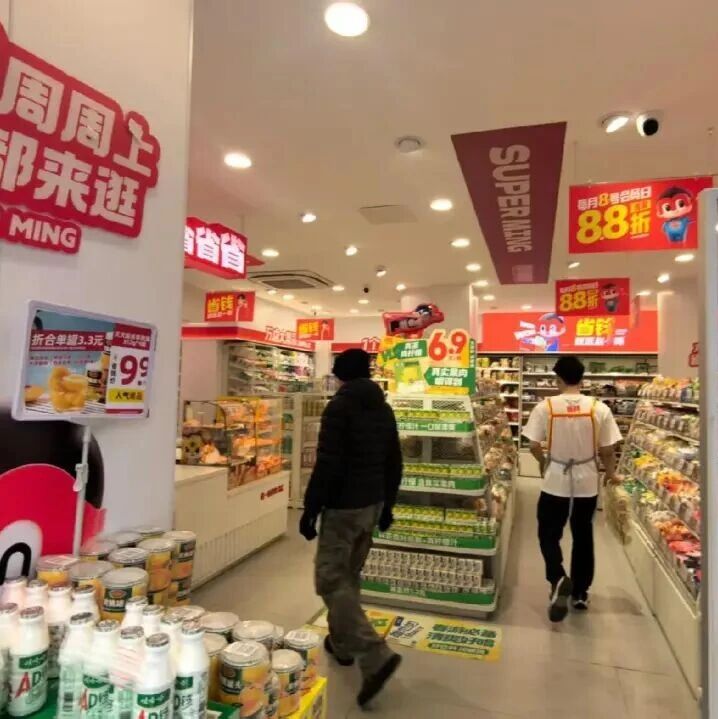
量贩零食店开进三环
经济观察报· 2026-03-29 04:11
Core Insights - The core viewpoint of the article is that leading snack retail brands are shifting their focus to core areas of first-tier cities, where market penetration is still low, marking a new phase of growth in the industry [1][11]. Group 1: Market Expansion - Snack retail brands like Zhao Yiming and Hao Xiang Lai are rapidly opening new stores in Beijing's core areas, indicating a strategic shift from expansion in lower-tier markets to exploring new growth opportunities in high-tier cities [2][6]. - The industry has reached a stage of high market concentration, with the CR2 (market share of Ming Ming Hen Mang and Wan Chen Group) reaching 75.1% by 2024 [8]. Group 2: Store Characteristics - New stores in first-tier cities are smaller, around 100 square meters, compared to larger stores in lower-tier markets, and feature a more compact layout with a focus on convenience items like drinks and snacks [5]. - Customer traffic patterns show that these stores experience low foot traffic during weekdays but see significant increases during after-school and after-work hours, indicating a reliance on local student and working populations [4][5]. Group 3: Cost Challenges - Opening stores in first-tier cities presents significant cost pressures, with annual rent for a store in Beijing's core area reaching 500,000 yuan, and average gross margins around 20% [13]. - In contrast, the cost structure in lower-tier markets is more favorable, with lower rent and investment requirements, making it easier for brands to operate profitably [13]. Group 4: Strategic Adaptations - In response to market saturation in lower-tier cities and high costs in first-tier cities, brands are diversifying their product offerings and exploring new store formats, such as discount supermarkets [14][15]. - Both Ming Ming Hen Mang and Hao Xiang Lai are developing private labels and optimizing supply chains to enhance operational efficiency and differentiate their product offerings across various locations [15].

招商证券:白酒行业仍在筑底过程 大众品板块关注成本传导
智通财经网· 2026-03-27 03:51
Core Viewpoint - The overall sentiment in the liquor industry is cautious as the focus shifts from channel competition to consumer engagement and retention, with 2026 expected to be a pivotal year for the industry [1][2]. Group 1: Liquor Industry Insights - The number of participating companies and personnel at the 2026 Spring Sugar Conference is lower than in previous years, with major companies like Moutai and Wuliangye canceling events, indicating a shift towards C-end user operations and brand value transmission [1][2]. - The liquor sector is still in a bottoming phase, with signs of stabilization from leading companies like Moutai and Wuliangye, while overall demand is expected to normalize post-holiday [2]. - Inventory levels among distributors are gradually normalizing, with major liquor companies actively reducing stock, suggesting a potential for marginal improvement in the second half of 2026 [2]. Group 2: Consumer Goods Sector Insights - In the consumer goods sector, the restaurant chain segment shows significant improvement in Q1 2026, with key players locking in short-term costs [3]. - The dairy sector, represented by companies like Mengniu and Yili, is experiencing modest growth, while beverage leaders such as Nongfu Spring continue to show stable growth [3]. - The snack retail segment is also improving, with same-store sales showing positive trends and new store formats being explored to enhance growth potential [3]. Group 3: Investment Recommendations - The investment strategy emphasizes a focus on cyclical recovery in the restaurant chain sector, recommending companies like Haitian Flavoring and Yanjing Beer for their competitive advantages and growth potential [4]. - In the dairy sector, attention is drawn to leading companies like Yili and Mengniu, as well as upstream suppliers like Youran Dairy, due to improving supply-demand dynamics [4]. - The liquor sector is viewed as a buying opportunity at the bottom, with recommendations for Moutai and Wuliangye based on clearer Q1 expectations and potential price catalysts [4].

华源晨会精粹20260324-20260324
Hua Yuan Zheng Quan· 2026-03-24 12:08
Group 1: Fixed Income/Banking - The overall scale of corporate annuities in China continued to expand in Q4 2025, with a decrease in investment returns compared to the previous quarter [7][8] - The number of enterprises establishing annuity plans increased by 2,730 to 178,000, and the number of insured employees rose by 109,400 to 3,343,000, indicating steady growth in scale metrics [8][9] - The average management scale of insurance funds is higher than that of public funds, with several institutions showing significant growth in both scale and percentage increase [7][11] Group 2: Robotics - Yushu Technology's IPO has been accepted, aiming to become the first humanoid robot company listed on A-shares, with over 5,500 humanoid robots shipped in 2025, ranking first globally [14][15] - The domestic humanoid robot industry is accelerating its capitalized process, with multiple companies completing significant financing rounds in 2026 [15][16] - The government is increasingly prioritizing the embodied intelligence industry, with new national standards being established to support the sector [16][17] Group 3: Construction/Building Materials - Infrastructure fixed asset investment reached 1.88 trillion yuan in January-February 2026, a year-on-year increase of 11.40%, with significant growth in energy and public facilities sectors [23][24] - The issuance of special bonds is accelerating, with a cumulative issuance of 1.048 trillion yuan as of March 22, 2026, reflecting a 50.82% year-on-year increase [24] - The construction investment logic is shifting towards structural investments that serve national strategies and security needs, particularly in energy and water resources [26][27] Group 4: Food and Beverage - China Resources Beer reported a total revenue of 37.985 billion yuan in 2025, a slight decrease of 1.68%, with a net profit of 3.371 billion yuan, down 28.87% due to goodwill impairment in its liquor business [28][30] - The beer segment showed resilience with a revenue of 36.49 billion yuan, maintaining stable performance despite a slight decline in sales volume [29][30] - Wanchen Group achieved a revenue of 51.459 billion yuan in 2025, a year-on-year increase of 59.17%, with a net profit of 1.345 billion yuan, reflecting a significant growth in its snack retail business [32][33] Group 5: Pharmaceuticals - Junshi Biosciences, established in December 2012, focuses on innovative therapies and reported a sales revenue of 2.068 billion yuan for its core product in 2025, a growth of 37.72% [36][37] - The company has multiple potential products in its pipeline that are expected to contribute to revenue growth, including a PD-1/VEGF dual antibody and a CLDN18.2 ADC [37][38] - The company is projected to have total revenues of 3.398 billion yuan in 2026, with a strong emphasis on innovation and clinical development [38]


【万辰集团(300972.SZ)】拓店节奏良好,盈利能力增强——2025年年报点评(叶倩瑜/董博文/李嘉祺)
光大证券研究· 2026-03-22 23:05
Core Viewpoint - Wanchen Group reported a significant increase in revenue and net profit for 2025, indicating strong business performance and growth potential [4]. Group 1: Financial Performance - In 2025, the company achieved a revenue of 51.459 billion yuan, a year-on-year increase of 59.17%, and a net profit attributable to shareholders of 1.345 billion yuan, up 358.09% [4]. - For Q4 2025, the revenue was 14.897 billion yuan, reflecting a year-on-year growth of 27.15%, while the net profit reached 490 million yuan, an increase of 133.76% [4]. Group 2: Business Expansion - The company’s snack retail business generated revenues of 50.857 billion yuan for the full year and 14.699 billion yuan for Q4, with year-on-year growth rates of 59.98% and 27.12%, respectively [5]. - As of the end of 2025, the total number of stores reached 18,314, with a net increase of 4,118 stores during the year [5]. Group 3: Profitability and Margins - The gross margin for 2025 was 12.40%, with Q4 gross margin at 14.15%, showing an increase of 2.80 percentage points year-on-year for Q4 [6]. - The net profit margin for the full year was 2.61%, while for Q4 it was 3.29%, reflecting improvements in profitability [6].

鸣鸣很忙20260322
2026-03-22 14:35
Summary of the Conference Call for Mingming Hen Mang Group Company Overview - Mingming Hen Mang Group is a leading player in the snack wholesale industry, formed by the merger of "Lingshi Hen Mang" and "Zhao Yiming" in November 2023. [2][3] - The company aims to achieve a GMV exceeding 90 billion yuan and a net profit of over 2.2 billion yuan by 2025, driven by rapid store expansion and net profit margin recovery. [2][3] Financial Performance and Projections - The company expects to have over 22,000 stores by the end of 2025, with a significant contribution from the Zhao Yiming brand, which accounts for over 60% of total revenue. [2][3] - Projected net profits for 2025, 2026, and 2027 are 2.2 billion, 3.3 billion, and 4.3 billion yuan respectively, with a compound annual growth rate (CAGR) exceeding 35% starting in 2026. [2][14] - The company’s net profit margin is expected to improve from 3.4% to over 5% in the medium term, driven by enhanced bargaining power and operational efficiency. [2][12][14] Market Dynamics and Competitive Landscape - The snack wholesale industry is characterized by low gross margins (approximately 10%), high turnover (inventory turnover around 10 days), and low expense ratios (operating expenses at 5-6%). [2][7] - The competitive landscape is consolidating, with Mingming Hen Mang holding over 40% market share and a CR2 close to 75%. The company’s store closure rate is significantly lower than its competitor, Wancheng Group. [2][8][12] - The industry has seen a compound annual growth rate of about 80% over the past five years, with the market share of snack wholesale expected to reach 20% by 2025. [8] Brand Performance - The Zhao Yiming brand has shown a significant increase in revenue contribution and gross margin improvement, with its gross margin rising from approximately 6-7% to nearly 10% post-merger. [4][5] - As of Q3 2025, Zhao Yiming operates over 11,000 stores, generating approximately 27.1 billion yuan in revenue, while Lingshi Hen Mang operates 8,400 stores with around 19.3 billion yuan in revenue. [4] Operational Efficiency - The company’s operational efficiency is highlighted by a lower store closure rate (0.76%) compared to Wancheng Group (1.9%), indicating stronger store management. [5][12] - Average annual store GMV for Mingming Hen Mang is 5.27 million yuan, outperforming Wancheng Group's 4.5 million yuan, attributed to larger store sizes and faster expansion rates. [5][12] Future Growth Drivers - Future growth is expected to come from increased store density, with potential for 20,000 additional stores in the market. [12][13] - The company plans to enhance single-store revenue through the introduction of new product categories and improved operational strategies. [12][14] Valuation and Investment Rating - The company is projected to have a target price of 4,309.65 HKD per share, reflecting a 15% upside from current levels, based on a 25x PE ratio for 2026. [15] - The investment rating is set at "Buy," considering the company's high growth potential and market positioning. [15] Key Catalysts - Important catalysts to watch include potential developments in May and the performance of new business models introduced by Zhao Yiming. [15]
万辰集团(300972):2025年年报点评:拓店节奏良好,盈利能力增强
EBSCN· 2026-03-22 07:45
Investment Rating - The report maintains a "Buy" rating for the company [5][7]. Core Insights - The company achieved a revenue of 51.459 billion yuan in 2025, representing a year-on-year growth of 59.17%. The net profit attributable to shareholders reached 1.345 billion yuan, up 358.09% year-on-year [2]. - The company has shown a steady pace in store expansion, with a total of 18,314 stores by the end of 2025, netting an increase of 4,118 stores during the year [3]. - The gross margin improved to 12.40% for the full year of 2025, with a significant increase in profitability driven by enhanced bargaining power on the procurement side [4]. Revenue and Profitability Summary - The company’s revenue for 2025 was 51.459 billion yuan, with a growth rate of 59.17%. The net profit attributable to shareholders was 1.345 billion yuan, reflecting a growth rate of 358.09% [6]. - The average revenue per store decreased by 7% year-on-year to 3.13 million yuan, but the decline in the second half of 2025 was less severe compared to the first half [3]. - The company’s gross margin for Q4 2025 was 14.15%, showing a year-on-year increase of 2.80 percentage points [4]. Future Earnings Forecast - The net profit forecasts for 2026 and 2027 have been raised to 2.177 billion yuan and 2.623 billion yuan, respectively, with an additional forecast for 2028 set at 3.317 billion yuan [5]. - The expected earnings per share (EPS) for 2026, 2027, and 2028 are projected to be 11.38 yuan, 13.71 yuan, and 17.34 yuan, respectively [6]. Valuation Metrics - The current price-to-earnings (P/E) ratios for 2026, 2027, and 2028 are 17, 14, and 11 times, respectively [5][6].
万辰集团(300972):门店数量快速扩张,盈利能力持续提升
Xiangcai Securities· 2026-03-20 09:06
Investment Rating - The report assigns a "Buy" rating for the company, marking its first coverage [2][9]. Core Insights - The company's snack retail business is rapidly expanding, significantly enhancing profitability and driving substantial revenue and profit growth. In 2025, the company achieved a revenue of 51.459 billion yuan, a year-on-year increase of 59.17%, and a net profit attributable to shareholders of 1.345 billion yuan, up 358.09% [3][4][5]. - The company has successfully integrated its brands under the "Hao Xiang Lai" name, leading to a robust expansion of its store network, which reached 18,314 stores by the end of 2025, with a net increase of 4,118 stores during the year [5][6]. - The gross margin for the snack retail business improved by 1.46 percentage points to 12.32% in 2025, reflecting enhanced pricing power and operational efficiency [6][7]. - The company is exploring new store formats and product categories, aiming to create a "snack paradise" for customers, which is expected to further enhance store performance and customer loyalty [7][8]. Financial Performance Summary - In 2025, the company reported a total revenue of 51.459 billion yuan, with a year-on-year growth of 59.17%. The net profit attributable to shareholders was 1.345 billion yuan, marking a 358.09% increase [3][11]. - The revenue projections for 2026 to 2028 are 61.691 billion yuan, 70.844 billion yuan, and 79.003 billion yuan, with corresponding growth rates of 19.88%, 14.84%, and 11.52% respectively. The net profit for the same period is expected to be 2.117 billion yuan, 2.676 billion yuan, and 3.065 billion yuan, with growth rates of 57.47%, 26.41%, and 14.50% respectively [9][11].
零食量贩行业深度分析-行业发展-省钱超市-新鲜零食
2026-03-20 02:27
Key Points Summary of the Snack Wholesale Industry Analysis Industry Overview - The snack wholesale market is projected to exceed 600 billion yuan by 2029, with channel share increasing from 7.6% in 2019 to 14% by 2024 [1][2] - Traditional supermarkets' share has decreased to below 45% [1] Market Structure and Competition - The industry has formed a dual oligopoly with "Snack Busy" and "Wancheng (Good Idea)" holding a combined market share of 70%-75% [1][2] - Wancheng's revenue is expected to reach 51.4 billion yuan in 2025, with a target of 21,000 stores by 2026 [1][2] - "Snack Busy" is projected to generate 46.3 billion yuan in revenue for the first three quarters of 2025, with plans to open 6,000 new stores by 2026 [2] Store Model Evolution - The store model has evolved from 60-110 square meters with 1,800-2,000 SKUs to "discount supermarkets" of 150-300 square meters with over 3,000 SKUs [1][4] - The average transaction value has increased from 30 yuan to between 50-80 yuan [1][4] Financial Performance and Investment - In 2025, the same-store performance is expected to recover in the second half of the year, with single-store investments around 500,000 yuan and daily sales of 10,000-15,000 yuan [1][3][8] - The net profit margin is estimated to be between 5%-8%, with a payback period extending to over two years due to store density [1][3][8] Supply Chain and Cost Efficiency - Core competitiveness stems from a streamlined supply chain, achieving over 20% cost savings [1][10] - Cash procurement can yield discounts of 10%-30%, with private label gross margins reaching 30%-40% [1][10][11] "Discount Supermarket" Concept - "Discount supermarkets" are characterized by a full-category, one-stop discount retail model, targeting 80% of the mass consumer goods market [5][6] - The target demographic includes families aged 25-45, price-sensitive students, and older adults [6] Product Structure and Pricing Strategy - Core products include snacks (50%-60% of SKUs), daily necessities (8%-10%), and food items (10%) [7] - Pricing strategies involve selling well-known brands at 10%-20% below market prices and developing private labels at 60%-70% of major brand prices [7][11] Industry Trends and Future Directions - Leading companies are actively expanding into "discount supermarket" formats, with Wancheng launching various store types and "Snack Busy" focusing on essential products [12] - The shift towards full-category retailing is seen as a key direction for the future of the snack wholesale industry [12]
涨价交易联合解读电话会议
2026-03-20 02:27
Summary of Conference Call Transcripts Industry Overview - The conference call discusses the chemical, energy, and retail industries in the context of inflation and geopolitical tensions, particularly focusing on the implications for investment opportunities and risks in 2026. Key Points Economic and Inflation Trends - Domestic supply-demand gaps are expected to lead inflation by 6-8 months, with a nominal GDP target of 5% for 2026 likely to drive moderate inflation, benefiting sectors like chemicals, non-ferrous metals, and military industries [1][2][3] - Geopolitical tensions could push oil prices to $120-130 per barrel, potentially leading to a positive CPI in March and approaching 5% by year-end, significantly up from a low of -3.6% in 2025 [1][2][3] Sector-Specific Insights - **Chemical Industry**: The capacity expansion cycle is nearing completion, and under "anti-involution" policies and dual carbon goals, leading companies may accelerate the cycle's turning point [1][3][10] - **Energy Sector**: High oil prices are expected to trigger increased demand for coal chemical substitutes and "coal-to-gas" solutions, contributing an estimated 60-70 million tons of additional coal demand [1][14][15] - **Retail Sector**: The retail landscape is expected to show significant divergence, with supermarkets and luxury goods performing steadily, while discount platforms like Pinduoduo are likely to benefit from rising prices [1][5][6] Investment Opportunities - The call emphasizes two main investment directions: 1. Focus on sectors with clear pricing power and performance certainty, particularly in the upstream chemical and non-ferrous sectors, as well as AI-related industries [4][12] 2. Positioning in sectors that will benefit from rising oil prices, including oil extraction, oil services, and shipping [4][12] Oil Tanker Market Dynamics - The core logic for oil tanker stocks revolves around expectations of the reopening of the Strait of Hormuz, with current freight rates significantly higher than 2025 averages, indicating potential for further increases [7][8] - The main obstacle for tankers in the Strait is insurance issues, which could limit operational capacity despite high demand [8][9] Coal Industry Dynamics - The coal industry faces two new demand increments: the substitution effect from coal chemicals and "coal-to-gas" demand, with a combined potential increase of 60-70 million tons [14][15] - Supply-side challenges include tightening overseas supplies and domestic production controls, which are expected to support coal prices [16][17] Future Price Trends - The overall trend for coal prices is expected to rise due to demand increments and supply constraints, with investment recommendations focusing on companies with overseas assets and those benefiting from coal chemical alternatives [17][18] Conclusion - The conference call highlights a complex interplay of domestic and international factors influencing various sectors, with specific investment strategies recommended based on anticipated economic conditions and sector performance.