
非法校园贷

Search documents
大力整治非法“校园贷”
Jing Ji Ri Bao· 2025-10-05 22:03
Core Viewpoint - The article emphasizes the need for vigilance against illegal "campus loans" that target students, highlighting the deceptive practices used by illicit lending institutions and the importance of collaborative efforts to protect students [1][2]. Group 1: Nature of Illegal Campus Loans - Illegal "campus loans" often disguise themselves under various forms such as "training loans," "beauty loans," "leaseback loans," "order-filling loans," and "job-seeking loans," making them highly misleading [1]. - Unscrupulous lending institutions exploit students' lack of financial knowledge and experience, often presenting contracts with inflated amounts compared to the actual funds received [1]. - These institutions lure students with promises of "no collateral, high limits, and low interest rates," encouraging excessive and impulsive borrowing [1]. Group 2: Recommendations for Stakeholders - Universities should enhance campus network security, filter illegal advertisements, and establish a warning mechanism to monitor online information effectively [2]. - Financial regulatory bodies need to strengthen oversight of financial activities among students to create a safe and healthy environment [2]. - Law enforcement should intensify efforts to combat financial fraud targeting students and establish specialized teams for prevention and response [2]. Group 3: Student Responsibilities - Students are advised to develop a rational consumption mindset, plan their expenses wisely, and avoid impulsive borrowing [2]. - Before applying for loans, students must thoroughly read contracts to understand loan amounts, interest rates, and repayment terms [3]. - In case of encountering illegal lending practices, students should remain calm, report to authorities, and gather evidence to protect their rights [3].
以案说险|广发银行南京分行提醒您:理性消费 别让非法校园贷“贷”走你的青春
Jiang Nan Shi Bao· 2025-09-23 07:09
Core Points - The article highlights the dangers of campus loans, particularly focusing on a case where a student was lured into a high-interest loan scheme, leading to significant financial distress and harassment from debt collectors [1] Group 1: Loan Scheme Details - A student named Xiao Wang was approached by a stranger on WeChat, who offered assistance with online loans [1] - The loan manager, identified as Manager Xia, charged an exorbitant interest rate of 30% per week and provided a total of 30,000 yuan in loans [1] - Within three months, the total loan amount ballooned to 60,000 yuan due to the compounding interest and pressure to take new loans to pay off old debts [1] Group 2: Impact on Student Life - The harassment from debt collectors included physical visits to the student's dormitory and public postings demanding repayment, severely disrupting the student's life and studies [1] - The situation prompted Xiao Wang to seek help from the police due to the escalating threats and intimidation [1] Group 3: Risk Awareness and Financial Planning - A warning from Guangfa Bank's Nanjing branch emphasized the importance of risk awareness regarding campus loans, including interest and credit risks [1] - Students are advised to create a clear consumption plan based on their actual needs and financial capabilities to avoid falling into debt traps [1]
警惕非法“校园贷” ,一地金融监管局发布消费者风险提示
Yang Zi Wan Bao Wang· 2025-09-19 07:12
Core Viewpoint - The Beijing Financial Regulatory Bureau has issued a consumer risk warning regarding illegal "campus loans," highlighting four main deceptive practices used by illicit lending institutions [1][4]. Group 1: Deceptive Practices - Illicit lending institutions disguise "campus loans" under various names such as "training loans," "beauty loans," "rent-back loans," "order-filling loans," and "job-seeking loans," making them highly misleading [4]. - Some institutions exploit students' lack of social experience by having them sign contracts with inflated amounts compared to the actual funds received, or by tricking them into signing blank contracts that are later filled with unfavorable terms [4]. - These institutions lure students with claims of easy loans requiring only an ID and student card, promoting "no collateral, high limits, and low interest rates," which encourages excessive and impulsive borrowing [4]. - Once students fall behind on payments, they face aggressive collection tactics, including threats and harassment, leading to severe personal safety concerns [4]. Group 2: Recommendations for Students and Parents - Students and parents are advised to adopt a rational consumption mindset, practicing frugality and planning expenses to avoid overspending [5]. - It is recommended to seek financial assistance through legitimate channels, such as discussing needs with parents and applying for student loans or scholarships from schools or licensed financial institutions [5]. - Consumers should enhance their self-protection awareness by safeguarding personal information, avoiding unauthorized agreements, and thoroughly reviewing loan contracts to ensure legality and fairness [5]. - In case of falling into illegal "campus loan" traps, it is crucial to remain calm, inform parents and teachers, keep evidence of transactions and communications, and report to authorities for legal recourse [5].

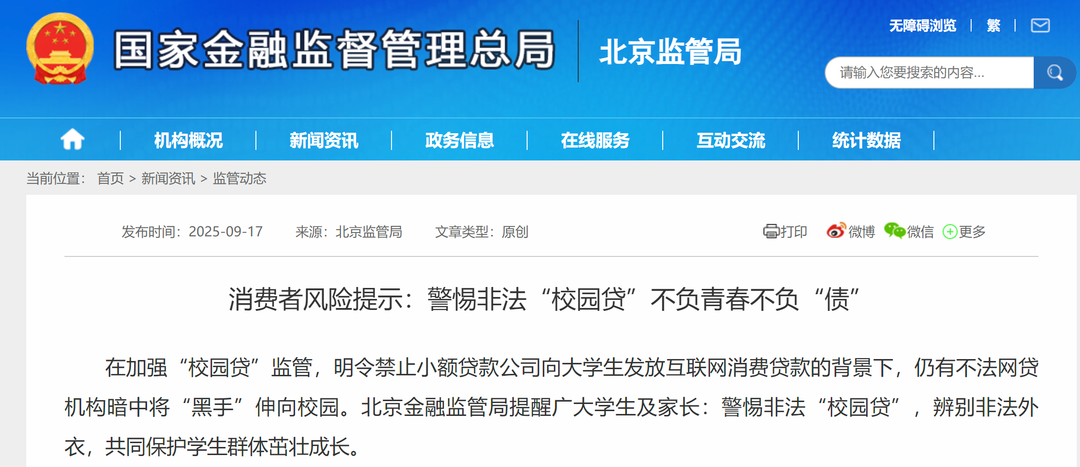
警惕非法“校园贷”!北京金融监管局拆解四大套路,这些坑别踩
Bei Jing Shang Bao· 2025-09-17 08:01
Core Viewpoint - The Beijing Financial Regulatory Bureau has issued a warning against illegal "campus loans," emphasizing the need for students and parents to be vigilant and recognize deceptive practices in the lending industry [1] Group 1: Types of Illegal Campus Loans - Illegal campus loans primarily consist of four deceptive practices, with the first being misleading names that disguise the true nature of the loans, such as "training loans," "beauty loans," and "job-seeking loans" [1] - The second practice involves "yin-yang contracts," where students are tricked into signing contracts with inflated amounts compared to the actual loan received, or signing blank contracts that are later filled with unfavorable terms [1] - The third practice is enticing offers that promise loans with minimal requirements, such as only needing an ID or student card, and promoting low interest rates and quick approval times, which can lead to excessive borrowing and financial strain [1] - The fourth practice involves a cycle of borrowing to repay previous loans, leading to aggressive collection tactics that can threaten students' safety and well-being [2] Group 2: Recommendations for Students and Parents - The regulatory body advises students and parents to adopt a rational consumption mindset, emphasizing the importance of frugality and proper financial planning to avoid overspending and excessive debt [2] - It is recommended that students communicate with their parents regarding financial needs and explore legitimate funding options, such as scholarships or loans from accredited financial institutions [2] - Consumers are urged to protect their personal information, carefully read loan agreements, and ensure that the terms are legal and reasonable before signing [2] - In case of falling into illegal loan traps, students should remain calm, inform their parents and teachers, keep all relevant documentation, and report to authorities to seek legal recourse [2]
全国学生资助管理中心发布预警!警惕非法“校园贷”陷阱
Yang Shi Wang· 2025-06-05 04:11
Core Viewpoint - The article highlights the resurgence of illegal "campus loans" in China, posing significant risks to students' financial well-being and urging them to adopt prudent financial practices and utilize legitimate funding sources [1][2] Group 1: Risks of Illegal Campus Loans - Illegal "campus loans" are re-emerging, severely harming students' interests [1] - Some fraudulent online lending platforms lure students with low thresholds, quick processing, high limits, and low interest rates, leading to excessive borrowing and debt [1] - Students unable to repay debts face illegal collection practices, resulting in serious consequences [1] Group 2: Recommendations for Students - Students are advised to establish a rational consumption mindset, emphasizing frugality and responsible spending to avoid overconsumption and peer pressure [1] - It is recommended to apply for financial aid through legitimate channels, such as national student loans and scholarships, to ensure academic completion [1] - If considering commercial student loans, students should communicate with parents, assess repayment capabilities, and carefully review loan agreements to ensure legality and fairness [1] Group 3: Legal Protections - In case of falling into illegal "campus loan" traps, students should remain calm, inform parents and teachers, and retain evidence such as contracts and payment records [2] - Immediate reporting to authorities is advised to protect legal rights [2]