
国家助学贷款

Search documents
一图读懂《关于统筹建立常态化金融支持机制 助力防止返贫致贫和乡村全面振兴的意见》
Xin Lang Cai Jing· 2026-02-14 07:19
Core Viewpoint - The People's Bank of China, along with financial regulatory authorities, has issued guidelines to establish a normalized financial support mechanism aimed at preventing poverty and promoting rural revitalization, focusing on enhancing the endogenous development capabilities of underdeveloped regions and facilitating urban-rural integration [1][33]. Group 1: Financial Support Mechanisms - Establish a long-term financial support mechanism for key populations to prevent poverty [2][34]. - Optimize credit policies for small loans and agricultural households to enhance financial accessibility [3][35]. - Develop specialized industry loans and link support policies to increase farmers' income [5][37]. Group 2: Employment and Education Support - Continue implementing entrepreneurship guarantees and national student loan policies to promote employment and education among key populations [6][38]. Group 3: Regional Financial Support - Create a tiered financial support mechanism for underdeveloped areas, prioritizing financial resources for key rural revitalization counties [7][39]. - Enhance financial support for post-relocation services and infrastructure projects in resettlement areas [8][40]. Group 4: Agricultural and Rural Development - Strengthen financial resources for agricultural production capacity and quality improvement, including support for grain and oil production [10][42]. - Innovate financing models to support the construction of infrastructure and public services in agricultural areas [8][40]. Group 5: Digital Transformation and Financial Services - Promote the digital transformation of agricultural financial services, utilizing platforms for credit information sharing and online loan approvals [22][58]. - Enhance rural financial services by introducing new payment methods and improving accessibility for elderly populations [59][60]. Group 6: Capital Market and Insurance Development - Encourage the issuance of special financial bonds for small and agricultural enterprises to support rural revitalization [64][66]. - Innovate insurance products and services to support high-standard farmland construction and agricultural machinery [67][68].


四部门最新印发!加大农村地区企业上市辅导培育力度
Shang Hai Zheng Quan Bao· 2026-02-14 06:58
Core Viewpoint - The People's Bank of China, along with other regulatory bodies, has issued guidelines to establish a normalized financial support mechanism aimed at preventing poverty and promoting rural revitalization, in line with the directives from the 20th National Congress of the Communist Party of China [1][3]. Group 1: Financial Support Mechanism - The guidelines propose a long-term financial support mechanism for key populations, optimizing microcredit policies for impoverished individuals and enhancing support for those at risk of falling back into poverty [2][4]. - Financial institutions are encouraged to develop loans for specialized industries and increase the credit limits for entrepreneurial guarantee loans in eligible regions [2][5]. - A tiered financial support mechanism for underdeveloped areas will be established, prioritizing financial resources for key rural revitalization counties [6][7]. Group 2: Investment in Key Areas - The guidelines emphasize the need for increased financial resources in critical sectors, particularly in agricultural production and infrastructure development [8][11]. - Financial services will be enhanced to support the entire agricultural supply chain, including innovative financing solutions like accounts receivable financing [9][10]. - There will be a focus on improving rural infrastructure financing, including projects related to water supply, electricity, and housing [11][12]. Group 3: Financial Service Capacity Building - The guidelines call for the strengthening of the financial organizational system, with state-owned banks and rural financial institutions playing a crucial role in supporting rural revitalization [12][13]. - Financial institutions are encouraged to diversify their product offerings and explore new financing models to meet the needs of various agricultural stakeholders [13][14]. - The promotion of digital financial services and the use of technology in rural finance will be prioritized to enhance efficiency and accessibility [14][15]. Group 4: Multi-Industry Collaboration - The guidelines advocate for the use of bond markets to finance rural initiatives, encouraging local financial institutions to issue specialized bonds [15][16]. - A comprehensive support system for capital markets will be developed to facilitate the listing and financing of rural enterprises [16][17]. - The innovation of insurance products tailored for agricultural projects will be promoted to ensure financial stability and risk management [17]. Group 5: Policy Implementation and Monitoring - The guidelines stress the importance of policy coordination and the need for continuous monitoring and evaluation of financial support measures [17][18]. - Financial institutions are encouraged to maintain support for former impoverished populations and ensure that their loan default rates remain manageable [17]. - There will be efforts to disseminate successful case studies and best practices in financial support for rural revitalization to foster a positive social environment [18].
四部门:统筹建立常态化金融支持机制,助力防止返贫致贫和乡村全面振兴
Xin Lang Cai Jing· 2026-02-14 05:03
Core Viewpoint - The document outlines a comprehensive framework for establishing a normalized financial support mechanism aimed at preventing poverty and promoting rural revitalization in China, emphasizing the need for targeted financial assistance and collaboration among various financial institutions and government bodies [1][4][18]. Group 1: Financial Support Mechanisms - The framework aims to enhance the long-term financial support mechanisms for key populations, including optimizing microcredit policies for impoverished individuals and ensuring continuous support for those at risk of falling back into poverty [1][4][5]. - Financial institutions are encouraged to develop loans for specialized industries and increase credit limits for entrepreneurial support in underdeveloped areas [2][5][6]. - A tiered financial support mechanism will be established for underdeveloped regions, prioritizing financial resources for key rural revitalization counties [7][8]. Group 2: Investment in Key Areas - The document emphasizes the importance of financial resources in enhancing agricultural production capacity and quality, particularly in grain and oil production [2][9]. - It calls for the development of supply chain financial services to meet the financial needs of the entire agricultural industry chain [2][10]. - There is a focus on expanding financial support for county-level industries and improving rural infrastructure through long-term funding [11][12]. Group 3: Financial Service Capacity Building - The framework highlights the need to strengthen the financial organizational system, ensuring that state-owned and commercial banks provide adequate support for rural revitalization [13][14]. - It encourages the development of diverse financial products tailored to the needs of different agricultural sectors and the promotion of digital transformation in financial services [14][15]. Group 4: Multi-Industry Financial Collaboration - Financial institutions are urged to leverage bond markets to raise stable, low-cost funds for local credit investments, particularly in underdeveloped areas [16][17]. - The document advocates for a comprehensive capital market support system to facilitate the listing and financing of rural enterprises [16][17]. Group 5: Policy Implementation and Monitoring - The framework stresses the importance of policy coordination and the need for continuous monitoring and evaluation of financial support policies to ensure their effectiveness [18][19]. - It encourages the documentation and dissemination of successful financial service practices to promote a favorable environment for rural revitalization efforts [18][19].
央行等四部门印发《关于统筹建立常态化金融支持机制 助力防止返贫致贫和乡村全面振兴的意见》
Xin Lang Cai Jing· 2026-02-14 03:43
Core Viewpoint - The People's Bank of China, along with other regulatory bodies, has issued guidelines to establish a normalized financial support mechanism aimed at preventing poverty and promoting rural revitalization, in line with the directives from the 20th National Congress of the Communist Party of China [1][17]. Group 1: Financial Support Mechanism - The guidelines emphasize the need to develop a long-term financial assistance mechanism targeting key populations, optimizing microcredit for impoverished individuals, and ensuring continuous support for those at risk of falling back into poverty [2][18]. - Financial institutions are encouraged to create loans for specialized industries and increase the upper limit for entrepreneurial guarantee loans in eligible regions [2][18]. - A tiered financial support mechanism for underdeveloped areas will be established, prioritizing new financial resources for key rural revitalization counties [2][18]. Group 2: Investment in Key Areas - The guidelines stress the importance of enhancing financial resources in critical sectors, particularly in grain and oil production, to improve agricultural productivity and quality [3][19]. - Development of supply chain financial services, such as accounts receivable financing, will be promoted to meet the financial needs of the entire agricultural industry chain [3][19]. - Increased long-term funding for rural infrastructure projects is highlighted, supporting the integration of agriculture, culture, and tourism [3][19]. Group 3: Financial Service Capacity Building - The guidelines call for strengthening the financial organizational system, with state-owned banks and rural financial institutions playing a crucial role in supporting rural revitalization [11][28]. - Financial institutions are urged to diversify their product offerings and develop tailored financial services to meet the needs of various agricultural stakeholders [11][29]. - The promotion of digital transformation in financial services is emphasized, leveraging technologies like big data and artificial intelligence to enhance efficiency [12][30]. Group 4: Multi-Industry Financial Collaboration - The guidelines encourage the issuance of special financial bonds by local financial institutions to raise stable, low-cost funds for rural revitalization [14][32]. - A comprehensive support system for capital markets will be constructed, facilitating the listing of enterprises in rural areas and providing risk management tools for agricultural products [14][32]. - The development of innovative insurance products to safeguard agricultural projects and enhance service quality is also a focus [15][32]. Group 5: Policy Coordination and Implementation - The guidelines advocate for coordinated policy efforts to ensure sustained financial support for poverty prevention and rural revitalization, with a focus on maintaining low non-performing loan rates in targeted areas [20][33]. - Establishing a dynamic monitoring mechanism to assess the effectiveness of financial assistance policies is crucial for ongoing evaluation and improvement [20][33]. - The promotion of successful case studies and experiences in financial support for rural revitalization is encouraged to foster a positive social environment [20][33].
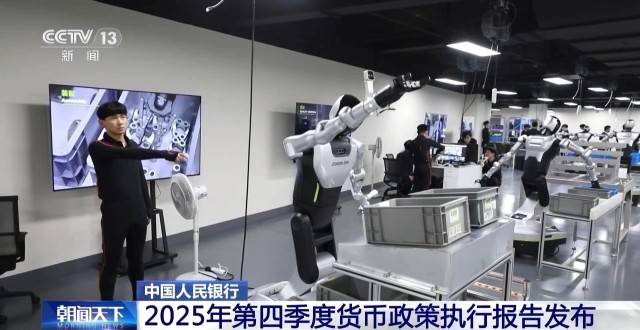
2025年第四季度货币政策执行报告发布
Sou Hu Cai Jing· 2026-02-10 23:08
Core Viewpoint - The People's Bank of China (PBOC) is set to continue its moderately accommodative monetary policy into 2025, aiming to maintain ample liquidity and relatively loose social financing conditions [1] Group 1: Monetary Policy - The report indicates that the effects of the moderately accommodative monetary policy are gradually becoming evident, with a commitment to continue this approach throughout the year [1] - The PBOC plans to leverage monetary credit policy to support key groups in entrepreneurship, employment, and education, while also promoting financial support for consumer services [1] Group 2: Credit Structure - By the end of 2025, the credit structure is expected to continue optimizing, with significant growth in technology loans, green loans, inclusive loans, elderly care industry loans, and digital economy industry loans, all maintaining double-digit growth [1] - The report highlights a focus on reducing the comprehensive financing costs for enterprises through pilot programs [1] Group 3: Currency Stability - The RMB exchange rate is projected to remain stable amid complex conditions, with the closing price against the USD at 6.9890 by the end of 2025, reflecting a 4.4% appreciation compared to the end of 2024 [1]
普惠金融“体系化”:从“量增面扩”到“质价双优”
Zhong Guo Jing Ying Bao· 2025-12-31 03:36
Core Insights - The development of inclusive finance in China is showing a positive trend characterized by increased volume, expanded coverage, reduced costs, and improved quality [1] - By the end of Q3 2025, the balance of inclusive loans for small and micro enterprises reached 36.5 trillion yuan, a year-on-year increase of 12.1% [1] - The balance of inclusive agricultural loans reached 14.1 trillion yuan, with an increase of 1.2 trillion yuan since the beginning of the year [1] Group 1: Policy and Regulatory Framework - The National Financial Supervision Administration issued a notice in May 2025 emphasizing reasonable loan pricing and the need for a differentiated supply structure [2] - In June 2025, a joint implementation plan was released, outlining 16 specific measures for the development of inclusive finance over the next five years [2] Group 2: Service System Optimization - The plan includes optimizing the inclusive financial service system by establishing a multi-tiered, widely covered, and differentiated institutional framework [3] - It aims to enhance financial services in rural areas and improve monitoring and guidance for county-level financial services [3] Group 3: Credit System Enhancement - The plan focuses on improving the inclusive credit management system and enhancing the quality of credit services for small and micro enterprises [4] - It emphasizes the need for increased credit support for agriculture and rural areas, as well as for poverty alleviation efforts [4] Group 4: Insurance System Development - The plan calls for the establishment of a specialized management system for inclusive insurance and the development of diverse insurance products tailored to small and micro enterprises [5] - It aims to improve the quality of inclusive insurance services and streamline underwriting processes [5] Group 5: Competitive Landscape and Innovation - The regulatory focus is shifting from mere expansion to a more nuanced and sustainable approach, requiring financial institutions to clarify their roles and paths [6] - Large commercial banks are expected to lead innovation, while local banks should focus on serving small and micro enterprises [6] Group 6: Differentiated Regulation - There is a call for differentiated regulation based on the systemic importance and resource endowments of financial institutions, encouraging small banks to focus on local markets [7] - The emphasis is on supporting innovation in specific areas like technology finance and inclusive finance [7] Group 7: Product and Service Innovation - Financial institutions are encouraged to innovate in products and services to meet diverse financial needs, including promoting investment-loan linkage models [8] - The development of government-backed financing guarantee systems is also highlighted to enhance the capacity of these institutions [8] Group 8: Strategic Focus for Small Banks - Small banks are advised to concentrate on their core responsibilities and avoid a "one-size-fits-all" approach, focusing on quality in credit delivery [9] - They should leverage their local advantages to build unique customer bases and enhance their competitive edge [9]
守护每一个求学梦想
Xin Hua Wang· 2025-12-24 23:34
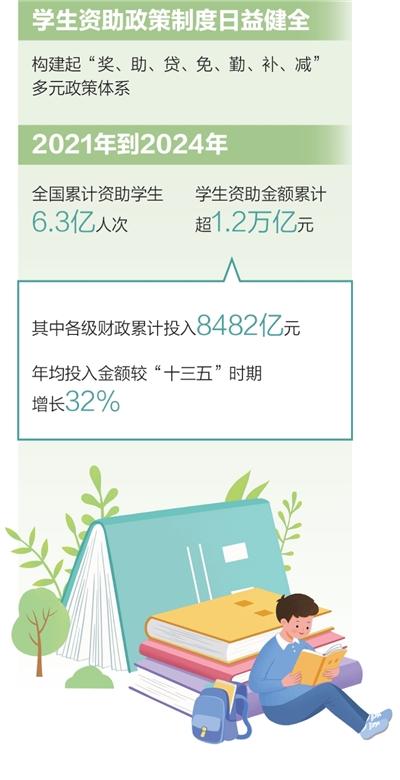
Core Viewpoint - The article highlights the significant advancements in China's student financial aid system during the "14th Five-Year Plan" period, emphasizing the expansion of coverage, improvement of standards, and the overall impact on educational equity and student welfare [4]. Group 1: Financial Aid Overview - From 2021 to 2024, a total of 630 million students have received financial aid, with cumulative funding exceeding 1.2 trillion yuan, of which 848.2 billion yuan (70%) comes from various levels of government [4]. - The annual financial input has increased by 32% compared to the "13th Five-Year Plan" period [4]. Group 2: Expansion and Improvement of Aid Standards - The maximum loan amount for undergraduate and vocational students has been raised to 20,000 yuan per year, with loan terms extending up to 22 years [5][6]. - The national scholarship for undergraduates has been increased to 10,000 yuan, while the average aid for undergraduates has risen to 3,700 yuan [6]. Group 3: Comprehensive Coverage and Support - The financial aid policy aims for comprehensive coverage across all educational stages and institutions, ensuring that no student is left behind due to financial difficulties [7]. - A data-sharing mechanism has been established among various government departments to accurately identify and support students from low-income families [14]. Group 4: Development-Oriented Financial Aid - The financial aid philosophy has shifted from merely providing support to also focusing on the development of students, exemplified by programs like the "Cocoon Breaking Plan" that enhance students' skills and confidence [15][16]. - Initiatives such as increased tuition compensation for students serving in the military and those employed in grassroots positions reflect a dual focus on economic relief and social responsibility [16].
寒假前我省将开展国家助学贷款政策宣讲700余场
Liao Ning Ri Bao· 2025-12-02 00:54
Core Viewpoint - The recent promotional activities for the national student loan policy in Liaoning Province aim to clarify the policy and address concerns among students and parents, ensuring effective implementation and accessibility of the loans [1][2] Group 1: Policy Promotion Activities - The promotional activities have been conducted across various cities in Liaoning Province, targeting high school teachers, college counselors, and students, with over 700 sessions expected before the winter break [1] - The sessions utilize detailed data and vivid case studies to make the policy clear and understandable, facilitating the precise implementation of the national student loan policy [1] Group 2: Addressing Concerns - The promotional efforts also focus on alleviating fears related to loans, such as concerns about scams, application difficulties, and information leakage, by explaining the application process and loan features [1] - Key features highlighted include the loans being purely credit-based, government-subsidized interest rates, flexible amounts, low interest rates, and long repayment periods [1] Group 3: Targeted Communication - Schools are shifting from broad promotional strategies to more targeted communications, with teachers encouraged to understand the specific needs of each student and parent regarding student loans [2] - Initiatives include setting up dedicated policy consultation stations and prominently displaying key policy points in school public areas to ensure easy access to information for all students [2] Group 4: Ensuring Accessibility - The provincial education department plans to conduct 197 policy promotion sessions this week to assist students in need, ensuring they can pursue their education with confidence [2] - Teachers are taking on the role of "liaison officers" to connect students with financial aid management centers, providing timely answers to questions and ensuring that eligible students can access loans [2]
1036亿元,加快发放!国家助学贷款“护航”学子求学之路
Yang Shi Wang· 2025-11-21 02:58
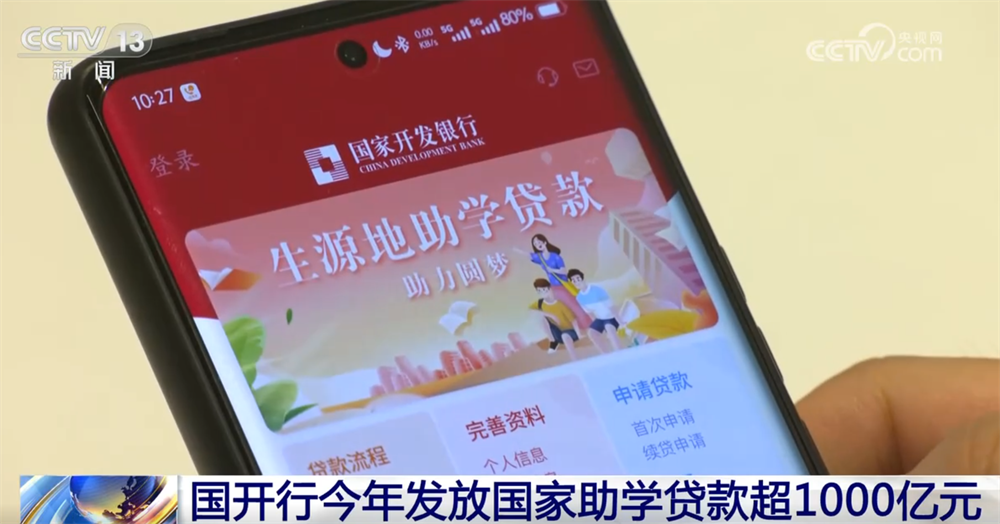
Core Points - The National Development Bank has completed the issuance of national student loans for the year 2025, providing loans to 7.02 million economically disadvantaged students totaling 103.6 billion yuan [1][4] - The bank has implemented measures to accelerate loan disbursement, shifting from a concentrated issuance in November to a staggered release after the start of the school year, with nearly 90% of loans disbursed by the end of October [4] - Since 2004, the National Development Bank has cumulatively issued national student loans amounting to 560.5 billion yuan, supporting 63.72 million economically disadvantaged students [4]
下一阶段货币政策主要思路,央行最新披露
Di Yi Cai Jing· 2025-11-11 09:43
Core Viewpoint - The People's Bank of China (PBOC) has implemented a moderately accommodative monetary policy in 2023, aiming to create a favorable monetary environment for economic recovery and financial market stability [1][2]. Monetary Policy Implementation - The PBOC has maintained reasonable growth in money and credit by utilizing various monetary policy tools such as open market operations and medium-term lending facilities to ensure ample liquidity [1][2]. - The central bank aims to reduce the overall financing costs in society by enhancing the market-oriented interest rate adjustment framework, leading to a decline in both deposit and loan rates [1][2]. - The PBOC is focusing on optimizing the credit structure by utilizing 500 billion yuan for consumption and pension-related loans, as well as increasing support for technology innovation and transformation [1][3]. Exchange Rate Stability - The PBOC emphasizes maintaining basic stability in the exchange rate, allowing the market to play a decisive role in its formation while ensuring it serves as a stabilizer for the macro economy and international balance of payments [1][4]. Financial Risk Management - The central bank is committed to systematically addressing financial risks by enhancing monitoring, assessment, and early warning systems for key financial sectors [2][6]. - The PBOC plans to maintain reasonable growth in financial aggregates and ensure that social financing conditions remain relatively loose, adapting to changes in the economic and financial landscape [2][6]. Financial Market Development - The PBOC is focused on accelerating the development of the bond market, particularly for technology enterprises, and enhancing the legal framework for corporate bonds [5]. - The central bank aims to promote the internationalization of the renminbi and expand its use in cross-border trade and investment [5].