韧性转型

Search documents
奔驰坚守高端阵地:2025年AMG交付量同比增长7% G级车交付量达4.97万辆
Zhong Guo Jing Ying Bao· 2026-01-15 05:04
Core Insights - Mercedes-Benz has demonstrated resilience in the luxury car market, maintaining a strong foothold despite industry challenges and competition from domestic electric vehicle brands [2][4][5] Sales Performance - In 2025, Mercedes-Benz sold 2.16 million passenger and light commercial vehicles, with a notable performance in core high-end categories, including a 7% year-on-year increase in AMG deliveries to 145,000 units and a record 49,700 units of G-Class vehicles [2] - For the first eleven months of 2025, Mercedes-Benz led the market for vehicles priced above 300,000 yuan with sales of 339,000 units, outperforming competitors like BMW and Audi [4] Market Position - Mercedes-Benz maintained its leading position in the 400,000 yuan and above luxury market, as well as in the 1 million yuan and above high-end luxury market, despite a 9% decline in global sales and a 19% drop in the Chinese market [2][5] - The brand's imported vehicle segment remains strong, with 91,000 units sold, ranking second in the overall import market [5] Product Strategy - In 2026, Mercedes-Benz plans to introduce over 15 new and updated models across various luxury segments, leveraging new electric platforms such as MB.EA, AMG.EA, and VAN.EA [6] - The launch of the new electric GLC SUV, along with the new generation S-Class and long-wheelbase GLE SUV, is expected to enhance market confidence [6] Digital Transformation - The company is focusing on digital transformation to improve efficiency, including optimizing its retail network and implementing a cost reduction plan aimed at saving 5 billion euros by 2027 [7] - Mercedes-Benz will enhance customer engagement through AI tools and digital operations, aiming to strengthen connections with its customer base [7]

进博会首设“它”专属展区 毕马威解读宠物经济与酒店业“韧性转型”
Zhi Tong Cai Jing· 2025-11-07 03:53
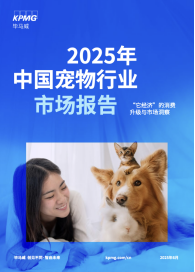
Core Insights - The 8th China International Import Expo (CIIE) has opened in Shanghai, showcasing the growing demand for high-quality and diversified lifestyles in the Chinese market, particularly through the newly established pet-themed exhibition area [1] - The pet economy is emerging as a significant growth area in consumer spending, reflecting the modern lifestyle concept of pets as important family members [1][4] - KPMG has released two in-depth industry reports focusing on the pet and hotel sectors, providing insights into market evolution and development opportunities [1][3] Pet Economy - The pet economy is closely linked to residents' consumption levels, with rising material needs leading to increased spiritual demands [3] - The urban pet market in China is projected to exceed 300 billion yuan in 2024 and is expected to surpass 400 billion yuan by 2027, driven by the shift of pets from "functional companions" to "family members" [4][5] - The pet market is characterized by a younger, more educated consumer base, with over 60% of pet owners being born in the 1990s and 2000s, who prioritize cost-effectiveness and product functionality [4][5] Market Trends - The Chinese pet market is expected to exceed 811.4 billion yuan by 2025, with pet food being the largest segment [5] - The competition in the pet industry is intensifying, with a rise in new registrations of companies and local brands increasing R&D investments to build competitive products [5][6] - Key trends include supply chain restructuring, domestic brand recognition through technology and marketing, and a shift towards high-quality, refined pet products [6] Hotel Industry - The hotel industry is transitioning from scale expansion to value reconstruction, focusing on quality improvement rather than just quantity [7][8] - The market is experiencing a structural adjustment, with a notable increase in the chain hotel rate to 40.1%, indicating potential for light asset transformation [7][8] - The industry is responding to the rise of the Z generation, leading to more personalized and youthful product designs and service experiences [8] Strategic Insights - KPMG's reports provide a clear path for the hotel industry's transformation, emphasizing the integration of consumption policies and the promotion of green, low-carbon transitions [8] - The hotel sector is encouraged to adopt a systematic upgrade in brand building, operational models, and capital operations to create a data-driven, efficient, and sustainable development framework [8][9] - The core focus for both the pet economy and hotel industry is on emotional satisfaction and experience enhancement, which are crucial for capturing opportunities in the evolving consumer landscape [9]