
风险管理转型

Search documents
人保财险江西分公司筑牢安全防线,风险减量服务减损1.24亿元
Jin Rong Jie· 2026-01-21 07:37
Core Viewpoint - The insurance industry is transitioning from traditional "post-disaster compensation" to a comprehensive risk management approach that includes "prevention, mitigation, and compensation" in response to the evolving demands of development and security [1] Group 1: Risk Reduction Services - The PICC Jiangxi branch aims to provide over 300,000 risk reduction services by 2025, covering more than 1,600 products, with an estimated annual loss reduction of 124 million yuan [1] - The company has established a collaborative mechanism with multiple local departments to innovate insurance models such as "insurance + meteorology" and "insurance + traffic management" [2] - The company has implemented safety measures at 400 high-risk traffic locations, which are expected to reduce accident rates and achieve a service loss reduction of 650,000 yuan by 2025 [2] Group 2: Technology Empowerment - The company has developed a digital risk reduction management platform consisting of one intelligent risk control center, multiple specialized risk control platforms, and one command center, enabling full-process management of risk identification, assessment, intervention, and review [5] - As of October 2025, the system has sent out 27,000 warning messages and assigned over 7,200 inspection tasks, serving more than 31,000 clients with an estimated loss reduction of 102 million yuan [5] Group 3: Focus on Livelihood - The company has deployed intelligent waterlogging monitoring devices in high-risk urban areas, allowing for immediate response to potential flooding [6] - In rural areas, the company utilizes integrated technology for crop monitoring and disaster assessment, providing comprehensive disaster prevention services for over 30 million acres of crops [9] Group 4: Emergency Response - The Jiangxi PICC Emergency Rescue Team was established on July 31, 2025, consisting of 28 certified emergency rescuers, marking the first specialized emergency force in the insurance industry in Jiangxi [12] - The team provided on-site support during the Nanchang Marathon, ensuring the safety of 30,000 runners and offering emergency assistance to those in need [12]

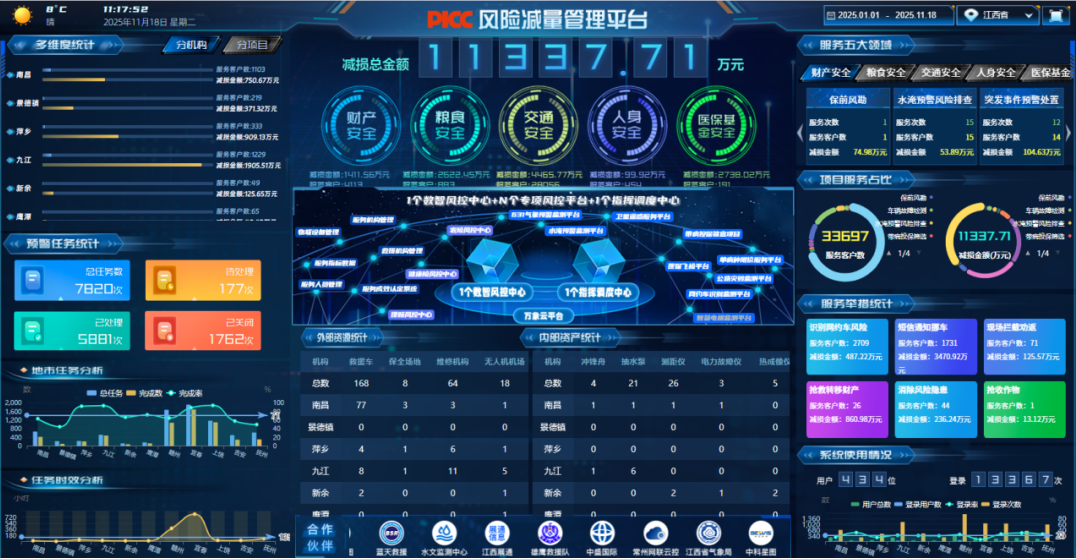
新时代下的风险管理转型:银行业未来风险展望
KPMG· 2025-12-11 06:46
Investment Rating - The report does not explicitly provide an investment rating for the banking industry Core Insights - The banking industry is facing increasing uncertainty, necessitating a comprehensive restructuring of risk management processes, with Chief Risk Officers (CROs) playing a crucial role in this transformation [10][11][13] - Effective risk management execution can provide banks with a competitive advantage, enabling them to respond swiftly to market fluctuations and drive continuous improvement across the organization [11] - The report emphasizes the need for banks to adapt to emerging risks, including geopolitical complexities, economic volatility, and the impact of digital transformation on risk management [21][23][24][26] Summary by Sections Introduction - The report highlights the necessity for banks to adjust their risk management cycles to address increasing uncertainties, focusing on risk identification, assessment, monitoring, control, and reporting [10] Drivers of Risk Management Transformation - Key factors driving the transformation of risk management functions include geopolitical challenges, economic fluctuations, and the need for enhanced operational resilience [21][23] - Banks are increasingly recognizing the importance of understanding and adapting to emerging risks, such as supply chain disruptions and cybersecurity threats [23][24] Reshaping Risk Management Functions - The transformation of risk management functions is led by CROs, requiring collaboration among all stakeholders to embrace the evolving role of risk management [36][37] - Banks must modernize their operations and risk management approaches to remain competitive, addressing outdated systems and manual processes [39][40] Future Risk Management Blueprint - The report outlines the importance of integrating data-driven risk management practices, emphasizing the need for improved data quality and infrastructure to support effective risk monitoring and reporting [79][81] - The adoption of artificial intelligence and machine learning is identified as a key technology for enhancing risk management capabilities, although regulatory challenges remain [64][81] Conclusion - The report concludes that banks must proactively adapt their risk management strategies to navigate the complexities of the current environment, aligning risk management with business objectives to drive performance transformation [101]