食物多样性

Search documents
九千年前的炭化小豆(考古中国)
Ren Min Ri Bao· 2025-10-25 22:12
Core Viewpoint - The discovery of carbonized small beans at the Xiaogao site in Shandong, dating back approximately 9,000 years, provides significant evidence of early agricultural practices in East Asia, particularly the integration of legumes into the crop system alongside grains, which predates previous findings in China by 4,000 years [2][3][5]. Group 1: Archaeological Findings - An international team, including researchers from Shandong University and Washington University in St. Louis, published findings in the Proceedings of the National Academy of Sciences, highlighting the importance of the Xiaogao site in understanding the origins of agriculture in northern China [2][3]. - The excavation at Xiaogao involved systematic sampling of 891 flotation samples, leading to the identification of 45 carbonized small beans among 32,000 carbonized plant remains, confirming the presence of a diverse agricultural system [3][4]. - Radiocarbon dating of two small beans revealed ages of 8,985–8,645 cal.BP and 8,032–7,939 cal.BP, marking a significant advancement in the timeline of legume domestication in the region [3][4]. Group 2: Agricultural Practices and Implications - The findings indicate that 9,000 years ago, the lower Yellow River region had already developed an early "grain + legume" agricultural system, showcasing the nutritional and ecological benefits of combining these crops [3][4]. - The presence of small beans alongside other crops like millet and soybeans suggests an early understanding of sustainable agricultural practices, which improved soil fertility and provided essential protein [3][4]. - The research emphasizes the need to reassess the role of food diversity in human civilization and the importance of legumes in sustainable agricultural development [4][6]. Group 3: Collaborative Research Efforts - The success of this research is attributed to international collaboration among scholars from China, the U.S., Japan, and South Korea, who shared archaeological data from over 40 sites and utilized multidisciplinary techniques [6]. - The study of small bean domestication reflects a broader global issue, highlighting the necessity of cross-regional and interdisciplinary cooperation to understand the dynamics of agricultural evolution [6].


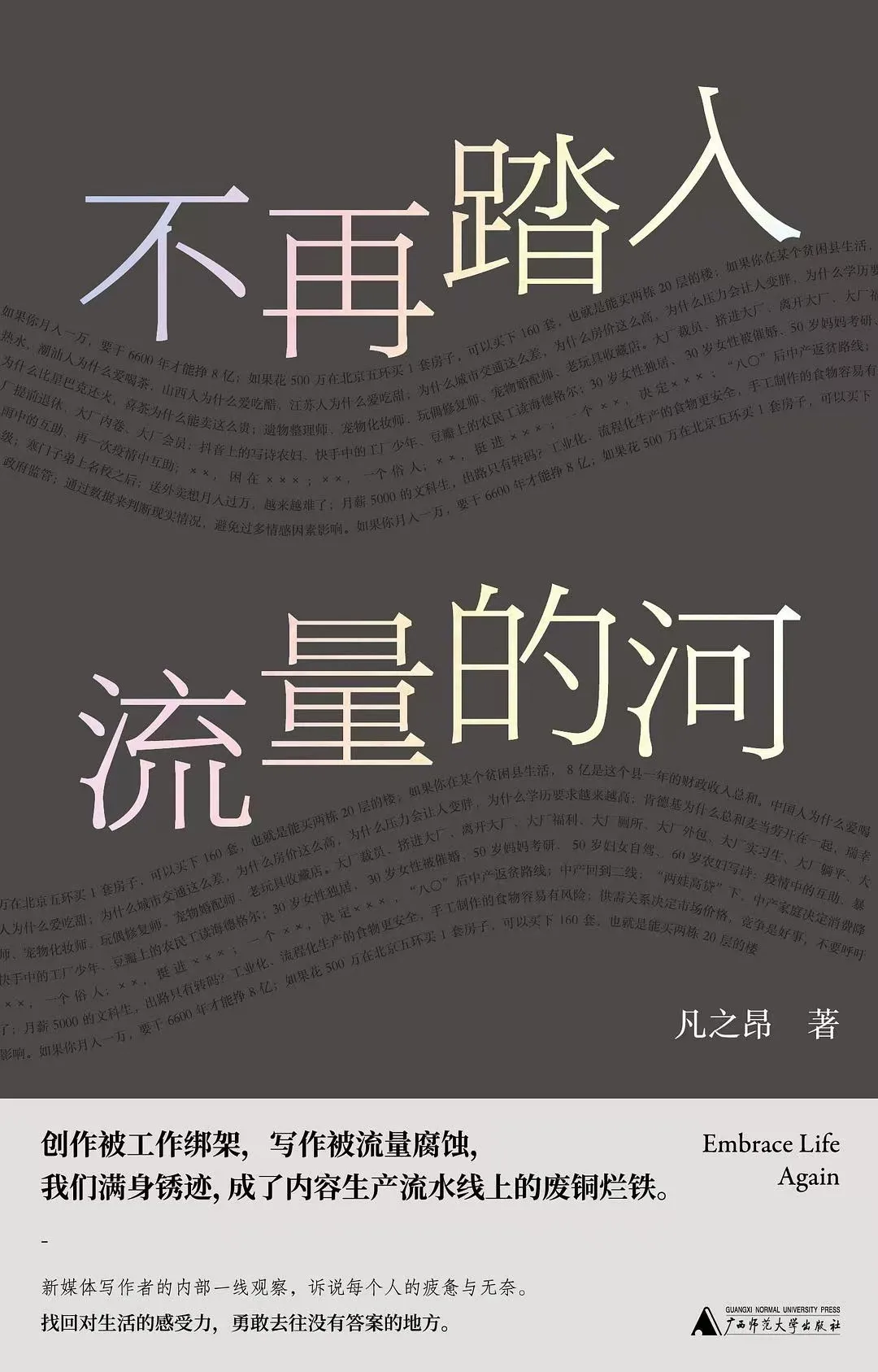
当一名爆款文作者,开始厌倦“流量”与“套路”
Hu Xiu· 2025-05-29 03:26
Core Insights - The article discusses the overwhelming focus on "traffic" in the new media industry, highlighting the pressures and challenges faced by content creators in a highly competitive environment [1][3][21] Group 1: Industry Overview - As of December 2023, the total number of short video accounts reached 1.55 billion, with major platforms updating nearly 80 million short videos daily and hosting over 3.5 million live broadcasts each day [2] - The new media industry is characterized by a large number of practitioners and significant market size, all competing for the most valuable resource: traffic [3][21] Group 2: Personal Experience and Challenges - A former content creator, after four years in the industry, experienced deep fatigue and questioned the significance of her work due to the repetitive nature of content production and the pressure to generate traffic [3][22] - The transition from a creative role to an editorial position revealed that the success of articles was often random, with no guaranteed methods for achieving high traffic [12][13] Group 3: Shift in Work Dynamics - The shift to a profit-driven model in new media led to increased pressure to produce commercially viable content, often at the expense of personal interest and creativity [17][21] - The fast-paced environment left little room for reflection or in-depth research, resulting in a sense of alienation among content creators [18][21] Group 4: New Directions - After leaving the industry, the former content creator began to explore topics of personal interest, such as food diversity, allowing for a more relaxed and autonomous approach to research and writing [23][24] - The focus shifted from metrics and traffic to the quality and significance of the content, emphasizing the importance of genuine engagement with subjects rather than merely chasing trends [27][30]