黍

Search documents
古人吃饭的那些事
Xin Lang Cai Jing· 2026-02-06 16:48
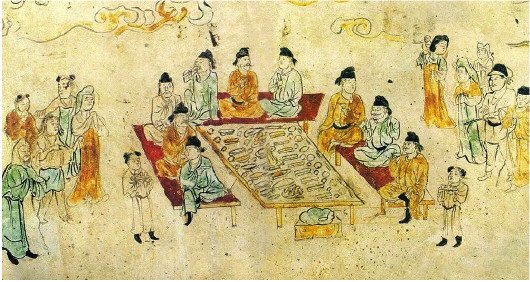
Core Perspective - The book "The Way of the Ancients: Common Knowledge of Ancient Chinese Life" by author Shi Jiepeng provides a detailed depiction of the everyday life of ordinary people in ancient China, focusing on aspects such as geography, food, clothing, housing, travel, health, values, survival, marriage, communication, and more, rather than grand historical narratives [3]. Group 1: Food and Diet - Ordinary people could rarely afford to eat pork, lamb, or beef, typically consuming offal instead. The staple food was millet, with rice also being consumed in the north, and glutinous millet being a luxury often paired with chicken [4]. - The common diet included porridge-like dishes called "geng," made from rice, flour, vegetables, and sometimes meat, which were convenient for serving with rice [6]. - Historical records indicate that the average daily food intake for adult males was around 1.5 kg for breakfast and 1 kg for dinner, while women consumed about 900 grams daily [10]. Group 2: Water and Salt - Water was primarily drawn from wells using clay pots, which were often broken, leading to disputes among users. By the Tang Dynasty, wooden buckets began to replace clay pots for drawing water [12][14]. - Salt was a crucial part of daily life, with historical accounts highlighting its importance in food preparation and the economy. The state managed salt production, indicating its significance in ancient society [15][16]. Group 3: Sweeteners - Ancient China did not have modern granulated sugar; instead, honey and a type of sweetener called "yi" made from rice and malt were used. These sweeteners were considered luxury items [17][18]. - The production of sugar from sugarcane began in the Six Dynasties period, but the method of making granulated sugar was introduced later during the Tang Dynasty [18].

华夏文明膏腴地 齐鲁必争汶阳田
Xin Lang Cai Jing· 2026-01-02 17:26
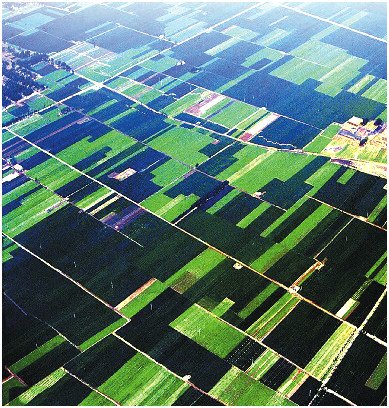
Core Viewpoint - The newly enacted "Wenyang Field Protection Regulations" aims to preserve the historical and agricultural significance of Wenyang Field, a vital area in the development of Chinese farming civilization, effective from May 1, 2026 [2]. Historical Significance - Wenyang Field, nourished by the Dawang River, is recognized as one of the important birthplaces of Chinese agricultural civilization, reflecting thousands of years of cultural evolution and technological innovation [2][3]. - The region has been a focal point for various historical events, including the transition from hunting to farming and the establishment of early agricultural models [3][4]. Agricultural Development - The area is characterized by its fertile land and advanced agricultural techniques, which date back to the Spring and Autumn period, including practices like deep plowing and crop rotation [6][7]. - Historical records indicate that Wenyang Field was a center for agricultural innovation, influencing farming practices across China [6][8]. Economic and Social Transformation - Wenyang Field witnessed significant changes in land ownership and taxation systems, marking the transition from communal land ownership to private land rights, which laid the groundwork for future economic structures [8][9]. - The region's agricultural productivity directly influenced the political dynamics between the states of Qi and Lu, showcasing the strategic importance of Wenyang Field in historical conflicts [5][9]. Cultural Integration - The area served as a melting pot for cultural exchange between the Confucian and Legalist schools of thought during the Spring and Autumn period, enriching the philosophical landscape of ancient China [11][12]. - Wenyang Field is noted for its deep-rooted cultural traditions, which have persisted through centuries, reflecting the values of respect, humility, and community [10][12].
一份精密的气候与人文互动档案(考古进行时)
Ren Min Ri Bao· 2025-11-28 22:00
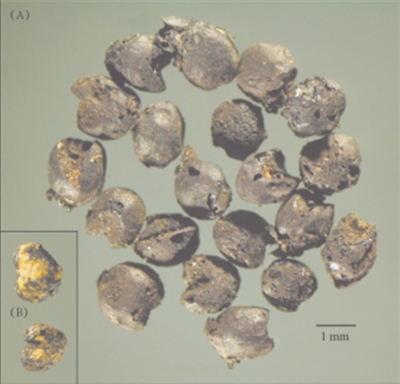
Core Insights - The research at the Xinglong site reveals the transition of early humans from a nomadic lifestyle to a semi-sedentary existence, ultimately leading to low-intensity agricultural production, providing a valuable case study for understanding human adaptation to environmental changes in East Asia [2][6][8] Environmental Evolution - The climate environment in the region has undergone three main phases since the Holocene: 1. A warming and humidification period from approximately 11,700 to 10,000 years ago, where vegetation transitioned from cold grasslands to forest grasslands, creating an ecological foundation for human activities [5] 2. A warm and humid period from 10,000 to 5,000 years ago, particularly between 10,000 and 7,100 years ago, where human exploitation of forest resources inhibited natural expansion [5] 3. A cooling and arid period since 5,000 years ago, leading to vegetation degradation and significant water body shrinkage [5] Agricultural Development - Evidence shows that as early as 8,000 years ago, charred millet and foxtail millet seeds were found at the Xinglong site, indicating that agriculture was not the primary means of survival but rather an experimental or supplementary activity [6][7] - The transition to agriculture was influenced by a warm and humid climate that allowed for the cultivation of certain plants, while human activities actively modified the environment to support these crops [6][8] Societal Changes - The period from 8,150 to 7,100 years ago marked a flourishing of Neolithic culture, with archaeological findings indicating a more stable population and complex social structures, alongside an increase in the number of cultivated crops [7] - The interaction between stable population growth and environmental resource utilization led to deeper impacts on the ecosystem, highlighting the relationship between climate, population stability, and societal evolution [7][8] Historical Significance - The research underscores the importance of the Xinglong site in understanding the independent origins of agriculture in China, pushing back the timeline for the cultivation of millet and foxtail millet, and reinforcing the region's status as a center for agricultural origins [7][8] - The findings provide insights into human adaptability and resilience in the face of climate fluctuations, offering lessons for contemporary agricultural transformations and ecological policies [8]
【省文物局】最新研究表明秦人东进推动小麦向东传播
Shan Xi Ri Bao· 2025-11-14 00:01
Core Insights - The recent analysis of plant remains from the Nanyao site in Jingyang County, Shaanxi Province, reveals significant findings regarding agricultural practices during the late Yangshao period and the Eastern Zhou period, highlighting the structure of crops and the expansion of wheat in the Yellow River basin during the Eastern Zhou period [1][2][3] Group 1: Agricultural Findings - The Nanyao site primarily features remains from the late Yangshao period, with a total of 6,036 charred plant remains identified, including five types of crops and 16 species of non-crop plants [1] - During the late Yangshao period, the dominant crops were millet (90.1% of the total crop remains) and foxtail millet, with soybeans being marginal [2] - In the Eastern Zhou period, while millet continued to be cultivated, its proportion decreased, and wheat emerged as a significant crop, accounting for nearly 40% of the agricultural structure [2] Group 2: Historical Context and Implications - The research suggests that the military actions of the Qin people during the Eastern Zhou period facilitated the eastward spread of wheat, which had been traditionally cultivated in Gansu since the early Bronze Age [3] - The interactions between the Qin and neighboring tribes, whether peaceful or conflictual, contributed to the integration of wheat into the Qin agricultural system, leading to its prominence in the region [3] - The findings indicate that the Qin's military expansion played a crucial role in establishing the "south rice, north wheat" agricultural pattern that would develop in later periods [3]
九千年前的炭化小豆(考古中国)
Ren Min Ri Bao· 2025-10-25 22:12
Core Viewpoint - The discovery of carbonized small beans at the Xiaogao site in Shandong, dating back approximately 9,000 years, provides significant evidence of early agricultural practices in East Asia, particularly the integration of legumes into the crop system alongside grains, which predates previous findings in China by 4,000 years [2][3][5]. Group 1: Archaeological Findings - An international team, including researchers from Shandong University and Washington University in St. Louis, published findings in the Proceedings of the National Academy of Sciences, highlighting the importance of the Xiaogao site in understanding the origins of agriculture in northern China [2][3]. - The excavation at Xiaogao involved systematic sampling of 891 flotation samples, leading to the identification of 45 carbonized small beans among 32,000 carbonized plant remains, confirming the presence of a diverse agricultural system [3][4]. - Radiocarbon dating of two small beans revealed ages of 8,985–8,645 cal.BP and 8,032–7,939 cal.BP, marking a significant advancement in the timeline of legume domestication in the region [3][4]. Group 2: Agricultural Practices and Implications - The findings indicate that 9,000 years ago, the lower Yellow River region had already developed an early "grain + legume" agricultural system, showcasing the nutritional and ecological benefits of combining these crops [3][4]. - The presence of small beans alongside other crops like millet and soybeans suggests an early understanding of sustainable agricultural practices, which improved soil fertility and provided essential protein [3][4]. - The research emphasizes the need to reassess the role of food diversity in human civilization and the importance of legumes in sustainable agricultural development [4][6]. Group 3: Collaborative Research Efforts - The success of this research is attributed to international collaboration among scholars from China, the U.S., Japan, and South Korea, who shared archaeological data from over 40 sites and utilized multidisciplinary techniques [6]. - The study of small bean domestication reflects a broader global issue, highlighting the necessity of cross-regional and interdisciplinary cooperation to understand the dynamics of agricultural evolution [6].
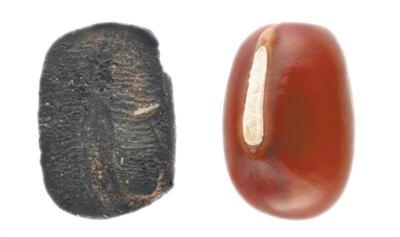
颠覆性证据!山东淄博发现45粒9000年前炭化小豆,比秦始皇早近7000年!“使中国小豆利用史与日本绳文早期证据并驾齐驱”
Mei Ri Jing Ji Xin Wen· 2025-10-11 15:53
Core Insights - The archaeological discovery at the Xiaogao site in Shandong, China, revealed charred small beans (adzuki beans) dating back 9,000 years, which is 4,000 years earlier than previous similar findings in China [1][3] - This finding indicates that a dry farming system based on "cereal + legume" was established in the lower Yellow River region 9,000 years ago, providing groundbreaking evidence for the study of agricultural origins in East Asia [1][3] Group 1 - The Xiaogao site, a typical post-Li culture site, has revealed rich remains including house sites, ash pits, pottery, and stone grinding plates, dating from 9,000 to 7,500 years ago [3] - A systematic analysis of 891 flotation samples identified 30,000 charred plant grains, including millet, foxtail millet, rice, soybeans, and small beans, with 45 charred small beans being particularly significant as the earliest evidence of small beans in the Yellow River basin [3] - The discovery highlights that the agricultural system in the lower Yellow River was more complex than previously understood, showcasing the region's pioneering role in the development of East Asian agricultural civilization [3] Group 2 - Professor Lang Jianfeng from Shandong University noted that the domestication of small beans in East Asia is a long-term, multi-centered complex process [5] - The research team compared small bean remains from over 140 sites in East Asia and found distinct evolutionary trajectories in the Yellow River basin, Japan, and the Korean Peninsula [5] - The small beans from the Xiaogao site measured only 5.8 cubic millimeters, significantly smaller than modern wild varieties, indicating an early "primitive form" of domestication, with significant size increase occurring 4,000 years later [5]

山西稷山考古新发现:东周时期北方旱作农业实证
Yang Shi Xin Wen· 2025-06-18 07:55
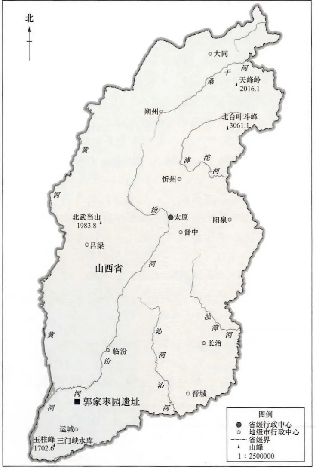
Core Insights - The Guojia Zaoyuan site in Jishan, Shanxi Province, has been identified as a typical example of northern China's dry farming tradition during the Eastern Zhou period [1][3] Group 1: Archaeological Findings - The Guojia Zaoyuan site covers an area of nearly 1 million square meters and was discovered in 2009, with significant cultural deposits from the late Yangshao culture, the second phase of the Miaodigou culture, and the Eastern Zhou period [1] - A total of 19 soil samples were collected from 17 archaeological units during the 2009 excavation, specifically targeting important relics [2] Group 2: Plant Remains Analysis - The analysis revealed charred plant seeds and fruits from the Eastern Zhou period, including millet, broomcorn, wheat, and soybean, with millet being the dominant crop [3] - The absence of rice remains and the limited presence of wheat and soybean may relate to the site's environmental conditions and the limitations of archaeological findings [3] - Wheat dating indicates its significance during the Spring and Autumn period, highlighting its increasing importance in Shanxi agriculture during the Eastern Zhou to Qin-Han periods [3]