餐饮新零售

Search documents
沙拉食刻陨落记:1.5亿融资、周杰伦代言 难敌商业模式致命缺陷
Xin Lang Cai Jing· 2026-02-03 09:45
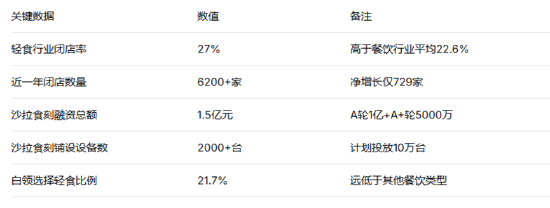
Core Insights - The dramatic downfall of "Salad Time" reflects the challenges faced by the healthy food industry, highlighting the contradictions between health and convenience in its business model [2][18][19] Company Overview - "Salad Time" was founded in 2020 in Dongguan, leveraging an "AI vending machine + light meal salad" model, quickly becoming a capital darling [2][12] - The company aimed to deploy 100,000 AI vending machines within five years, with over 2,000 machines installed by April 2025 in major cities [2][12][19] Financial Performance - The company raised a total of 1.5 billion yuan in funding, including 100 million yuan in Series A and 50 million yuan in Series A+ [8][19] - Despite ambitious revenue projections of at least 1 billion yuan annually, actual operational performance lagged significantly behind expectations [3][13] Operational Challenges - The company's aggressive expansion strategy led to operational inefficiencies, with reports of unpaid wages and delayed payments to franchisees surfacing by March 2025 [3][13][16] - By October 2025, "Salad Time" was officially declared bankrupt, with the founder facing legal issues due to debt disputes [14][16] Business Model Flaws - The company's reliance on a fixed-location vending machine model failed to meet the dynamic lunch needs of office workers, leading to a mismatch between consumer behavior and service delivery [15][16] - The franchise model, which included complex revenue-sharing arrangements, contributed to financial instability and management difficulties [16][19] Industry Context - The healthy food sector is characterized as a "high-risk category," with a closure rate of 27% from 2023 to 2024, surpassing the average closure rate of 22.6% in the broader restaurant industry [18][19] - The market is witnessing an influx of non-healthy food brands entering the light meal segment, increasing competition for independent healthy food brands [20][19] Lessons Learned - The collapse of "Salad Time" serves as a cautionary tale for the healthy food industry, emphasizing the need for a balance between health and convenience in product offerings [18][19] - Successful brands are now focusing on localized innovations that cater to traditional Chinese tastes, moving away from the rigid vending machine model [19][20]

美团推出新餐饮品牌打造美食新体验
Sou Hu Cai Jing· 2025-09-25 07:44
Core Insights - Meituan's "Raccoon Canteen" is revolutionizing the food delivery ecosystem by establishing a transparent kitchen and a restructured supply chain, marking a new era of quality consumption [3][6][9] Group 1: Transparent Kitchen - The "Raccoon Canteen" features a fully transparent kitchen where the entire food preparation process is live-streamed to users via smart cameras, addressing trust issues in traditional food delivery [5][6] - User engagement has increased significantly, with daily views of kitchen live streams exceeding 1,000, and a 15% rise in repurchase rates compared to traditional outlets [5] - The introduction of a "Food Safety Diary" records daily inventory and hygiene checks, enhancing consumer trust and satisfaction [5][6] Group 2: Supply Chain Reconstruction - The initiative integrates over 200 food suppliers, creating a direct sourcing chain that ensures traceability from farm to kitchen, significantly lowering operational costs for merchants [6][7] - Merchants can enter the "Raccoon Canteen" with an initial investment of only 50,000 to 60,000 yuan, with rental costs kept below 10% of total revenue, a reduction of over 50% compared to traditional stores [6] - AI tools are utilized to help merchants identify high-demand areas, optimizing resource allocation and reducing waste [6][7] Group 3: Industry Resonance - The rapid expansion of "Raccoon Canteen" signifies a shift in the food delivery industry from competition over traffic to collaborative value creation [7][8] - Meituan plans to invest 100 billion yuan over the next three years to support hardware, traffic, and live-streaming initiatives, aiming to expand to 200,000 stores [7][8] - The model encourages small businesses to standardize operations, with some reporting a rise in daily orders from 80 to 300 after joining the platform [7] Group 4: Challenges and Future - Despite initial success, nationwide expansion faces challenges such as regional consumer behavior differences and increased food safety management complexity [8] - Meituan is testing a "dynamic order splitting" delivery strategy to ensure timely delivery of core items, addressing potential delays [8] - Competition is intensifying with the entry of JD's "Seven Fresh Food Mall," which also emphasizes kitchen transparency and high-end market positioning [9]