
沙拉轻食

Search documents
沙拉食刻陨落记:1.5亿融资、周杰伦代言 难敌商业模式致命缺陷
Xin Lang Cai Jing· 2026-02-03 09:45
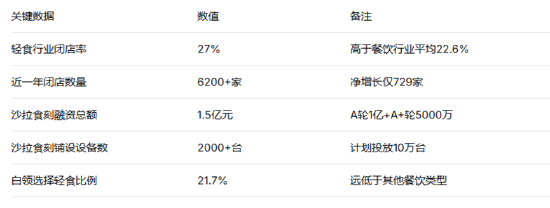
Core Insights - The dramatic downfall of "Salad Time" reflects the challenges faced by the healthy food industry, highlighting the contradictions between health and convenience in its business model [2][18][19] Company Overview - "Salad Time" was founded in 2020 in Dongguan, leveraging an "AI vending machine + light meal salad" model, quickly becoming a capital darling [2][12] - The company aimed to deploy 100,000 AI vending machines within five years, with over 2,000 machines installed by April 2025 in major cities [2][12][19] Financial Performance - The company raised a total of 1.5 billion yuan in funding, including 100 million yuan in Series A and 50 million yuan in Series A+ [8][19] - Despite ambitious revenue projections of at least 1 billion yuan annually, actual operational performance lagged significantly behind expectations [3][13] Operational Challenges - The company's aggressive expansion strategy led to operational inefficiencies, with reports of unpaid wages and delayed payments to franchisees surfacing by March 2025 [3][13][16] - By October 2025, "Salad Time" was officially declared bankrupt, with the founder facing legal issues due to debt disputes [14][16] Business Model Flaws - The company's reliance on a fixed-location vending machine model failed to meet the dynamic lunch needs of office workers, leading to a mismatch between consumer behavior and service delivery [15][16] - The franchise model, which included complex revenue-sharing arrangements, contributed to financial instability and management difficulties [16][19] Industry Context - The healthy food sector is characterized as a "high-risk category," with a closure rate of 27% from 2023 to 2024, surpassing the average closure rate of 22.6% in the broader restaurant industry [18][19] - The market is witnessing an influx of non-healthy food brands entering the light meal segment, increasing competition for independent healthy food brands [20][19] Lessons Learned - The collapse of "Salad Time" serves as a cautionary tale for the healthy food industry, emphasizing the need for a balance between health and convenience in product offerings [18][19] - Successful brands are now focusing on localized innovations that cater to traditional Chinese tastes, moving away from the rigid vending machine model [19][20]

海归学霸卖爆沙拉轻食,借力拼多多“千亿扶持”打造带动就业新样本
Quan Jing Wang· 2025-12-09 07:38
Core Insights - The article highlights the success of Jiang Fangjun, a graduate from Nanjing University and a master's degree holder from Germany, who founded the salad and light meal brand "No. 1 Farm" and became a leading seller on Pinduoduo while supplying to major membership supermarkets [1][2] Group 1: Company Overview - Jiang Fangjun transitioned from an IT background to the salad light meal industry, establishing two intelligent factories in Shanghai and Changzhou, with an annual production capacity of 15,000 tons [1][2] - The company utilizes AI technology in its production line, achieving a sorting accuracy of 99.99% for vegetable quality inspection, significantly enhancing food safety [3][4] Group 2: Market Strategy - The company has successfully tapped into the online market through Pinduoduo, where sales of salad light meals have become a significant portion of its online revenue, with 50% of total online sales coming from this platform [6][9] - Jiang Fangjun's collaboration with ten planting bases across various provinces has led to an estimated annual income increase of approximately 50 million yuan for farmers, promoting a sustainable agricultural model [5][7] Group 3: Future Plans - The company plans to develop a 3.0 version of its intelligent factory to further automate processes, including vegetable cutting and packaging, to enhance production efficiency [8] - Future expansion plans include establishing fully automated factories in major cities like Beijing, Chengdu, and Shenzhen, aiming to create more job opportunities [8]