餐饮经营模式创新

Search documents
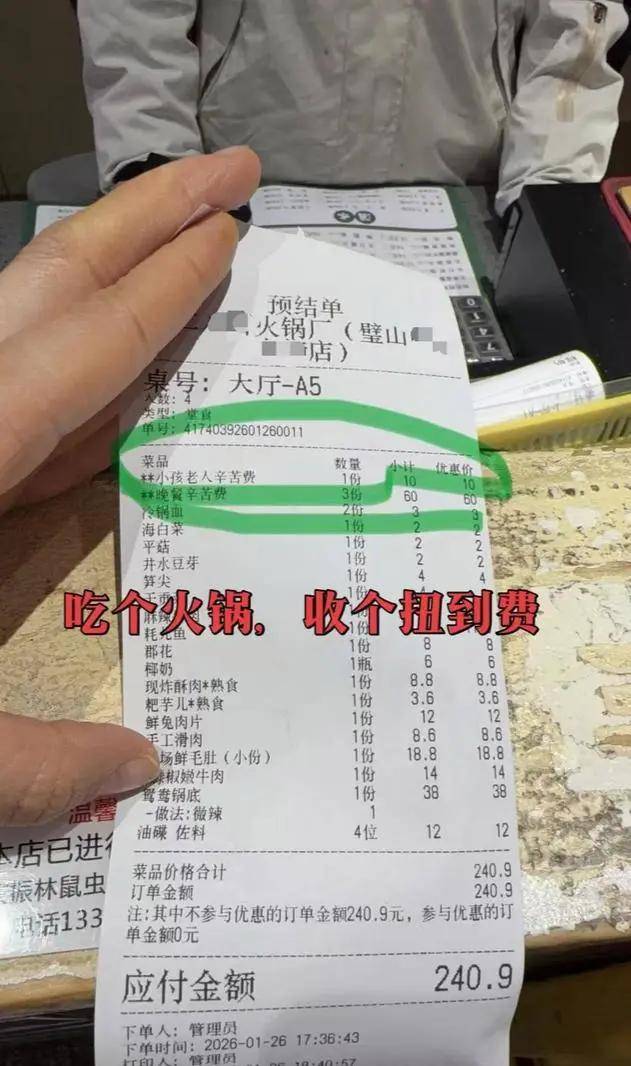
一顿火锅收70元“辛苦费”:低价素菜背后的餐饮模式困局
Sou Hu Cai Jing· 2026-02-07 13:50
Core Viewpoint - The controversy surrounding the "hardship fee" charged by a hotpot restaurant in Chongqing highlights the tension between innovative pricing strategies and consumer trust, raising questions about compliance and fairness in the restaurant industry [1][2][3] Group 1: Incident Overview - A hotpot restaurant in Chongqing introduced a "hardship fee" of 20 yuan for adults and 10 yuan for children and seniors, which sparked public outrage and discussions on social media [1][2] - The restaurant owner claimed that the fee was necessary to cover employee wages and operational costs, and that it was clearly communicated to customers [2][3] - The local market supervision authority intervened, ordering the restaurant to cease the additional charge and adhere to fair pricing practices [3][4] Group 2: Consumer Reactions - Consumers expressed dissatisfaction with the "hardship fee," feeling misled by the low prices of food items that did not include service costs [6][10] - The separation of food prices and service fees disrupted consumers' traditional understanding of pricing, leading to feelings of being unfairly charged [8][10] - There were concerns about the transparency of the fee structure, as many customers reported not being adequately informed about the charges before dining [9][10] Group 3: Industry Challenges - The restaurant industry is facing declining average consumer spending, with a reported drop from 43.2 yuan in 2022 to 42.6 yuan in 2023, and further projected declines [12] - Rising operational costs, including increased wages for restaurant staff and higher rental prices, are putting pressure on profit margins [17][19] - The strategy of separating food costs from service fees is seen as a response to these economic pressures, aiming to attract price-sensitive customers while maintaining profitability [19][20] Group 4: Recommendations for Restaurants - Restaurants are advised to ensure clear pricing practices, avoiding ambiguous charges like "hardship fees" that could lead to compliance issues [21][22] - Optimizing pricing models by renaming fees to more standard terms and providing clear descriptions of services included can enhance transparency [22] - Establishing a scientific cost accounting system and focusing on quality and service can help restaurants maintain profitability without resorting to controversial pricing strategies [23][25]

经营承压,分化加剧,2026年餐饮该怎么干才能赚钱?
虎嗅APP· 2026-01-01 13:19
Core Viewpoint - The restaurant industry faced unprecedented challenges in 2025, with significant pressure on operators due to rising costs, declining customer traffic, and a sharp drop in profits, leading to a survival struggle for many entrepreneurs [4][5]. Group 1: Consumer Behavior Changes - Consumer behavior has fundamentally changed, with increased price sensitivity and a heightened demand for quality and experience, forcing restaurants to optimize their "value-for-money" proposition [5]. - The controversy surrounding pre-prepared meals has intensified industry differentiation, impacting cost structures, service models, and consumer trust [5]. Group 2: Successful Business Models - Brands that successfully navigate the challenges have adopted new operational models, focusing on either extreme cost-effectiveness or unique customer experiences [7]. - For example, "南城香" has implemented a model of "fresh stir-fry + self-service weighing," offering competitive pricing with a focus on quality [8]. - The brand "椿芽·鲜牛肉杭州拌川" has differentiated itself through fresh preparation and a unique aesthetic, achieving significant market presence [8]. Group 3: Regional Cuisine and Consumer Preferences - Regional cuisines, such as Jiangxi cuisine, have gained popularity, with a notable increase in the number of related establishments and consumer preference for authentic local flavors [9]. - Data indicates that the importance of "regional characteristics" in restaurant selection has risen from 18% in 2024 to 29% in 2025, reflecting a shift towards unique and authentic dining experiences [9]. Group 4: Social Media and Brand Engagement - Building genuine brand engagement through social media has become crucial, with brands leveraging authenticity and transparency to connect with consumers [10]. - For instance, the founder of Big Pizza has cultivated a personal brand that resonates with consumers by sharing real experiences and addressing operational issues openly [10]. Group 5: Operational Adjustments - Smaller store formats have emerged as a strategy to reduce costs and adapt to the dual demands of dine-in and delivery services [12]. - Brands like "麻小六" and "小菜园" have successfully reduced store sizes and simplified their offerings to enhance operational efficiency and profitability [12]. Group 6: Strategic Recommendations for 2026 - Moving into 2026, the industry must shift focus from merely expanding store numbers to creating unique value for customers and ensuring brand memorability [14]. - Operators are advised to optimize their menu, enhance space efficiency, prioritize delivery channels without becoming overly reliant on platforms, and maintain product quality [14][15]. - Emphasizing team cohesion and employee well-being is critical for navigating challenging times, as a strong team can significantly impact business resilience [15].