高周转模式

Search documents
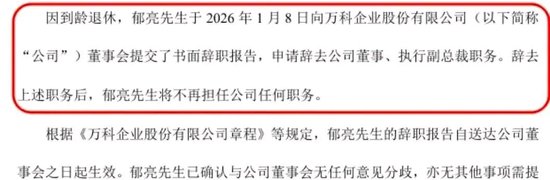
万科郁亮被爆疑似失联
Xin Lang Cai Jing· 2026-01-28 05:00
Core Viewpoint - The former chairman of Vanke Group, Yu Liang, has reportedly been missing for half a month following his resignation from all positions on January 8, 2025, amid significant changes in the company's management structure and financial challenges [1][10]. Group 1: Management Changes - Yu Liang resigned from all positions at Vanke Group on January 8, 2025, after a 36-year career with the company, with a smooth transition of his shares [2][11]. - On January 27, 2025, Zhu Jiasheng, the then-president and CEO, also resigned due to "health reasons," and was later confirmed to be under criminal investigation [2][11]. - Following these resignations, Vanke underwent a major management reshuffle, with Yu Liang demoted to executive vice president and new management taking over [7][12]. Group 2: Career Highlights of Yu Liang - Yu Liang joined Vanke in 1990 and quickly became a key executor of the strategic plans laid out by then-chairman Wang Shi [3][11]. - He played a significant role in Vanke's B-share listing in 1993, raising HKD 450 million, and was instrumental in the company's strategic decisions during the "Junwan War" in 1994 [4][11]. - After the "Baowan War" concluded in 2017, Yu Liang succeeded Wang Shi as chairman, marking a significant leadership transition [5][12]. Group 3: Company Performance and Challenges - Under Yu Liang's leadership, Vanke pursued a diversification strategy, but the company's high turnover model began to show weaknesses as industry adjustments exceeded expectations [7][12]. - By the time of Yu Liang's retirement, Vanke was facing a debt crisis, contrasting sharply with the stable conditions during Wang Shi's tenure [8][12].


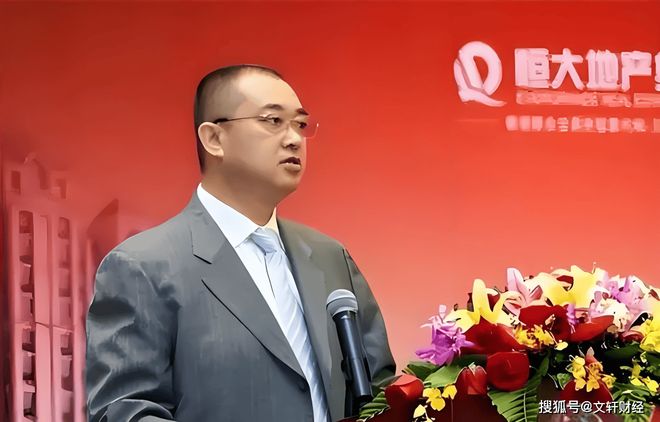
恒大梦魇:起底夏海钧的20亿薪酬、财务造假与跨国追责
Xin Lang Cai Jing· 2026-01-05 03:37
Core Viewpoint - The legal troubles of Xia Haijun, former CEO of Evergrande Group, are closely tied to the company's collapse, with a global Mareva injunction preventing him from transferring or disposing of assets worth HKD 60 billion [2][3]. Group 1: Legal and Financial Issues - The Mareva injunction is a cross-border asset freezing measure aimed at preventing the defendant from transferring or disposing of assets during litigation, ensuring the enforcement of final judgments [3]. - The injunction prohibits Xia from transferring HKD 60 billion in assets within Hong Kong and from disposing of proceeds from the sale of his luxury property [3]. - Xia's attempts to lift the injunction have been unsuccessful, with multiple court rejections from July 2024 to January 2026 [3]. Group 2: Compensation and Corporate Governance - Xia Haijun received approximately HKD 2 billion in compensation during his 15 years at Evergrande, with his salary peaking at HKD 270 million in 2016 [4]. - His compensation growth was closely linked to the company's rapid expansion, which raised concerns about the alignment of executive incentives with long-term risk management [4][8]. Group 3: Financial Misconduct - Xia played a central role in financial fraud at Evergrande, overseeing the preparation of false financial reports that inflated revenues and profits significantly in 2019 and 2020 [5][6]. - The inflated financial data was used as a basis for issuing over HKD 20 billion in corporate bonds, raising questions about the integrity of the company's financial practices [5]. - Following the exposure of Evergrande's debt crisis, Xia engaged in significant asset liquidation, selling bonds and shares at steep discounts, which was perceived as an attempt to mitigate personal risk [6]. Group 4: Broader Implications - Xia's strategies contributed to the aggressive leverage model that defined Evergrande's rapid growth, which ultimately proved unsustainable when market conditions shifted [8]. - The ongoing legal proceedings against Xia reflect broader systemic issues within the Chinese real estate sector, where accountability for the crisis remains a contentious topic [9].
万科“20亿债崩”背后的生死赌局:万亿房企如何沦为资本弃子?
Sou Hu Cai Jing· 2025-11-30 23:02
Core Viewpoint - Vanke's request for a bond extension has exposed severe cash flow issues, leading to a significant decline in its market position and raising concerns about the sustainability of the high-debt model in the real estate industry [1][2]. Group 1: Cash Flow Crisis - Vanke's cash flow has deteriorated, with only 300 billion available for use out of a reported 656 billion, as 60% of the cash is tied up in regulatory accounts [4]. - The company faces a debt repayment of 1,347 billion within a year, resulting in a cash shortfall exceeding 800 billion, necessitating a daily cash burn of 2.2 billion to maintain operations [4]. - Sales have plummeted by 44.6% year-on-year, with operating cash flow negative for three consecutive quarters, indicating a collapse of its previously successful business model [4]. Group 2: Survival Strategies - Vanke is selling assets to generate cash, having raised 68.6 billion from project sales in the first three quarters of 2025, including discounted sales of previously acquired prime properties [5]. - The company is negotiating with creditors for debt restructuring, potentially involving debt extensions and debt-to-equity swaps, with an upcoming bondholder meeting seen as critical [5]. - Vanke has shifted its focus from expansion to core urban residential projects, but the lack of quality buyers may lead to further losses from asset sales [5]. Group 3: Industry Implications - Vanke's situation reflects the end of the high-debt, high-turnover model in the real estate sector, as many companies struggle with similar issues [6]. - In 2025, 17 other real estate firms have already defaulted on debts, with a higher risk of bankruptcy due to their lack of substantial assets and government support [7]. - The government is unlikely to allow Vanke to fail due to its impact on housing delivery and supplier livelihoods, but it will not provide direct financial assistance [6]. Group 4: Human Impact - Ordinary individuals, such as homeowners and suppliers, are significantly affected, with concerns over delayed property deliveries and unpaid debts leading to financial distress [8]. - Vanke employees are also facing job cuts, with reports of a 30% reduction in some regional offices, highlighting the broader impact of the company's financial struggles [8].
民企“黑马”邦泰集团还能快跑多久?
3 6 Ke· 2025-09-22 02:07
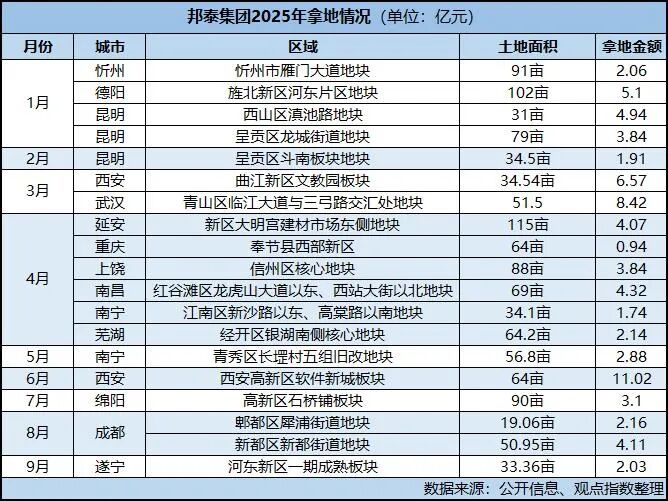
Core Viewpoint - The article highlights the resilience of the Chengdu real estate market amidst ongoing industry adjustments, with the local company, Bangtai Group, emerging as a significant player through aggressive expansion strategies and land acquisitions [1][4][10]. Company Overview - Bangtai Group, originally a real estate sales agency, transitioned to property development in 2007 and has since focused on the Sichuan region, particularly in third and fourth-tier cities [2][3]. - The company has expanded its operations to 39 cities across 11 provinces, developing over 160 projects with a total area exceeding 32 million square meters [3]. Market Performance - In 2024, Chengdu led the nation with 331,100 residential sales, while Bangtai Group achieved significant sales growth, ranking 18th in equity sales with 19.868 billion yuan in the first eight months of 2025 [1][9]. - The company’s land acquisition strategy has been aggressive, with 22 plots acquired in 2024, resulting in a total land acquisition amount exceeding 10 billion yuan [4][7]. Expansion Strategy - Bangtai Group has shifted its focus from Sichuan to second-tier cities in central and western China, aiming for markets with less competition [3][10]. - The company employs a "high turnover" strategy, focusing on smaller land plots in less competitive markets, which allows for quicker sales and cash flow [8][10]. Financial Insights - The company’s land acquisition activities in 2023 included 19 transactions totaling approximately 7.519 billion yuan, indicating a robust presence in the land market [6][7]. - Despite the aggressive expansion, there are concerns regarding the sustainability of the high turnover model, especially in the context of rising financing costs associated with equity pledges [10][11]. Future Outlook - Bangtai Group aims to achieve a sales target of 30 billion yuan in 2025, with a significant portion of its sales now coming from second-tier cities [10][12]. - The company’s approach to financing through equity pledges raises questions about long-term viability, especially as many peers in the industry face liquidity challenges [11][12].
暴跌90%,“换帅”后绿城中国创下19年来最低中期净利
Di Yi Cai Jing· 2025-08-26 10:48
Core Viewpoint - Greentown China (03900.HK) reported a significant decline in net profit despite a substantial increase in revenue, highlighting a concerning trend in profitability relative to its historical performance [1][5]. Financial Performance - For the first half of 2025, Greentown China's revenue was RMB 533.68 billion, a decrease of 23% year-on-year, while gross profit fell by 21% to RMB 71.59 billion [2]. - The company's net profit attributable to shareholders was only RMB 2.1 billion, down nearly 90% from RMB 20.45 billion in the same period last year, marking the lowest mid-year net profit since its listing in 2006 [1][2]. - The decline in revenue and profit was attributed to uneven delivery schedules and a 22.7% decrease in area recognized for revenue during the first half of the year [2]. Asset Impairment and Costs - Greentown China recorded asset impairment losses of RMB 19.33 billion in the first half of 2025, which significantly impacted net profit [2]. - The company also reported a non-financial asset impairment loss of RMB 17.17 billion, reflecting a cautious approach to asset valuation amid market conditions [8]. Shareholder Profit Distribution - Non-controlling shareholders took away RMB 10.01 billion of the total profit, which accounted for 83% of the net profit, leaving only RMB 2.1 billion for the company's shareholders [9][10]. - This represents a significant increase in the share of profits taken by non-controlling shareholders compared to the previous year, where they accounted for 38% of the total profit [10]. Market Position and Sales - Despite the profit decline, Greentown China remains a strong player in the real estate market, achieving total contract sales of approximately RMB 1,222 billion in the first half of 2025, ranking second in the industry [3]. - The company maintained a high collection rate of 96% for its sales, supporting further project investments [3]. Financial Health - Greentown China's cash and bank deposits amounted to approximately RMB 667.95 billion, which is 2.9 times its short-term debt, indicating a strong liquidity position [3]. - The company's average cost of debt decreased to 3.6%, down 40 basis points from the previous year, reflecting improved financing conditions [3].
从全球市值最高房企到清盘退市 中国恒大资本市场跌宕终章
Feng Huang Wang· 2025-08-26 00:07
Core Viewpoint - China Evergrande officially delisted from the Hong Kong Stock Exchange on August 25, 2023, marking the end of its 16-year presence in the capital market [1][14]. Summary by Sections Delisting Announcement - On August 12, 2023, China Evergrande announced its decision to delist from the Hong Kong Stock Exchange, following a letter from the exchange stating that the company failed to meet the resumption criteria [2]. - The last trading day for its shares was August 22, 2023, with the delisting effective from 9 AM on August 25, 2023 [3]. Historical Context - China Evergrande was approved for listing in January 2008 but faced challenges due to the global financial crisis, leading to a temporary suspension of its IPO [4]. - The company officially listed on the Hong Kong Stock Exchange on November 5, 2009, with a market capitalization exceeding 700 billion HKD [4]. - In October 2017, the company's market value peaked at 4,144 billion HKD, making it the largest real estate company globally [4]. Financial Struggles - The company adopted a high-leverage, high-debt business model, which led to significant risks that materialized after 2020, resulting in a liquidity crisis in 2021 [6]. - In December 2021, China Evergrande initiated a debt restructuring process for its overseas debts [7]. Debt Restructuring Efforts - By March 2023, the company disclosed a debt restructuring plan involving the issuance of new bonds to replace existing ones, with terms including a 4-12 year maturity and interest rates between 2%-7.5% [8]. - However, by September 2023, the company announced a reassessment of the restructuring terms due to disappointing sales and ongoing negotiations with creditors [9]. Legal and Regulatory Issues - In January 2024, the Hong Kong High Court ordered the company to be liquidated, with the stock remaining suspended [9]. - The company's stock price plummeted from a peak of 28.74 HKD per share to 0.16 HKD per share by January 2024, representing a 99.43% decline [9]. - The company faced legal actions against its founder and former executives for alleged financial misconduct, including approval of misleading financial statements [11][13]. Conclusion - The delisting of China Evergrande signifies a dramatic fall from grace for a company that once dominated the real estate sector, now facing significant financial and legal challenges [14].
从全球市值最高房企到清盘退市,中国恒大资本市场跌宕终章
Xin Lang Cai Jing· 2025-08-25 14:29
Core Viewpoint - China Evergrande officially delisted from the Hong Kong Stock Exchange on August 25, 2023, marking the end of its 16-year presence in the capital market due to failure to meet the resumption guidelines set by the exchange [1][2][12]. Summary by Sections Delisting Announcement - On August 12, 2023, China Evergrande announced its decision to delist from the Hong Kong Stock Exchange, following a letter from the exchange indicating that the company failed to meet any of the resumption requirements [2]. - The last trading day for the shares was August 22, 2023, with the delisting taking effect on August 25, 2023 [3]. Historical Context - China Evergrande was approved for listing in January 2008 but faced challenges due to the global financial crisis, leading to a delayed IPO until November 2009, when it became the largest private real estate company listed in Hong Kong [4]. - The company reached its peak market capitalization of HKD 414.4 billion in October 2017, making it the top global real estate firm [4]. Financial Struggles - The company adopted a high-leverage, high-debt business model, which led to significant financial difficulties starting in 2020, culminating in a liquidity crisis in 2021 [6][7]. - In December 2021, China Evergrande initiated a debt restructuring process, which faced multiple delays and challenges [7][8]. Legal and Regulatory Issues - In January 2024, the Hong Kong High Court ordered the company to enter liquidation, with appointed liquidators focusing on asset recovery for creditors [9][10]. - The company has faced legal actions against its former executives for alleged financial misconduct, including fraud and misrepresentation of financial statements [11][12]. Current Status - As of December 2023, the company has not disclosed a new debt restructuring plan, and its stock has been suspended from trading, reflecting a dramatic decline in market value from its peak [9][10].
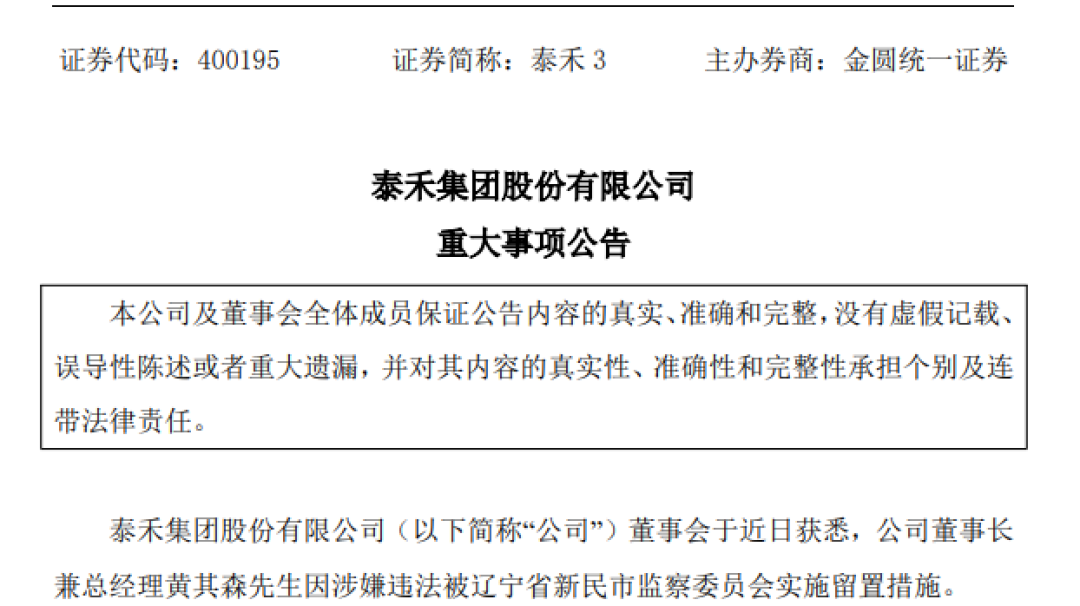
“第二代豪宅教父”黄其森被留置,他15岁考入大学,31岁创业,身家曾达200亿元
Mei Ri Jing Ji Xin Wen· 2025-08-23 07:16
Core Viewpoint - 泰禾集团面临资产被冻结和查封的情况,运营受到一定影响,但经营活动仍在正常进行 [2] - 公司因未按规定披露重大诉讼而受到中国证监会的行政处罚,罚款总额达到600万元 [5] Company Overview - 泰禾集团创始人黄其森在房地产行业有显著影响力,曾以200亿元人民币的财富名列《2020胡润全球房地产富豪榜》第99位 [7] - 泰禾集团成立初期专注于福建市场,逐步扩展至北京豪宅市场,成为高周转模式的标杆企业 [7][8] Financial Performance - 根据2024年年报,泰禾集团实现营业收入约80.4亿元,同比上升25.78%,但归属于公司股东的净利润亏损约213亿元,同比下降250.94% [10][12] - 亏损增加的主要原因包括部分经营主体破产重整、投资性股权和重要资产被拍卖,导致投资损失大幅增加 [10] Market Position - 泰禾集团在2017年销售金额超过千亿,曾被认为是中国房企的佼佼者 [8] - 2023年7月,深交所宣布泰禾集团股票终止上市,标志着其市场地位的显著下滑 [9]


地产大佬黄其森,被留置!
中国基金报· 2025-08-22 22:35
Core Viewpoint - The chairman and general manager of Taihe Group, Huang Qisen, has been placed under detention due to suspected illegal activities, which raises concerns about the company's operational stability and governance [2][5]. Group 1: Company Governance and Legal Issues - Taihe Group announced that its chairman, Huang Qisen, is under detention by the Liaoning Provincial New Min City Supervisory Committee for suspected illegal activities [2]. - The company is currently facing asset freezes and seizures, which are expected to impact its operations [5]. - The China Securities Regulatory Commission (CSRC) has imposed a fine of 6 million yuan on Taihe Group, while Huang Qisen has been fined 3 million yuan [5]. Group 2: Financial Performance and Debt Situation - As of the end of 2024, Taihe Group has outstanding loan principal repayments of 73.49 billion yuan, with total assets worth 107.18 billion yuan being frozen, seized, or pledged, accounting for 65.07% of total assets [11]. - The company is at risk of asset auctions or debt settlements due to its financial difficulties [10][11]. - The company has been listed as a defaulter due to failure to fulfill repayment obligations, leading to further financial strain [11]. Group 3: Historical Context and Market Position - Taihe Group, founded by Huang Qisen, initially focused on the Fujian region and became known for its high turnover model, achieving significant market presence in Beijing's luxury real estate sector [8]. - The company once had a market capitalization exceeding 50 billion yuan and set ambitious sales targets, but has faced severe financial challenges since 2020, including debt defaults and a delisting in August 2023 [8][9]. - The company’s flagship project, "Chinese Courtyard," has seen properties being disposed of, indicating a significant decline in its market position [10].

“第二代豪宅教父”黄其森被留置,身家曾达200亿元
Mei Ri Jing Ji Xin Wen· 2025-08-22 14:32
Core Viewpoint - 泰禾集团 is facing significant operational challenges due to asset freezes and administrative penalties from the China Securities Regulatory Commission (CSRC) for failing to disclose major lawsuits and omissions in annual reports [2][5]. Financial Performance - For the fiscal year 2024, 泰禾集团 reported an operating income of approximately 8.04 billion yuan, a year-on-year increase of 25.78% [12][14]. - The net profit attributable to shareholders showed a loss of about 21.3 billion yuan, representing a year-on-year decline of 250.94% [12][14]. - The gross profit margin decreased to 1.11% from 2.52% in the previous year [14]. Regulatory Issues - The CSRC has issued warnings and fines totaling 6 million yuan to 泰禾集团 for not disclosing significant lawsuits and for major omissions in its annual reports from 2020 to 2022 [5]. - Key executives, including 黄其森, received individual fines ranging from 80,000 to 300,000 yuan for their roles in the company's regulatory failures [5]. Company Background - 泰禾集团, founded by 黄其森, initially focused on the Fujian market and expanded into Beijing's luxury housing sector, becoming known for high-end products [8][9]. - The company experienced rapid growth from 2013 to 2017, achieving sales exceeding 100 billion yuan and expanding its project portfolio significantly [9][10]. - In 2017, 泰禾集团 set an ambitious sales target of 200 billion yuan, which led to a surge in its stock price and market capitalization [10]. Recent Developments - On July 28, 2023, the Shenzhen Stock Exchange announced the termination of 泰禾集团's stock listing [11]. - The company faced a significant asset sale, with its former headquarters, 泰禾大厦, sold for approximately 660 million yuan, reflecting a substantial loss compared to its assessed rental value [11].