
高端材料国产化

Search documents
切入锂电材料行业!鼎龙股份拟6.3亿元收购皓飞新材70%股权
Bei Jing Shang Bao· 2026-01-26 12:53
Core Viewpoint - Dinglong Co., Ltd. plans to acquire 70% of Shenzhen Haofei New Materials Co., Ltd. for 630 million yuan, marking its entry into the lithium battery materials industry, particularly in key functional materials like binders and dispersants [1] Group 1: Acquisition Details - The acquisition will be funded through the company's own or raised funds, totaling 630 million yuan [1] - The transaction does not constitute a related party transaction or a major asset restructuring [1] - Upon completion, Haofei New Materials will become a 70% owned subsidiary and will be included in the company's consolidated financial statements [1] Group 2: Industry Context - Haofei New Materials specializes in the R&D, production, and sales of lithium battery process materials and related services, including lithium dispersants and binders [1] - The acquisition aligns with the growing demand in the new energy vehicle and energy storage sectors, driven by technological upgrades and the localization of high-end materials [1] - The company aims to leverage its platform advantages and integrate resources to create a new growth engine, while also accelerating its layout in high-end lithium battery auxiliary materials [1]

我国光伏核心材料获关键突破 气相法聚烯烃弹性体实现规模化生产
Xin Lang Cai Jing· 2026-01-25 22:58
Core Viewpoint - The successful large-scale production of high-end material polyolefin elastomer at Dushanzi Petrochemical in Xinjiang alleviates China's reliance on imports for this material, crucial for strategic emerging industries like photovoltaics [1] Group 1: Production Breakthrough - Polyolefin elastomer, known as "industrial gold," combines the processability of plastics with the elasticity of rubber, making it a core raw material for industries such as photovoltaics [1] - The technology development for polyolefin elastomer began in 2015, and by 2024, the transition from laboratory to industrial production was achieved [1] Group 2: Future Production Plans - Dushanzi Petrochemical is expected to produce a cumulative total of 58,000 tons of polyolefin elastomer by 2025, completing the full-chain construction of the technical process [1]
美国专家也看不懂!中国为何又把顶尖材料,给干成“白菜价”了?
Sou Hu Cai Jing· 2026-01-24 11:50
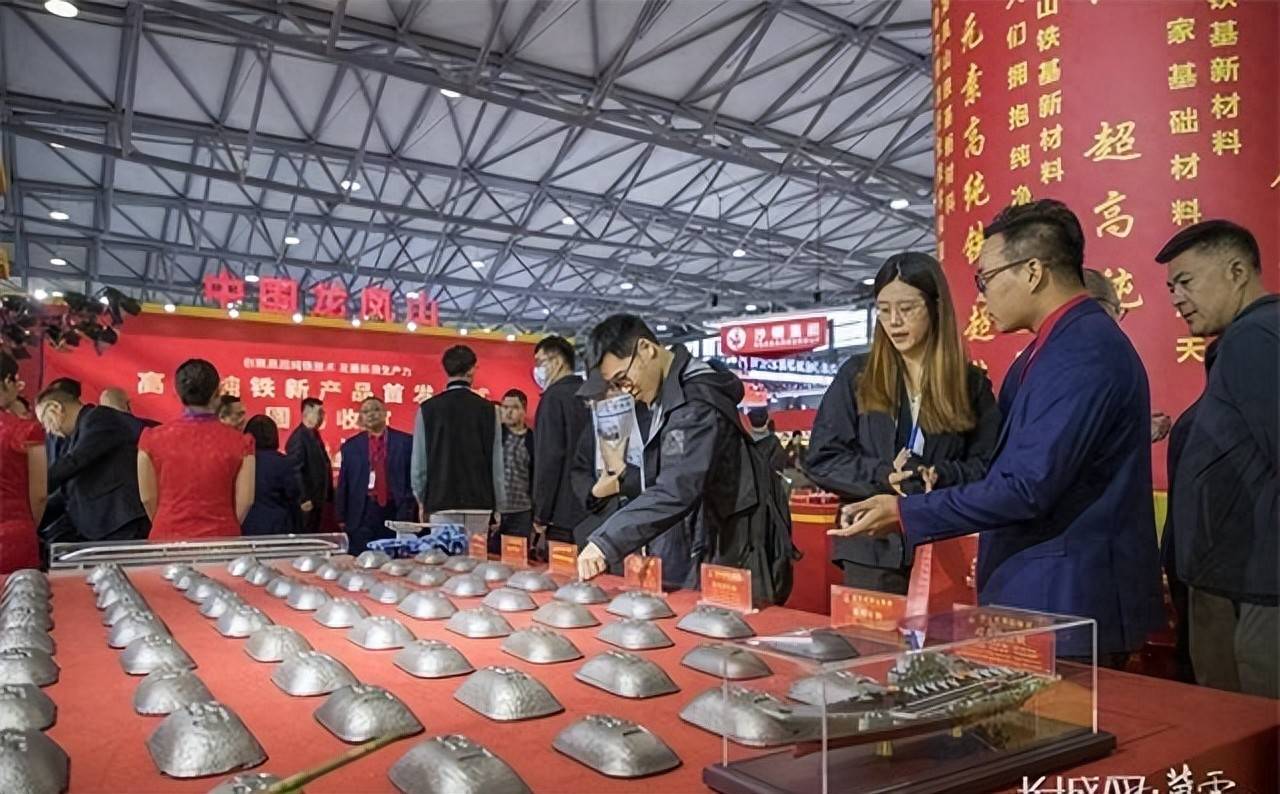
Core Insights - The article discusses China's breakthrough in producing high-purity iron, specifically 5N-grade ultra-pure iron, which has historically been dominated by Japanese and American companies [1][2] - The Chinese team, led by Hebei Longfengshan Group and Shanghai University, developed a new production method that significantly reduces costs and increases supply stability [2][3] Group 1: Production Process - The Chinese team utilized local high-purity pig iron as raw material, avoiding the high costs associated with traditional methods used by Japan and the U.S. [2] - They established the Iron-Based New Materials Research Institute in 2020 and launched a project to achieve 4N-grade purity, with the first production line achieving an annual capacity of 80,000 tons [2][3] - By September 2023, the team successfully produced the first batch of 5N samples with a purity of 99.999% [2] Group 2: Market Impact - By June 2024, the purity reached 99.9992%, surpassing Japanese and American standards, leading to a significant influx of orders from global buyers [3] - The price of the new high-purity iron dropped to one-fifth of the original price, prompting Japanese companies to cut their prices to one-third in response [3][5] - The shift in market dynamics has positioned China as a new supplier, reducing the market share of Japanese and American firms [5] Group 3: Technological Advancements - The production process involves a three-step method: pyrometallurgical pre-treatment, electrolytic refining, and vacuum zone melting, utilizing self-developed ultra-high vacuum furnaces [2][3] - The team has filed 42 patents to protect their innovations and ensure competitive advantage [5] Group 4: Broader Implications - The use of domestically produced high-purity iron has improved the yield of 28nm chips, increased the lifespan of aerospace components, and reduced energy losses in power grids [7] - The project has been recognized with a Metallurgical Science and Technology Award in 2025, indicating its significance in the industry [7] - This development reflects a broader trend of China moving from reliance on imports to becoming a technology exporter, enhancing strategic security [7][9]

地表最强,0.5克承重400斤!这根国产黑色细丝,让日美企业慌了
Sou Hu Cai Jing· 2026-01-05 06:53
Core Viewpoint - The domestically produced T1000-grade high-performance carbon fiber is revolutionizing the global high-end materials market, being recognized as a strategic material comparable to rare earth elements and essential for national defense and military strength [1][3][11]. Group 1: Material Characteristics - T1000 carbon fiber has a diameter of only 6 to 7 microns, with a density one-fourth that of steel but a strength over five times greater [1]. - It can withstand temperatures up to 3000℃ and as low as -180℃, making it highly resistant to heat, cold, and corrosion [1]. - Weighing only 0.5 grams per meter, it can support a weight of 400 kilograms, equivalent to the weight of three adult men [1]. Group 2: Strategic Applications - The primary applications of T1000 are in the defense and military sectors, including missile bodies, rocket casings, submarine pressure hulls, and components of fighter jets like the F-22 and F-35 [2]. - Other applications include high-speed trains, the domestically produced C919 aircraft, and electric vehicles, where it can be used for vehicle bodies and fuselages [4]. Group 3: Market Dynamics - For over 30 years, the T1000-grade carbon fiber market has been dominated by Japanese and American companies, which controlled 80% of the global market [4]. - The leading companies include Japan's Toray, which holds 35% of the market, and the U.S.'s Hexcel, with approximately 25% [4]. - Prior to 2020, China relied heavily on imports for T800 and T1000 carbon fibers, facing high prices and strict technology embargoes from these countries [6]. Group 4: Cost and Production - The production cost of domestically produced T1000 is approximately 8000 yuan per kilogram, which is 20% to 30% lower than imported prices [7]. - The domestic production of T1000 is expected to increase the carbon fiber usage in the C919 aircraft from 12% to 35%, significantly reducing the aircraft's weight by 20% [7][8]. - The Dazhong project aims for an annual production capacity of 3000 tons by 2025, meeting nearly 40% of domestic demand, with plans to expand to 10,000 tons by 2028 to satisfy over 60% of high-end demand [11]. Group 5: Industry Impact - The rise of domestic T1000 production is expected to disrupt the existing global carbon fiber market, forcing international competitors to lower their prices to retain market share [11]. - A new competitive landscape is emerging in China, with companies like Huayang, Zhongfu Shenying, and Guangwei Composites forming a leading tier in the industry [12]. - Research and development for T1100-grade carbon fiber has already begun, with expectations to surpass Japanese products by 2027 [12][13].
三责新材闫永杰:以硬核陶瓷破局半导体国产化
Zhong Guo Zheng Quan Bao· 2025-11-03 22:26
Core Viewpoint - The company, Sanze New Materials, is rapidly emerging in the advanced ceramics sector, particularly in silicon carbide materials, aiming to break the foreign monopoly in high-end ceramic components, with a focus on strategic national fields like semiconductors and new energy [1][4]. Group 1: Company Strategy and Development - Sanze New Materials initially established its headquarters and R&D center in Shanghai, with manufacturing in Nantong, but later moved its headquarters to Nantong to enhance operational efficiency and integrate into the regional industrial cluster [2][3]. - The company has received significant land support from the Nantong government, which has facilitated its strategic relocation and expansion efforts [2][3]. - The collaboration with local enterprises, such as Zhongtian Technology, highlights the company's integration into the local supply chain and its role in the new materials industry in Nantong [3]. Group 2: Technological Advancements - The company has achieved breakthroughs in three core technologies: large-size complex shape sintering, precision forming based on 3D printing, and high-purity coating processes for semiconductor equipment [4]. - Sanze has improved the yield rate of complex structural components with a diameter of 700mm to 70%, significantly higher than the industry average [4]. - The company is now entering the domestic mainstream equipment manufacturers' verification systems for semiconductor components, with initial small-scale deliveries already made [4]. Group 3: Financial Growth and Investment - The company has seen rapid revenue growth, from 30 million yuan in 2020 to an expected 270 million yuan in 2023, although profit margins have decreased from 30% to around 15% due to increased competition [5][6]. - Sanze has secured funding from government-backed funds, which not only provides financial support but also validates the company's technology and direction [5]. - Plans for an IPO on the New Third Board and a potential listing on the Beijing Stock Exchange by mid-2026 are underway, with funds aimed at expanding semiconductor component production and R&D [5]. Group 4: Vision and Future Outlook - The company aims to focus on the independent research and industrialization of high-performance ceramic materials, contributing to the national goal of achieving greater self-sufficiency in critical materials [6]. - The transition from a technology-driven mindset to a product-oriented approach is emphasized, highlighting the importance of market competitiveness and customer recognition [6].
联泓新科以“自主+协同”驱动高端材料国产化
Da Zhong Ri Bao· 2025-08-17 23:27
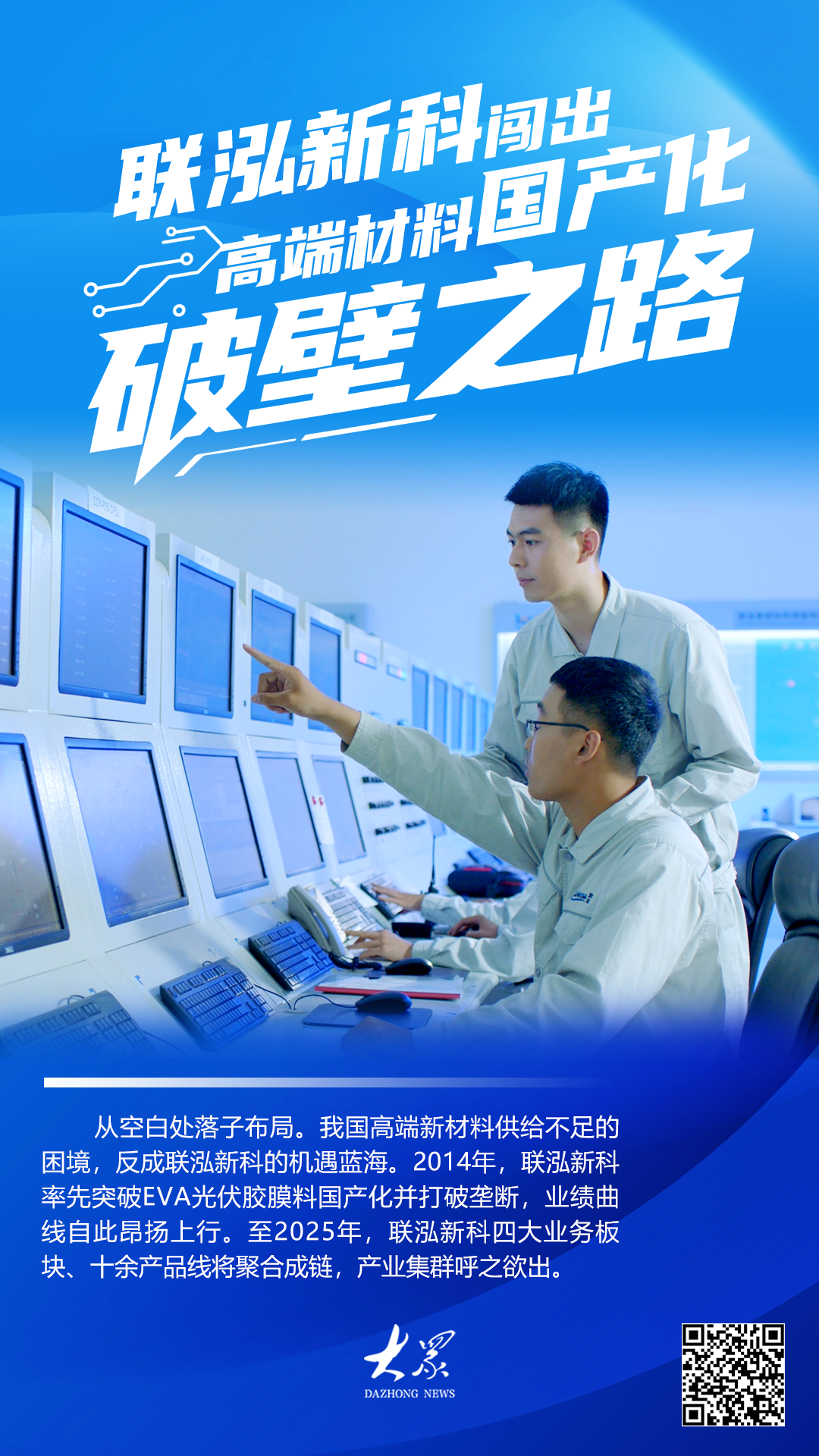
Core Viewpoint - The article highlights the achievements of Lianhong New Materials Technology Co., Ltd. in the high-end materials sector, emphasizing its role in domestic production and innovation within the Shandong industrial chain [3][9]. Company Overview - Lianhong New Materials was established in 2010 and has made significant strides in the high-end materials market, particularly in photovoltaic materials [5]. - The company has successfully broken the monopoly on EVA photovoltaic film materials in 2014, leading to a significant upward trend in its performance [5][7]. Technological Innovations - Lianhong New Materials employs a dual innovation strategy of "independence + collaboration" to enhance its industrial capabilities [9]. - The company has developed proprietary technologies, such as continuous processing methods for ultra-high molecular weight polyethylene, which have been certified by leading battery manufacturers [7][9]. - A recent breakthrough in addressing equipment scaling issues resulted in a 20% increase in production and a 20% reduction in energy consumption [7]. Market Position and Future Plans - By 2025, Lianhong New Materials aims to consolidate its four major business segments and over ten product lines into a cohesive industrial cluster [5]. - The company is positioned to support the transformation of Shandong's industrial landscape, particularly in the context of the "ten strong industries" upgrade wave [7]. Contribution to the Industry - Lianhong New Materials is recognized as a key player in the domestic high-end materials market, contributing to the localization of critical materials and technologies [9]. - The company’s innovations are expected to strengthen the resilience of the Shandong industrial chain, particularly in the fields of electronic-grade chemicals and biodegradable materials [9].
商道创投网·会员动态|致知博约·完成数千万元Pre-A轮融资
Sou Hu Cai Jing· 2025-07-31 15:57
Core Insights - Zhizhi Boyue recently completed a multi-million Pre-A round financing led by several institutions, including Xianfeng Changqing and Dingxing Quantum, with Wanshi Capital serving as the exclusive financial advisor [1] Group 1: Company Overview - Zhizhi Boyue was established in 2022 in Shaanxi, initially focusing on military special materials, and now centers on proprietary modification of base resins, covering high-end electronic materials across display panels, semiconductor packaging, and military applications [1] - The company has overcome significant challenges in controlling electronic-grade impurity ions, achieving uniform dispersion of fillers, and ensuring long-term reliability, with its first LCD packaging adhesive passing rigorous 1000-hour validation at BOE's 8.5 generation line [1] Group 2: Financing Purpose - The CEO of Zhizhi Boyue, Sun Jiuli, stated that the funds from this round will be primarily used for the expansion of production bases in South China, the Yangtze River Delta, and Sichuan, as well as for the introduction of high-end semiconductor packaging testing equipment and an increase of 30% in the R&D team to accelerate the iteration of next-generation high-reliability packaging materials [2] Group 3: Investment Rationale - Zhao Yang, a partner at Xianfeng Changqing, highlighted that Zhizhi Boyue has a clear technological migration path from military applications to semiconductors, with high technical barriers in proprietary resin modification and validation from leading panel manufacturers, which instills confidence in investing in domestic high-end packaging materials [3] Group 4: Investment Perspective - Wang Shuai, founder of Shandao Venture Capital Network, noted that this financing coincides with the government's recent policies promoting the synergy between advanced manufacturing and venture capital, with Zhizhi Boyue entering the semiconductor materials sector using military-grade processes, thereby enhancing the supply chain and demonstrating the entrepreneurial spirit of tackling tough challenges [4]
有研新材:高增长表象下的隐忧与突围
Sou Hu Wang· 2025-04-29 10:23
Group 1 - The core viewpoint of the news highlights the contrasting performance of the company in 2024 and Q1 2025, with a significant decline in 2024 followed by a remarkable profit surge in Q1 2025, primarily driven by subsidiaries [1][6] - In 2024, the company's total revenue decreased by 15.49% to 9.146 billion yuan, and net profit dropped by 34.78% to 148 million yuan, indicating challenges in core business operations [1][2] - The company's cash flow from operating activities turned negative, dropping from 221 million yuan in 2023 to -54.52 million yuan, reflecting insufficient cash generation from core operations [2][3] Group 2 - In Q1 2025, net profit surged by nearly 14,698%, reaching 67.38 million yuan, largely due to the performance of subsidiaries, which raises concerns about the sustainability of this growth [1][3] - The main revenue-generating products faced significant declines: platinum group metals revenue fell by 28.94%, rare earth materials by 13.95%, and infrared optical materials by 20.16%, while thin film materials saw a 46.53% increase [2][4] - The company achieved several technological breakthroughs, including advancements in high-purity metal targets and rare earth green extraction, but the low R&D expenditure relative to revenue (2.27%) poses a risk to maintaining its competitive edge [4][5] Group 3 - The company faces multiple challenges for future growth, including cyclical fluctuations in the semiconductor and rare earth industries, high competition from international giants, and uncertainty regarding the sustainability of subsidiary contributions [5][6] - Despite the strategic focus on four major sectors (electric, magnetic, optical, and medical), the company must navigate the risks associated with commodity price volatility and market competition [5][6] - The company's efforts in capacity expansion and industry chain integration are ongoing, but their effectiveness will require time to validate [5][6]

基础化工行业研究:对杜邦开展反垄断调查,高端材料加速国产化
SINOLINK SECURITIES· 2025-04-07 00:55
Investment Rating - The industry investment rating is not explicitly stated in the provided content, but the report suggests a focus on domestic companies capable of achieving domestic substitution in high-end materials [5]. Core Insights - The antitrust investigation into DuPont China Group is a landmark event for the industry, signaling accelerated growth for domestic enterprises in the high-end materials sector [2]. - The investigation reflects China's strategic response to foreign competition in the chemical high-end materials market, allowing domestic companies to compete more fairly and potentially reduce procurement costs for downstream enterprises [3][4]. - DuPont's significant reliance on the Chinese market, contributing approximately 18% (around $2.29 billion) to its global revenue, indicates that the company is unlikely to abandon this market despite the ongoing investigation [4]. Summary by Sections Event Overview - On April 4, DuPont China Group was investigated for allegedly violating the Anti-Monopoly Law of the People's Republic of China [1]. Event Analysis - The antitrust investigation is seen as a pivotal moment for the industry, coinciding with recent tariff increases imposed by the U.S. on China, which further emphasizes the competitive landscape [2]. - China's chemical market is the largest globally, with domestic companies having made significant advancements in self-sufficiency and competitiveness in the mid-to-low-end product segments [2]. Company Insights - DuPont has a strong presence in protective materials, photovoltaic materials, membrane materials, and electronic materials, having evolved from its origins in military explosives to a leader in fine chemicals [3]. - The antitrust investigation presents opportunities for domestic companies to break existing exclusive agreements and enhance their market positions [3]. Investment Recommendations - The report advises focusing on domestic companies that are positioned to lead in high-end material substitutions, leveraging the current market dynamics [5].
