18C规则

Search documents
翼菲智能IPO:业绩连亏、负债率近90%、现金流呈重压 研发占比年年走低营销开支高增
Xin Lang Zheng Quan· 2026-01-23 10:14
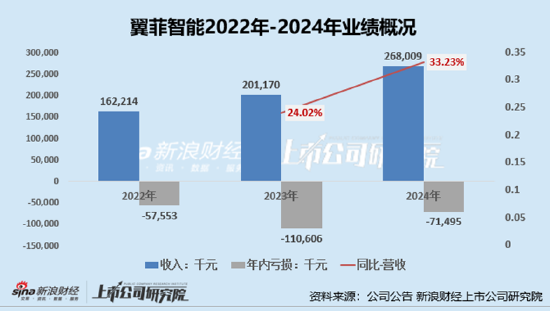
Core Viewpoint - Zhejiang Yifei Intelligent Technology Co., Ltd. is seeking to list on the Hong Kong Stock Exchange under the 18C chapter, which allows unprofitable tech companies to enter the capital market, despite facing significant financial challenges including ongoing losses and high customer concentration [1][11]. Financial Performance - The company has shown steady revenue growth from 2022 to 2024, with revenues of RMB 162 million, RMB 201 million, and RMB 268 million, representing year-on-year growth rates of 24.02% and 33.23% respectively [2][4]. - However, the company has reported continuous losses, with losses of RMB -57.55 million, RMB -111 million, and RMB -71.49 million for the same years [2][5]. - In the first three quarters of 2025, revenue increased to RMB 180 million, but losses expanded to RMB -126 million, surpassing the total losses of the previous year [4]. Cash Flow and Debt - The company has consistently negative operating cash flow from 2022 to 2025, with net outflows of RMB -44.15 million, RMB -86.75 million, RMB -69.58 million, and RMB -138 million [6][7]. - By the end of 2024, the company had only RMB 22.9 million in cash and cash equivalents, indicating a tight cash flow situation [6]. - The debt burden is significant, with the debt-to-asset ratio rising from 43.84% in 2022 to 88.42% by the end of 2024, indicating a substantial increase in financial leverage [8][9]. Customer Concentration - The company relies heavily on its top five customers, with sales to these clients accounting for 83.3%, 60.7%, 50.1%, and 47.4% of total revenue from 2022 to 2025 [10]. - This high customer concentration poses risks to revenue stability and bargaining power, as any adverse changes in the purchasing strategies of these clients could lead to significant revenue declines [10]. R&D and Marketing Expenditure - Despite the emphasis on technological innovation, the company's R&D expenditure has been declining as a percentage of revenue, from 21.1% in 2022 to 14.4% in 2024, while marketing expenses have been increasing significantly [12][11]. - R&D expenditures were RMB 34.17 million, RMB 33.14 million, and RMB 38.66 million from 2022 to 2024, while marketing expenses rose from RMB 14.79 million to RMB 53.14 million in the same period [12]. Market Positioning and Challenges - The company aims to leverage its "Tsinghua System" technology background and comprehensive product matrix in industrial robotics to attract investors, but it faces challenges in proving that its technological advantages can translate into sustainable profitability [14].

亏损也要上市!2025机器人港股IPO通道竞速激烈,30+企业仅5家成功上市
Sou Hu Cai Jing· 2025-11-28 07:15
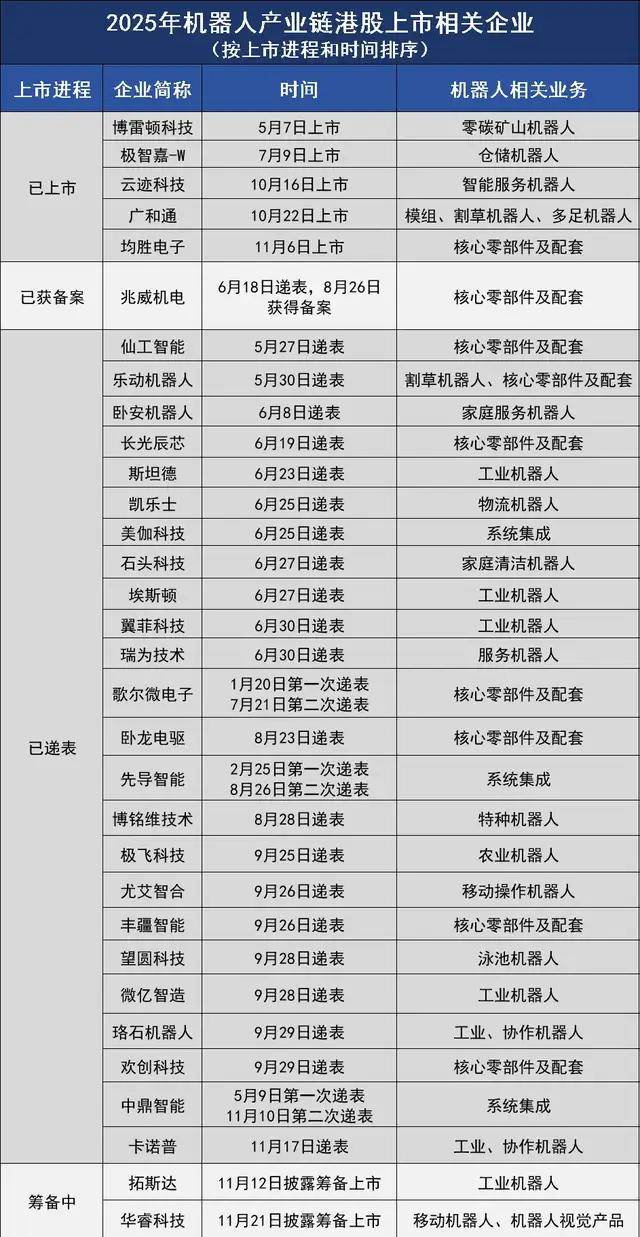
Core Insights - The Hong Kong stock market has seen 87 new listings raising over 240 billion HKD, making it the leading exchange globally for IPOs as of November 11, 2025 [1] - The introduction of the "18C" rule and the "Specialized Technology Company" service by the Hong Kong Stock Exchange has attracted a surge of robotics companies seeking to go public, with over 30 companies from the robotics industry lining up for IPOs [1][4] - Despite the influx of companies, many are struggling with losses, indicating a critical test of the commercialization capabilities and sustainable development prospects of China's robotics industry [1][11] Listing Progress - Among the 32 robotics companies currently in the IPO process in Hong Kong, only 5 have successfully listed, while 25 are still awaiting approval [4] - The companies are categorized into four main types, including those already listed on A-shares seeking dual listings in Hong Kong to broaden financing channels [4][5] 18C Rule Impact - The "18C" rule facilitates the listing of unprofitable specialized technology companies by lowering the minimum market capitalization requirements and allowing companies to go public without profitability [5] - Approximately 15-20 companies are targeting the 18C listing pathway, reflecting the high investment and long cycle characteristics of the robotics industry [5] Market Segmentation - Several companies are competing to become the "first stock" in specific robotics segments, such as logistics, agricultural, and household robots, aiming to establish brand recognition and valuation premiums [7] - The presence of 14 upstream suppliers in the robotics industry highlights the importance of these companies in supporting the growing demand from downstream clients [8] Financial Performance - Financial data indicates that about two-thirds of the 32 companies face profitability challenges, with many experiencing significant losses despite revenue growth [11][12] - A few companies have successfully turned losses into profits, showcasing potential for improvement in the industry [12] - The sustainability of these companies post-IPO remains uncertain, as evidenced by previous cases where companies listed under the 18C rule have struggled to maintain their stock prices [13] Conclusion - The 2025 IPO wave in Hong Kong reflects both the potential and challenges within the Chinese robotics industry, with many companies seeking to capitalize on market opportunities while facing significant financial hurdles [14]


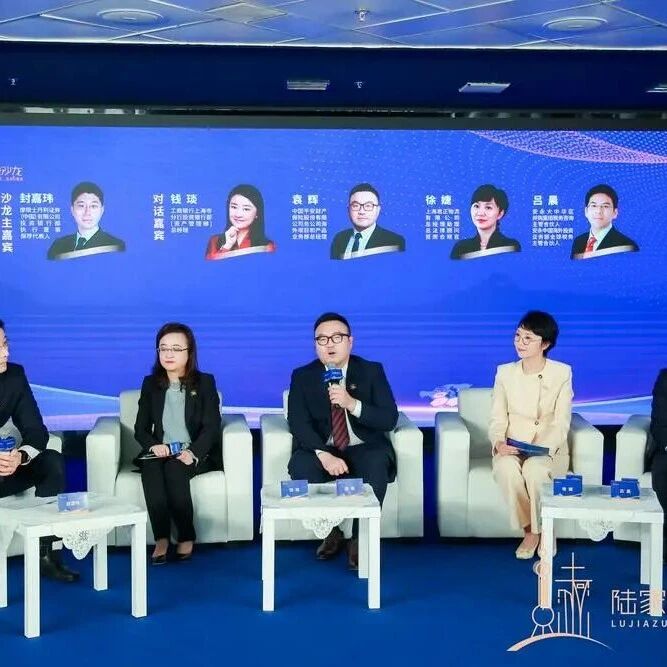
聚焦企业赴港上市,陆家嘴金融沙龙第37期解析新机遇与挑战
财联社· 2025-11-25 03:08
Core Viewpoint - The article discusses the recent trends and opportunities in the Hong Kong IPO market, highlighting the significant increase in IPO financing and the favorable conditions for companies considering listing in Hong Kong [3][4][5]. Group 1: Hong Kong IPO Market Performance - In 2023, Hong Kong's IPO financing exceeded 30 billion USD, with over 80 companies listed [4][5]. - The Hang Seng Index and Hang Seng Tech Index are expected to see substantial increases by 2025, although current valuations remain relatively low [4]. - The average daily trading volume in the Hong Kong market has nearly doubled, reaching approximately 130 billion HKD [4]. Group 2: Reasons for Companies to List in Hong Kong - Companies are increasingly choosing to list in Hong Kong as a step towards internationalization, allowing access to global capital and enhancing brand recognition [5]. - The Hong Kong Stock Exchange (HKEX) has introduced various rules, such as the 18A and 18C regulations, to accommodate companies at different stages, including those without commercial revenue [5][6]. Group 3: IPO Trends and Investor Participation - The top ten IPOs in Hong Kong accounted for over two-thirds of the total financing, indicating the importance of large projects in the market [8]. - The average first-day gain for IPOs was 38%, with a decrease in the IPO break-even rate from 34% last year to 23% this year [8][9]. - Over 85% of new IPOs included cornerstone investors, with a significant increase in the amount raised from these investors compared to the previous year [9]. Group 4: Challenges and Future Outlook - The article notes that while the market shows promise, it still faces uncertainties related to geopolitical factors and company valuations [9]. - The biopharmaceutical sector is highlighted as particularly capital-intensive, with the average cost to develop a new drug exceeding 2 billion USD [11]. - The HKEX's new measures are expected to facilitate the listing process for A-share companies, potentially increasing the number of firms opting for secondary listings in Hong Kong [6][12]. Group 5: Regulatory and Structural Considerations - The process for companies to list in Hong Kong typically involves either H-share or red-chip structures, with the latter requiring more complex arrangements [14]. - The China Securities Regulatory Commission (CSRC) has implemented a new overseas listing filing management system, which emphasizes legal compliance and data security [15][16]. - The average time for H-share projects to complete the CSRC filing is around 146 days, while more complex structures like VIE can take up to 287 days [16].