
2型炎症

Search documents
赛诺菲「度普利尤单抗」同日获批两项新适应症
Xin Lang Cai Jing· 2026-02-27 10:12
Core Viewpoint - Sanofi's Dupilumab injection (brand name: Dupixent) has received official approval from the National Medical Products Administration (NMPA) for two new indications: treatment of bullous pemphigoid in adult patients and maintenance treatment for asthma in children aged 6 and above, marking significant advancements in treatment options for these patient groups [1][4]. Group 1: Product Approval and Indications - Dupilumab is now the first and only targeted biologic approved in China for the treatment of bullous pemphigoid [1]. - It is also the first and only anti-IL-4Ra monoclonal antibody approved in China for maintenance treatment of asthma in children aged 6 and above [1]. - The drug has been approved for nine indications in China, including moderate to severe atopic dermatitis, nodular prurigo, bullous pemphigoid, asthma, and chronic obstructive pulmonary disease (COPD) [4]. Group 2: Clinical Benefits and Mechanism - Dupilumab is a fully human monoclonal antibody that inhibits the signaling pathways of interleukin-4 (IL-4) and interleukin-13 (IL-13), rather than acting as an immunosuppressant [4]. - Clinical trials have shown significant clinical benefits, demonstrating the drug's ability to suppress type 2 inflammation, which is a key driver in various related common diseases [4]. Group 3: Market Context and Future Outlook - The approval comes at a time when China is experiencing deep population aging, with bullous pemphigoid's incidence closely linked to this demographic shift, impacting the quality of life for elderly patients [5]. - Sanofi aims to address unmet medical needs in China and is committed to accelerating the introduction of transformative innovations to improve patient outcomes [5].


度普利尤单抗小心点,外面全是国产创新药
3 6 Ke· 2026-02-06 04:29
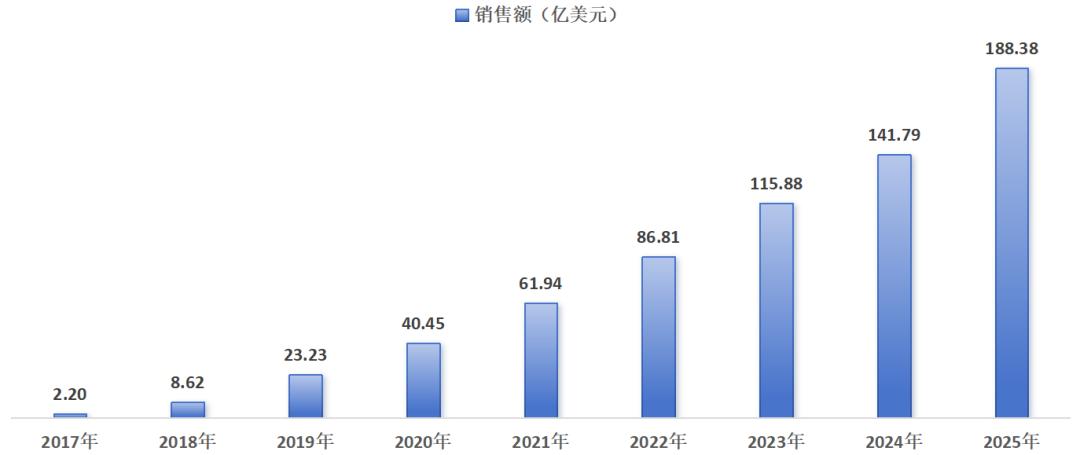
Core Insights - The article discusses the competitive landscape of the IL-4Rα monoclonal antibody market, highlighting Dupixent's dominance and the emerging challenges from new entrants [2][11][15] Group 1: Dupixent's Market Position - Dupixent, developed by Sanofi, has achieved significant sales milestones, with Q4 2025 revenue reaching €4.246 billion (approximately $5.085 billion), marking a 32.2% year-over-year increase [1] - Since its FDA approval in March 2017, Dupixent has rapidly become a leading drug in the autoimmune space, with sales surpassing $2.2 billion in its first year and exceeding $2 billion in 2019 [3][5] - The drug's success is attributed to its strategic targeting of the IL-4Rα pathway, which is crucial in mediating type 2 inflammation, and its innovative VelocImmune® technology that enhances safety and efficacy [6][7] Group 2: Competitive Landscape - The approval of Connoa's Suplizumab in September 2024 marks the second IL-4Rα monoclonal antibody to enter the market, intensifying competition against Dupixent [12] - Other candidates, including Leideqi (CBP-201) and Tairiqi, are in the NDA stage, indicating a growing pipeline of competitors that could challenge Dupixent's market share [13][14] - The emergence of these new IL-4Rα monoclonal antibodies suggests a shift from a "one-player" market to a more competitive environment, with multiple players vying for market share [11][15] Group 3: Future Outlook - The article suggests that while Dupixent remains a strong player, its growth may face challenges due to the increasing number of competitors and the saturation of its core indications [15] - The competitive dynamics in the IL-4Rα space are expected to evolve, with a focus on differentiation strategies and the expansion of indications being critical for maintaining market position [15]
鼻窦炎伴鼻息肉易复发,专家称规范治疗与长期管理是关键
Bei Ke Cai Jing· 2025-06-26 04:34
Core Viewpoint - Chronic sinusitis with nasal polyps is a prevalent condition in China, affecting approximately 100 million people, with 20 to 30 million patients experiencing nasal polyps, which significantly impacts their quality of life [1][2]. Group 1: Disease Prevalence and Symptoms - The prevalence of chronic sinusitis in China is estimated to be around 8%, translating to about 100 million patients [1]. - Common symptoms include nasal congestion, purulent nasal discharge, olfactory/taste reduction, and facial pain, which can severely affect patients' quality of life [1][2]. Group 2: Treatment Approaches - The primary treatment strategy combines corticosteroid medication and surgical intervention, but the management of chronic sinusitis with nasal polyps is challenging due to high recurrence rates [1][3]. - Surgical removal of nasal polyps aims to restore normal airflow and drainage, but it does not guarantee a permanent solution, necessitating ongoing medication and follow-up care [3][4]. Group 3: Advances in Treatment - The emergence of biologic therapies represents a significant advancement in treatment, allowing for more precise and effective management of the disease by targeting the underlying inflammatory mechanisms [4][5]. - Biologic agents focus on key inflammatory pathways associated with type 2 inflammation, which is relevant for patients with chronic sinusitis, nasal polyps, asthma, and other comorbidities [5].