
Dupixent(度普利尤单抗)

Search documents
赛诺菲安万特2026年初面临高管变动与业绩增长挑战
Jing Ji Guan Cha Wang· 2026-02-13 19:36
Group 1 - The company is undergoing a significant leadership change with CEO Paul Hudson announcing his departure in February 2026, to be succeeded by Beren Garijo in April 2026, which may impact the company's strategic direction and R&D efficiency [2] - The company expects a high single-digit percentage growth in sales for 2026, with earnings per share growth slightly exceeding sales growth, and plans to execute a €1 billion stock buyback program [3] - The company faces critical R&D challenges and needs to accelerate its drug pipeline to replace its core product Dupixent, which accounts for over 30% of revenue and has a patent expiring in the early 2030s, while its vaccine business may continue to be pressured by U.S. policies [4]

度普利尤单抗小心点,外面全是国产创新药
3 6 Ke· 2026-02-06 04:29
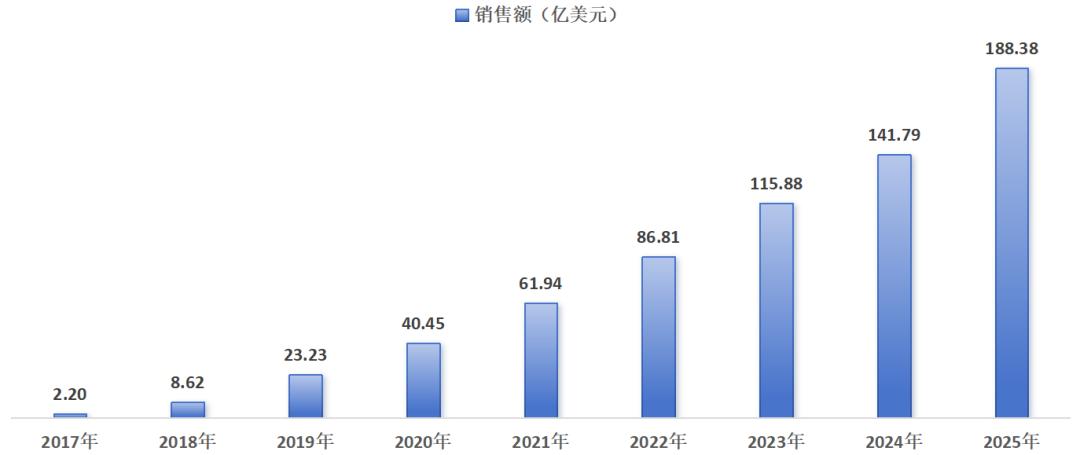
Core Insights - The article discusses the competitive landscape of the IL-4Rα monoclonal antibody market, highlighting Dupixent's dominance and the emerging challenges from new entrants [2][11][15] Group 1: Dupixent's Market Position - Dupixent, developed by Sanofi, has achieved significant sales milestones, with Q4 2025 revenue reaching €4.246 billion (approximately $5.085 billion), marking a 32.2% year-over-year increase [1] - Since its FDA approval in March 2017, Dupixent has rapidly become a leading drug in the autoimmune space, with sales surpassing $2.2 billion in its first year and exceeding $2 billion in 2019 [3][5] - The drug's success is attributed to its strategic targeting of the IL-4Rα pathway, which is crucial in mediating type 2 inflammation, and its innovative VelocImmune® technology that enhances safety and efficacy [6][7] Group 2: Competitive Landscape - The approval of Connoa's Suplizumab in September 2024 marks the second IL-4Rα monoclonal antibody to enter the market, intensifying competition against Dupixent [12] - Other candidates, including Leideqi (CBP-201) and Tairiqi, are in the NDA stage, indicating a growing pipeline of competitors that could challenge Dupixent's market share [13][14] - The emergence of these new IL-4Rα monoclonal antibodies suggests a shift from a "one-player" market to a more competitive environment, with multiple players vying for market share [11][15] Group 3: Future Outlook - The article suggests that while Dupixent remains a strong player, its growth may face challenges due to the increasing number of competitors and the saturation of its core indications [15] - The competitive dynamics in the IL-4Rα space are expected to evolve, with a focus on differentiation strategies and the expansion of indications being critical for maintaining market position [15]

JPM 2026:AI破局,肥胖引爆,巨头血战新王座
Xin Lang Cai Jing· 2026-01-15 14:15
Core Insights - 2026 is identified as a pivotal year for transformation and output in the global biopharmaceutical industry, with major companies revealing strategic developments at the JMP conference [1] - The industry is experiencing extreme differentiation, with ADC and GLP-1 seen as key growth engines for the next five years, while mRNA, siRNA, and RLT are transitioning from concepts to clinical norms [1][9] - The BD strategies are becoming more precise, with 2025's small-scale acquisitions starting to yield results, and the logic behind mergers and acquisitions in 2026 expected to diversify [1] Hot Track Dynamics: Dual Drivers of Technology Iteration and Indication Expansion - ADC remains a leading player in the oncology sector, with Merck advancing multiple ADC assets through collaboration with Daiichi Sankyo [12] - BeiGene views ADC as a core technology and is actively promoting drug accessibility globally [12] - Eli Lilly has completed several ADC-related transactions to enhance its capabilities in cancer treatment [12] Weight Management Market Transition - The weight management market is shifting from simple weight loss to comprehensive management of metabolic syndrome, with Eli Lilly focusing on AI-driven drug discovery and direct patient engagement [14] - Roche's acquisition of Carmot Therapeutics enhances its pipeline with new metabolic therapies [14] - Sanofi is expanding the indications for its core asset Dupixent and advancing its autoimmune pipeline [14] Key Corporate Strategic Planning: Core Track Deepening and Platform Layout - Eli Lilly's strategy focuses on obesity and AI-driven drug development, with a projected investment of up to $1 billion in collaboration with NVIDIA [15] - Pfizer aims to maximize core transaction value and apply AI across its business chain, targeting a $150 billion market in obesity by 2030 [15] - Amgen is accelerating the integration of biotechnology and AI, with a focus on rare diseases and partnerships in China [16] BD Trends: Core Logic of Track Reinforcement and Ecological Synergy - The pharmaceutical industry is seeing a concentration of mergers and acquisitions in ADC and bispecific antibodies, with major companies acquiring key assets and technology platforms [17] - Big Pharma is shifting from scale expansion to pipeline restructuring to avoid revenue cliffs due to upcoming patent expirations [18] - The focus is on mid-stage assets with immediate Phase 3 potential, which are expected to have a premium advantage over early-stage assets [18] Industry Outlook - The biopharmaceutical industry is entering an "innovation harvest period" from 2026 to 2030, with GLP-1 drugs evolving into comprehensive metabolic management platforms [19] - The market for GLP-1 receptor agonists in China is projected to reach approximately 38.3 billion yuan by 2030 [19] - The commercialization of cutting-edge therapies is approaching a "singularity," with advancements in cell and gene therapies and RNA therapies expected to overcome production and reimbursement challenges [19][20]


