
司普奇拜单抗

Search documents
康诺亚-B:港股公司信息更新报告:司普奇拜单抗放量在即,平台价值持续验证-20260331
KAIYUAN SECURITIES· 2026-03-31 08:24
Investment Rating - The investment rating for the company is "Buy" (maintained) [1] Core Insights - The company achieved significant revenue growth in 2025, with total revenue reaching 716 million yuan, a year-on-year increase of 67.31%. The sales revenue from the product Sipulizumab was approximately 315 million yuan, representing a 633% increase from 2024 [4][5] - The company is expected to continue its revenue growth trajectory, with projected revenues of 2.458 billion yuan in 2026, 1.624 billion yuan in 2027, and 2.224 billion yuan in 2028 [4][7] - Sipulizumab has been included in China's National Medical Insurance Drug List, enhancing its affordability and accessibility, and the company is actively expanding its product pipeline with next-generation dual antibodies [5][6] Financial Summary - The company reported a net loss of 523 million yuan in 2025, but adjusted net profit (excluding share-based payment impacts) was -495 million yuan [4] - The gross margin for 2025 was 87.7%, with a projected gross margin of 95% for the following years [7][10] - The price-to-sales (P/S) ratio is projected to be 7.4, 11.2, and 8.2 for 2026, 2027, and 2028 respectively, indicating a favorable valuation compared to historical performance [4][7]
康诺亚-B(02162):港股公司信息更新报告:司普奇拜单抗放量在即,平台价值持续验证
KAIYUAN SECURITIES· 2026-03-31 06:13
Investment Rating - The investment rating for the company is "Buy" (maintained) [1] Core Insights - The company achieved significant revenue growth in 2025, with a total revenue of 716 million yuan, representing a year-on-year increase of 67.31%. The sales revenue from the product Siponimod (司普奇拜单抗) reached approximately 315 million yuan, a remarkable growth of 633% compared to 32 million yuan in 2024 [4][5] - The company is expected to continue its revenue growth trajectory, with projected revenues of 2.458 billion yuan in 2026, 1.624 billion yuan in 2027, and 2.224 billion yuan in 2028. This is an upward revision from previous estimates [4] - The product Siponimod has been included in China's National Medical Insurance Drug List, enhancing its affordability and accessibility, and is expected to expand into various II-type immune diseases [5] - The company has completed overseas licensing for multiple products, which will help in expanding its global market presence [6] Financial Summary - In 2025, the company reported a net loss of 523 million yuan, with an adjusted net profit of -495 million yuan. The gross margin for 2025 was 87.7%, and the net margin was -73% [7][10] - The projected earnings per share (EPS) for 2026 is 2.6 yuan, with a price-to-earnings (P/E) ratio of 23.8 times [7] - The company's total assets are expected to grow from 4.218 billion yuan in 2025 to 4.923 billion yuan in 2026, with total liabilities increasing from 1.443 billion yuan to 1.385 billion yuan in the same period [9]
康诺亚-B:销售放量在即,国际化兑现路径清晰-20260329
HTSC· 2026-03-29 07:45
Investment Rating - The report maintains a "Buy" rating for the company with a target price of HKD 91.13 [8][6]. Core Insights - The company reported a revenue of RMB 716 million for 2025, representing a year-on-year increase of 67.3%, with net losses of RMB 5.23 billion and adjusted net losses of RMB 4.95 billion, which were better than the expected RMB 5.71 billion and RMB 6.79 billion respectively [1][6]. - The sales of the drug Siponimod are expected to reach RMB 750 million in 2026, driven by three major indications being included in medical insurance and a favorable pricing strategy [2][3]. - The company has a clear path for global value realization, with several key milestones expected in 2026, including the submission of BLA for CMG901 and the acceleration of CM336's global value realization due to Gilead's acquisition of Ouro [3][4]. Revenue and Profit Forecast - The revenue forecast for 2026 is adjusted to RMB 753 million, with a projected net loss of RMB 6.49 billion, improving from previous estimates [6][13]. - The company anticipates a significant increase in revenue to RMB 2.62 billion by 2028, with a projected net profit of RMB 472 million [11][13]. Pipeline and Product Development - The company has a robust pipeline with several products expected to yield data in 2026, including CM512 and CM518D1, which are anticipated to show strong efficacy and safety trends [4][5]. - The automatic injection pen for Siponimod received approval at the end of 2025, enhancing the convenience of administration compared to competitors [2][3]. Financial Health - The company reported a gross margin of approximately 87.7% for 2025, with cash reserves of RMB 1.96 billion as of the end of 2025, providing a solid financial foundation for future growth [5][6]. - The operational efficiency is expected to improve as sales scale up, with a gradual optimization of the sales expense ratio [5][6].
康诺亚-B(02162):港股公司点评:核心产品放量在即,NewCo二次BD有望带来价值重估
SINOLINK SECURITIES· 2026-03-27 13:56
Investment Rating - The report maintains a "Buy" rating for the company, indicating an expected price increase of over 15% in the next 6-12 months [6]. Core Insights - The company reported a revenue of 716 million yuan, a 67% increase year-on-year, with product sales from Siponimod contributing 315 million yuan and collaboration income of 402 million yuan. The net loss for the year was 523 million yuan, with adjusted net loss at 495 million yuan. R&D expenses totaled 720 million yuan, and cash reserves stood at 1.96 billion yuan as of December 31, 2025 [2]. - Siponimod is expected to see significant sales growth in 2026 as it has been included in the medical insurance directory, with three approved indications. The company anticipates rapid growth due to the advantages of insurance coverage, pricing, and exclusive indications [3]. - The year 2026 is projected to be pivotal for multiple pipelines, with key catalysts expected, including the readout of Phase III data for CMG901 in gastric cancer and submissions for various NDAs [4]. - The second business development (BD) of NewCo is expected to lead to a revaluation of pipeline value, with Gilead proposing to acquire Ouro for $2.175 billion, which could yield significant upfront and milestone payments for the company [5]. Financial Forecasts - Revenue projections for 2026-2028 are 2.871 billion yuan, 2.064 billion yuan, and 2.994 billion yuan, reflecting growth rates of 300.8%, -28.1%, and 45.0% respectively. Net profit forecasts are 1.027 billion yuan, -587 million yuan, and 272 million yuan, with corresponding EPS of 3.44 yuan, -1.96 yuan, and 0.91 yuan [6][10].
BD中国模式:可持续现金流有望重塑估值
HTSC· 2026-03-19 02:55
Investment Rating - The report maintains an "Overweight" rating for the biopharmaceutical and chemical pharmaceutical sectors [6]. Core Insights - The Chinese innovative drug sector is at the beginning of a long cycle, with continuous global output of high-quality assets from Chinese companies. The potential of these assets is not fully reflected in A/H share pricing, leading to a recommendation for the innovative drug sector [1]. - The number and value of business development (BD) deals in the Chinese innovative drug industry have reached record highs in 2023, with 45 BD deals completed (+73% year-on-year) and a total disclosed amount of $57.5 billion (+135% year-on-year) [2]. - The report highlights a significant valuation gap between A/H shares and US stocks for similar innovative drug assets, indicating that A/H shares are systematically undervalued [4]. Summary by Sections Business Development Trends - The report notes that the Chinese innovative drug sector has achieved a global market share of approximately 20% in the number of BD projects and around 75% in the disclosed amount [2]. - There is a high predictability of continued growth in BD activities, driven by increasing interest from multinational corporations (MNCs) and private equity (PE) firms in Chinese assets [2]. Cash Flow Contributions - The report emphasizes that platform companies in China are expected to generate sustainable cash flows through ongoing BD activities, which have not been adequately valued in the market [3]. - It is projected that significant BD deals (with upfront payments exceeding $500 million) will contribute to continuous cash flow growth for companies like Heng Rui Medicine, Shiyao Group, and others [3]. Valuation Comparisons - The report compares the valuations of similar assets in A/H shares and US markets, revealing that Chinese innovative drug companies are undervalued relative to their US counterparts [4][19]. - Specific case studies illustrate the valuation discrepancies, such as between MSD and Kelun Biotech, and Insmed and Haizhi Pharmaceutical, highlighting the potential for significant upside in A/H share valuations [19][22]. Investment Recommendations - The report recommends focusing on large pharmaceutical and biopharmaceutical companies with sustained BD capabilities, including Heng Rui Medicine, Shiyao Group, and others [5]. - Companies that have completed large BD deals are expected to benefit from ongoing milestone cash flows, with specific recommendations for companies like Kelun Biotech and Rongchang Biopharmaceutical [5]. Target Prices and Market Outlook - Target prices for recommended stocks are provided, with specific price targets for companies such as Shiyao Group at HKD 19.25 and Heng Rui Medicine at HKD 98.43, indicating a bullish outlook for these stocks [26].



2026年过敏性哮喘药物品牌推荐精准控哮,长效无忧
Tou Bao Yan Jiu Yuan· 2026-03-07 00:30
Investment Rating - The report does not explicitly state an investment rating for the industry Core Insights - The Chinese allergic asthma drug market is transitioning from traditional treatments to precision medicine, with a focus on monoclonal antibodies targeting various pathways such as IL-5 and IL-4Rα, indicating a shift towards individualized treatment strategies [4][6] - The market size for allergic asthma drugs in China is projected to grow from CNY 11.2 billion in 2018 to CNY 19.6 billion by 2024, with a compound annual growth rate (CAGR) of 9.8%. By 2030, the market is expected to reach CNY 46.7 billion, driven by an expanding patient population and increasing demand for innovative therapies [7][8] - The report highlights the emergence of local companies in the allergic asthma drug market, which are leveraging policy changes and technological advancements to challenge multinational corporations' dominance [17][18] Market Background - The report outlines that allergic asthma is primarily driven by Th2 cell-mediated immune mechanisms and is associated with other allergic conditions [5] - The market is evolving from a focus on inhaled corticosteroids (ICS) and long-acting beta-agonists (LABA) to include biologics and targeted therapies, reflecting a significant transformation in treatment approaches [6] Market Status - The Chinese allergic asthma drug market is experiencing robust growth, with over 40 million patients and nearly one million new cases annually, leading to increased drug demand [7][8] - The report notes that the global allergic asthma patient population is expected to rise from 471.3 million in 2018 to 560.6 million by 2030, with China's growth slightly outpacing the global average [11][12] Market Competition - The competitive landscape is characterized by a mix of multinational corporations and local innovators, with companies like GSK and AstraZeneca maintaining significant market shares through established product lines and clinical data [16][17] - Local companies are capitalizing on the "patent cliff" effect and are making strides in the development of biosimilars and targeted therapies, thereby reshaping the competitive dynamics [17][18] Development Trends - The report identifies several key trends, including the acceleration of precision medicine and targeted therapies, the breakthrough of domestic inhalation formulations, and the integration of digital technologies in patient management [33][34][37] - The shift towards a multi-faceted market driven by policy reforms and the coexistence of innovative and cost-effective generic drugs is highlighted as a significant trend [36]
2026年过敏性鼻炎药物品牌推荐双效合一,快速通鼻
Tou Bao Yan Jiu Yuan· 2026-03-05 12:24
Investment Rating - The report does not explicitly state an investment rating for the industry Core Insights - The treatment of allergic rhinitis in China employs a comprehensive multi-modal approach, including immunotherapy as a first-line clinical recommendation and drug therapy as the core of symptomatic treatment [4] - The market for allergic rhinitis drugs in China is projected to grow from USD 4.4 billion in 2019 to USD 8.1 billion in 2024, with a compound annual growth rate (CAGR) of 12.9%, and is expected to reach USD 22.9 billion by 2030 [7] - The industry is witnessing a shift from traditional symptomatic treatment to targeted therapies, with biological agents becoming a focal point of research and development [31] Market Background - Allergic rhinitis, also known as allergic rhinitis (AR), is a non-infectious chronic inflammatory disease of the nasal mucosa mediated by IgE antibodies, characterized by symptoms such as sneezing, nasal discharge, nasal itching, and nasal congestion [5] - The treatment landscape has evolved, with the introduction of new therapies like the IL-4Rα monoclonal antibody and combination nasal sprays, which enhance treatment options for moderate to severe patients [6] Market Status - The Chinese allergic disease drug market is expected to grow significantly, with biological agents projected to increase from USD 0.1 billion in 2019 to USD 1.6 billion in 2024, and small molecule drugs from USD 4.3 billion to USD 6.5 billion in the same period [7] - The recognition of allergic diseases is shifting towards precision medicine driven by immune mechanisms, supported by breakthroughs in immunology [8] Market Competition - The competition in the allergic rhinitis drug market is characterized by the coexistence of multinational pharmaceutical companies and local enterprises, with multinational firms dominating the high-end market [16] - Local companies are leveraging cost advantages and innovative therapies to penetrate the market, focusing on desensitization treatments and biological agents [17] Development Trends - The industry is transitioning towards innovative therapies, with biological agents leading the way in technical breakthroughs [31] - Patient demand is driving product iterations and service upgrades, with a focus on high efficacy, safety, and convenience [32] - Dynamic adjustments in health insurance policies are enhancing the accessibility of innovative drugs, reshaping the market landscape [33] - Cross-industry collaboration and full industry chain layout are becoming key strategies for companies to enhance competitiveness [34]
政策赋能创新药加速跑
Jing Ji Ri Bao· 2026-02-26 21:26
Group 1 - The core issue highlighted is the current burden of innovative drug costs, where basic medical insurance covers 44%, commercial insurance covers 7%, and nearly half is borne by patients themselves [1] - The new policies since 2026 have significantly empowered the innovative drug industry, optimizing the payment system and enhancing drug accessibility [1][2] - The 2025 updated national medical insurance drug list represents the largest expansion of innovative drugs since the inception of the list, adding 114 new drugs while removing 29 [2] Group 2 - The newly added drugs are characterized by filling clinical gaps, superior efficacy, and cost-effectiveness, addressing unmet treatment needs [2] - The first commercial insurance innovative drug list includes 19 drugs, marking a significant step in supporting innovative drugs within a multi-tiered medical insurance system [2][3] - The new policies are expected to reshape the retail drug ecosystem, enhancing the accessibility and efficiency of innovative drugs [4][5] Group 3 - The innovative drug market is anticipated to undergo a restructuring, with deeper integration between innovative drug companies and retail pharmacies [5] - The dual-channel management mechanism for negotiated drugs aims to solve the "last mile" issue in drug accessibility [4][6] - The support from the medical insurance fund has exceeded 460 billion yuan, benefiting 1 billion patients and driving sales of related drugs over 670 billion yuan [7] Group 4 - The current period is seen as a golden era for high-quality development in the innovative drug industry, with increasing support for research and development from the government [8] - The alignment of national medical needs with corporate innovation is crucial for ensuring that innovative results reach patients more quickly and broadly [8][9] - Continuous efforts in basic research and supportive industrial policies are necessary for maintaining a leading position in global pharmaceutical innovation [9]
度普利尤单抗小心点,外面全是国产创新药
3 6 Ke· 2026-02-06 04:29
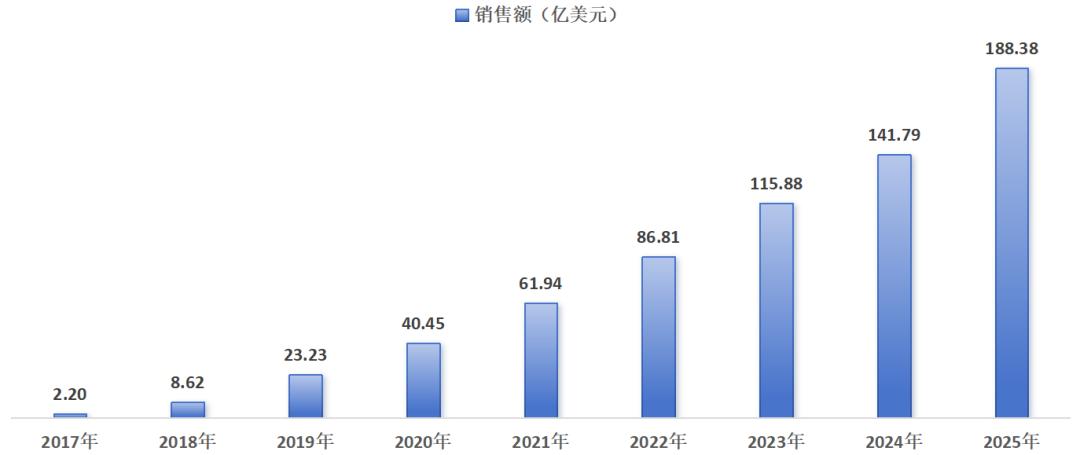
Core Insights - The article discusses the competitive landscape of the IL-4Rα monoclonal antibody market, highlighting Dupixent's dominance and the emerging challenges from new entrants [2][11][15] Group 1: Dupixent's Market Position - Dupixent, developed by Sanofi, has achieved significant sales milestones, with Q4 2025 revenue reaching €4.246 billion (approximately $5.085 billion), marking a 32.2% year-over-year increase [1] - Since its FDA approval in March 2017, Dupixent has rapidly become a leading drug in the autoimmune space, with sales surpassing $2.2 billion in its first year and exceeding $2 billion in 2019 [3][5] - The drug's success is attributed to its strategic targeting of the IL-4Rα pathway, which is crucial in mediating type 2 inflammation, and its innovative VelocImmune® technology that enhances safety and efficacy [6][7] Group 2: Competitive Landscape - The approval of Connoa's Suplizumab in September 2024 marks the second IL-4Rα monoclonal antibody to enter the market, intensifying competition against Dupixent [12] - Other candidates, including Leideqi (CBP-201) and Tairiqi, are in the NDA stage, indicating a growing pipeline of competitors that could challenge Dupixent's market share [13][14] - The emergence of these new IL-4Rα monoclonal antibodies suggests a shift from a "one-player" market to a more competitive environment, with multiple players vying for market share [11][15] Group 3: Future Outlook - The article suggests that while Dupixent remains a strong player, its growth may face challenges due to the increasing number of competitors and the saturation of its core indications [15] - The competitive dynamics in the IL-4Rα space are expected to evolve, with a focus on differentiation strategies and the expansion of indications being critical for maintaining market position [15]


从“灵魂砍价”到“价值共赢” 医保与创新药的双向奔赴
Zhong Guo Jing Ji Wang· 2026-01-21 09:18
Core Insights - The new national medical insurance drug list and the first commercial insurance innovative drug list will be implemented nationwide starting January 1, 2026, marking the largest expansion of innovative drugs in the history of the medical insurance directory [1] - The adjustment of the medical insurance directory represents a dual benefit for the innovative drug industry in China, with significant changes in the inclusion of innovative drugs and the establishment of a commercial insurance innovative drug directory [1][2] Summary by Sections Innovative Drug Inclusion - A total of 114 new drugs have been added to the national medical insurance drug list, including 111 new products launched within the last five years and 50 Class I new drugs, both of which set historical highs in terms of quantity and proportion [1][2] - The newly included drugs generally possess three common characteristics: they either fill a treatment gap, are superior alternatives, or offer better cost-effectiveness [2] Commercial Insurance Innovative Drug Directory - The first commercial insurance innovative drug directory includes 19 drugs, covering treatments for various conditions such as CAR-T therapies for tumors, rare diseases like Gaucher disease, and Alzheimer's disease, complementing the basic medical insurance [2][3] - The selection mechanism for the commercial insurance directory emphasizes high innovation, significant clinical value, strong irreplaceability, and adaptability to a multi-tiered payment system [3] Payment System and Market Impact - The medical insurance fund has paid over 460 billion yuan for negotiated drugs by the end of October 2025, benefiting 1 billion patients and driving related drug sales exceeding 670 billion yuan [4] - The new dual-directory system aims to clarify the boundaries of basic medical insurance coverage while allowing space for commercial insurance development, thus supporting a multi-tiered payment system [3][4] Innovation Ecosystem - The integration of the commercial insurance innovative drug directory with the national medical insurance drug list is crucial for building a multi-layered medical security system, focusing on high-innovation and clinically significant drugs that exceed basic insurance coverage [5] - The successful inclusion of breakthrough therapies like Alpelisib not only provides hope for patients but also signals strong support for genuine innovation within the pharmaceutical industry [5]