301条款关税

Search documents
不是15%?特朗普10%全球关税生效,还有六个行业关税或在路上
Di Yi Cai Jing· 2026-02-24 09:40
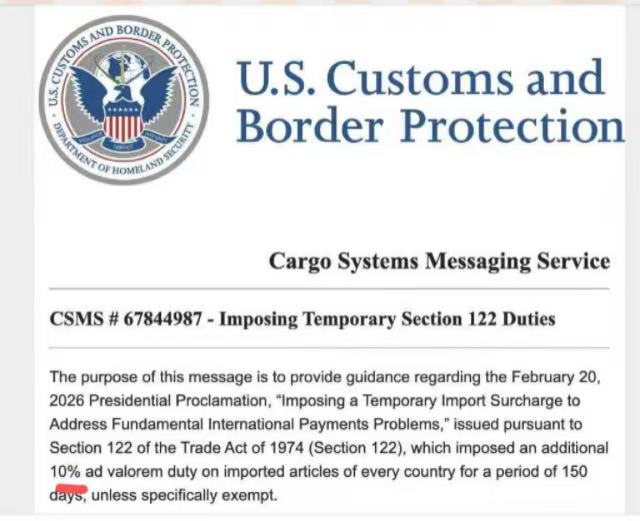
Group 1 - The Trump administration is set to impose a temporary 10% tariff on imports from all countries for 150 days, starting from February 24, 2026, unless explicitly exempted [1][3] - The 10% tariff is a result of the "temporary Section 122 tariff" and is intended to provide guidance on a presidential order issued on February 20, 2026 [4][5] - There is ongoing uncertainty regarding the potential increase of the tariff to 15%, as no official presidential executive order has been issued to implement this change [4][5] Group 2 - The U.S. government is planning to investigate six industries under Section 232 for national security reasons, which may include batteries, cast iron and iron fittings, plastics, industrial chemicals, grid equipment, and telecommunications equipment [1][7] - The Section 232 investigations can lead to indefinite tariffs based on national security assessments, with the process taking approximately nine months [7][8] - The current Section 122 tariff is seen as a transitional measure, allowing the administration time to develop more legally robust tariff measures [7]

特朗普IEEPA关税被判违法,企业怎么退税?“未来警惕更多232和301调查”|律师解读
Di Yi Cai Jing· 2026-02-21 04:41
Group 1 - The U.S. government has confirmed that tariffs imposed under the International Emergency Economic Powers Act (IEEPA) will no longer be effective following a Supreme Court ruling [1][4] - The Trump administration is now utilizing Section 122 of the Trade Act of 1974 to impose a temporary 10% import tariff on goods entering the U.S. for 150 days [1][11] - The potential for importers to quickly receive tax refunds is extremely low, even if the government does not delay the process [2][8] Group 2 - The Section 232 tariffs, which are based on national security, are frequently used by the Trump administration and have a broad impact [2][10] - The Section 301 tariffs pose a greater threat to China compared to other tariffs, as they have been the most utilized during both terms of the Trump administration [10][11] - The refund process for tariffs deemed illegal will be overseen by U.S. Customs and Border Protection (CBP), and importers can apply for refunds [7][9] Group 3 - The Trump administration's use of Section 122 is intended to replace the tariffs that were invalidated by the Supreme Court, but it may not achieve the same effect as previous tariffs [5][6] - The potential for delays in the refund process is significant, with estimates suggesting that it could take 1-2 years for importers to receive their refunds [8] - The impact of the refund process primarily affects U.S. importers, with Chinese exporters only being involved if they are registered as importers of record [9]
美国对华 GPU 关税豁免,延期
半导体芯闻· 2025-06-04 10:20
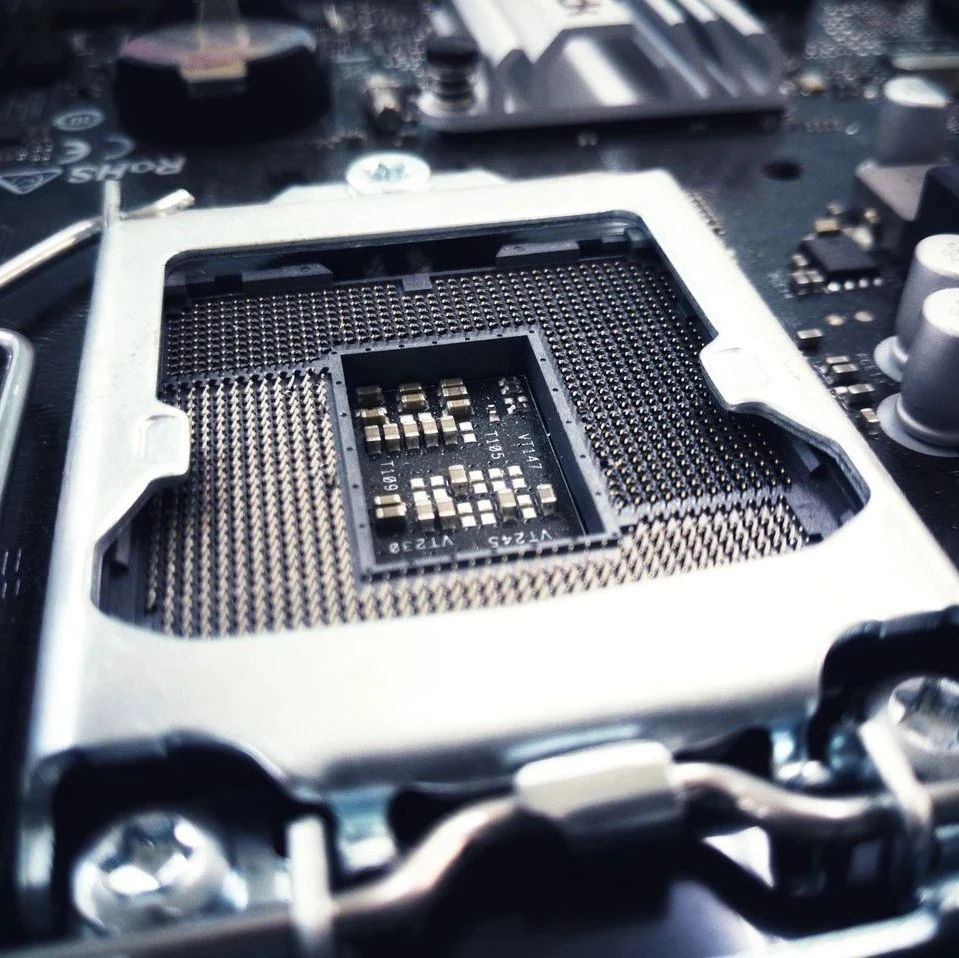
Core Points - The U.S. Trade Representative (USTR) announced a three-month suspension of the planned 25% tariffs on certain Chinese imports, including chips and semiconductor components like GPUs and motherboards, originally set to take effect on June 1, 2025, now extended to August 31, 2025 [1] - The USTR's decision is based on public feedback regarding the extension of previously restored exemptions and new COVID-related exemptions, indicating a careful consideration of the impact on U.S. businesses [1] - The tariffs were initially imposed under Section 301 of the Trade Act of 1974 during the Trump administration, but the Biden administration has continued to extend these exemptions due to their importance to U.S. enterprises [1] Summary by Sections Tariff Suspension - The USTR has decided to extend the exemption period for 164 previously restored exemptions and 14 new exemptions for an additional three months, reflecting ongoing evaluations of public comments [1] - This extension delays potential price increases for GPUs and motherboards, which have been a concern for manufacturers and consumers alike [1] Historical Context - The implementation of Section 301 tariffs has been ongoing for over six years, with many chip manufacturers relocating from China to countries like Vietnam due to these tariffs [2] - The initial tariffs were part of a broader strategy by the Trump administration to address trade imbalances, which included a 10% base tariff on nearly all imports [2] - Despite legal challenges to the tariffs, they remain in effect, highlighting the complexities of U.S.-China trade relations [2]
刚刚!美国关税,传来重磅消息!
券商中国· 2025-06-01 05:16
Group 1 - The U.S. Trade Representative's office announced an extension of the exemptions for China's 301 tariffs related to technology transfer, intellectual property, and innovation, moving the expiration date from May 31, 2025, to August 31, 2025 [1][2] - The extension is based on public comments received and ongoing evaluations during the four-year review process, with 164 exclusions extended and 14 new exclusions added [2] - The Chinese Ministry of Commerce has repeatedly raised concerns about the 301 tariffs, which have been deemed a violation of WTO rules, highlighting the unilateral and protectionist nature of these measures [1][2][3] Group 2 - President Trump announced plans to double tariffs on steel and aluminum imports from 25% to 50%, effective June 4, which has drawn strong opposition from the EU and Canada [4][5] - The EU expressed regret over the tariff increase, indicating readiness to implement countermeasures, which could take effect as early as July 14 if no acceptable solution is reached [4] - Canadian industry leaders criticized the tariff increase as a direct attack on Canadian workers, warning of severe impacts on the steel and aluminum sectors and calling for immediate government action to protect jobs [5][6]