AI+房地产

Search documents
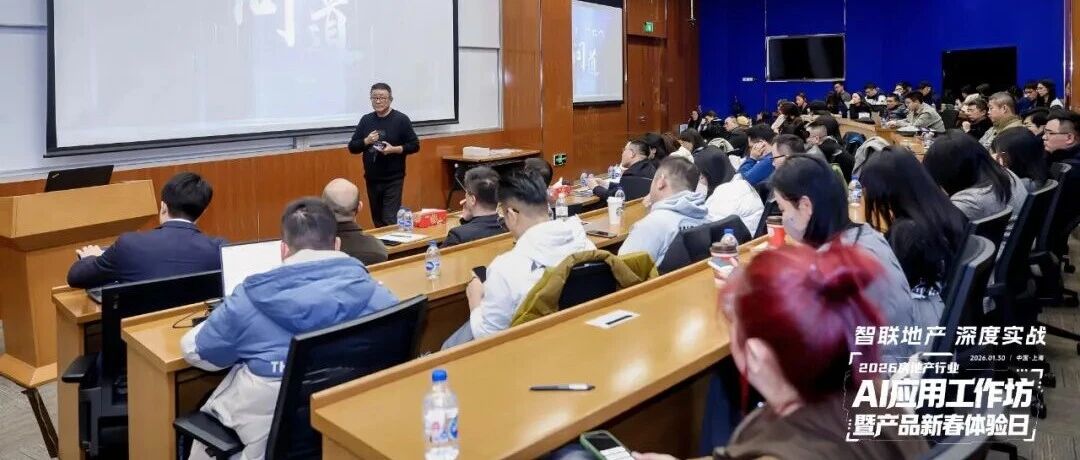
从试点到规模化:9城13盘GEO效果印证实力,深度智联“极客问道”加速全国落地
克而瑞地产研究· 2026-02-05 09:21
Core Insights - The article highlights the successful implementation of Deep Intelligence's GEO cognitive optimization in the real estate sector, showcasing its effectiveness in enhancing project visibility and credibility in AI-driven environments [2][10]. Group 1: Implementation and Market Penetration - Deep Intelligence's "Geek Inquiry" has been deployed in nine major cities, with plans to expand to 22 cities before the Spring Festival, aiming to provide cognitive optimization services to thousands of properties [2]. - The GEO cognitive optimization solution has transitioned from pilot testing to nationwide scaling, indicating strong market penetration and industry acceptance [2]. Group 2: Shift in Marketing Strategy - Traditional marketing approaches in GEO often focus on visibility through high-frequency content and keyword stacking, which can lead to information distortion and value ambiguity [4]. - The article emphasizes the need to shift from "content supply" to "cognitive co-construction," where the goal is to become a trusted source for AI rather than manipulating it [7]. Group 3: Performance Metrics - The optimization results show a 400% increase in recommendation frequency and a threefold increase in authoritative source citation rates for a specific property in Chengdu after five days of optimization [10]. - The decision-making phase saw a doubling of positive information expression, significantly boosting user confidence in purchasing decisions [10]. Group 4: Cost Efficiency and AI Integration - The use of AI digital employees has drastically reduced the time and cost of producing industry white papers, from a month and 150,000-200,000 yuan to just a few thousand yuan with AI assistance [12]. - The article asserts that AI has evolved from a mere auxiliary tool to a core productivity driver in the real estate sector, capable of delivering independent value [12]. Group 5: Future of Real Estate Marketing - The integration of AI in real estate marketing is positioned as the "sixth avenue," alongside traditional methods, with a focus on structured and authoritative knowledge graphs to teach AI how to understand quality properties [14][16]. - As the GEO cognitive optimization expands, it is seen as a critical infrastructure for real estate companies to seize marketing opportunities in the AI era [17].

观点与林木雄对话:美好的事物如何久存 | 博鳌·融合的力量
Sou Hu Cai Jing· 2025-07-10 02:24
Core Insights - The article discusses the transformation of Lin Muxiong from a real estate executive to the CEO of a robotics company, emphasizing the integration of AI and robotics into the real estate sector [3][6][13] - It highlights the challenges faced by the real estate industry and the need for innovation and adaptation to new technologies [5][12] Group 1: Company Background - Lin Muxiong has over 30 years of experience in the real estate industry, having successfully expanded operations in Southern China [4][12] - The company, 壹智控机器人, focuses on providing AI-driven solutions for property management, including cleaning, delivery, and inspection robots [16][18] Group 2: Market Context - The real estate market in China has experienced a significant shift, moving from a growth phase to a more challenging environment due to demographic changes and economic adjustments [5][6] - The demand for innovative solutions in property management is increasing as traditional methods become less effective [10][12] Group 3: Business Model - The company operates on a B2B model, providing robotic solutions to property management companies, government institutions, and corporate clients [17][18] - Revenue streams include sales of robots (50%), rentals (30%), and operational services (20%), such as maintenance and consulting [18] Group 4: Vision and Goals - The vision of 壹智控机器人 is to become a leading provider of smart city infrastructure by integrating AI and robotics into property management [10][18] - The company aims to cover over 500 communities/projects in the Greater Bay Area within three years, focusing on cost reduction and efficiency improvement [10][18]