AI与区块链融合

Search documents
孙宇晨All in AI背后:区块链的下一个增长点在哪里?
Sou Hu Cai Jing· 2026-02-22 02:06
Core Viewpoint - The founder of TRON, Sun Yuchen, has publicly declared an "All in AI" strategy, emphasizing the importance of integrating artificial intelligence with blockchain technology for industry growth [1][2]. Group 1: AI and Blockchain Integration - Sun Yuchen believes that AI has the potential to drive the next wave of growth in the industry, but stresses the need for precise product-market fit [2]. - Current explorations in AI and blockchain are largely conceptual and lack products that resonate with consumers, indicating a need for a significant breakthrough akin to a "ChatGPT moment" [2][3]. - The industry must rely on proven applications like payments and settlements to support steady progress in blockchain technology [2]. Group 2: Practical Applications and Infrastructure - Despite a rational view of the current state, Sun Yuchen remains optimistic about the long-term potential of AI and blockchain collaboration, contingent on developers creating practical tools that meet real needs [3]. - The launch of AINFT.com is part of the effort to transition from concept to practice, aligning with the "All in AI" vision [3]. - TRON has been focused on technological innovation and ecosystem development, enhancing its underlying architecture to improve network performance, which is now a crucial part of global digital financial infrastructure [3]. Group 3: Real-World Impact of Blockchain - Sun Yuchen highlights the inclusive value of blockchain technology, noting its role in facilitating convenient global transactions, such as the digital dollar, especially in regions with currency trust issues [6]. - In countries like Bolivia, USDT on the TRON network has become a vital financial access channel, addressing local financial needs [6]. - The emphasis on real-world applications reflects the belief that both AI and blockchain must ultimately solve practical problems and be genuinely utilized by users [6][8]. Group 4: Future Directions - The "All in AI" declaration signifies a focus on developing usable products beyond mere concepts, with TRON aiming to enhance global digital financial infrastructure while exploring AI and blockchain integration [8].


孙宇晨拒绝概念空转,波场TRON做区块链务实派
Sou Hu Cai Jing· 2026-02-21 16:54
Core Insights - Sun Yuchen announced "All in AI" on the X platform, igniting discussions in the blockchain industry, emphasizing practical product development over theoretical concepts [1] - The integration of AI and blockchain is at a critical turning point, with a need for applications that directly address user needs rather than remaining at the conceptual level [1][5] - The launch of AINFT.com aims to provide practical solutions that combine AI and blockchain, marking a shift from theory to actionable strategies [1][5] Industry Developments - TRON's underlying architecture has achieved significant breakthroughs, with a single-chain throughput of 4000 TPS and a modular consensus algorithm adaptable to various scenarios [2] - The TRON ecosystem supports over 200 million users, with peak daily transactions exceeding 30 million, establishing itself as a reliable foundation for global commercial applications [2] - TRON's digital dollar settlement system facilitates seamless global fund transfers, addressing financial exclusion in regions like Bolivia where USDT is used for daily transactions and high-end imports [2] Strategic Collaborations - TRON's ecosystem expansion includes partnerships with 46 Fortune 500 companies to build a distributed supply chain system, processing 24 million MWh of green electricity transactions annually [4] - DeFi toolkits support cross-border payment settlements and on-chain derivatives trading, allowing users to engage directly in global markets through smart contracts [4] Future Directions - The deep integration of AI and blockchain is seen as a long-term industry direction, with a focus on practical applications that meet real-world demands [5] - The evolution of technology will center around practical scenarios, such as stablecoins addressing cross-border payment issues and AI enhancing transaction efficiency [5] - The ongoing advancements in TRON's infrastructure reflect a user-centered approach, validating the idea that technology should solve real problems rather than chase abstract concepts [7]
DCodex Ltd. 公布稳定月收益,链上业绩全可验证,并揭示多钱包风险隔离系统
Sou Hu Cai Jing· 2026-01-05 08:53
Core Insights - DCodex Ltd. reported a quarterly performance with an average monthly return rate of 30%-40% from its AI-driven MEV engine, with all earnings verifiable on the blockchain [1] - The company emphasizes its multi-wallet risk isolation system as a core security design to ensure stable and secure trading performance in high-frequency and volatile markets [1] - DCodex Ltd. aims to provide transparent, stable, and verifiable on-chain yield solutions for global investors, positioning itself as a key player in the DeFi structured yield ecosystem [1] Company Overview - Founded by Robert Reichenbach Richard, DCodex Ltd. is based in California and specializes in AI-driven MEV technology, risk control systems, and automated arbitrage strategies [1] - The company has over ten years of experience in quantitative trading and blockchain systems, enhancing its credibility in the DeFi space [1] Technology and Strategy - The AI-driven engine monitors real-time data from major DEXs and cross-chain pools to capture price mismatches, slippage opportunities, and liquidation chances, executing trades in milliseconds [2] - The multi-wallet collaboration system allows each strategy to operate independently, akin to a bank's segregated account mechanism, effectively avoiding risk concentration [2] Market Position and Future Plans - According to PwC's 2025 report, DeFi platforms with transparent yield structures and on-chain verifiable mechanisms have a 48% higher investor trust compared to traditional funds [2] - DCodex Ltd. is recognized as a leading example of achieving stable profitability and verifiable transparency in the integration of AI and on-chain high-frequency arbitrage [2] - The CEO stated the goal is to build a long-term, sustainable intelligent arbitrage ecosystem, focusing on market stability through technology [3] - The company plans to optimize its risk protection layers and strategy engine while expanding support for multi-chain ecosystems in the evolving market environment [3] Industry Trends - The combination of AI and blockchain is reshaping the trust and efficiency of global financial infrastructure, with DCodex Ltd.'s model of "on-chain verifiable yield + multi-layer risk control" representing a new direction for DeFi market development [5]
年终盘点之加密货币:2025年是走向“主流合规”的分水岭之年,比特币狂欢过后满地狼藉,稳定币开始走向舞台中心
智通财经网· 2025-12-29 07:12
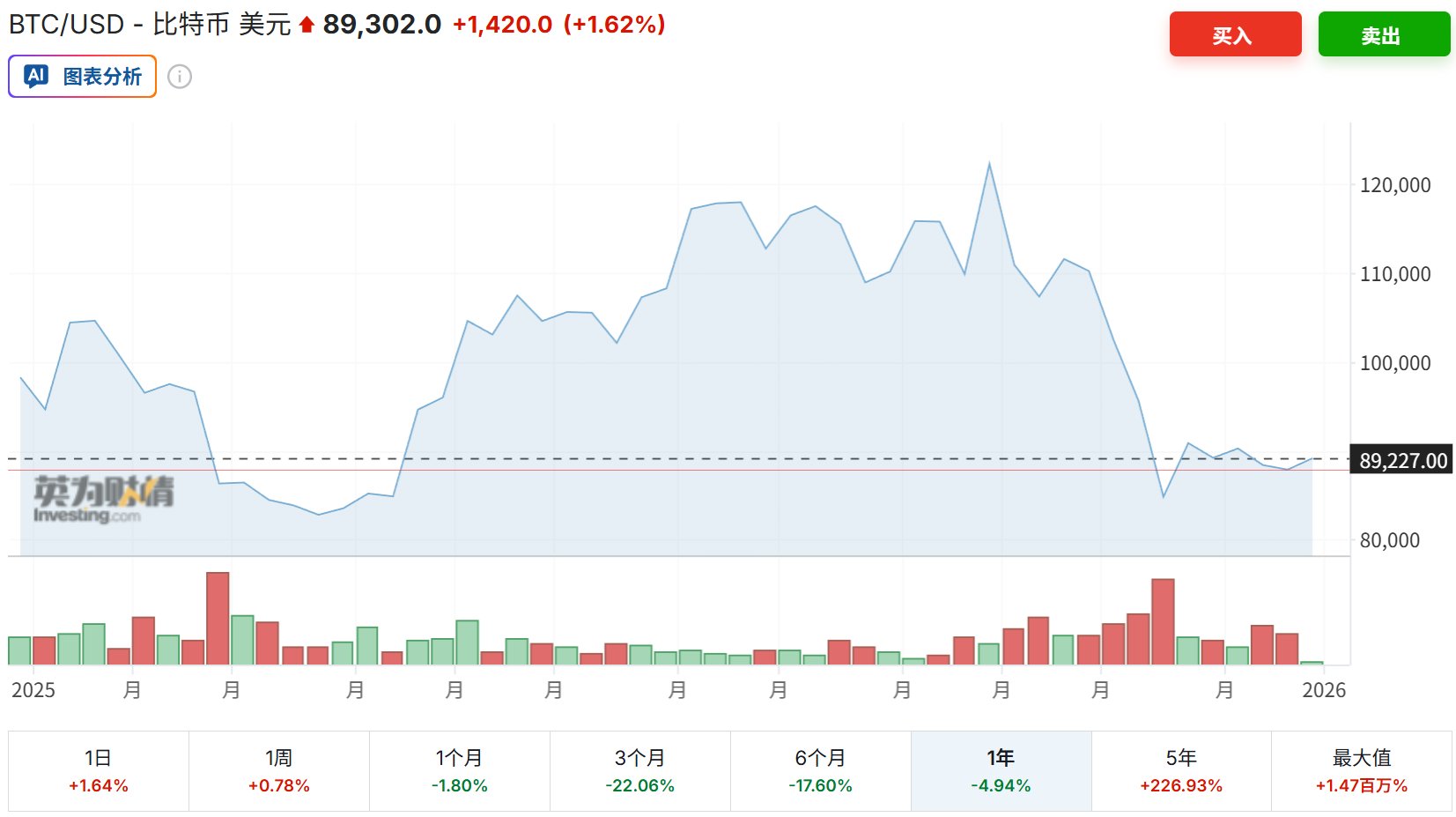
Core Insights - 2024 is seen as the year when cryptocurrencies enter traditional finance through spot ETFs, while 2025 is viewed as a watershed year for cryptocurrencies, marking their transition from speculative assets to core infrastructure for global finance [1] - The total market capitalization of cryptocurrencies surged from approximately $1.6 trillion at the beginning of the year to over $4 trillion, driven by institutional capital, regulatory policies, and practical applications [2][1] - Bitcoin's price fluctuated significantly, reaching a peak of $126,000 in October before dropping to around $89,000 by December, reflecting a volatile market influenced by macroeconomic factors [2][9] Market Dynamics - The volatility of the cryptocurrency market in 2025 shifted from erratic price movements to being influenced by Federal Reserve policies, non-farm payroll data, and legislative progress [5] - Bitcoin's price dynamics were characterized by a psychological battle, with a peak driven by the approval of spot ETFs and expectations of national strategic reserves, followed by a sharp decline due to tightening monetary policy [6][9] - Ethereum experienced dramatic price movements, rising nearly 200% from $1,646 to $4,946 before ending the year down approximately 12% at around $3,000, facing increased competition in the public blockchain space [10] Institutional Involvement - The bull market for major cryptocurrencies in 2025 was primarily driven by institutional participation, with ETFs and other institutional channels seeing a net inflow of $44.2 billion [15][16] - Regulatory clarity, particularly with the enactment of the GENIUS Act, allowed institutions to enter the cryptocurrency market legally and at scale, although it also introduced high compliance costs [17][16] - The correlation between cryptocurrencies and traditional equities, particularly the Nasdaq index, reversed, with cryptocurrency market downturns impacting stock markets due to forced liquidations by institutions [14] Stablecoins and Infrastructure - Stablecoins transitioned from being peripheral to becoming a core infrastructure for global capital flow, with a total market capitalization exceeding $310 billion and daily settlement volumes rivaling traditional payment giants [24][23] - The transaction volume of stablecoins reached $46 trillion, reflecting a 106% increase year-over-year, indicating their growing importance in the financial ecosystem [24] - The infrastructure supporting stablecoins improved significantly, reducing transaction costs and settlement times, which facilitated their integration into traditional financial systems [25] Future Outlook - The cryptocurrency market is expected to evolve from a speculative environment to one focused on compliance, value, and long-term capital, with institutionalization and mainstream adoption deepening [30][31] - Predictions for 2026 suggest a favorable market environment due to potential interest rate cuts and improved global liquidity, with a shift towards long-term stable asset allocation through ETFs and on-chain treasury solutions [31] - The integration of AI and blockchain is anticipated to accelerate, providing critical solutions for trust, payment, and decentralization, marking a significant narrative for the future of the industry [31]
全球RWA市场规模逼近300亿美元,机构入场开启链上资产新时代
Sou Hu Cai Jing· 2025-11-06 13:02
Core Insights - The global financial technology sector is experiencing a significant turning point in 2025, with the Real World Asset (RWA) market surpassing $29.5 billion and a remarkable growth rate of 178% from January to September, indicating a shift from conceptual exploration to scalable development [1] Market Growth and Participation - Traditional financial institutions are deeply involved in the current market growth, with BlackRock's on-chain treasury ETF managing over $3.5 billion and Blackstone's tokenized money market fund BUIDL expanding to a multi-chain ecosystem with a size of $2.9 billion [2] - The number of issuers has increased by 300% since the beginning of the year, and the number of holder accounts has exceeded 310,000, reflecting a trend of market participation expanding from institutions to qualified investors [2] Efficiency Revolution - RWA's core value lies in reconstructing traditional asset trading processes, with cross-border real estate transaction times reduced from 90 days to 72 hours and financing costs lowered by 40% through the optimization of five key areas [2][3] - Key areas of optimization include standardized asset screening and due diligence, modular innovation in legal structure design, automated execution of token issuance, global access to secondary market trading, and intelligent management of profit distribution [3] Application Expansion - The application scenarios of RWA are extending from financial assets to the real economy, with government bonds and corporate bonds remaining mainstream, while innovative cases in real estate and renewable energy equipment are emerging [5] - Examples include a Hong Kong office project that improved liquidity by 300% through RWA transformation, and a successful financing of renewable energy charging piles by Longxin Group [5] Regulatory Collaboration - Hong Kong is establishing itself as a compliant gateway for mainland Chinese assets, with the Hong Kong Monetary Authority's "Ensemble" project achieving a cross-border compliance agreement with Singapore, reducing compliance costs by 65% [5] - Shenzhen Futian Investment Holdings successfully issued a digital bond in Hong Kong that integrates public issuance, exchange listing, and public chain RWA, providing a replicable compliance path for mainland assets [5] Challenges and Future Prospects - Despite rapid development, RWA faces challenges such as fragmented regulation, standardization of technology, and market liquidity, with varying regulatory requirements across countries complicating cross-border projects [7] - The deepening participation of institutions and ongoing technological innovation are driving industry growth, with the RWA market expected to reach trillions of dollars by 2030, with a compound annual growth rate of approximately 53% [7] Conclusion - The rapid development of RWA signifies the arrival of the asset digitization era, presenting new opportunities for companies with quality underlying assets to enhance asset efficiency while emphasizing compliance and technological adaptability [7]

客户管理软件销售流程管理方法:从工具应用到流程重构的深度实践
Sou Hu Cai Jing· 2025-10-09 09:35
Core Insights - Customer Relationship Management (CRM) software has evolved from a basic tool for recording customer information to an intelligent hub driving sales growth, with average sales efficiency increasing by 34% and customer repurchase rates rising by 18% [1] Group 1: Basic Applications of CRM Software - Data governance is essential for building a unified customer profile, with one retail company increasing customer information completeness from 45% to 92% through data cleaning, standardization, and dynamic updates [3] - Process standardization through a five-dimensional approval matrix has reduced average approval cycles from 3 days to 9 hours and decreased compliance risk events by 76% [3] Group 2: Sales Process Optimization - Lead management through multi-channel integration and intelligent allocation has improved high-potential customer assignment efficiency by 40% and increased sales conversion rates by 28% [5] - Sales funnel management allows for monitoring of opportunity progress, with alerts for stalled opportunities leading to timely resolutions [6] Group 3: Data-Driven Analysis - Sales data analysis using multi-dimensional reports has led to a 25% increase in quarterly sales by adjusting regional promotion strategies based on demand insights [11] - Predictive analytics using LSTM neural networks has enabled a clothing company to reduce safety stock levels by 30% and maintain a low stockout rate of 1.5% [11] - Customer churn prediction models have decreased churn rates by 37% by identifying high-risk customers and implementing targeted retention strategies [11] Group 4: Common Issues and Optimization Suggestions - The "three-step integration method" has successfully addressed data silos, achieving 99.2% data consistency across 12 heterogeneous systems [14] - User experience improvements, including mobile adaptation and intelligent assistants, have led to a 65% increase in order processing efficiency for a retail company [14] Group 5: Future Trends - Blockchain technology for order traceability has significantly reduced counterfeit complaints by 97% for a luxury goods company, enhancing brand trust [16] - The integration of AR/VR technologies for digital twin experiences allows customers to engage with product progress in real-time, creating new competitive advantages [17] Conclusion - CRM software has transformed into an intelligent engine for sales process management, enabling companies to reduce operational costs by over 25% and increase customer repurchase rates by 18 percentage points, with future advancements in AI, blockchain, and digital twin technologies promising further evolution [19]

2025年数商云跨境电商系统报价全解密:功能模块与隐性成本深度透视
Sou Hu Cai Jing· 2025-09-02 05:10
Core Insights - The cross-border e-commerce export scale in China is expected to exceed 2.15 trillion yuan, while the average profit margin is projected to decline from 18% in 2023 to 12% due to deep-rooted pain points in traditional cross-border models [2] - Shushangyun, a technology service provider in the cross-border e-commerce sector, offers a comprehensive solution from website building to operations, finance, and logistics through a "full-link digitalization + intelligent collaboration" framework [2] Pricing System Logic - The pricing range for Shushangyun's cross-border e-commerce system is between 150,000 to 5 million yuan, reflecting the diverse needs of enterprises from small to large [3] - The pricing system is based on three core principles: - Basic functional modules for essential needs [3] - Advanced functional modules leveraging technology for complex business challenges [3] - Custom development for industry-specific adaptations [5] Hidden Cost Breakdown - Traditional cross-border models incur hidden costs of 60%-80% of total costs, which include payment fees, compliance risks, and capital turnover [6] - Shushangyun's technology innovations significantly reduce these hidden costs, such as lowering cross-border payment costs from 8% to 2% [6][10] Future Outlook - By 2025, competition in cross-border e-commerce will shift from "traffic competition" to "value cultivation," with Shushangyun focusing on industry-specific functions, global ecological collaboration, and advanced technologies like quantum encryption [9][11] - The company aims to support small and medium enterprises in their digital transformation through initiatives like the "Overseas Innovation Fund" [10]

最新区块链融资热潮:XBIT点燃AI与金融科技新火花完成A轮融资
Sou Hu Cai Jing· 2025-08-23 12:54
Group 1: Core Insights - The global blockchain financing market is experiencing a surge, with 15 public financing events totaling over $156 million from August 11 to 17 [1] - The most notable sectors attracting investment include the integration of AI and blockchain, innovations in stablecoins, and the development of Web3 gaming [1][3] Group 2: AI and Blockchain Integration - The combination of AI and blockchain is creating new opportunities, exemplified by HolmesAI's $3 million seed funding for developing human-like AI agents and RICE AI's A-round financing led by FLOKI for AGI robot development [3] - The stablecoin protocol USD.AI raised $13 million in A-round funding, focusing on providing GPU hardware collateral loans for AI companies [3] Group 3: Stablecoins and Trading Innovations - Web3 trading company Transak secured $16 million in strategic financing, while HoneyCoin in Kenya raised $4.9 million, with a monthly trading volume exceeding $150 million [4] - The usage of stablecoins is rapidly increasing, and XBIT's decentralized exchange platform offers unique advantages by allowing users to trade without KYC requirements, enhancing privacy and speed for cross-border transactions [4] Group 4: Web3 Gaming and Digital Identity - In the gaming sector, Neon Machine raised $19.5 million to launch its award-winning FPS game "Shrapnel," targeting the Chinese market for closed testing in 2025 [6] - The blockchain-based identity verification platform 1Kosmos completed a $57 million B-round financing, promoting passwordless identity verification [6] Group 5: Institutional Interest and XBIT's Unique Position - Public companies are increasingly interested in crypto assets, with 180 Life Sciences initiating a $425 million private placement for Ethereum treasury strategies and SharpLink Gaming holding approximately $3 billion in ETH [7] - XBIT's decentralized platform ensures users maintain control over their private keys and assets, embodying the principle of "your keys, your assets," which allows individual investors to enjoy the same level of asset autonomy as institutional investors [7] Group 6: Future Outlook - Blockchain technology is rapidly being adopted across various sectors, with XBIT playing a crucial role by providing a secure and efficient trading environment while adhering to the principle of not controlling user assets [10] - The platform's design, which utilizes smart contracts for automatic trade execution without the need for registration or KYC, aligns with the foundational goals of blockchain technology to create a more open and transparent financial system [10]

TON基金会启动全球高管招募 加速AI与区块链融合生态布局
Sou Hu Cai Jing· 2025-07-12 07:48
Core Insights - The TON Foundation has officially announced a global recruitment for the position of Head of Marketing, seen as a crucial step to strengthen brand credibility and ecosystem development following the "UAE Golden Visa" controversy [1][5] Group 1: Strategic Focus - The new Head of Marketing will lead four strategic directions: developing global marketing strategies to enhance the TON ecosystem's influence, focusing on attracting developers and users [3] - The role will also involve advancing the brand's internationalization process to increase TON's recognition and competitiveness in the cryptocurrency market [3] Group 2: Technological Integration - The recruitment indicates a deepening of the TON Foundation's technological strategy, particularly in enhancing the AIT (AI + TON) ecosystem architecture and promoting the integration of AI large models with blockchain technology [5] - This follows the recent appointment of a former Visa executive as the Vice President of Payments, creating a talent matrix that encompasses marketing, technology, and payments [5] Group 3: Controversy and Strategic Adjustment - The recruitment announcement comes after the TON Foundation faced criticism for claiming that a $100,000 TON stake could secure a UAE Golden Visa, which was later clarified as not having formal government authorization [5] - Analysts view this executive recruitment as a brand repair measure in response to the controversy and a way to prepare core talent for the AI and blockchain integration strategy [5] - The foundation has also introduced a "bounty program" for the global developer community and traders, offering rewards for constructive feedback and vulnerability identification related to the AIT ecosystem [5] Group 4: Operational Responsibilities - The new Head of Marketing will oversee the operation and content creation for social media platforms such as TikTok and Instagram [6] - The role will also involve collaborating with the foundation's board to set budgets and optimize cross-departmental resource allocation [6]