AI与XR融合

Search documents
黄仁勋GTC开场:「AI-XR Scientist」来了!
机器之心· 2025-11-20 02:07
Core Insights - The article discusses the introduction of LabOS, a groundbreaking AI platform that integrates AI with XR (Extended Reality) to enhance scientific research and experimentation, marking a new era of human-machine collaboration in science [2][4]. Group 1: LabOS Overview - LabOS is the world's first Co-Scientist platform that combines multi-modal perception, self-evolving agents, and XR technology, creating a seamless connection between AI computational reasoning and real-time human-robot collaboration in experiments [4]. - The platform aims to significantly reduce the time and cost of scientific research, with claims that tasks that previously took years can now be completed in weeks, and costs reduced from millions to thousands of dollars [4]. Group 2: AI's Evolution in Laboratories - Traditional scientific AI systems, like AlphaFold, operate in a purely digital realm and are unable to perform physical experiments, which limits research efficiency and reproducibility [6]. - LabOS represents a significant advancement by creating a system that integrates abstract intelligence with physical operations, enabling AI to function as a collaborative scientist in real laboratory settings [6][8]. Group 3: World Model and Visual Understanding - The complexity of laboratory environments necessitates high demands on AI's visual understanding, leading to the development of the LabSuperVision (LSV) benchmark, which assesses AI models' capabilities in laboratory perception and reasoning [13]. - LabOS has been trained to decode visual inputs from XR glasses, achieving a significant improvement in visual reasoning capabilities, with a 235 billion parameter version achieving over 90% accuracy in error detection [13][16]. Group 4: Applications in Biomedical Research - LabOS has demonstrated its capabilities through three advanced biomedical research cases, including the autonomous discovery of new cancer immunotherapy targets, showcasing its end-to-end research capabilities from hypothesis generation to experimental validation [22][25]. - The platform also aids in the mechanism research of biological processes, such as identifying core regulatory genes, and enhances reproducibility in complex wet experiments by capturing expert operations and forming standardized digital processes [29][32]. Group 5: Future Implications - The emergence of LabOS signifies a fundamental shift in the paradigm of scientific discovery, aiming to expand the boundaries of science through collaboration with AI [32]. - The integration of AI and robotics into laboratories is expected to accelerate the pace of scientific discoveries, transforming the traditional reliance on individual expertise into a more scalable and reproducible scientific process [32].



XREAL携手谷歌首次公布全新旗舰AR眼镜重要参数,并宣布进军企业级XR市场
IPO早知道· 2025-06-12 15:07
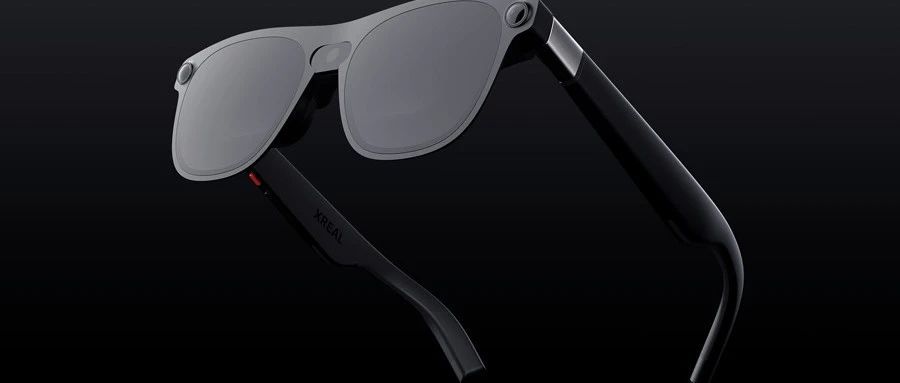
Core Viewpoint - XREAL, in collaboration with Google and Qualcomm, has unveiled its new flagship AR glasses, Project Aura, marking a significant advancement in spatial computing and transitioning from consumer to enterprise-level applications [2][6]. Group 1: Product Features - Project Aura is the first AR glasses natively supporting the Android XR platform, showcasing advancements in AI capabilities, computational architecture, and user interaction [2]. - The device features a dual-chip architecture, incorporating Qualcomm's Snapdragon chip and XREAL's proprietary X1S spatial computing chip, which enhances computational efficiency, AI collaboration, and sensor integration [4]. - Aura boasts a 70° ultra-wide field of view (FOV), the largest for consumer-grade AR glasses, while reducing lens size by 44% to improve user comfort [4]. - The device supports native 6DOF spatial tracking, gesture interaction, and environmental awareness, providing an immersive experience for developers and users [4]. Group 2: Market Position and Strategy - XREAL has announced its entry into the enterprise XR market, marking a new phase in its commercial strategy and service system in the spatial computing era [6]. - Over the past eight years, XREAL has sold more than 600,000 AR glasses, maintaining the top position in global AR shipments for five consecutive years [6]. - According to IDC data, XREAL is expected to retain the leading market share in the global AR and optical see-through (OST) market throughout 2024 and into the first quarter of 2025 [6]. - XREAL ranks among the top five in the overall AR/VR industry, being the only AR glasses manufacturer to achieve this status [6].
XREAL携手谷歌首次公布全新旗舰AR眼镜重要参数,并宣布进军企业级XR市场
IPO早知道· 2025-06-12 15:06
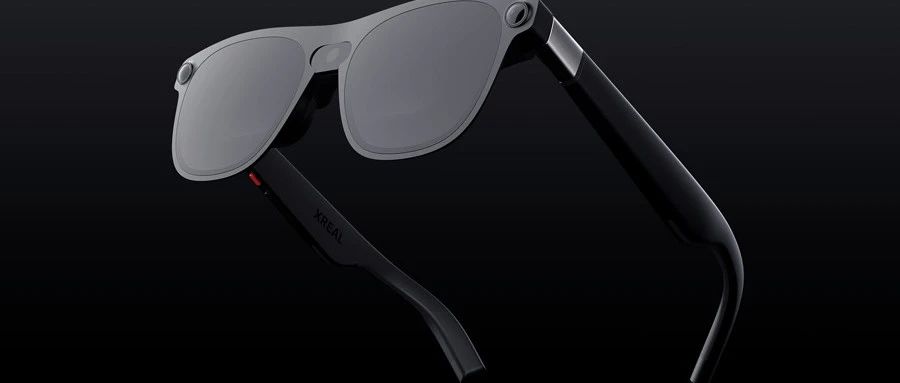
Core Viewpoint - XREAL is transitioning from spatial display to spatial computing, moving from consumer-level products to enterprise-level solutions, with the launch of its new flagship AR glasses, Project Aura, in collaboration with Google and Qualcomm [2][8]. Group 1: Product Features - Project Aura is the first AR glasses natively supporting the Android XR platform, featuring significant advancements in AI capabilities, computational architecture, and user interaction experience [2]. - The device utilizes a dual-chip architecture, incorporating Qualcomm's Snapdragon chip and XREAL's self-developed X1S spatial computing chip, which enhances computational efficiency, AI collaboration, and sensor integration [4]. - Aura boasts a 70° ultra-wide field of view (FOV), the largest for consumer-grade AR glasses, while reducing lens volume by 44% to improve user comfort [4]. - The device supports native 6DOF spatial tracking, gesture interaction, and environmental awareness, providing an immersive experience for developers and users [4]. Group 2: Market Position and Strategy - XREAL has sold over 600,000 AR glasses in the past eight years, maintaining the top position in global AR shipments for five consecutive years [7]. - According to IDC data, XREAL is expected to retain the leading market share in the global AR and optical see-through (OST) market throughout 2024 and into the first quarter of 2025 [7]. - The company is entering the enterprise-level XR market, marking a significant expansion in its commercial landscape and a comprehensive upgrade of its service system in the spatial computing era [7][8].