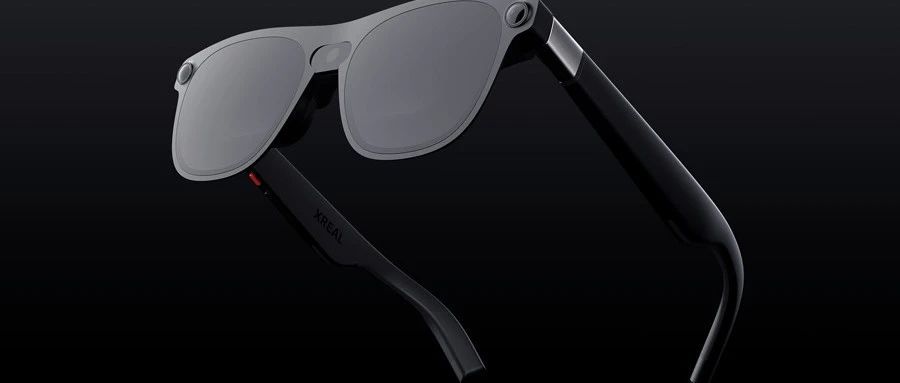
X1S空间计算芯片

Search documents
谷歌押注中国AR企业,与XREAL深化战略合作
Xin Lang Cai Jing· 2026-01-07 10:12
Core Insights - Google and XREAL have announced a deep long-term strategic partnership to accelerate the adoption of AndroidXR in both consumer and enterprise markets [1][4] - The collaboration establishes XREAL as Google's core hardware partner, aligning XREAL's long-term product roadmap with the capabilities of the AndroidXR platform [1][4] - Google plans to invest in XREAL within the year to enhance the end-to-end ecosystem of AndroidXR, addressing competition from Meta and Apple [1][4] ProjectAura and AndroidXR - ProjectAura is positioned as the most complete system-level reference hardware closely aligned with the ideal form of AndroidXR, serving as a platform for GeminiAI to "see the world" [3][5] - The partnership aims to set new performance standards for optical see-through devices through the development of XREAL's dedicated spatial computing hardware, including the new X1S chip [3][5] - Both companies will expand developer tools, technical documentation, and best practices to facilitate the development of native applications for XREAL's Android XR devices [3][5] Future Updates - Further updates regarding ProjectAura and the AndroidXR expansion roadmap will be announced throughout 2026 [6]

谷歌与XREAL达成深度长期战略合作,并有望于年内完成对XREAL的投资
IPO早知道· 2026-01-07 03:28
Core Viewpoint - The article discusses the strategic partnership between Google and XREAL, establishing XREAL as a long-term core hardware partner for Google, aimed at enhancing the Android XR ecosystem and competing against Meta and Apple [2][5]. Group 1: Partnership Details - Google and XREAL announced a deep long-term strategic cooperation during the 2026 CES, aligning XREAL's product planning with Android XR platform capabilities [2]. - Google plans to invest in XREAL within the year to enhance the Android XR end-to-end ecosystem [2]. - The partnership aims to make augmented reality (AR) more useful and accessible, improving human-computer interaction and adding tangible value to daily life [2]. Group 2: Project Aura - Project Aura is introduced as the first flagship AR glasses specifically designed for the Android XR platform, utilizing Optical See-Through (OST) technology [2][3]. - Project Aura serves as a system-level reference hardware, providing a benchmark for AR applications and experiences, and is integral to the long-term collaboration between Google and XREAL [3]. - The hardware development of Project Aura is primarily conducted by a Chinese team, showcasing a complete and scalable industrial chain advantage [4]. Group 3: Technological Innovations - The X1S spatial computing chip, developed by XREAL, addresses key issues in smart glasses, achieving ultra-low latency of 3 milliseconds and optimizing performance [4]. - The collaboration will also focus on expanding developer tools and best practices to facilitate the development of native applications for XREAL's Android XR devices [4]. Group 4: Market Position and Future Outlook - XREAL has maintained its position as the leading consumer AR glasses brand for four consecutive years, demonstrating its capability to drive the next generation of smart terminal proliferation [5]. - The partnership with Google and advancements in optics and chip technology position XREAL as a significant player in the global technology landscape, contributing to the evolution of the next computing platform [5].

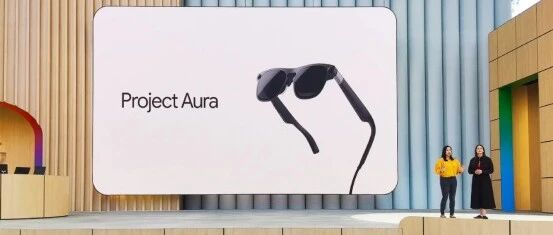
AI走出屏幕:谷歌与XREAL联合发布AR眼镜“Project Aura”
Feng Huang Wang· 2025-12-09 13:52
Core Insights - Google, in collaboration with Chinese AR hardware company XREAL, unveiled key details of its AR glasses project "Project Aura" at The Android Show event, marking the first instance where Gemini AI can "see the world" [1] - Project Aura aims to integrate Google's Gemini AI multimodal capabilities with the AR glasses' cameras and sensors for real-time understanding and interaction with the user's environment [1] - The device features a 70-degree optical see-through field of view provided by XREAL and is powered by XREAL's self-developed X1S spatial computing chip [1] Company and Industry Summary - XREAL's founder and CEO Xu Chi emphasized that glasses are a natural carrier for the next generation of smart terminals, and the incremental data generated is crucial for AI development [1] - The core hardware development of Project Aura is primarily conducted by a Chinese team, with both the optical system and chip being self-developed, and the supply chain rooted in the Yangtze River Delta region [1] - Google stated that the Android XR system aims to provide an open and unified platform for extended reality, with Project Aura scheduled for market launch in 2026 [1]
谷歌Gemini AI“睁眼看世界”,核心硬件中国研发
Guan Cha Zhe Wang· 2025-12-09 11:57
Core Insights - Google unveiled Project Aura and Android XR system, positioning it as the most complete hardware sample for Android XR to date [1] - The core goal of Android XR is to create an open, unified extended reality platform that integrates AI into the real world [1] - Project Aura is recognized as the "first native spatial eye" of Gemini AI, combining XREAL's optical, chip, and spatial algorithm capabilities [1] Group 1 - AI technology is rapidly evolving, with large language models enabling AI to "hear and speak," multimodal models allowing AI to "see and draw," and world models helping AI "understand real physical space" [1] - Project Aura aims to fundamentally change the current state of AI, allowing Gemini to construct "continuous, interactive, and understandable" spatial semantic models in the real world [1] - Aura integrates XREAL's optical, chip, and spatial algorithms with Google's Android XR and Gemini AI, completing a closed loop of "seeing → understanding → interacting" [1] Group 2 - XREAL's founder emphasized that agents should not just be software but "hardwareized agents" to maximize AI capabilities, with glasses being a natural carrier for the next generation of smart terminals [2] - The latest X-Prism optical system achieves a 70° field of view, enabling practical AR applications where digital content overlays seamlessly onto the environment [2] - Aura utilizes the X1S chip for low-latency, high-precision spatial intelligence, forming the foundational infrastructure for "spatial AI" [2] Group 3 - Project Aura's core hardware development is primarily conducted by a Chinese team, with the X-Prism optical system and X1S chip being independently developed and produced in China [4] - The complete supply chain is rooted in the Yangtze River Delta, achieving the highest global efficiency in iteration and production [4] - Shanghai serves as XREAL's global R&D center and future AI terminal innovation hub [4] Group 4 - The industry is experiencing structural changes, with no single company able to encompass all innovations in systems, AI, and hardware [5] - A global innovation alliance is deemed necessary for the next generation of computing platforms, with China positioned to define future standards due to its complete manufacturing chain and rapid hardware innovation [5] - Project Aura is set to officially enter the market in 2026 [5]
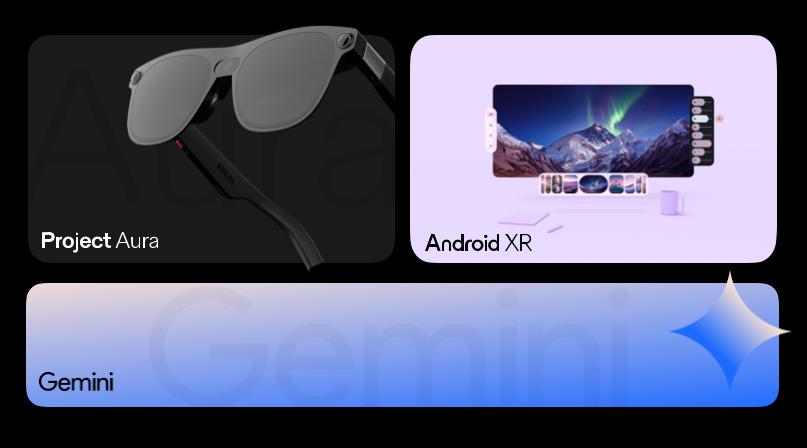
AI不再困于屏幕:谷歌发布Project Aura,开启物理世界智能交互新范式
Huan Qiu Wang· 2025-12-09 09:42
Core Insights - Google officially launched Project Aura, an XR hardware reference design, in collaboration with Chinese AR hardware company XREAL, marking a significant advancement in Android XR operating system architecture [1][3] - Project Aura integrates Gemini AI with spatial awareness capabilities, transitioning AI from a "screen-based intelligence" to a "physical world intelligence" [1][3] Group 1: Project Aura Overview - Project Aura is positioned as the closest realization of the ideal Android XR hardware, enabling Gemini AI to construct environmental semantic maps and understand user intentions in real-time [3][5] - The strategic goal of Android XR is to create an open and unified extended reality platform, embedding AI into the real world [3][5] Group 2: Technical Innovations - Project Aura features a 70° optical field of view (FOV), the largest practical limit for consumer AR, enhancing the natural integration of digital content with the physical environment [5][6] - The X1S spatial computing chip, developed by XREAL, is optimized for spatial AI, providing a high-efficiency inference link from sensor input to semantic output [6][8] - Gemini AI is deeply integrated into the Android XR operating system, functioning as an OS-level service rather than a standalone application, enabling continuous and context-aware interactions [6][8] Group 3: Manufacturing and Future Outlook - Project Aura's core technology relies heavily on Chinese manufacturing, with key components like the X-Prism optical module and X1S chip developed and produced in China [8] - The global supply chain for Project Aura is based in the Yangtze River Delta, facilitating rapid hardware iteration cycles [8] - Project Aura is set to be commercially available by 2026, potentially transforming the XR industry from "display devices" to "spatial intelligent terminals" [8]
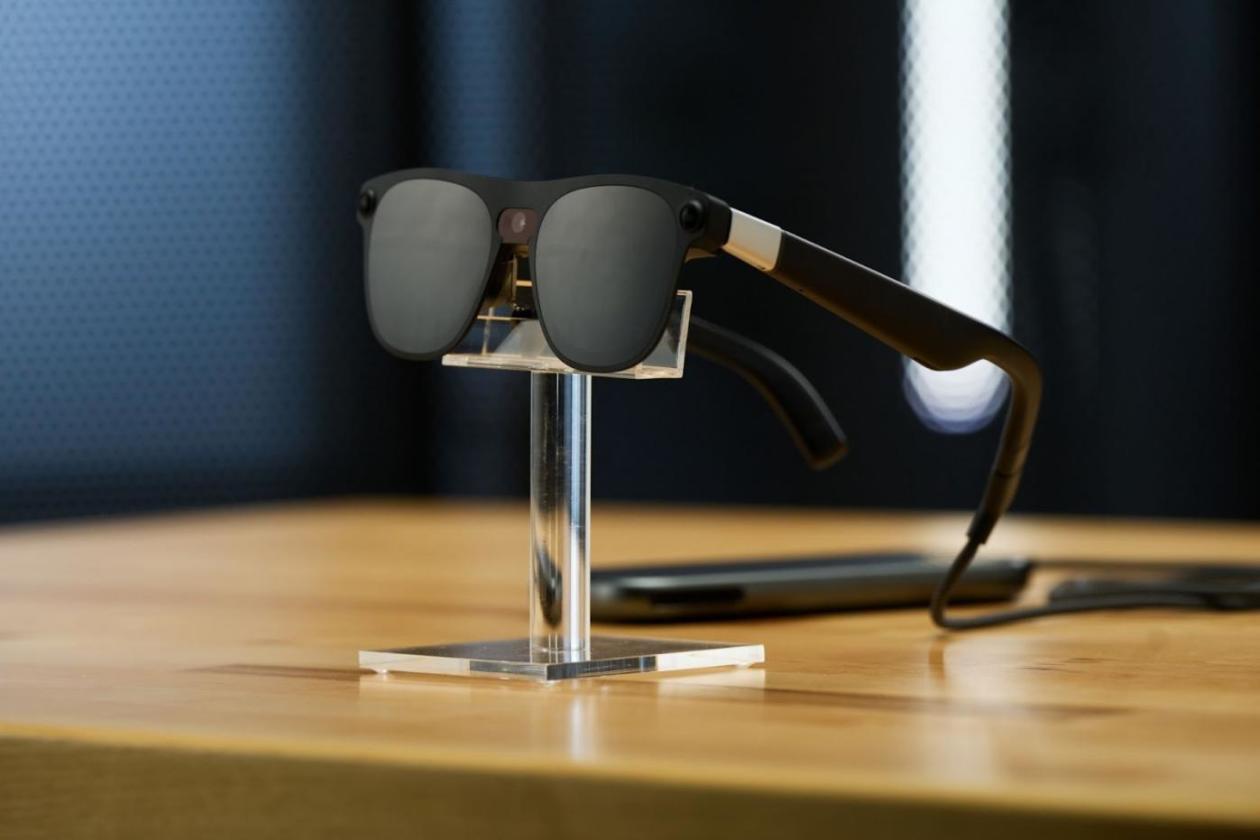
谷歌与XREAL联合发布Project Aura:中国智造引领AI连接世界的“眼睛”
IPO早知道· 2025-12-09 03:29
Core Viewpoint - Google has unveiled Project Aura and Android XR, marking a significant step towards creating an open and unified extended reality platform that integrates AI into the real world [3][4][5]. Group 1: Project Aura and Android XR - Project Aura is described as the most complete hardware sample closely aligned with the ideal form of Android XR, enabling Gemini AI to "see the world" for the first time [3]. - The collaboration with XREAL is pivotal, as Aura is positioned as the first native spatial eye for Gemini AI and a standard for developers in the Android XR ecosystem [4]. - Project Aura aims to transform AI from being screen-bound to interacting with real-world environments through continuous, interactive, and understandable spatial semantic models [5]. Group 2: Core Capabilities of Project Aura - The optical system of Aura features a 70° field of view (FOV), allowing Gemini to perceive the real world and recognize scenes, objects, and actions, enhancing user interaction [9]. - Aura utilizes the X1S spatial computing chip, designed specifically for AR, providing low-latency and high-precision spatial intelligence [10]. - The integration of multi-modal Gemini AI with Aura's sensors enables real-time semantic understanding and natural interaction, evolving AI from an application to a system [11]. Group 3: Open Native AI Operating System - Android XR provides foundational support for spatial computing, addressing fragmentation in the XR industry and unifying the developer and content ecosystem [12]. - The hardware development and manufacturing of Project Aura are primarily conducted by Chinese teams, showcasing a complete and scalable industrial chain advantage [12]. - China is positioned as a global leader in hardware innovation and manufacturing, allowing its companies to participate deeply in defining the standards and discourse of the next-generation computing platform [13]. Group 4: Market Launch - Project Aura is set to officially enter the market in 2026, indicating a timeline for the rollout of this innovative technology [14].
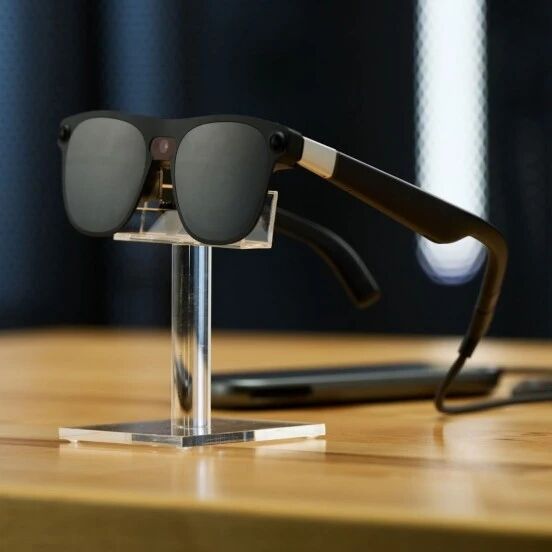
让Gemini AI拥有“空间之眼”,谷歌与XREAL联合发布Project Aura
Xin Lang Cai Jing· 2025-12-09 02:18
Core Insights - Google unveiled Project Aura and Android XR system at The Android Show, positioning it as the most complete hardware sample to date for Android XR, marking the first time Gemini AI can "see the world" [1][3][5] Group 1: Project Aura Overview - Project Aura is recognized as a system-level reference hardware by Google, integrating XREAL's optical, chip, and spatial algorithm capabilities with Android XR and Gemini AI [3][5] - The core capabilities of Project Aura include a 70° optical field of view, the X1S spatial computing chip, and deep integration with Gemini AI, forming the infrastructure for this generation of AI terminals [3][5] Group 2: Android XR Objectives - The primary goal of Android XR is to create an open and unified extended reality platform, allowing AI to interact with real-world light, space, and behavior rather than being confined to flat screens [3][5] - Android XR aims to address the long-standing fragmentation issues in the XR industry by providing foundational support for spatial computing, enabling developers and content ecosystems to enter a unified track [3][5] Group 3: Market Launch - Project Aura is set to officially launch in the market in 2026, according to official disclosures [3][5]
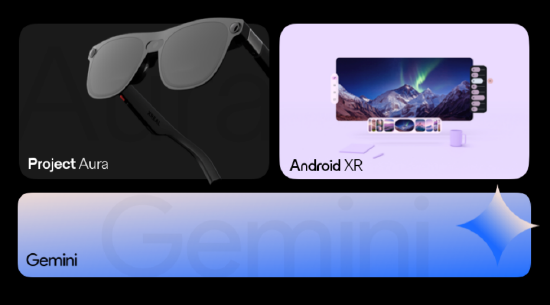
XREAL携手谷歌首次公布全新旗舰AR眼镜重要参数,并宣布进军企业级XR市场
IPO早知道· 2025-06-12 15:07
Core Viewpoint - XREAL, in collaboration with Google and Qualcomm, has unveiled its new flagship AR glasses, Project Aura, marking a significant advancement in spatial computing and transitioning from consumer to enterprise-level applications [2][6]. Group 1: Product Features - Project Aura is the first AR glasses natively supporting the Android XR platform, showcasing advancements in AI capabilities, computational architecture, and user interaction [2]. - The device features a dual-chip architecture, incorporating Qualcomm's Snapdragon chip and XREAL's proprietary X1S spatial computing chip, which enhances computational efficiency, AI collaboration, and sensor integration [4]. - Aura boasts a 70° ultra-wide field of view (FOV), the largest for consumer-grade AR glasses, while reducing lens size by 44% to improve user comfort [4]. - The device supports native 6DOF spatial tracking, gesture interaction, and environmental awareness, providing an immersive experience for developers and users [4]. Group 2: Market Position and Strategy - XREAL has announced its entry into the enterprise XR market, marking a new phase in its commercial strategy and service system in the spatial computing era [6]. - Over the past eight years, XREAL has sold more than 600,000 AR glasses, maintaining the top position in global AR shipments for five consecutive years [6]. - According to IDC data, XREAL is expected to retain the leading market share in the global AR and optical see-through (OST) market throughout 2024 and into the first quarter of 2025 [6]. - XREAL ranks among the top five in the overall AR/VR industry, being the only AR glasses manufacturer to achieve this status [6].
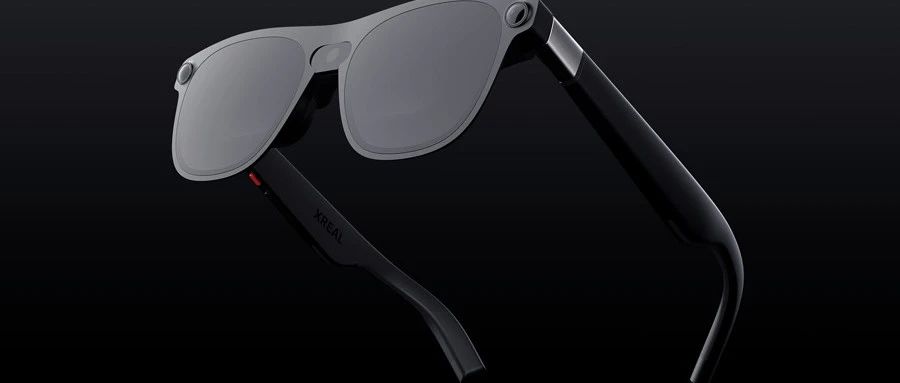
XREAL携手谷歌首次公布全新旗舰AR眼镜重要参数,并宣布进军企业级XR市场
IPO早知道· 2025-06-12 15:06
Core Viewpoint - XREAL is transitioning from spatial display to spatial computing, moving from consumer-level products to enterprise-level solutions, with the launch of its new flagship AR glasses, Project Aura, in collaboration with Google and Qualcomm [2][8]. Group 1: Product Features - Project Aura is the first AR glasses natively supporting the Android XR platform, featuring significant advancements in AI capabilities, computational architecture, and user interaction experience [2]. - The device utilizes a dual-chip architecture, incorporating Qualcomm's Snapdragon chip and XREAL's self-developed X1S spatial computing chip, which enhances computational efficiency, AI collaboration, and sensor integration [4]. - Aura boasts a 70° ultra-wide field of view (FOV), the largest for consumer-grade AR glasses, while reducing lens volume by 44% to improve user comfort [4]. - The device supports native 6DOF spatial tracking, gesture interaction, and environmental awareness, providing an immersive experience for developers and users [4]. Group 2: Market Position and Strategy - XREAL has sold over 600,000 AR glasses in the past eight years, maintaining the top position in global AR shipments for five consecutive years [7]. - According to IDC data, XREAL is expected to retain the leading market share in the global AR and optical see-through (OST) market throughout 2024 and into the first quarter of 2025 [7]. - The company is entering the enterprise-level XR market, marking a significant expansion in its commercial landscape and a comprehensive upgrade of its service system in the spatial computing era [7][8].