AI人机协同

Search documents
湖北经营主体发展跃上新台阶 总量突破1000万户居全国第六
Chang Jiang Shang Bao· 2026-02-11 00:00
Core Insights - In 2025, Hubei's market supervision sector achieved significant results, with the total number of business entities surpassing 10 million for the first time, reaching 10.126 million, ranking sixth nationwide, an increase of one position from 2024 [1] - The province registered 1.9219 million new business entities in 2025, including 775,000 new enterprises, representing a year-on-year growth of 26.22% [1] Group 1: Business Development - Hubei's new registered "Four New" enterprises reached 361,800, and foreign-invested enterprises numbered 1,209 [1] - The total number of business entities in Hubei increased from 5.714 million to over 10 million during the 14th Five-Year Plan period, with a net increase of 4.41 million, marking a growth rate of 77.2% [3] Group 2: Regulatory Improvements - Hubei has optimized the business environment by reducing institutional transaction costs and transitioning registration services from "easy to handle" to "intelligent handling" [2] - The province implemented a "one-click three-link" reform for license processing, reducing steps by 50%, materials by 40%, and time limits by 20% [2] Group 3: Consumer Protection - The province's market supervision department processed 755,000 consumer complaints through the 12315 platform, recovering economic losses of 128 million yuan for consumers [2] - The average processing time for complaints decreased from 13.4 days in 2024 to 11.6 days in 2025 [2] Group 4: Quality and Competition - Hubei's market supervision sector established a multi-channel dispute resolution mechanism, with a 20% average decrease in consumer complaints in sectors like entertainment and utilities [3] - The province monitored 770,000 policy documents and reviewed 15,000 new policy measures, adjusting 396 to maintain market competition order [3]
当AI成为我的“同事”
Yang Shi Wang· 2026-01-30 07:50
Core Insights - The integration of AI into various industries is evolving from basic assistance to active collaboration, significantly enhancing efficiency and productivity [1][2] - AI tools are now capable of understanding user preferences and providing proactive suggestions, marking a shift from reactive to proactive assistance [2] - However, challenges remain in achieving deep collaboration between AI and humans, particularly in complex scenarios where AI's limitations can lead to errors and increased workload for humans [4][5][6] Group 1: AI in New Media and Content Creation - AI tools have become essential for content creators, allowing for significant time savings in producing articles and video scripts, reducing production time from hours to minutes [1] - The introduction of AI has enabled content creators to focus on core creative tasks while AI handles basic work, leading to a more efficient workflow [1] Group 2: AI in Healthcare - In healthcare, AI systems have been implemented to assist in diagnostic processes, particularly in radiology, where they can quickly identify standard conditions [4][5] - Despite the benefits, there are concerns about AI's accuracy in complex cases, with high misdiagnosis rates for atypical conditions, necessitating human oversight [5][6] - The lack of transparency in AI decision-making processes complicates the verification of AI-generated conclusions, leading to increased workloads for healthcare professionals [6] Group 3: Responsibility and Accountability in AI Collaboration - The current framework for accountability in AI-human collaboration is unclear, with humans often bearing the responsibility for AI errors [7][9] - Experts suggest that a clear delineation of responsibilities is necessary, particularly in high-stakes fields like healthcare and finance, to ensure accountability [9] - There is a call for improved AI transparency and the establishment of a fair responsibility framework to address the challenges posed by AI's limitations [8][9] Group 4: Future Directions for AI Development - The potential for AI to support complex tasks and emotional understanding remains limited, indicating a need for further technological advancements [8] - Experts advocate for embedding fairness and ethical considerations into AI algorithms to enhance their decision-making capabilities [9] - Enhancing AI's interpretability and establishing dynamic calibration mechanisms are seen as crucial steps toward building trust in AI systems [9]
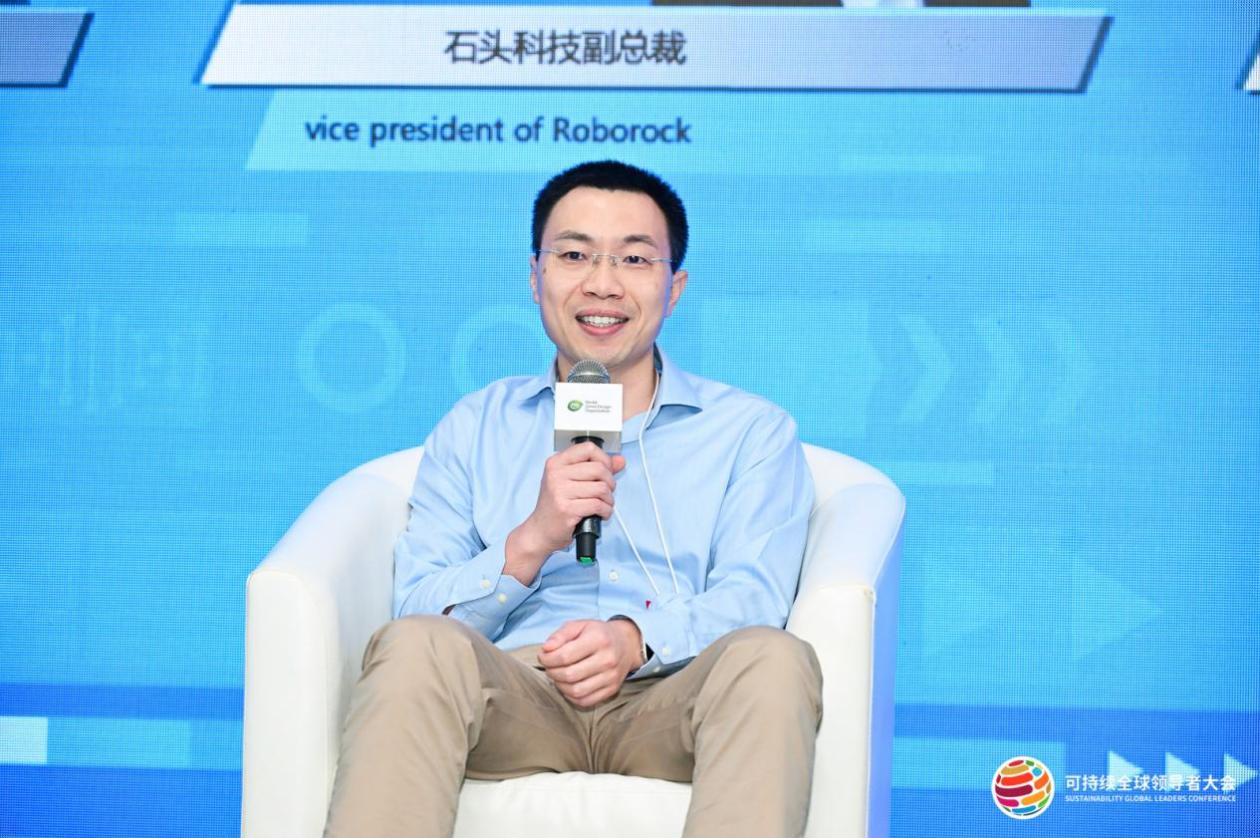
从“像人”到“场景最优解”:石头科技副总裁乌尔奇分享人机协同新思考
Huan Qiu Wang· 2025-10-20 11:21
Core Insights - The core viewpoint of the article emphasizes that solving real-world problems is more important than making robots human-like, as articulated by Stone Technology's VP, Urqi [1][11]. Group 1: Product Innovation - The G30 Space, launched by Stone Technology, integrates a five-axis foldable robotic arm on a mature wheeled platform, enabling it to identify and move obstacles like shoes and toys, addressing the challenges of household cleaning [3]. - The success of robotic vacuum cleaners as the first widely adopted household service robots is attributed to their ability to address core user pain points efficiently and economically [3]. Group 2: AI and Manufacturing - Stone Technology is extending AI from the decision-making level to the execution level in its smart manufacturing processes, optimizing production paths and logistics through intelligent algorithms [4]. - The introduction of a smart packing algorithm that incorporates worker proficiency as a variable enhances system scheduling to align better with on-ground operations, promoting "human-machine co-creation efficiency" [4]. Group 3: Digital Inclusion - To address the growing digital divide, Stone Technology proposes a "dual-track strategy" that includes establishing a tiered training system and designing inclusive products that cater to non-digital natives [5]. - The company emphasizes that technology should be accessible and adaptable to serve a broad user base, not just a privileged few [5]. Group 4: Global Market Position - Since initiating its overseas strategy in 2018, Stone Technology has expanded its reach to over 170 countries, leading the smart home cleaning robot market with a 15.2% global market share as of Q2 2025, and a 20.7% share in the core robotic vacuum segment [5][8]. - The company has achieved over 50% market share in key international markets such as Germany, South Korea, Turkey, and Nordic countries, showcasing its successful localization strategy [8]. Group 5: Sustainability and ESG - Stone Technology integrates ESG principles into its core strategy, focusing on green manufacturing, energy efficiency, and carbon emission management throughout the product lifecycle [10]. - The company has established a comprehensive ESG framework that encompasses decision-making, execution, and supervision, and has received multiple international certifications for information security and sustainability [10].