
生成式AI工具

Search documents
破除偏见:阻碍生成式AI加速落地的认知桎梏
麦肯锡· 2026-03-13 01:49
Core Insights - The article discusses the cognitive biases and organizational inertia that hinder the adoption of generative AI in companies, emphasizing the need for actionable strategies to overcome these invisible barriers [2][4]. Group 1: Current Challenges - A healthcare company invested significant resources in a comprehensive training program to accelerate the use of generative AI tools among employees, receiving over 90% positive feedback. However, a follow-up assessment revealed that less than 10% of employees integrated generative AI into their daily work [4]. - Employees expressed reluctance to use AI tools, even in scenarios where the benefits were clear, indicating a disconnect between training feedback and actual implementation [4]. Group 2: Research Insights - The management faced a classic psychological phenomenon known as status quo bias, where individuals prefer to maintain existing conditions rather than evaluate the potential benefits of change. This bias often leads to an exaggerated perception of the risks associated with adopting new tools [5]. - A study by William Samuelson and Richard Zeckhauser in 1988 demonstrated that options labeled as "currently adopted" received significantly higher preference, regardless of their actual superiority [5]. Group 3: Solutions - To address the issue, the healthcare company shifted its approach to focus on personal relevance and specific work tasks, fostering a consensus that adhering to old practices poses risks while embracing generative AI is the wiser choice [6]. - The company implemented targeted training sessions that went beyond merely recommending tools, helping employees identify practical applications of generative AI in their daily tasks [7]. - Executives received personalized training to experience firsthand how generative AI could save time and enhance decision-making, which was crucial in changing their perception of the technology as a threat [7]. - The company identified "super users" within teams who had successfully utilized generative AI, recognizing and empowering them to act as internal coaches to encourage broader adoption among colleagues [7][8]. - Organizing visits to external organizations that had successfully integrated generative AI helped employees witness real-world transformations, thereby challenging their preconceived notions about the feasibility of such changes [8]. Group 4: Conclusion - These combined efforts gradually dismantled the employees' belief that maintaining the status quo was the safest option, leading to a recognition that embracing generative AI is essential for keeping pace with industry advancements and personal career growth [8]. - The initiatives significantly increased the internal adoption rate of generative AI, illustrating that when new working methods are accepted as the norm rather than disruptive changes, transformation occurs naturally [8].


汇丰银行将生成式 AI 定为重点投资领域
Sou Hu Cai Jing· 2026-02-27 13:38
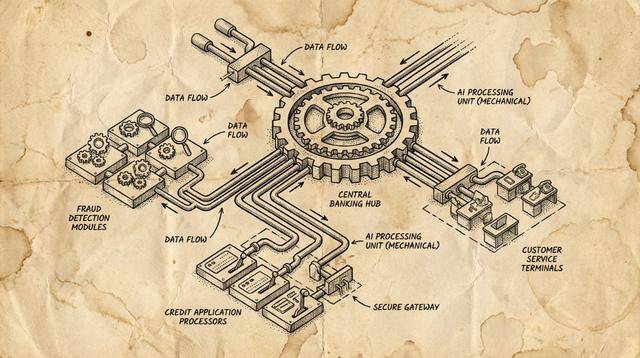
Group 1: HSBC's AI Investment Strategy - HSBC identifies generative AI as a key technology investment area, with CEO Al-Haidari stating it is the largest new technology investment focus today [2] - 85% of HSBC employees are able to use generative AI tools to become "future-ready talent," and the bank is assessing how this technology can help redesign 50 processes, including fraud detection and credit applications [2][6] - HSBC has observed productivity improvements due to the use of generative AI, with coding assistance tools increasing code patching and vulnerability fixing speed by five times [5] Group 2: Industry Trends in AI Investment - According to KPMG's AI quarterly pulse survey, banks plan to invest an average of $133 million in AI over the next 12 months, with over 80% of respondents expecting to continue investing regardless of immediate measurable returns [3] - UBS plans to leverage AI to redesign front and back office processes and improve services, with CEO Ermotti highlighting a portfolio of transformative AI projects aimed at enhancing operational resilience and customer experience [3] - TD Bank has implemented around 75 AI use cases in 2025, focusing on loan underwriting, creating smart leads, and deepening customer relationships, prioritizing AI investments in customer acquisition and insights as well as risk management [3][4]

73页|技术趋势2026
Sou Hu Cai Jing· 2026-02-22 02:01
Group 1 - The core trends driving companies from technology experimentation to actual value creation include the scaling of artificial intelligence (AI), the compound effect of technology, and the need for process redesign to achieve competitive advantages [1][10][11]. - AI is transitioning from proof-of-concept to large-scale application, becoming a core driver of automation, innovation, and business growth [1][10][11]. - The rapid growth of generative AI has created a flywheel effect, where advancements in technology, data, investment, and infrastructure mutually accelerate development [1][11]. Group 2 - Companies face challenges in building digital workforce systems, including difficulties in system integration, data architecture limitations, and inadequate governance frameworks [2][8]. - Leading companies are adopting strategies such as process reengineering and multi-agent collaborative scheduling to treat intelligent agents as core labor forces [2][8]. - As AI applications deepen, infrastructure strategies are undergoing significant adjustments, with a shift towards hybrid architectures that combine local deployment and edge computing [2][8]. Group 3 - The technology organization is undergoing fundamental restructuring, with a shift from infrastructure maintenance to strategic leadership [2][16]. - AI investments are increasing, and the focus is moving from technology management to strategic planning, leading to the emergence of new roles such as collaboration designers and edge engineers [2][16]. - The role of Chief Information Officers (CIOs) is evolving from strategic decision-makers to promoters and coordinators of AI initiatives [2][16]. Group 4 - Eight additional signals worth monitoring include the platform phase of foundational models, the impact of synthetic data on models, and the development of neuromorphic computing [3][8]. - These signals indicate a fundamental shift in the speed of technological change, and companies that can identify these trends early will have a competitive advantage [3][8].
标普全球2025财年业绩创新高,AI赋能与业务分拆成战略焦点
Jing Ji Guan Cha Wang· 2026-02-13 14:31
Core Insights - The company achieved record revenue and profit for the fiscal year 2025, driven by core business growth and ongoing integration of artificial intelligence [1] Financial Performance - Total revenue reached $15.336 billion, a year-on-year increase of 8.0%, marking a historical high for the company [2] - Adjusted diluted earnings per share for the year were $17.83, up 14.0% year-on-year, with profit growth outpacing revenue growth [2] - In Q4, revenue was $3.916 billion, reflecting a 9.0% year-on-year growth, in line with market expectations [2] - The adjusted operating profit margin for Q4 reached 50.0%, an increase of 1.2 percentage points year-on-year, maintaining above 50% for several consecutive quarters [2] Business Development - The S&P Ratings business saw a 12.0% year-on-year revenue growth in Q4 and a 10% increase for the full year, becoming the primary growth engine [3] - The S&P Dow Jones Indices business experienced a 14.0% year-on-year revenue growth in Q4 and a 13% increase for the full year, benefiting from the expansion of ETF sizes under passive investment trends [3] Operational Status - Subscription revenue accounted for 74% of total revenue, enhancing predictability and resilience against economic cycles [4] - Operating cash flow for the fiscal year reached $5.651 billion, with free cash flow at $5.456 billion, maintaining top-tier industry levels [4] - The company continues to return value to shareholders through dividends and stock buybacks [4] Business and Technology Development - The company launched several generative AI tools in market intelligence and over 50% of data products have been AI-adapted to enhance customer experience and operational efficiency [5] - The mobile solutions business is planned to be spun off by 2026 to create a more focused business portfolio [5] Future Performance Guidance - For fiscal year 2026, the company projects organic revenue growth of 6.0% to 8.0%, with adjusted diluted earnings per share expected to be between $19.40 and $19.65, representing a year-on-year growth of 9.0% to 10.0% [6]

AI让你更高效,为什么你却感觉更忙了?
3 6 Ke· 2026-02-11 00:32
Core Insights - The research indicates that AI tools have not alleviated employee workloads but have instead increased work intensity, leading to blurred boundaries between work and personal time [1][3][4] Group 1: AI's Impact on Workload - AI has enabled employees to take on tasks traditionally assigned to others, resulting in an expansion of responsibilities and increased workload [6][11] - Employees are experiencing a faster work pace and are extending their work hours, often voluntarily, due to the perceived ease of task completion with AI [3][5] - The initial productivity gains from AI may mask the growing cognitive load and potential burnout among employees [11][12] Group 2: Blurring of Work-Life Boundaries - AI has made it easier for employees to engage in work during breaks or personal time, leading to a reduction in natural pauses throughout the workday [7][8] - The informal nature of interacting with AI can make work feel less burdensome, yet it contributes to a pervasive sense of being "always on" [8][9] Group 3: Increased Multitasking - Employees are managing multiple tasks simultaneously, often feeling pressured to keep up with the pace set by AI, which can lead to cognitive overload [9][11] - The expectation for speed has risen, with employees reporting that they handle more tasks than before, despite the intention of AI to reduce workload [11][12] Group 4: Recommendations for Organizations - Organizations should establish "AI practices" to create clear guidelines for AI usage, helping employees balance efficiency with sustainability [12][13] - Implementing structured pauses and managing task progression can help mitigate the risks associated with increased workload and cognitive strain [13][14] - Encouraging social interactions and reflective moments can counteract the isolating effects of AI, fostering creativity and a broader perspective [15][16]

当AI成为我的“同事”
Yang Shi Wang· 2026-01-30 07:50
Core Insights - The integration of AI into various industries is evolving from basic assistance to active collaboration, significantly enhancing efficiency and productivity [1][2] - AI tools are now capable of understanding user preferences and providing proactive suggestions, marking a shift from reactive to proactive assistance [2] - However, challenges remain in achieving deep collaboration between AI and humans, particularly in complex scenarios where AI's limitations can lead to errors and increased workload for humans [4][5][6] Group 1: AI in New Media and Content Creation - AI tools have become essential for content creators, allowing for significant time savings in producing articles and video scripts, reducing production time from hours to minutes [1] - The introduction of AI has enabled content creators to focus on core creative tasks while AI handles basic work, leading to a more efficient workflow [1] Group 2: AI in Healthcare - In healthcare, AI systems have been implemented to assist in diagnostic processes, particularly in radiology, where they can quickly identify standard conditions [4][5] - Despite the benefits, there are concerns about AI's accuracy in complex cases, with high misdiagnosis rates for atypical conditions, necessitating human oversight [5][6] - The lack of transparency in AI decision-making processes complicates the verification of AI-generated conclusions, leading to increased workloads for healthcare professionals [6] Group 3: Responsibility and Accountability in AI Collaboration - The current framework for accountability in AI-human collaboration is unclear, with humans often bearing the responsibility for AI errors [7][9] - Experts suggest that a clear delineation of responsibilities is necessary, particularly in high-stakes fields like healthcare and finance, to ensure accountability [9] - There is a call for improved AI transparency and the establishment of a fair responsibility framework to address the challenges posed by AI's limitations [8][9] Group 4: Future Directions for AI Development - The potential for AI to support complex tasks and emotional understanding remains limited, indicating a need for further technological advancements [8] - Experts advocate for embedding fairness and ethical considerations into AI algorithms to enhance their decision-making capabilities [9] - Enhancing AI's interpretability and establishing dynamic calibration mechanisms are seen as crucial steps toward building trust in AI systems [9]
孙悟空机枪扫射沙僧?广电总局开展“AI魔改”视频专项治理
Nan Fang Du Shi Bao· 2026-01-01 13:28
Core Viewpoint - The rise of AI-generated "magic modifications" of classic films and historical narratives is leading to significant alterations in original content, prompting regulatory responses from authorities to address potential cultural and legal issues [1][9]. Group 1: AI Magic Modifications - AI tools are being used to create videos that dramatically alter classic narratives, such as turning "The Legend of Zhen Huan" into a gunfight scene or reimagining characters from "Dream of the Red Chamber" in violent contexts [2][3]. - These modifications often involve changing dialogue and character actions, resulting in a disconnection from the original themes and values of the works [3][4]. - The process of creating these videos has been simplified into a three-step template: generating text with AI, creating video from that text, and editing for publication, making it accessible to a wide audience [4][8]. Group 2: Cultural and Legal Concerns - There are concerns that these AI modifications undermine traditional culture and misrepresent historical narratives, leading to a loss of original context and meaning [3][9]. - The Chinese government has recognized the potential legal risks associated with these modifications, emphasizing the need for copyright authorization and respect for the original works' integrity [8][9]. - A nationwide initiative will begin on January 1, 2026, to regulate and clean up AI-modified videos, with a focus on protecting cultural heritage and ensuring responsible content creation [9].

零售巨头“换赛道”!沃尔玛转板纳斯达克,8500亿市值刷新纪录
Xin Lang Cai Jing· 2025-12-09 14:58
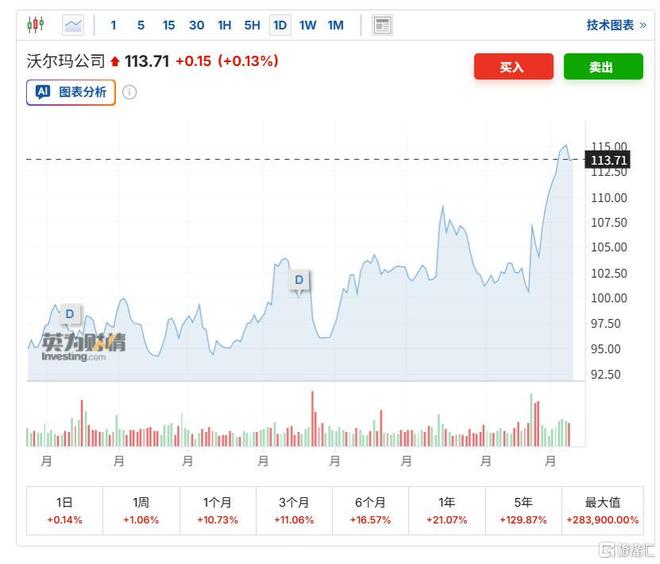
Core Viewpoint - Walmart has officially transferred its stock listing from the New York Stock Exchange to the Nasdaq Global Select Market, setting a record for the largest exchange migration in history with a market capitalization of $853.1 billion, surpassing PepsiCo's previous record of $166 billion in 2017 [1][3]. Group 1: Company Transition - The stock began trading on Nasdaq on December 9, 2025, under the same ticker symbol "WMT" [5]. - This transition reflects Walmart's commitment to a technology-driven transformation, aligning with its long-term strategy of being people-centric and technology-enabled [6][8]. - Walmart's CFO highlighted that the move resonates with the company's focus on integrating automation and AI technologies to enhance its retail ecosystem [6]. Group 2: Technological Investments - Walmart has invested over $10 billion in technology areas such as AI, supply chain automation, and digital payments from fiscal years 2023 to 2025 [7]. - The company has achieved over 60% of its goods processed by automated facilities in distribution centers, significantly improving logistics efficiency [7]. - Collaborations with OpenAI have led to a 90% automation rate in replenishment orders and a reduction in inventory turnover days to 30, compared to the industry average of 60 days [7]. Group 3: Financial Performance - In the third quarter, Walmart reported revenues of $179.5 billion, a year-over-year increase of 5.8%, with adjusted operating profit rising by 8% [9]. - The adjusted earnings per share reached $0.62, exceeding analyst expectations [9]. Group 4: Market Impact - Walmart's migration to Nasdaq enriches the market composition, with approximately 40 companies from the S&P 500 having migrated to Nasdaq, 24 of which are now part of the Nasdaq 100 index [10]. - Analysts suggest that Walmart is likely to be included in the Nasdaq 100 index following its transfer [11][12].

中国东方教育携手支付宝 数字化招生与管理重构职教生态
Xin Lang Zheng Quan· 2025-10-29 09:27
Core Insights - China Oriental Education (00667.HK) has entered into a comprehensive partnership with Alipay to explore digital transformation in vocational education, focusing on innovative enrollment and management upgrades [1][3] Digital Enrollment: Constructing a New Paradigm - The collaboration will leverage Alipay's intelligent recommendation and search capabilities to accurately identify and reach potential students, transforming traditional recruitment methods into data-driven, intelligent matching processes [4] - China Oriental Education will utilize its partnerships with 30,000 enterprises to stay updated on talent demand in the job market, enhancing enrollment efficiency and employment quality through Alipay's platform [4] Digital Management: Reshaping the Operational System - The company will advance digital upgrades in teaching management through its self-developed "Smart Campus" application, which analyzes student learning processes for personalized education [7] - This system will provide in-depth analysis of student behavior and knowledge gaps, enabling the automatic generation and dynamic adjustment of personalized teaching plans [7] Ecosystem Co-construction: From Joint Training Bases to Industrial Ecosystem - Plans include the establishment of joint training bases to expand the scope of cooperation between China Oriental Education and Alipay [9] - The integration of Alipay's ecosystem resources is expected to enhance the existing talent cultivation model, which already boasts a 95% employment recommendation rate, creating a comprehensive digital management system from enrollment to employment services [11]

全球约八成医疗机构正在部署或设点生成式AI工具 人工智能正重构医疗健康全产业链
Shang Hai Zheng Quan Bao· 2025-07-27 18:48
Group 1 - The core viewpoint of the articles is that artificial intelligence (AI) is fundamentally reshaping the global healthcare industry, with approximately 80% of medical institutions deploying or planning to implement generative AI tools [2][3] - AI is becoming the core engine driving leapfrog development in the healthcare sector, enabling new applications in clinical diagnosis, drug and device development, and hospital management [1][2] - The integration of AI technologies into healthcare is leading to a new paradigm characterized by intelligent, precise, and personalized medicine [1] Group 2 - The rapid development of AI technology is profoundly reconstructing the entire healthcare industry chain, with significant advancements from research labs to clinical applications and hospital management systems [2] - Challenges such as data barriers, regulatory ethics, and technical standards are emerging as major obstacles to the development of AI in healthcare [3] - Trust issues and the "black box" nature of algorithms are identified as the biggest barriers to the application of AI in healthcare, necessitating the establishment of transparent and inclusive systems [3]