
AI原生化

Search documents
国内知名ai crm系统服务商珍客AI CRM如何破解企业获客与转化难题
Sou Hu Cai Jing· 2026-01-27 11:31
Core Insights - The selection of customer relationship management (CRM) systems is becoming a key factor influencing corporate competitiveness amid the wave of digital transformation [1] - Traditional CRM systems face challenges such as low customer acquisition efficiency, severe data silos, and insufficient international product adaptability, prompting companies to seek solutions better suited to local business scenarios [2] Traditional CRM Challenges - Companies encounter multiple operational obstacles in customer relationship management, including fragmented acquisition channels leading to inconsistent lead quality and significant collaboration barriers between marketing and sales departments [2] - International CRM products lack localization adaptability, data storage compliance, and fail to meet the unique business processes in China, posing cross-border data compliance risks [2] - For B2B enterprises, the complexity of customer decision-making chains and the difficulty in uncovering latent needs highlight the urgent demand for intelligent and localized customer management systems [2] AI-Driven Transformation - The AI-native architecture of Zhenke CRM enables a shift from passive recording to proactive forecasting, enhancing the system's ability to empower various business scenarios [3] - The system's dual-engine model for lead management automates lead cleansing, scoring, and distribution, significantly improving lead quality and conversion rates [3] Multi-Channel Customer Acquisition - The system integrates various channels such as public domain advertising, search engines, social media, and private enterprise WeChat, achieving a comprehensive customer data integration across 10+ dimensions [4] - AI-driven customer insights create a 360° unified customer view, greatly enhancing the effectiveness of marketing activities, particularly for B2B enterprises with global acquisition needs [4] Full Value Chain Collaboration - Zhenke CRM constructs a full value chain from marketing to sales, technical delivery, service, and customer success, ensuring a closed-loop collaboration across all business processes [5] - The system provides a unified customer view and visualizes decision chains, enabling deep exploration of latent customer needs and proactive management of high-risk customers [5] Operational Efficiency Enhancement - AI technology automates sales visit records, communication follow-ups, and report generation, allowing sales personnel to focus on high-value customer interactions [8] - The system integrates AI risk control and intelligent drafting for contract management, significantly shortening the signing cycle and ensuring compliance [8] Flexible Deployment and Cost Optimization - The system offers three flexible deployment options: public cloud SaaS, private cloud localized deployment, and hybrid cloud architecture, catering to different enterprise needs [9] - Compared to international CRM products, domestic solutions demonstrate a 40%-60% reduction in overall costs and an average response time of under 4 hours [10] Industry Expertise and Ecosystem Integration - Zhenke CRM has accumulated mature application cases across over 20 vertical industries, particularly excelling in B2B scenarios [11] - The system supports ecosystem integration and third-party system connections, providing customizable digital business solutions through a low-code PaaS platform [12] Certification and Market Position - Zhenke CRM meets strict data security standards as an ISO27001 certified product, positioning itself as a significant player in the domestic CRM market [14] - Companies seeking digital transformation and improved customer relationship management efficiency should consider adopting an AI-native, full-link empowering, and industry-experienced domestic CRM system for a transformative upgrade from passive recording to proactive forecasting [14]

教育公司的 AI 分水岭:增长、效率与重塑价值的三种答案
3 6 Ke· 2025-11-27 02:11
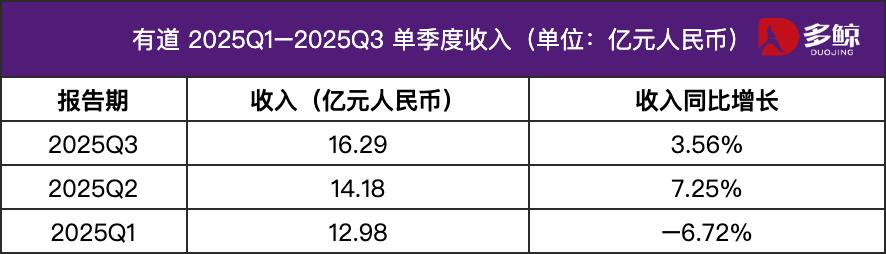
Core Insights - The education industry is shifting focus from "digital transformation" to "AI native" solutions, as evidenced by the distinct trajectories of three representative companies: Youdao, Duolingo, and Chegg, highlighting the profound impact of AI on educational business models [1] Youdao - Youdao's transformation is marked by a significant shift in revenue structure, with online marketing services surpassing learning services for the first time in Q3 2025, generating 7.4 billion RMB, a 51.1% increase year-on-year [3][4] - The company's total net revenue for Q1 2025 was 1.3 billion RMB, showing a slight decline, but operating profit reached 104 million RMB, a 248% increase year-on-year, marking a historical high for Q1 [2] - Youdao's AI-driven strategy has restructured its business model, with AI becoming a core component of its advertising and technology services, leading to a more profitable revenue stream [9] Duolingo - Duolingo has maintained a revenue growth rate of around 40% for six consecutive quarters, with Q3 2025 revenue reaching 271.7 million USD, a 41.08% year-on-year increase [10][11] - The integration of generative AI into course production and teaching processes has allowed Duolingo to rapidly launch 148 new language courses, significantly reducing reliance on human content creators [12] - The AI-driven teaching model has shifted the role of traditional teachers to a more supportive position, with the AI model taking on primary responsibilities in content generation and personalized feedback [12] Chegg - Chegg has experienced a steep decline in revenue, with Q3 2025 revenue dropping to 77.74 million USD, a 43.08% year-on-year decrease, marking the largest annual decline since its IPO [13][15] - The company is attempting to pivot towards "CheggMate," an AI learning partner, to shift from providing answers to offering explanations and personalized teaching, but faces challenges in attracting users accustomed to free solutions like ChatGPT [15][16] - Chegg's situation illustrates the urgent need for educational companies to redefine their value propositions in the face of AI's ability to directly replace traditional learning services [16] Industry Trends - The three companies represent different paths towards AI native solutions in the education sector, emphasizing a shift in core competitive advantages from product forms to AI capabilities that can redefine value chains [17][18] - AI is not merely an enhancement but a core force driving the direction of business models in the education industry, with the Chinese AI+ education market expected to exceed 70 billion RMB by 2025 [18]



上汽总裁称余承东对尚界H5初始方案不满意,提了非常多要求;董明珠回应说话太满:是一种自信;李想直言苹果17 Pro Max太丑了
雷峰网· 2025-09-24 00:34
Key Points - Jinzi Ham (002515.SZ) is venturing into the semiconductor industry with a planned investment of up to 300 million yuan to acquire up to 20% equity in Zhongsheng Microelectronics, indicating a strategic shift towards high-growth sectors like AI and optical communication [3][5] - The company's stock surged to a daily limit of 7.85 yuan, resulting in a market capitalization increase of nearly 1 billion yuan on September 23 [3] - Jinzi Ham has previously attempted to diversify into healthcare and internet finance, but most of these ventures were unsuccessful [5] Group 1 - Jinzi Ham's investment in Zhongsheng Microelectronics reflects a broader trend of traditional companies diversifying into technology sectors [3][5] - The company aims to leverage the growth potential of the AI industry and optical communication markets [3] - The announcement of this investment comes after a change in the company's controlling shareholder and management team [5] Group 2 - The stock market reaction to Jinzi Ham's announcement demonstrates investor confidence in the company's new direction [3] - The investment strategy aligns with the increasing interest in semiconductor technology amid rising demand for AI applications [3][5] - Jinzi Ham's core business remains in meat products, but this move signifies a potential shift in focus towards technology-driven growth [3][5]






广发证券易淘金App实现AI原生化升级
Zheng Quan Ri Bao Wang· 2025-08-19 13:55
Core Insights - Guangfa Securities has completed a comprehensive AI-native upgrade of its "Yitaojin App," transforming it from a comprehensive trading service tool to an all-weather intelligent investment partner, initiating a new paradigm of intelligent services characterized by "personalized experiences" [1][2] Group 1: AI Model and Technology - The upgrade is based on the "Tianji Zhirong" model, which integrates Guangfa Securities' extensive practical data and professional research capabilities, utilizing RAG and Agent orchestration technologies to create a controllable, reliable, and optimizable localized intelligent hub [1][2] - The new "Yitaojin App" leverages the "Tianji Zhirong" model for core design and restructuring, enhancing both the underlying architecture of securities trading and investment services as well as user experience [2][3] Group 2: User Interaction and Experience - The app's service logic is revolutionary, focusing on enabling AI to understand user intent rather than requiring users to adapt to functionalities, thus reshaping the interaction between users and financial data, market analysis, and trading decisions [2] - The introduction of the AI assistant "i Assistant - Yixiao Tao Plus" allows users to engage in a conversational manner for information retrieval and investment operations, significantly improving the efficiency of information acquisition [2] Group 3: Intelligent Advisory Services - The new app embodies a "human-machine collaboration" philosophy, creating an "intelligent advisory" model that enhances service depth and professionalism through bi-directional empowerment [3] - The "i Advisory" module utilizes deep model technology to create an intelligent "advisory cockpit," providing a comprehensive smart advisory service system that covers news interpretation, market analysis, and investment trading [3]
