AI原生终端

Search documents
“AI原生终端”的落地时刻,如何重构端侧智能?|CES 2026
Tai Mei Ti A P P· 2026-01-11 01:24
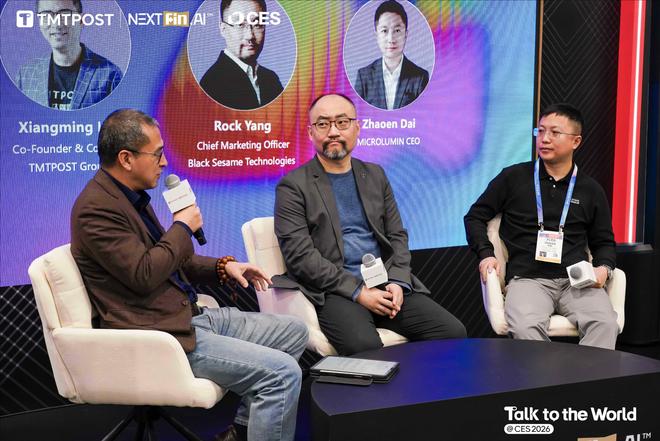
Core Insights - The CES 2026 focuses on the practical applications of AI, moving beyond previous years' discussions on AI concepts to real-world implementations [2] - The concept of AI-native terminals is gaining traction, with discussions highlighting the need for devices that are fundamentally reliant on AI for their existence [4][6] Group 1: AI Native Terminals - AI-native terminals are defined as devices that lose their significance without AI, with a strong emphasis on the importance of finding suitable application scenarios for these technologies [4][10] - The early stages of AI-native terminal development will favor scenarios with strong consumer willingness to pay, such as education, healthcare, and tourism [10] - The distinction between traditional smart hardware and AI-native terminals lies in the latter's autonomous computing capabilities, allowing them to solve problems independently [6][12] Group 2: Market Trends and Consumer Expectations - The market is witnessing a shift towards devices that integrate AI capabilities, with expectations that all electronic devices will eventually possess AI functionalities [2][8] - There is a consensus that successful AI-native products must focus on solving specific user pain points rather than attempting to cover all functionalities [4][10] - The development of AI glasses and embodied intelligence products is seen as a promising direction, with the potential to redefine user interaction and experience [6][12] Group 3: Technical Challenges and Innovations - The integration of AI into devices faces challenges related to physical limitations such as weight and battery life, particularly in wearable technology like AI glasses [6][15] - The current approach to data processing involves a "cloud-edge-end" model, where data is analyzed in stages, but there is a push towards local processing for simpler tasks to enhance user experience [15] - Future innovations in AI glasses will require a balance between hardware advancements and software improvements, focusing on user-friendly interactions [16][21] Group 4: Industry Collaboration and Ecosystem - The relationship between hardware manufacturers, chip suppliers, and algorithm developers is evolving, with a need for collaboration to meet consumer demands effectively [19][20] - The AI hardware landscape is characterized by a shift towards open platforms that provide a comprehensive AI technology foundation, including chips, software, and tools [20] - The competitive edge of Chinese companies in the AI hardware sector is attributed to their robust supply chains and growing AI research capabilities [22][24]

CES 2026开幕在即 TCL成最大中国参展商
Nan Fang Du Shi Bao· 2026-01-04 11:57
Group 1 - The CES 2026, known as the "Spring Festival of Technology," will take place in Las Vegas, showcasing a pivotal moment for global competition among display and consumer electronics giants from China, Japan, and South Korea [2] - TCL, as the largest Chinese exhibitor, will have a booth area of 2,453 square meters, competing directly with international leaders like Samsung, LG, and Sony in the fields of display technology and AI applications [2] - 2026 is widely regarded as the "year of AI hardware implementation," with AI transitioning from cloud to edge applications, prompting TCL to shift its exhibition strategy from merely showcasing hardware specifications to focusing on an "AI + display" ecosystem [2] Group 2 - In addition to its display technology, TCL will emphasize "AI in practice" as a key theme at the exhibition, highlighting its comprehensive layout in the "AI life" sector [3] - TCL plans to unveil products such as the Thunderbird AI/AR glasses, the TCL AiMe companion robot, and a range of AI-integrated home appliances, showcasing its commitment to the growing market of embodied intelligence and AI-native terminals [3]