AI原生终端

Search documents
数码家电行业周度市场观察:行业环境头部品牌动态投资运营产品技术营销活动-20260321
Ai Rui Zi Xun· 2026-03-21 08:31
Investment Rating - The report does not explicitly provide an investment rating for the industry Core Insights - The industry is witnessing a significant shift towards AI integration across various sectors, with a focus on military applications and consumer technology [4][10] - The AI chip market is experiencing rapid growth, with major companies like Meta and OpenAI signing multi-billion dollar contracts, although concerns about market sustainability and technological bottlenecks are emerging [7][10] - The AI toy market is booming, with online sales expected to reach 520 million yuan in 2025, driven by innovative products and increased investment [8][10] - The outdoor economy is boosting the mobile refrigerator market, with production expected to exceed 4.5 million units in 2024 [10] - The humanoid robot sector is seeing the emergence of unicorns with valuations exceeding 10 billion yuan, although challenges in commercialization and supply chain remain [11][10] Industry Trends - The military application of AI is accelerating, with historical comparisons showing a rapid transition from technology to military use [4] - The integration of AI with 6G technology is expected to revolutionize communication and user experience, with significant advancements showcased at major tech events [4] - The advertising industry is undergoing transformation as major players invest heavily in AI to enhance marketing efficiency and data integration [7] - The AI chip industry is facing challenges related to performance limits and the need for customized solutions, with significant capital expenditure pressures [7] - The competition in generative AI is intensifying, with companies focusing on cost efficiency and user experience [8] Top Brand News - Alibaba's leadership emphasizes the need for educational reform in the AI era, focusing on human-centric values rather than technical skills [13] - Meituan is facing challenges in its AI strategy, needing to enhance its AI capabilities to remain competitive [13] - Ant Group's AI health assistant app has rapidly gained over 100 million users, highlighting the potential of AI in healthcare despite existing challenges [14] - Efort Intelligent Equipment is expanding into the photovoltaic industry through strategic acquisitions, aiming to enhance its technological capabilities [14] - Broadcom's financial performance is significantly boosted by its AI business, with optimistic revenue projections for the upcoming quarters [16]
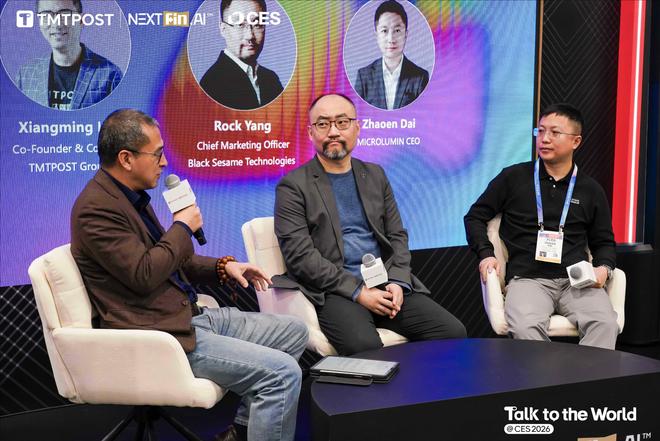
“AI原生终端”的落地时刻,如何重构端侧智能?|CES 2026
Tai Mei Ti A P P· 2026-01-11 01:24
Core Insights - The CES 2026 focuses on the practical applications of AI, moving beyond previous years' discussions on AI concepts to real-world implementations [2] - The concept of AI-native terminals is gaining traction, with discussions highlighting the need for devices that are fundamentally reliant on AI for their existence [4][6] Group 1: AI Native Terminals - AI-native terminals are defined as devices that lose their significance without AI, with a strong emphasis on the importance of finding suitable application scenarios for these technologies [4][10] - The early stages of AI-native terminal development will favor scenarios with strong consumer willingness to pay, such as education, healthcare, and tourism [10] - The distinction between traditional smart hardware and AI-native terminals lies in the latter's autonomous computing capabilities, allowing them to solve problems independently [6][12] Group 2: Market Trends and Consumer Expectations - The market is witnessing a shift towards devices that integrate AI capabilities, with expectations that all electronic devices will eventually possess AI functionalities [2][8] - There is a consensus that successful AI-native products must focus on solving specific user pain points rather than attempting to cover all functionalities [4][10] - The development of AI glasses and embodied intelligence products is seen as a promising direction, with the potential to redefine user interaction and experience [6][12] Group 3: Technical Challenges and Innovations - The integration of AI into devices faces challenges related to physical limitations such as weight and battery life, particularly in wearable technology like AI glasses [6][15] - The current approach to data processing involves a "cloud-edge-end" model, where data is analyzed in stages, but there is a push towards local processing for simpler tasks to enhance user experience [15] - Future innovations in AI glasses will require a balance between hardware advancements and software improvements, focusing on user-friendly interactions [16][21] Group 4: Industry Collaboration and Ecosystem - The relationship between hardware manufacturers, chip suppliers, and algorithm developers is evolving, with a need for collaboration to meet consumer demands effectively [19][20] - The AI hardware landscape is characterized by a shift towards open platforms that provide a comprehensive AI technology foundation, including chips, software, and tools [20] - The competitive edge of Chinese companies in the AI hardware sector is attributed to their robust supply chains and growing AI research capabilities [22][24]